

Fermenting Garum Fish Sauce — Roman Universal Condiment
دستورالعملها
Layer Fish and Salt
Layer Fish and Salt
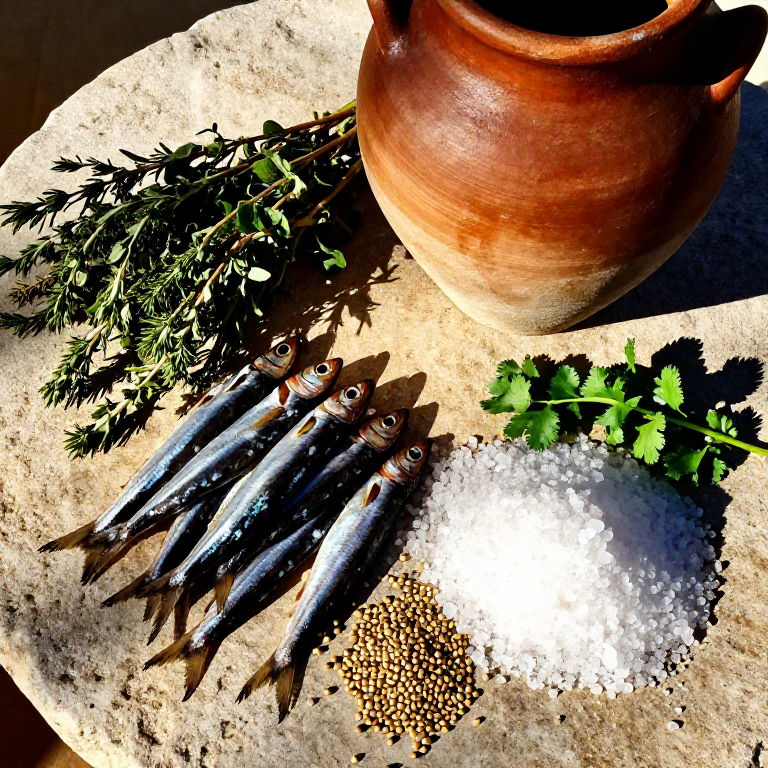
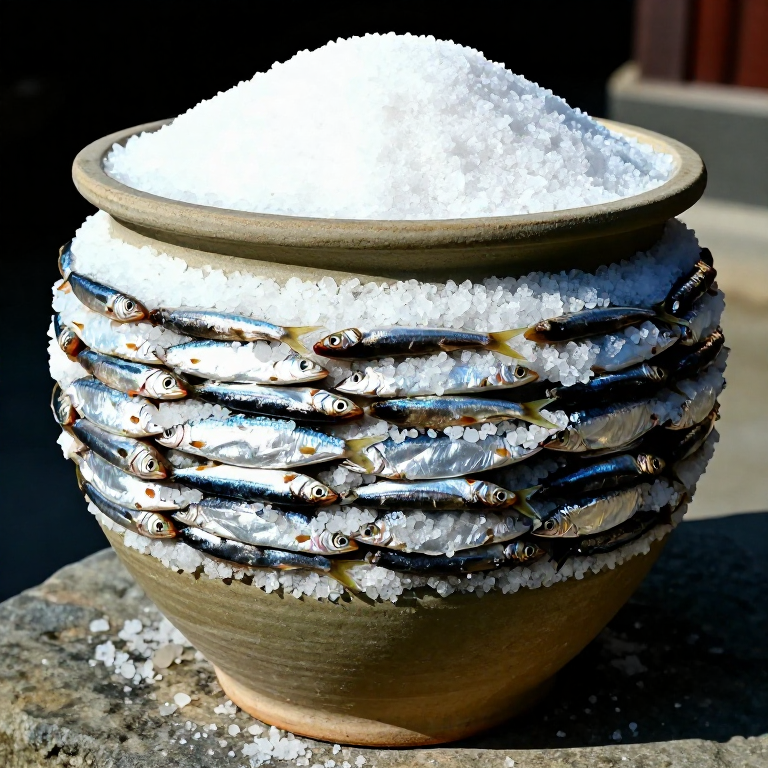
Use whole, ungutted small fish — the digestive enzymes in the intestines are essential for autolysis, the self-digestion process that breaks the fish down into liquid. Anchovies and sardines are ideal, as they were the most commonly used species in Roman garum production at factories in Hispania, North Africa, and the Black Sea coast. In a wide-mouthed ceramic vessel, place a layer of coarse sea salt approximately 2 cm deep on the bottom. Add a layer of whole fish, then another layer of salt, alternating until all fish and salt are used. The top layer must be salt. The salt concentration must be high enough to prevent putrefaction while allowing halophilic (salt-tolerant) bacteria and endogenous enzymes to work — a ratio of approximately one part salt to three parts fish by weight achieves this.
مواد مورد نیاز این مرحله:
 ماهی چرب تازه (آنچوی)2 kg کیلوگرم
 نمک دریای درشت600-800 grams (roughly 1:3 salt to fish ratio by weight) قطعه
 پونهٔ کوهی خشک2 tablespoons قطعه
 دانه گشنیز1 tablespoon قطعه
ابزارهای مورد نیاز:
 ظرف سفالی دهانگشاد
 قاشق چوبی همزدن
 پارچه پنیر (موسلین ریزبافت)
 صافی چای مشریز
 بطریهای شیشهای دربدار
Begin Sun Fermentation
Begin Sun Fermentation
Cover the vessel with cheesecloth or loose-weave linen to keep flies out while allowing air circulation. Place the vessel in direct sunlight — the heat accelerates enzymatic breakdown. Roman garum factories (cetariae) at Pompeii and Baelo Claudia in Spain used open courtyards with rows of large stone vats exposed to the Mediterranean sun. Stir the mixture thoroughly once or twice daily with a wooden paddle, breaking up the fish and mixing the developing liquid back through the solids. Within the first few days, the salt draws moisture from the fish through osmosis, and a brown liquid begins to accumulate. The mixture will develop a strong odour — Roman garum factories were located outside city walls for this reason.
Monitor the Fermentation
Monitor the Fermentation
Continue stirring daily and keeping the vessel in warm conditions (ideally 25-35 degrees Celsius) for one to three months. The fermentation progresses through distinct stages: first, the flesh softens and begins to liquefy as endogenous proteases (trypsin, pepsin, and other digestive enzymes from the fish gut) break proteins into peptides and free amino acids. Halophilic bacteria, particularly species of Halobacterium and Tetragenococcus, contribute additional enzymatic activity. The liquid darkens from golden to deep amber-brown. The solid residue gradually diminishes. By four to six weeks in warm conditions, most of the fish tissue has dissolved. If the surface develops a white film, this is typically harmless halophilic yeast — stir it back in. Any green or black mould indicates insufficient salt, and the batch should be discarded.
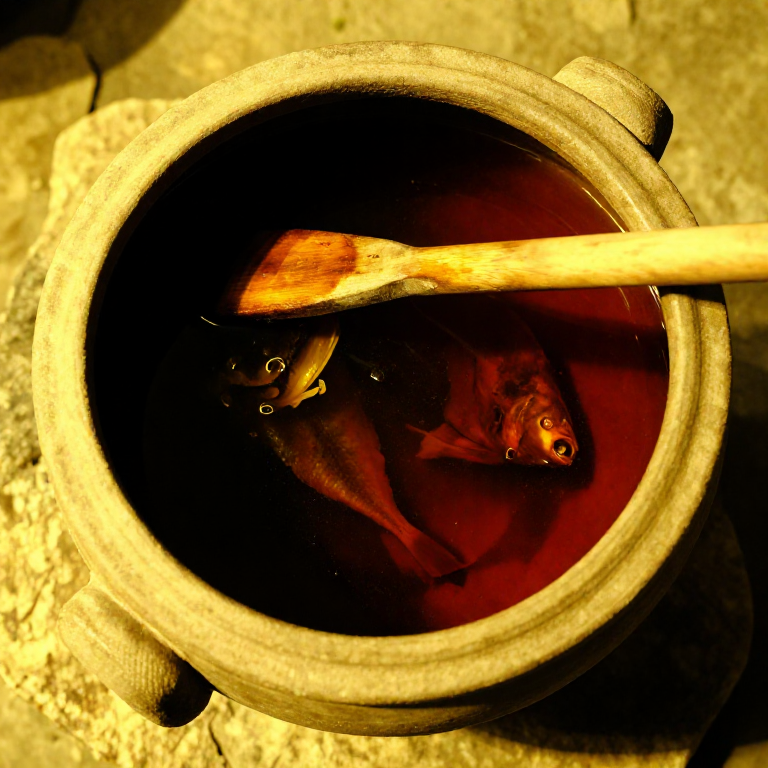
Strain the Garum
Strain the Garum
When fermentation is complete — the liquid is dark brown, intensely savoury-smelling, and the solid residue has reduced to a thick sludge of bones and scales — strain the liquid through a fine-mesh basket or linen bag. The clear amber liquid that passes through is the garum (also called liquamen in later Roman texts). Allow it to settle for a day, then decant the clear liquid off any sediment. The solid residue left in the strainer is called allec — Romans used this as a cheaper condiment or spread for bread. The finest garum was further clarified by repeated straining or by filtering through a wicker basket (as described by the Roman agricultural writer Gargilius Martialis), producing a clear, golden-brown liquid.
Bottle and Store
Bottle and Store
Pour the finished garum into clean glass or ceramic bottles and seal tightly. The high salt content (typically 15-25 percent salinity) acts as a natural preservative, and properly made garum does not require refrigeration — Roman garum was shipped across the empire in sealed amphora and remained stable for months or years. Use garum as the Romans did: as a universal seasoning added to virtually every dish, from roasted meats to vegetables to desserts. It provides intense umami flavour from its high concentration of free glutamic acid (the same compound responsible for the taste of MSG). Apicius, the Roman cookbook author, calls for garum or liquamen in the majority of his recipes. A few drops in a dish replaces both salt and adds a depth of flavour that salt alone cannot provide.
مواد
5- 2 kg کیلوگرمجایگزین
- 600-800 grams (roughly 1:3 salt to fish ratio by weight) قطعهجایگزین
- 1 tablespoon قطعهجایگزین
- 2 kg قطعهجایگزین
- 2 tablespoons قطعهجایگزین
ابزارهای لازم
9- جایگزین
- جایگزین
- جایگزین
- جایگزین
- جایگزین
- جایگزین
- جایگزین
- جایگزین
- جایگزین
CC0 مالکیت عمومی
این نقشه تحت مجوز CC0 منتشر شده است. شما آزاد هستید آن را کپی، ویرایش، توزیع و برای هر هدفی بدون نیاز به اجازه استفاده کنید.
با خرید محصولات از طریق نقشه از سازنده حمایت کنید و او کمیسیون سازنده تعیین شده توسط فروشندگان، دریافت میکند یا یک نسخه جدید از این نقشه ایجاد کنید و آن را به عنوان اتصال در نقشه خود قرار دهید تا درآمد به اشتراک گذاشته شود.