

Stencil Duplicator
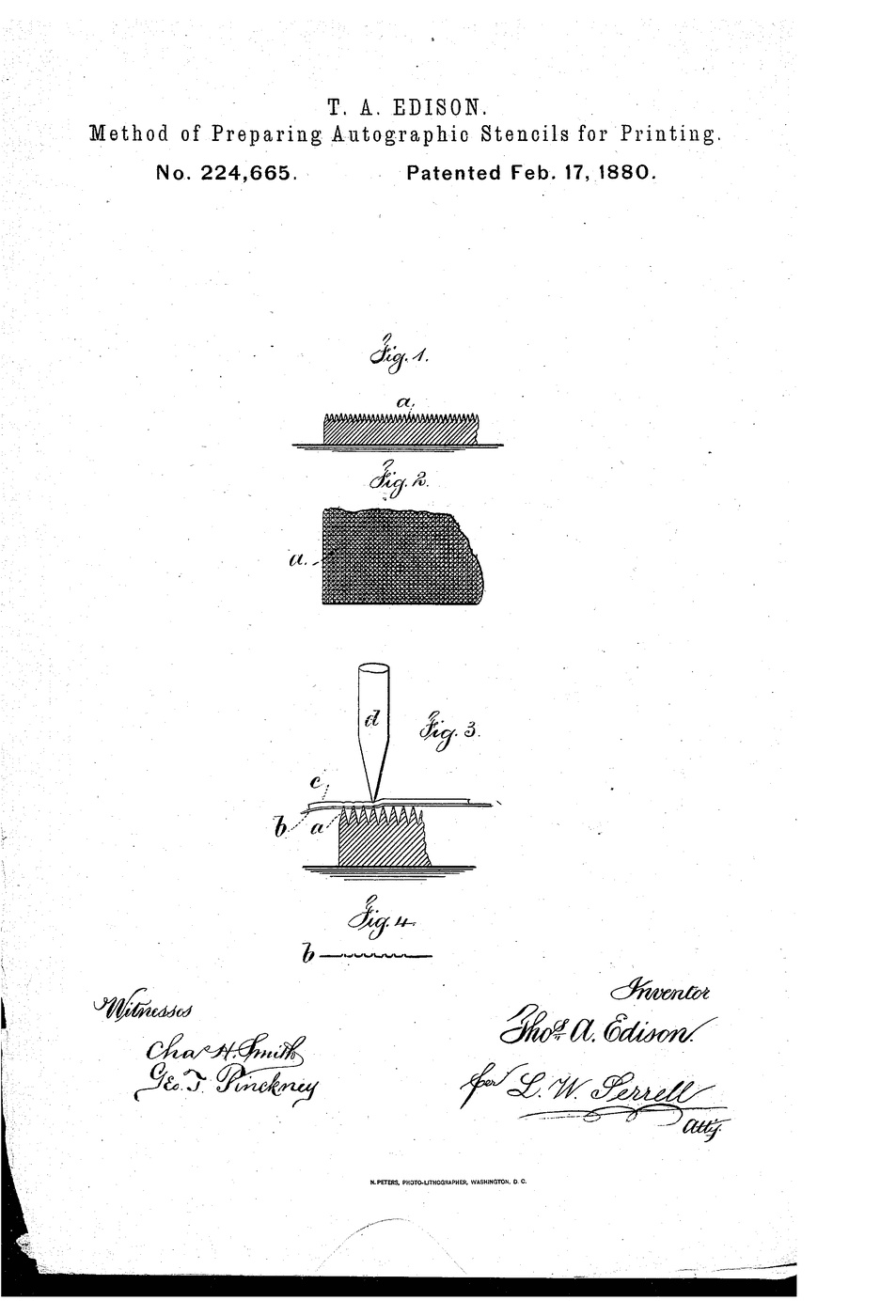
Edison's autographic stencil solved how to make a stencil — perforate a waxed sheet so ink can pass through it. It did not solve how to print from one repeatedly, quickly, and without smearing.
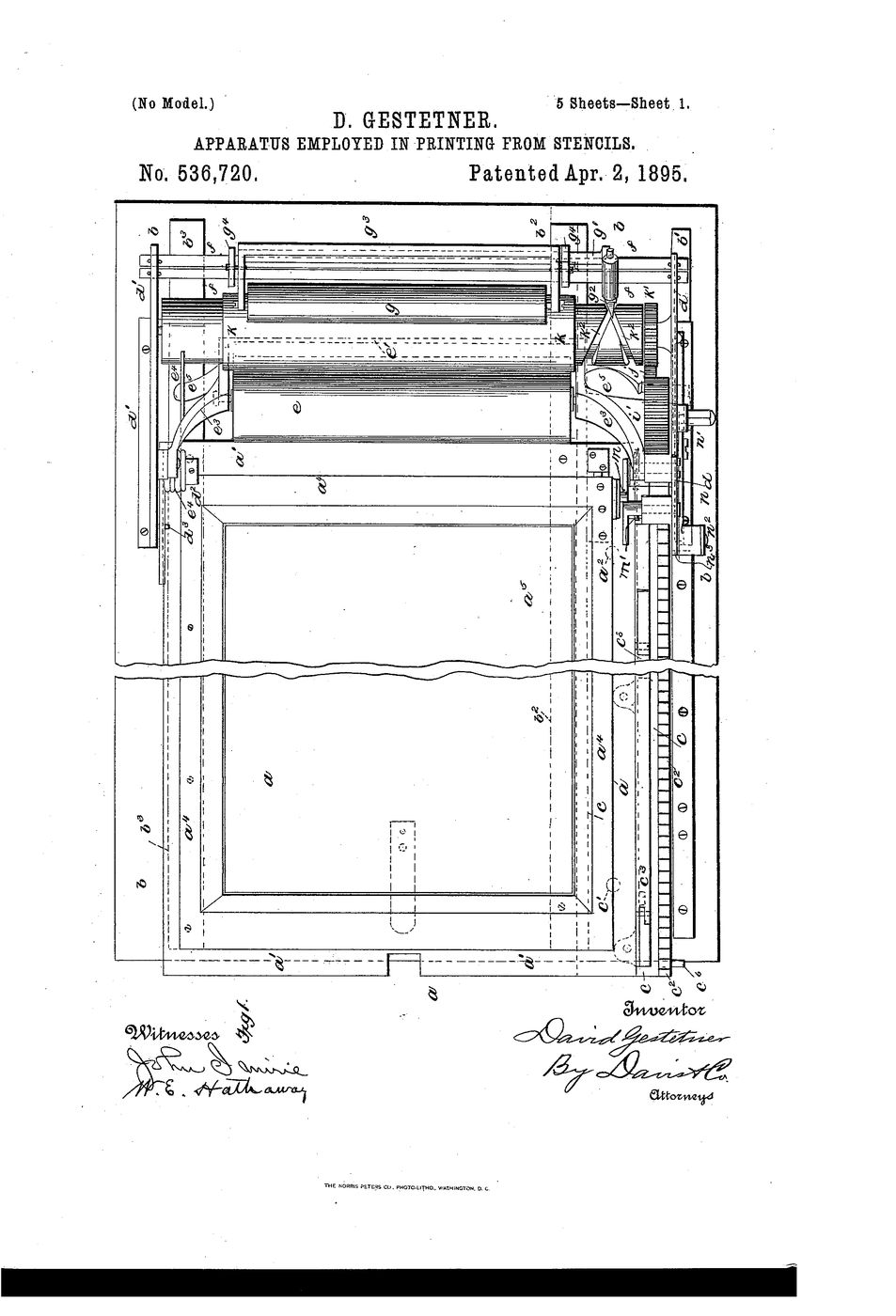
David Gestetner's US 536,720, “Apparatus employed in printing from stencils”, granted 2 April 1895 (filed 17 March 1893) claims the printing side: a movable stencil-carrying frame, a printing roller, an inking roller and an ink-distributing roller, working together. The frame travels back and forth under the roller, the roller raises and lowers automatically, sheets eject, and the stencil can be swapped quickly.
Note what this is not. Gestetner is remembered for the rotary drum duplicator, and this patent is routinely described as one. Read the claim: the stencil frame reciprocates. The rotary Cyclostyle came later. This blueprint builds what the patent actually claims.
دستورالعملها
Cut a stencil
Cut a stencil
Cut a simple shape or short word clean through a sheet of tracing paper. Ink will pass only where the sheet is gone.
مواد مورد نیاز این مرحله:
 رول کاغذ الگوبرداری1 ورق
ابزارهای مورد نیاز:
 چاقوی کاردستی
Print it once by hand, badly
Print it once by hand, badly
Lay the stencil on paper, dab ink through with the brayer, lift. Note the smearing and the uneven coverage. This is the problem Gestetner is solving.
مواد مورد نیاز این مرحله:
 جوهر چاپ قالبی2 میلیلیتر
 کاغذ1 ورق
ابزارهای مورد نیاز:
 غلتک جوهر لاستیکی
Build the stencil frame
Build the stencil frame
Cut a cardboard rectangle with a window slightly smaller than your stencil. Tape the stencil over the window, taut.
مواد مورد نیاز این مرحله:
 ورقهای مقوای کنگرهای1 ورقرول کاغذ الگوبرداری1 ورق
ابزارهای مورد نیاز:
چاقوی کاردستیBuild the travelling bed
Build the travelling bed
Glue two card rails on the board, spaced so the frame slides between them without lifting. The frame must move in a straight line only.
مواد مورد نیاز این مرحله:
ورقهای مقوای کنگرهای1 ورق چسب چوب5 میلیلیتر
ابزارهای مورد نیاز:
 تختهٔ چوبی تخت
 خطکش
خطکشMount the printing roller
Mount the printing roller
Fix a dowel across the rails at a fixed height so the brayer rolls over the stencil at constant pressure.
مواد مورد نیاز این مرحله:
چسب چوب3 میلیلیترابزارهای مورد نیاز:
 میلهٔ دوبل چوبیغلتک جوهر لاستیکی
Add an ink-distributing roller
Add an ink-distributing roller
Roll the brayer on a flat inked card several times before printing. Gestetner claims a separate distributing roller because even ink film matters more than ink quantity.
مواد مورد نیاز این مرحله:
جوهر چاپ قالبی3 میلیلیترورقهای مقوای کنگرهای1 ورقابزارهای مورد نیاز:
غلتک جوهر لاستیکیLoad a sheet under the frame
Load a sheet under the frame
Place paper on the bed, lower the frame, hold it flat.
مواد مورد نیاز این مرحله:
کاغذ1 ورقMake the first machine impression
Make the first machine impression
Draw the frame under the roller in one steady pass. Lift and inspect.
Run twenty copies without re-inking
Run twenty copies without re-inking
Repeat, re-inking only when the impression fades. Count how many copies one inking gives.
مواد مورد نیاز این مرحله:
کاغذ20 ورقTime twenty copies
Time twenty copies
Time the run and calculate copies per minute. Compare with your hand-dabbed sheet from step 2.
ابزارهای مورد نیاز:
 کرونومتر
Measure consistency, not speed
Measure consistency, not speed
Lay copies 1, 10 and 20 side by side. Judge ink density and registration. A duplicator's real product is sameness.
ابزارهای مورد نیاز:
 ذرهبین
Swap the stencil
Swap the stencil
Remove the stencil and fit a second one. Time the changeover — quick stencil removal is an explicit part of the claim.
مواد مورد نیاز این مرحله:
رول کاغذ الگوبرداری1 ورقابزارهای مورد نیاز:
کرونومترVary the roller pressure
Vary the roller pressure
Raise and lower the roller height by a millimetre either way and observe ink bleed versus starvation. Find the working window.
ابزارهای مورد نیاز:
خطکشHistory & Context
History & Context
US 536,720, “Apparatus employed in printing from stencils”, David Gestetner, granted 2 April 1895, filed 17 March 1893.
Read the claim, not the legend. Gestetner's name is attached in popular accounts to the rotary drum duplicator, and this patent is often cited as that machine. It is not. The document claims a movable stencil-carrying frame that travels back and forth beneath a printing roller — a reciprocating flatbed. The twin-cylinder rotary Cyclostyle, the Gestetner No. 3, drew on his 1903–1905 patents, a decade later.
Gestetner was born in Csorna, Hungary, and worked in London. He built an “automatic” printing device in 1891; the rotary stencil machines came at the turn of the century.
Where this sits in the chain. Edison's autographic stencil (linked) made the master. Gestetner made the press. Together they gave every school, church, union and campaign office its own printing capability for the best part of a century — until the photocopier, whose own ancestor is Carlson's electrophotography, made stencils obsolete.
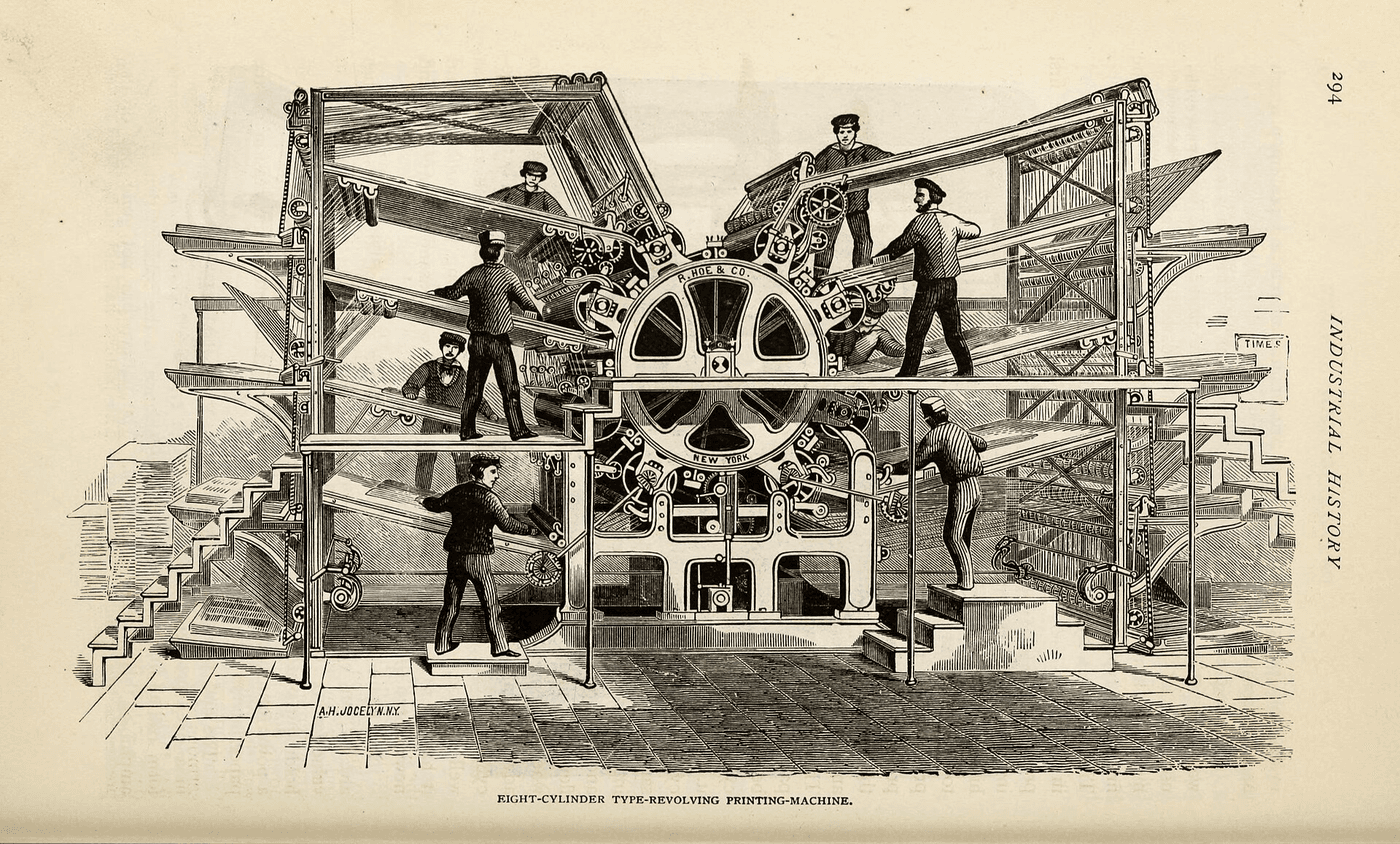
One more distinction worth keeping straight: a stencil duplicator forces ink through a perforated master. That is a fundamentally different act from relief printing, where ink sits on a raised surface, and from intaglio, where it sits in cut recesses.
مواد
5- 1 ورقجایگزین
- 5 میلیلیترجایگزین
- 22 ورقجایگزین
- جایگزین
- 8 میلیلیترجایگزین
مواد نقشههای متصل
نقشههای مرتبط
این نقشهها دانش مشترکی دارند — تکنیکها، مواد یا اصول
CC0 مالکیت عمومی
این نقشه تحت مجوز CC0 منتشر شده است. شما آزاد هستید آن را کپی، ویرایش، توزیع و برای هر هدفی بدون نیاز به اجازه استفاده کنید.
با خرید محصولات از طریق نقشه از سازنده حمایت کنید و او کمیسیون سازنده تعیین شده توسط فروشندگان، دریافت میکند یا یک نسخه جدید از این نقشه ایجاد کنید و آن را به عنوان اتصال در نقشه خود قرار دهید تا درآمد به اشتراک گذاشته شود.