هنر
زیبایی و سلامت
صنایع دستی
فرهنگ و تاریخ
سرگرمی
محیط زیست
غذا و نوشیدنی
مهندسی معکوس
علوم
ورزش
فناوری
پوشیدنیها
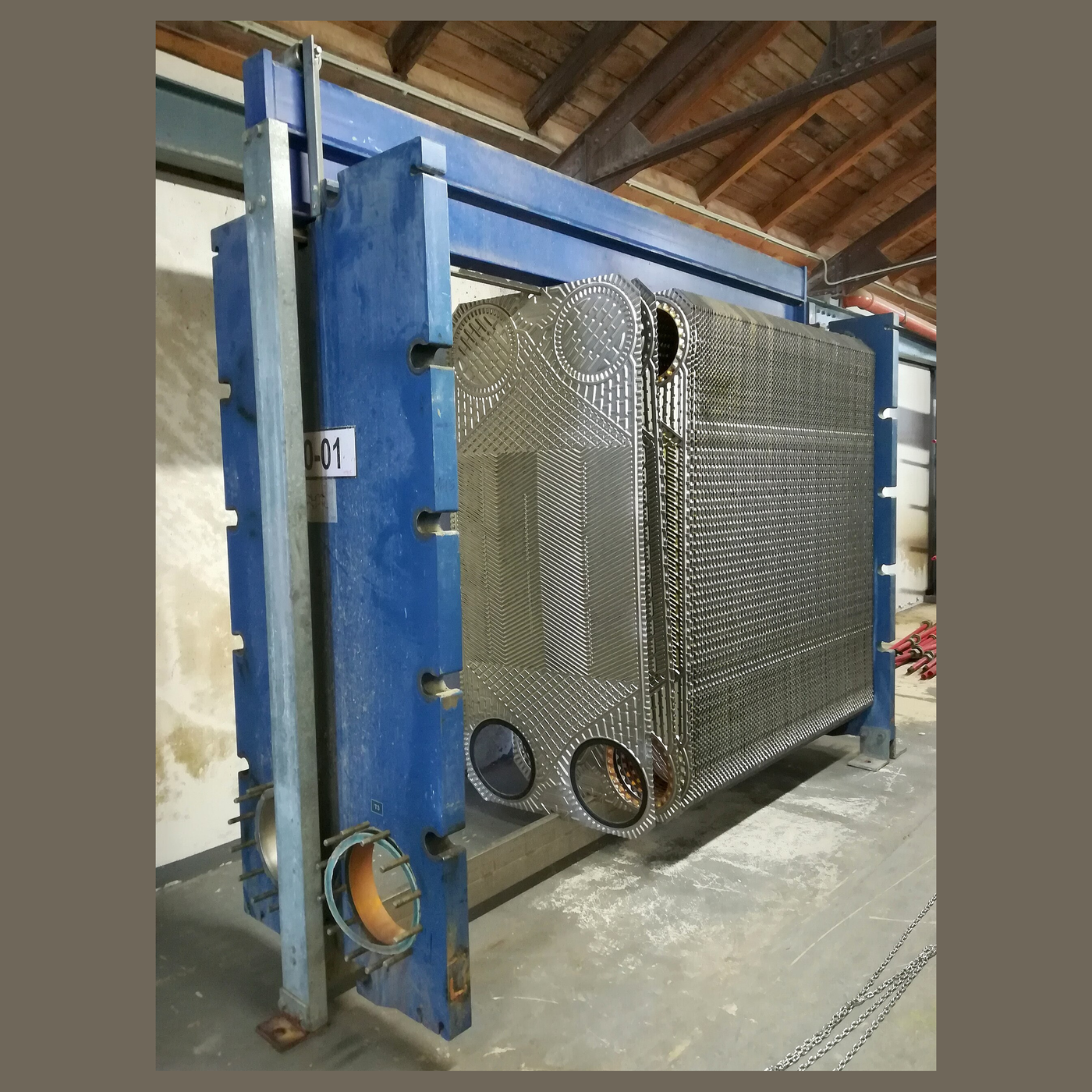

The Plate Heat Exchanger: Thin Plates, Turbulence, and a Frame You Can Open
A stack of thin pressed-metal plates, each sealed to the next by a gasket round its edge, clamped between two heavy frame plates by long bolts. Hot and cold liquids flow in alternate gaps, so every plate has hot on one face and cold on the other.
Richard Seligman's plate heat exchanger of 1923, made by his Aluminium Plate & Vessel Company (APV), was built for the dairy: milk had to be heated and cooled quickly for pasteurisation, and the equipment had to come apart for cleaning every day. Thin corrugated plates give very high heat transfer in a small space; the gasketed frame opens with a spanner.
This rung works out where the size advantage comes from, and builds a two-channel plate exchanger from copper sheet, printed gaskets and a clamped frame.
متوسط
About 6 hours
دستورالعملها
1
1
Where the high U comes from, and what fouling costs
Where the high U comes from, and what fouling costs
در حال بارگذاری دفترچهٔ Jupyter…
2
2
Plate exchangers run in counterflow
Plate exchangers run in counterflow
A plate exchanger's ports are arranged so the two liquids run in opposite directions through alternate gaps. The embedded blueprint explains why, and measures it on a tube-in-tube exchanger.
3
3
Build a two-channel plate exchanger
Build a two-channel plate exchanger
Cut three copper sheets 150 × 100 mm. The middle one is the heat-transfer plate; the outer two are blanks. Print two gasket frames in TPU, 3 mm thick, each the outline of the plate with a 10 mm border, so each frame encloses a flow gap.
Stack: acrylic end plate / copper blank / gasket frame / copper plate / gasket frame / copper blank / acrylic end plate. Drill four corner bolt holes through everything and clamp with threaded rod and wing nuts, tightening evenly.
Drill and fit hose tails so that gap 1 is fed at the top-left and drains at the bottom-right, and gap 2 is fed at the bottom-right and drains at the top-left — counterflow across the plate. Add ridges to the gasket frames or press shallow chevrons into the copper with a blunt punch to break up the flow.
مواد مورد نیاز این مرحله:
 ورق مس1 ورق
 فیلامنت انعطافپذیر TPU40 گرم
 ورق آکریلیک1 ورق
 میلهٔ رزوهشده1 قطعه
 مهره پروانهای4 قطعه
 مجموعه اتصالات لوله پیویسی1 مجموعه
 چسب درزگیر سیلیکون1 قطعه
ابزارهای مورد نیاز:
 چاپگر سهبعدی رشتهای (FDM)
 دریل شارژی
 مجموعه مته
 خطکش
خطکش آچار فرانسه
 دستکش کار چرمی
4
4
Test it, then open it
Test it, then open it
Run hot water through one gap and cold through the other at equal, timed flows, and read the four temperatures with the thermometer (or reuse the four-probe logger from the counterflow rung). Work out the heat carried by each side.
Now the reason the design exists: undo the wing nuts, lift the stack apart and look. Any sediment, scale or film is on the copper where you can wipe it. Wipe, restack and tighten. An exchanger you can open is an exchanger you can keep clean — which in a dairy is the difference between a safe product and a spoiled one.
Retighten evenly: a gasket squeezed harder on one side leaks on the other.
مواد مورد نیاز این مرحله:
 آب30 لیتر
ابزارهای مورد نیاز:
 کتری برقی شیشهای
 سطل
سطل پارچ اندازهگیری
 کرونومتر
 دماسنج آشپزخانهآچار فرانسه
5
5
History and context
History and context
**Richard Seligman, 1923** — the first commercially successful plate heat exchanger, made by the Aluminium Plate & Vessel Company he had founded in London in 1910, for the high-temperature short-time pasteurisation of milk. No patent number is asserted here: it could not be read from a primary source, and the design is fully documented.
Plate exchangers now run in food, brewing, district heating, heat pumps and chemical plant; brazed versions with no gaskets at all are the small cube in many domestic boilers.
**Honest limits.** Gaskets limit the temperature and pressure, and the chemicals they can meet. Narrow gaps clog on fibrous or particle-laden liquids, where shell-and-tube exchangers still win. And the high pressure drop of those turbulent gaps costs pumping power.
مواد
8- 1 ورقجایگزین
- 40 گرمجایگزین
- 1 ورقجایگزین
- 1 قطعهجایگزین
- مهره پروانهای10% کمیسیون4 قطعهجایگزین
- 1 مجموعهجایگزین
- 1 قطعهجایگزین
- 30 لیترجایگزین
ابزارهای لازم
11- جایگزین
- 1 vendor sell this, none ship to you yetجایگزین
- جایگزین
- جایگزین
- جایگزین
- جایگزین
- جایگزین
- جایگزین
- جایگزین
- جایگزین
- جایگزین
نقشههای مرتبط
این نقشهها دانش مشترکی دارند — تکنیکها، مواد یا اصول
Counterflow: The Same Area Does More When the Streams Run Opposite
توسط Emma
مکانیک
۱۷
۰
۰
۰
۰
۰

The Economiser: The Heat Still Going Up the Chimney
توسط Martin
مکانیک
۱۵
۰
۰
۰
۰
۰
The Centrifugal Pump: Speed Squared, and Why It Cannot Lift Air
توسط Emma
مکانیک
۱۸
۰
۰
۰
۰
۰
The Ferrule Fitting: Gripping and Sealing With One Nut
توسط Emma
ابزار
۲۱
۰
۰
۰
۰
۰
CC0 مالکیت عمومی
این نقشه تحت مجوز CC0 منتشر شده است. شما آزاد هستید آن را کپی، ویرایش، توزیع و برای هر هدفی بدون نیاز به اجازه استفاده کنید.
با خرید محصولات از طریق نقشه از سازنده حمایت کنید و او کمیسیون سازنده تعیین شده توسط فروشندگان، دریافت میکند یا یک نسخه جدید از این نقشه ایجاد کنید و آن را به عنوان اتصال در نقشه خود قرار دهید تا درآمد به اشتراک گذاشته شود.