همکاری
هنر
زیبایی و سلامت
صنایع دستی
فرهنگ و تاریخ
سرگرمی
محیط زیست
غذا و نوشیدنی
مهندسی معکوس
علوم
ورزش
فناوری
پوشیدنیها

Thompson (Nlaka'pamux) Smoked Buckskin: Scraped on a Leaning Poplar Log with a Deer Ulna, Soap-Soaked, Wrung, Pounded Soft, Smoked (Teit, 1900)
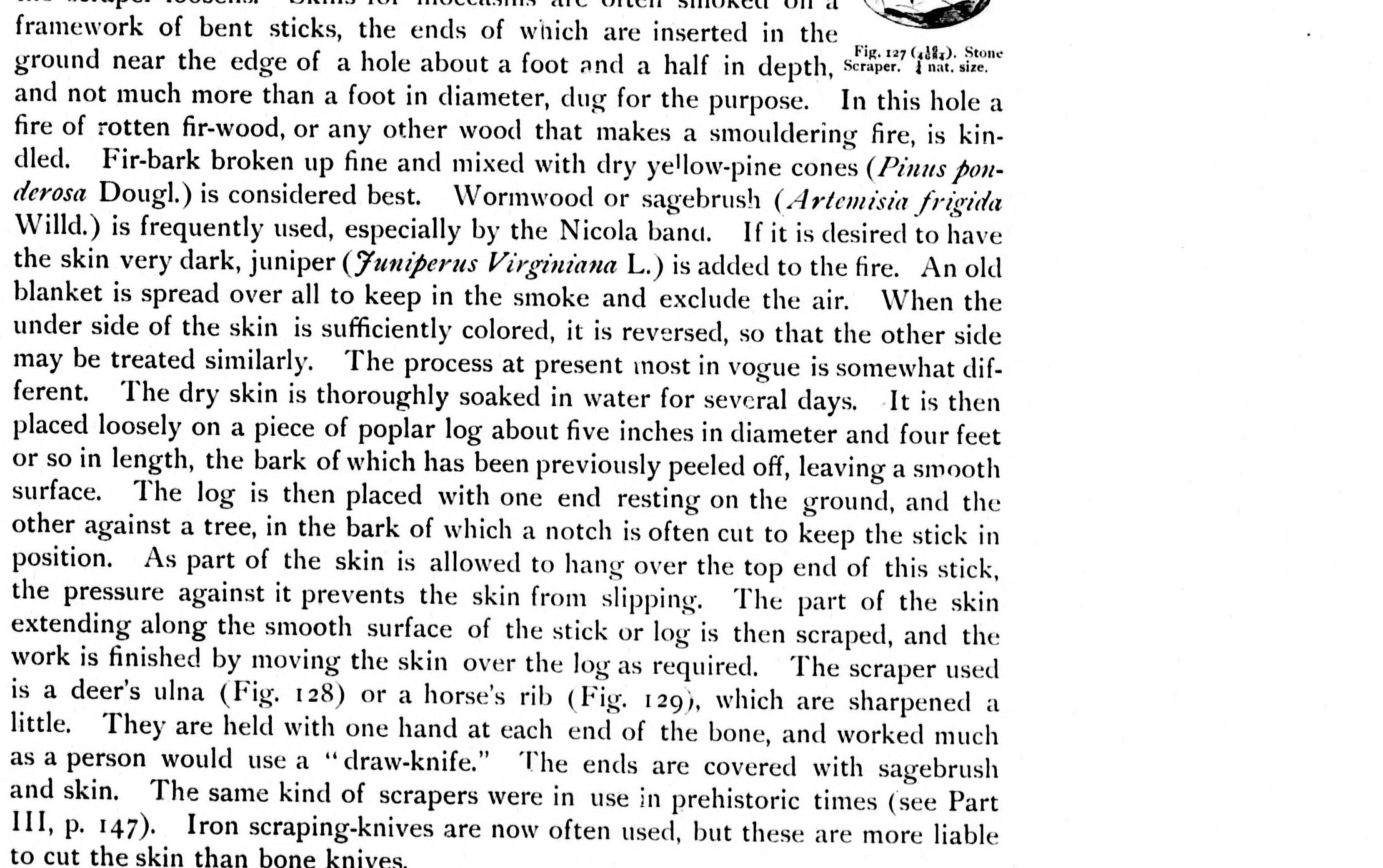
The Thompson (Nlaka'pamux) buckskin James Teit saw made around 1900: a soaked hide scraped on a peeled poplar log leaning against a tree with a deer's ulna or a horse rib used like a draw-knife, smoked over a small pit of smouldering rotten wood, soaked a day in soapy water, wrung with dry grass on a log and stick, pounded soft on a frame and smoked again.
پیشرفته
About a week
دستورالعملها
1
1
Read Teit
Read Teit
"It is said that, after being smoked, the skin does not shrink so much when it gets wet as it otherwise would."
2
2
Soak and set up the log
Soak and set up the log
Soak the dry skin in water for several days. Peel a poplar log about 5 in. (13 cm) thick and 4 ft (1.2 m) long; stand one end on the ground and lean the other against a tree, in a notch cut in its bark.
مواد مورد نیاز این مرحله:
 پوست خام1 قطعه
 آب1 قطعه
 تیرک چوب تر1 قطعه
ابزارهای مورد نیاز:
 کندهٔ گوشتگیری پوست
3
3
Scrape both sides
Scrape both sides
Lay the skin loosely over the log with some hanging over the top so the pressure holds it. Scrape the flesh side with a slightly sharpened deer ulna or horse rib held at both ends like a draw-knife, moving the skin as you go; then the hair side, taking the dark outer skin off with the hair. Bone cuts the skin less than iron.
ابزارهای مورد نیاز:
 کارد گوشتگیری پوستکندهٔ گوشتگیری پوست
4
4
Dry and smoke
Dry and smoke
Hang it over a pole to dry. Dig a hole about 1½ ft (45 cm) deep and a little over 1 ft (30 cm) across, light a smouldering fire of rotten fir wood (fir bark with dry pine cones is best; juniper for a very dark colour), set a frame of bent sticks over it, spread the skin on it and cover all with an old blanket. Turn it to smoke the other side.
مواد مورد نیاز این مرحله:
 چوب پوسیده1 قطعه
 ترکهٔ بید1 قطعه
ابزارهای مورد نیاز:
 بیل
 گودال آتش
 پارچهٔ کرباس
 تیرک چوبی
5
5
Soap, wring and pound
Soap, wring and pound
Soak it 24 hours or more in warm water with a strong soap solution. Roll it lengthwise with a little dry grass, tie one end to a log with a rope, fold the other round a short stout stick and turn until the water is wrung out. Stretch it on a frame and pound the inside until quite dry and soft (warm it by a fire in cold weather), then smoke it again.
مواد مورد نیاز این مرحله:
 صابون1 قطعهآب1 قطعه
 یونجهٔ خشک1 قطعه
ابزارهای مورد نیاز:
 دیگ بزرگ رنگکردن
 طناب
 پاروی چوبیتیرک چوبی
6
6
Troubleshooting
Troubleshooting
Smoked buckskin troubleshooting.
Flow
Loading...
7
7
History and honest limits
History and honest limits
From James Teit, *The Thompson Indians of British Columbia*, **Memoirs of the American Museum of Natural History, Jesup North Pacific Expedition** vol. I part IV (1900), pp. 185-186 and Figs. 127-129 (checked on the archive.org scan cihm_16242). Some said smoking came from the Okanagon; many held that a skin rubbed with brains needs no smoking (see the Navajo brain-tan blueprint). Corncob smoke gave a bright yellow. Frame size and hay for the dry grass are ours.
مواد
7- 1 قطعهجایگزین
- 2 قطعهجایگزین
- 1 قطعهجایگزین
- 1 قطعهجایگزین
- 1 قطعهجایگزین
- 1 قطعهجایگزین
- 1 قطعهجایگزین
این نقشه میسازد
نقشههای مرتبط
این نقشهها دانش مشترکی دارند — تکنیکها، مواد یا اصول
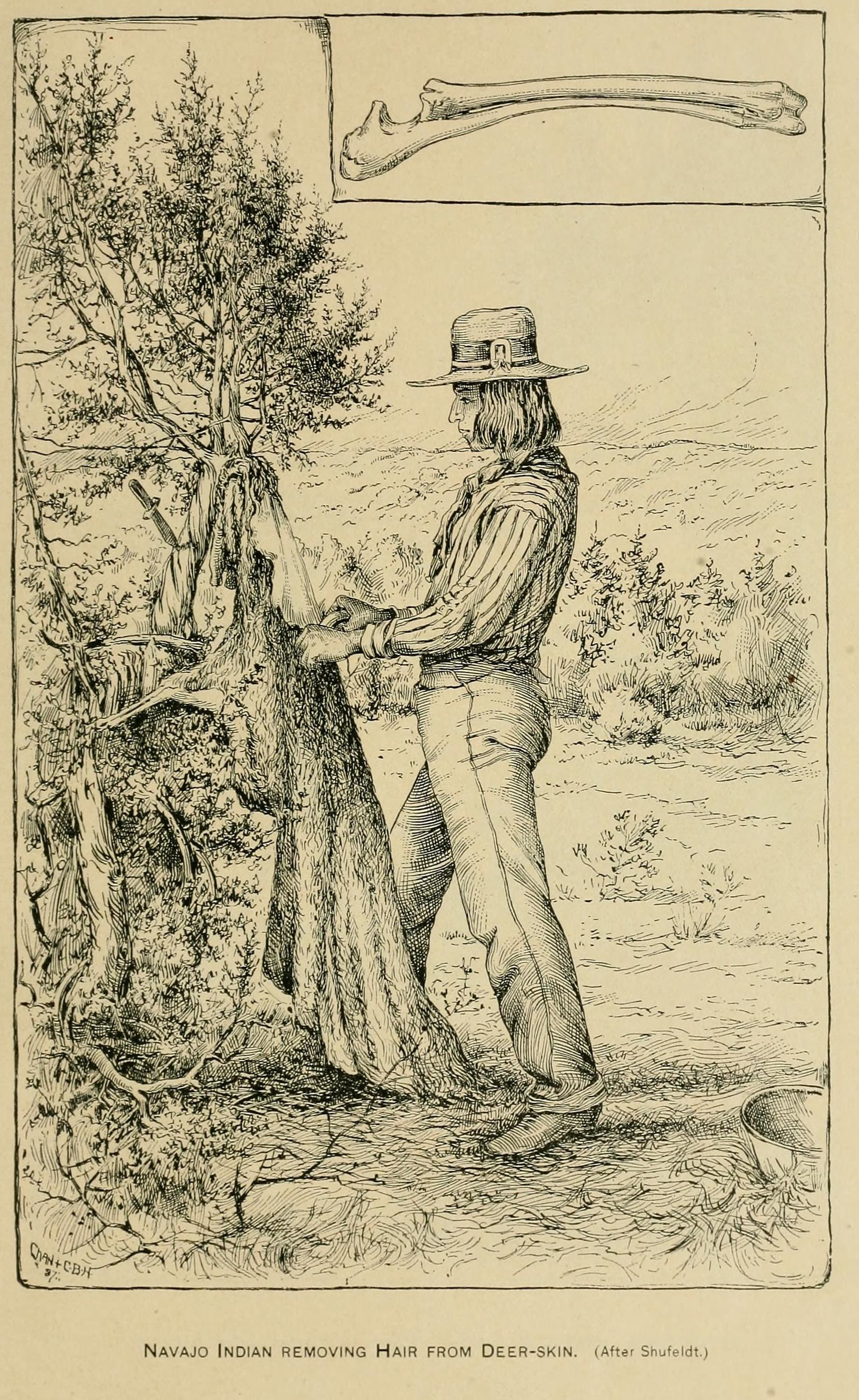
Navajo Buckskin: Hair Shaved with the Deer's Own Foreleg Bone, Brains Rubbed In, Wrung on a Tree, Worked Dry over the Feet (Shufeldt, 1888)
توسط Tex
منسوجات و چرم
۴
۰
۰
۰
۰
۰
Blackfoot Sinew Thread: Dried Leg and Neck Sinew Shredded, Softened and Rolled Between the Palms (Wissler, 1910)
توسط Tex
منسوجات و چرم
۶
۰
۰
۰
۰
۰
CC0 مالکیت عمومی
این نقشه تحت مجوز CC0 منتشر شده است. شما آزاد هستید آن را کپی، ویرایش، توزیع و برای هر هدفی بدون نیاز به اجازه استفاده کنید.
با خرید محصولات از طریق نقشه از سازنده حمایت کنید و او کمیسیون سازنده تعیین شده توسط فروشندگان، دریافت میکند یا یک نسخه جدید از این نقشه ایجاد کنید و آن را به عنوان اتصال در نقشه خود قرار دهید تا درآمد به اشتراک گذاشته شود.