هنر
زیبایی و سلامت
صنایع دستی
فرهنگ و تاریخ
سرگرمی
محیط زیست
غذا و نوشیدنی
مهندسی معکوس
علوم
ورزش
فناوری
پوشیدنیها
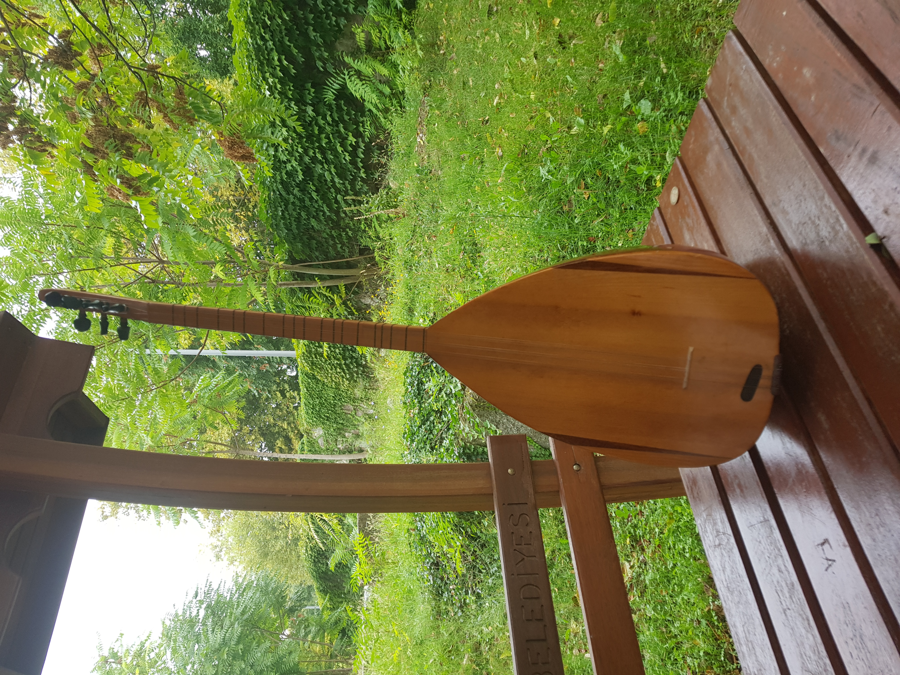
Sakhalinio · CC BY-SA 4.0


Building a Bağlama — The Turkish Long-Necked Lute with Movable Frets
Build a bağlama, Turkey's long-necked lute: a teardrop bowl body, a long neck, and frets that are TIED on with nylon so they slide — because Turkish music is microtonal and the movable frets let you place the notes between the notes. A serious maker build in the fretted string: how frets turn simple length ratios into a scale.
متوسط
Several hours over a few sessions
دستورالعملها
1
1
A lute whose frets slide
A lute whose frets slide
The bağlama is Turkey's long-necked lute: a teardrop bowl, a long fretted neck, and doubled strings. Its frets are TIED on and can slide, so it can play the microtones — the notes between the notes — of Turkish music.
2
2
Make the bowl body
Make the bowl body
Shape a deep teardrop bowl — carved from a block, or built up from thin wooden staves glued edge to edge. This bowl is the resonator.
مواد مورد نیاز این مرحله:
 تختهٔ چندلایهٔ توس بالتیک1 قطعه
 چسب چوب PVA1 قطعه
ابزارهای مورد نیاز:
 ارهٔ آهنبر
3
3
Fit the soundboard
Fit the soundboard
Glue a thin, light wooden soundboard over the open face of the bowl, with a few small holes to let the sound out. A light top vibrates best.
مواد مورد نیاز این مرحله:
 تختهٔ چوب نرم خشک1 قطعهچسب چوب PVA1 قطعه
4
4
Fit the long neck
Fit the long neck
Fix a long, straight neck to the bowl. The bağlama's neck is long on purpose, to give it a wide range of notes.
مواد مورد نیاز این مرحله:
 میلهٔ دوبل چوبی1 قطعهچسب چوب PVA1 قطعه
5
5
Fit the tuning pegs
Fit the tuning pegs
Bore holes in the pegbox at the end of the neck and fit the tuning pegs — a bağlama usually carries six or seven strings grouped in three courses.
مواد مورد نیاز این مرحله:
 گوشی کوک6 قطعه
ابزارهای مورد نیاز:
 درفش
درفش6
6
String it
String it
Carve a bridge and a nut, then run the strings from the bridge on the soundboard up the neck to the pegs, grouped in three close courses.
مواد مورد نیاز این مرحله:
 سیم فولادی ساز ۰٫۰۳۲ اینچ1 قطعه
ابزارهای مورد نیاز:
 چاقوی اسلوید
7
7
Tie on the frets
Tie on the frets
Tie loops of nylon line tightly around the neck as frets. Unlike metal frets set into the wood, these are MOVABLE — you can slide them along the neck.
مواد مورد نیاز این مرحله:
 زه نایلونی پرده1 قطعه
8
8
Place the frets by ratio
Place the frets by ratio
Set the main frets so that pressing behind each one shortens the string to a simple fraction of its length — halfway for the octave, two-thirds for the fifth, three-quarters for the fourth.
9
9
Add the microtonal frets
Add the microtonal frets
Now add extra frets BETWEEN the usual ones. Turkish music uses microtones that sit between the Western keys, and the sliding tied frets let you place them exactly.
10
10
Tune the courses
Tune the courses
Tune the three courses to the bağlama's tuning. Doubling the strings in each course makes the sound fuller and richer.
11
11
Play with a plectrum
Play with a plectrum
Strum and pick the strings with a thin, flexible plectrum, pressing behind the frets to choose notes and sliding between the microtones.
12
12
Compendium — frets, ratios and microtones
Compendium — frets, ratios and microtones
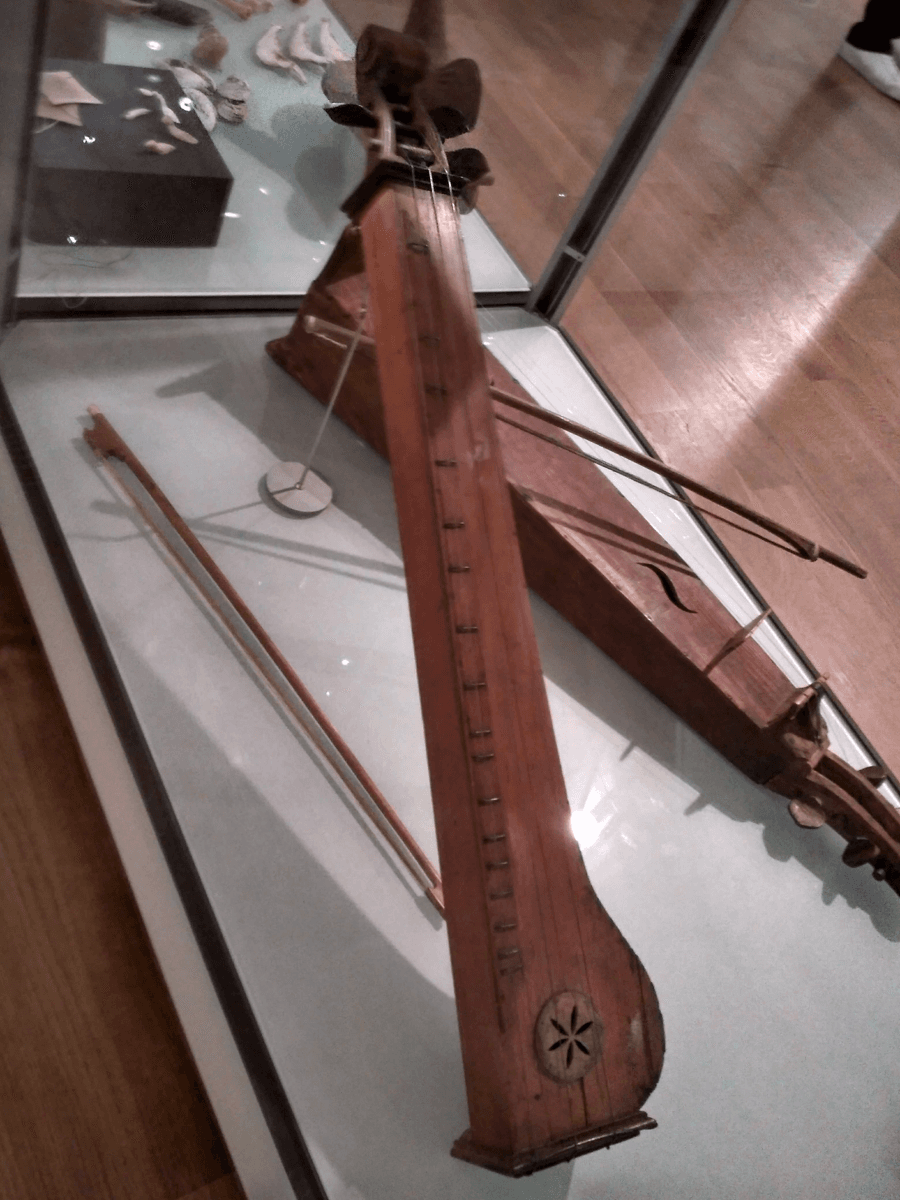
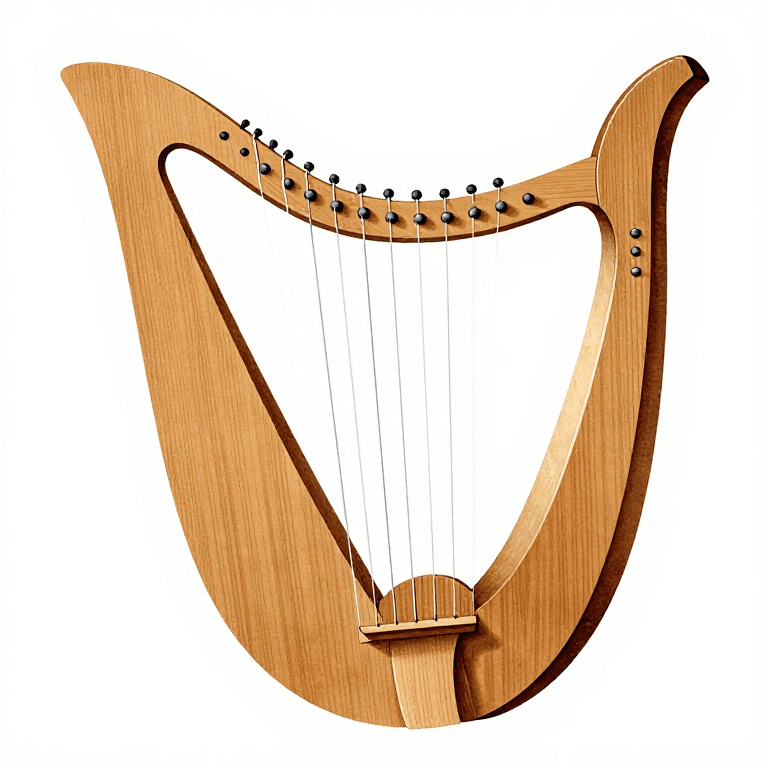
A fret is simply a hard ridge that stops a string at a fixed point so it always sounds the same note. Pressing a string behind a fret shortens its vibrating length, and a shorter string vibrates faster and sounds higher: halve the length and the pitch rises an octave, take two-thirds of it for a fifth, three-quarters for a fourth. Those simple whole-number ratios are the skeleton of every scale, and frets set them permanently under your fingers so a player can leap accurately between notes. But the bağlama does something a guitar cannot: its frets are not metal bars fixed in the wood but loops of nylon or gut tied round the neck, and they can be SLID. That is because Turkish and Ottoman music is microtonal — it uses notes that fall in the cracks between the Western twelve, like the 'neutral' second and third — and movable tied frets let a player place those in-between pitches exactly, and re-tune the whole instrument to a different makam (mode) just by sliding them. The teardrop bowl and its light soundboard amplify the strings as in any lute or guitar, and the long neck gives the bağlama a wide range. It belongs to the saz family of Turkey, Central Asia and the Balkans — cousins of the lute, the oud and, distantly, the guitar. On Youblob its fretted kin is the langspil, and its deeper ancestor is the lyre, from the day someone first ran a string over a neck and learned to stop it at a fret.
مواد
7- جایگزین
- 1 قطعهجایگزین
- 1 قطعهجایگزین
- 1 قطعهجایگزین
- 6 قطعهجایگزین
- جایگزین
- 1 قطعهجایگزین
ابزارهای لازم
3- جایگزین
- جایگزین
- جایگزین
نقشههای مرتبط
این نقشهها دانش مشترکی دارند — تکنیکها، مواد یا اصول
CC0 مالکیت عمومی
این نقشه تحت مجوز CC0 منتشر شده است. شما آزاد هستید آن را کپی، ویرایش، توزیع و برای هر هدفی بدون نیاز به اجازه استفاده کنید.
با خرید محصولات از طریق نقشه از سازنده حمایت کنید و او کمیسیون سازنده تعیین شده توسط فروشندگان، دریافت میکند یا یک نسخه جدید از این نقشه ایجاد کنید و آن را به عنوان اتصال در نقشه خود قرار دهید تا درآمد به اشتراک گذاشته شود.