

هنر
زیبایی و سلامت
صنایع دستی
فرهنگ و تاریخ
سرگرمی
محیط زیست
غذا و نوشیدنی
آینده سبز
مهندسی معکوس
علوم
ورزش
فناوری
پوشیدنی‌ها
Making Paper from Wood Pulp — The Groundwood Process That Made Paper Cheap
Glorfindel

ایجاد شده توسط

Glorfindel

25. ژوئن 2026US
۳
۰
۰
۰
۰

Making Paper from Wood Pulp — The Groundwood Process That Made Paper Cheap

For nearly two thousand years, paper was made from rags — worn-out linen and cotton beaten to pulp. It was good paper, but rags were scarce, and as literacy spread the world simply ran out of them. The answer, found in the 1840s, was to make paper from the most abundant fibre on Earth: wood.

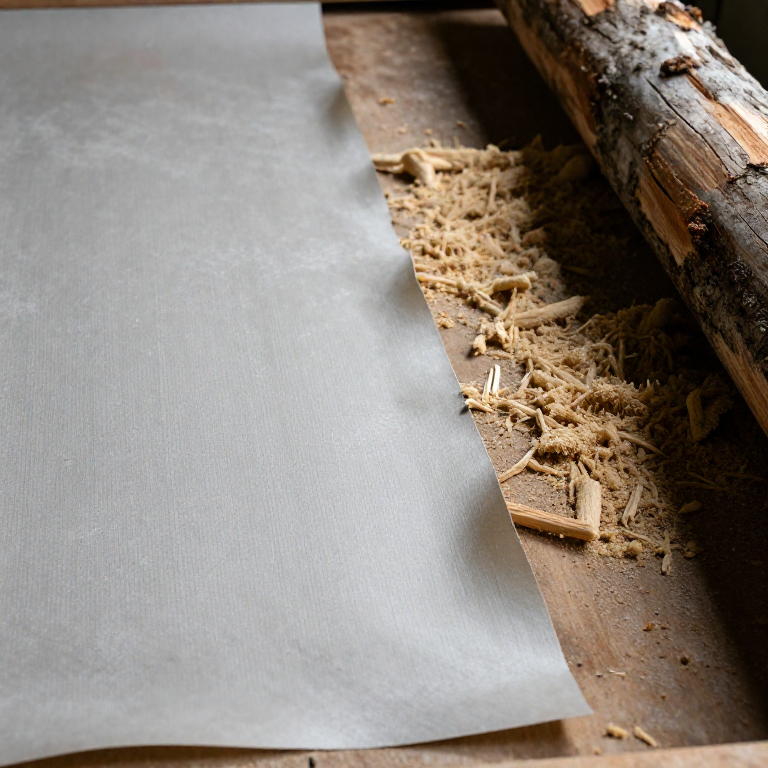
The simplest method is mechanical groundwood pulp. A log is pressed against a wet, spinning grindstone, which tears the wood into a slush of short fibres. Screened, refined, and matted on a wire, those fibres dry into paper. It is fast and cheap and turns a forest into newsprint — which is exactly what put a daily newspaper into every household.

Groundwood pulp keeps the wood's lignin, so the paper is weak and yellows with age, as old newspapers show. Removing the lignin by chemical pulping gives the white, durable paper of books — a more advanced step that built on this one. But it was cheap wood paper that truly democratised the printed word.

متوسط
Half a day for a batch of sheets

دستورالعمل‌ها

1

Understand the shift to wood

Rag paper was limited by the supply of old cloth. Wood pulp freed paper from that limit by using a fibre there is almost no end of. The goal is to break wood down into individual fibres and re-mat them into a sheet — the same idea as rag paper, but with a far cheaper raw fibre.
2

Select softwood

Choose softwood logs such as spruce, fir, or poplar. Their fibres are long and flexible, which makes stronger paper than short-fibred hardwoods. Cut the wood fresh — dry wood grinds to dust rather than fibre.

مواد مورد نیاز این مرحله:

Softwood LogsSoftwood Logs5 kg
3

Debark the logs

Strip all the bark from each log with a drawknife. Bark contains dark substances and grit that discolour and weaken the pulp, so clean white wood gives the best paper.

ابزارهای مورد نیاز:

DrawknifeDrawknife
4

Grind the wood to pulp

Press the log lengthwise against a rotating grindstone kept constantly wet. The abrasion shreds the surface into a slush of wood fibres while the water washes them away and stops the wood from scorching. This mechanical tearing is what gives groundwood pulp its name.

مواد مورد نیاز این مرحله:

WaterWater40 liter

ابزارهای مورد نیاز:

GrindstoneGrindstone
5

Screen the pulp

Wash the fibre slurry over a screen to remove splinters, shives, and grit. What passes through is a smooth suspension of fine fibres in water — the raw stock for paper. What is caught is sent back to be ground finer.

ابزارهای مورد نیاز:

SieveSieve
6

Refine the stock

Beat or refine the pulp gently in plenty of water to fray and bond the fibres so they will knit into a strong sheet. Stop before it turns to mush — over-beaten groundwood loses what little strength it has.
7

Add sizing and filler

Stir in a little rosin size set with alum so the finished paper resists ink feathering, and optionally some fine clay as a filler for opacity and smoothness. These additives turn raw pulp into writable, printable paper.

مواد مورد نیاز این مرحله:

RosinRosin50 g
Potassium AlumPotassium Alum30 g
8

Form the sheet

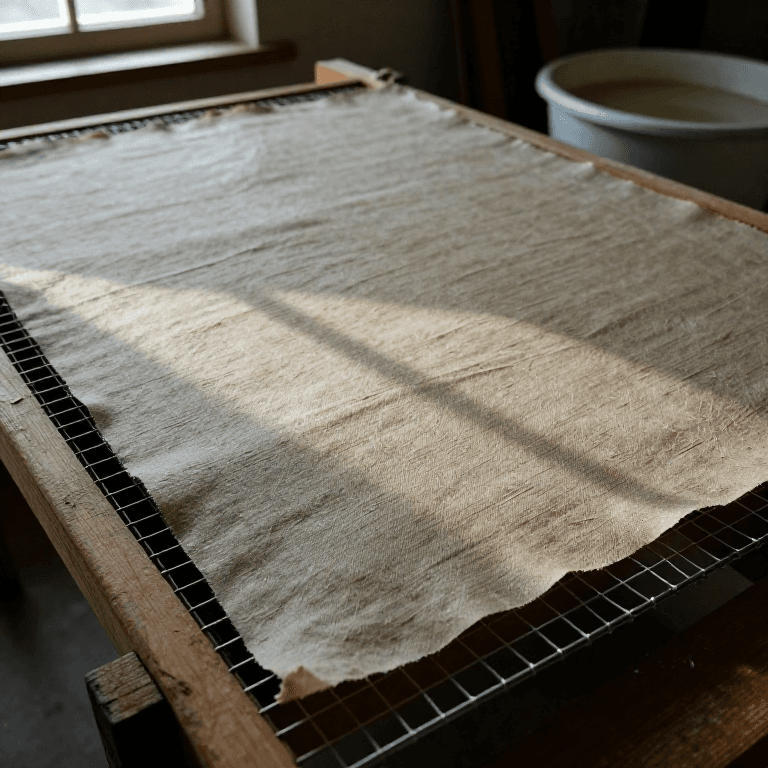
Dip a mould — a fine wire screen in a frame — into the vat of stock and lift it level so a thin even layer of fibres drains and mats on the wire. By hand this makes single sheets; the Fourdrinier machine does the same on an endless moving wire to make a continuous web.

ابزارهای مورد نیاز:

Paper MouldPaper Mould
9

Couch and press

Turn the wet sheet out onto a felt — called couching — and stack felts and sheets together. Press the stack hard to squeeze out most of the water and consolidate the fibres into a coherent damp sheet.

مواد مورد نیاز این مرحله:

FeltFelt2 piece

ابزارهای مورد نیاز:

PressPress
10

Dry the sheets

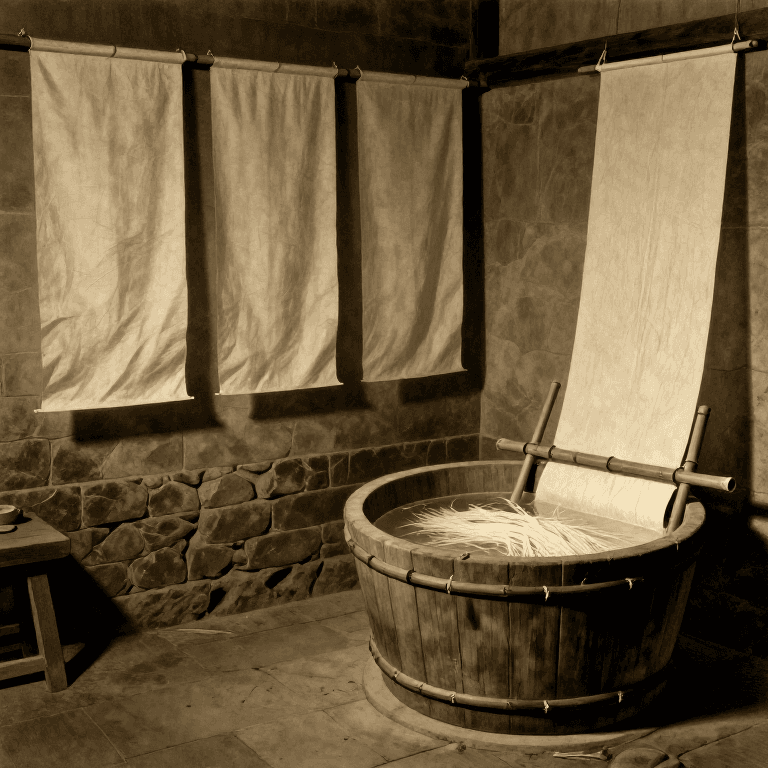
Hang or lay the pressed sheets to dry, ideally under slight tension or between boards so they dry flat rather than cockling. As the last water leaves, the fibres bond tightly and the mat becomes paper.
11

Finish the paper

Smooth the dried paper by pressing it between hot polished plates or rollers — calendering — then trim to size. The result is cheap, lightweight paper, perfect for newspapers and everyday printing.

ابزارهای مورد نیاز:

PressPress
12

Know its strength and weakness

Groundwood paper is cheap and abundant but, because it still holds the wood's lignin, it grows brittle and yellow over years — the fate of old newsprint. For lasting white paper, the lignin must be dissolved out by chemical pulping, the next advance built on this foundation.

مواد

5

ابزارهای لازم

5

نقشه‌های مرتبط

این نقشه‌ها دانش مشترکی دارند — تکنیک‌ها، مواد یا اصول

CC0 مالکیت عمومی

این نقشه تحت مجوز CC0 منتشر شده است. شما آزاد هستید آن را کپی، ویرایش، توزیع و برای هر هدفی بدون نیاز به اجازه استفاده کنید.

با خرید محصولات از طریق نقشه از سازنده حمایت کنید و او کمیسیون سازنده تعیین شده توسط فروشندگان، دریافت می‌کند یا یک نسخه جدید از این نقشه ایجاد کنید و آن را به عنوان اتصال در نقشه خود قرار دهید تا درآمد به اشتراک گذاشته شود.

بحث و گفتگو

(0)

ورود برای شرکت در بحث

در حال بارگذاری نظرات...