Samvinna
LIST
FEGURÐ OG VELLÍÐAN
HANDVERK
MENNING OG SAGA
SKEMMTUN
UMHVERFI
MATUR OG DRYKKUR
ÖFUGVERKFRÆÐI
VÍSINDI
ÍÞRÓTTIR
TÆKNI
KLÆÐANLEG TÆKNI
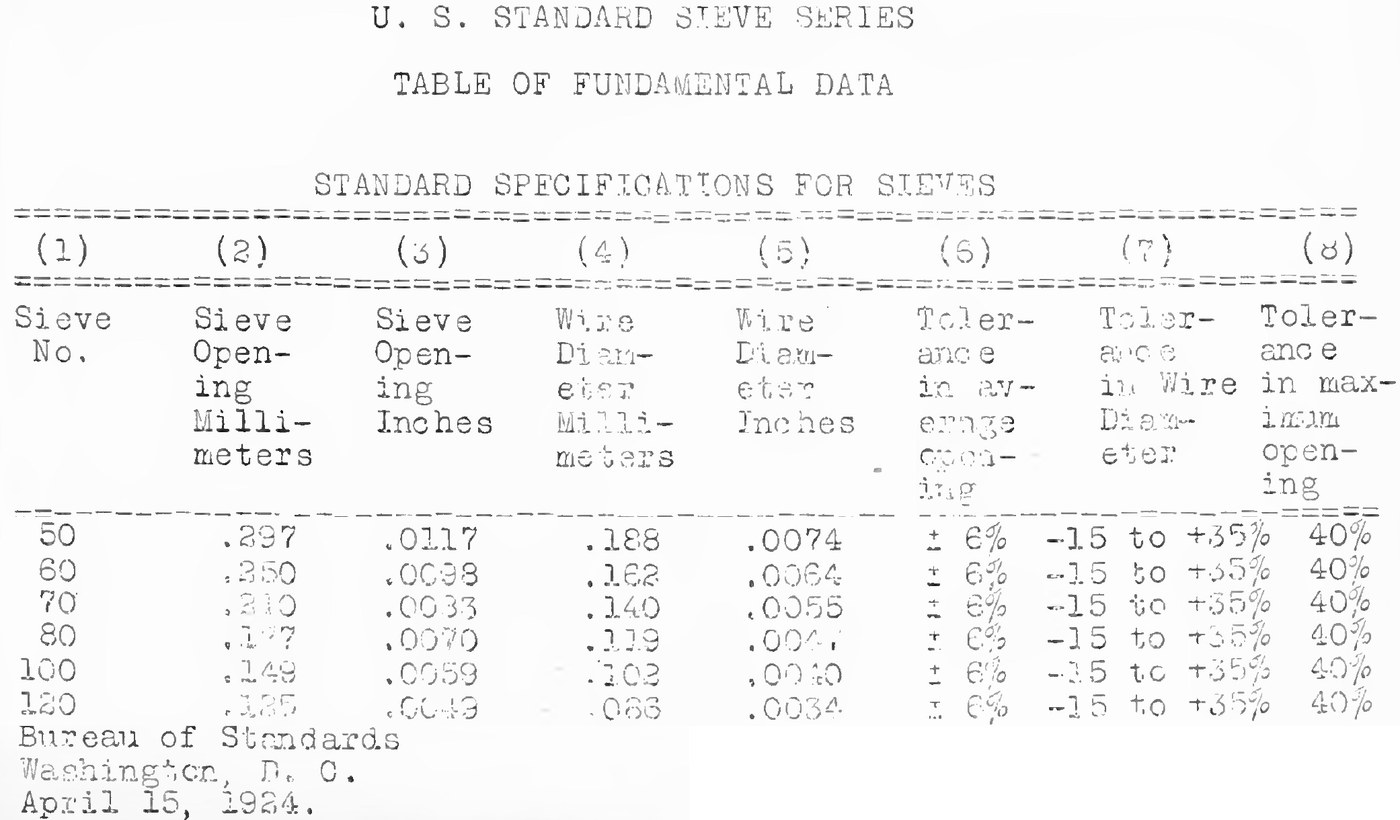

60-Mesh and 80-Mesh Sieves: U.S. Standard Sieves No. 60 and No. 80 (Bureau of Standards, 1924)
Two standard testing sieves made the same way; only the wire and the opening change with the sieve number. Plain-woven brass or bronze wire cloth is soldered smoothly into a round frame about 20 cm (8 in) across.
No. 60 has 0.250 mm openings (the 60-mesh sieve); No. 80 has 0.177 mm openings (the 80-mesh sieve). The finer the cloth, the finer the grains that pass.
Source: Bureau of Standards, Letter Circular 74, Standard Specifications for Sieves (revised 1924). Unknown: the frame metal and the weaving. Picture: the Bureau's table.
Miðlungs
Unknown
Leiðbeiningar
1
1
Choose the sieve number
Choose the sieve number
The sieve number sets the wire and the opening (Bureau of Standards table, 1924):
No. 60: opening 0.250 mm (0.0098 in), wire 0.162 mm (0.0064 in).
No. 80: opening 0.177 mm (0.0070 in), wire 0.119 mm (0.0047 in).
The opening is the clear space between adjacent wires. No. 60 passes grains under 0.250 mm; No. 80 passes grains under 0.177 mm.
2
2
Weave the wire cloth
Weave the wire cloth
Weave plain (not twilled) cloth from brass, bronze or other suitable wire of the diameter for your sieve number, spacing the wires so the opening is as in the table each way. Ours: bronze wire. Not given: how it is woven.
Efni fyrir þetta skref:
 Bronsvír1 warp and shoot wires
Nauðsynleg verkfæri:
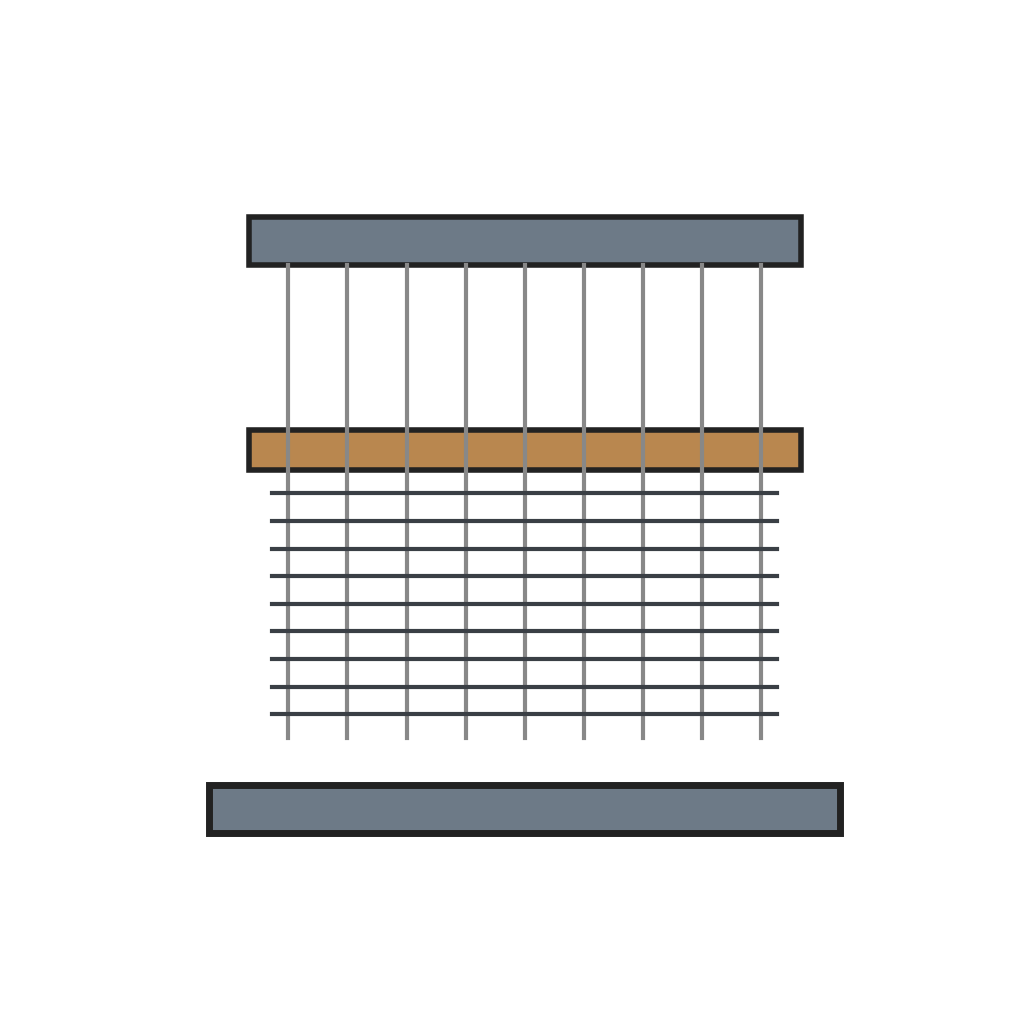 Vírnetsvefstóll
3
3
Make the frame
Make the frame
Make a circular frame about 20 cm (8 in) across, with about 5 cm (2 in), or 2.5 cm (1 in), between its top and the cloth. Ours: brass strip. Not given: the frame metal.
Efni fyrir þetta skref:
 Messingræma1 frame
Nauðsynleg verkfæri:
 Plötuklippur
 Lóðbolti
4
4
Mount the cloth
Mount the cloth
Mount the cloth on the frame without distorting it. Fill the joint between cloth and frame smoothly with solder, so the material being sieved cannot catch in it.
Efni fyrir þetta skref:
 Tin-blý lóðmálmur1 joint
 Lóðfeiti1 joint
Nauðsynleg verkfæri:
Lóðbolti5
5
Check it against the tolerances
Check it against the tolerances
Measure the warp and shoot wires separately. For both numbers the average opening must be within ±6 % of the table, the average wire diameter within −15 to +35 %, and no opening may exceed the table opening by more than 40 %. Reject a sieve with punctures, loose or wavy cloth, poor soldering, or too many large openings.
Nauðsynleg verkfæri:
 Míkrómetri
 Stækkunargler
Efni
4- 1 warp and shoot wiresStaðgengill
- 1 frameStaðgengill
- 1 jointStaðgengill
- 1 jointStaðgengill
Nauðsynleg verkfæri
5- Staðgengill
- Staðgengill
- Staðgengill
- Staðgengill
Efni úr tengdum teikningum

10% eignun
120-Mesh Sieve: U.S. Standard Sieve No. 120 (Bureau of Standards, 1924)
eftir Tex
Eðlisfræði
4
0
0
0
1
0
10% eignun
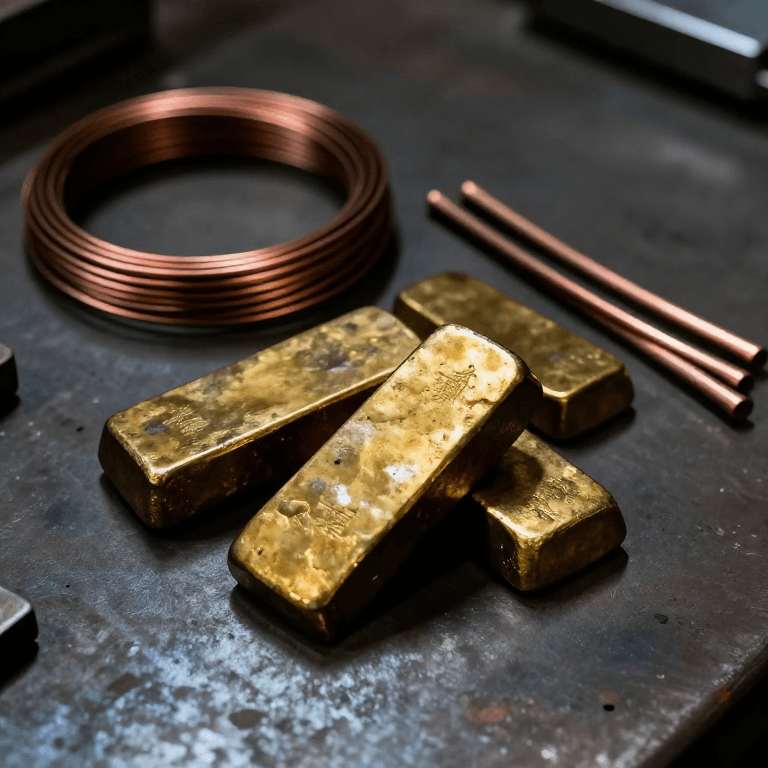
Tin Bronze Ingots, Wire and Rod
eftir Forge
Málmsmíði
52
0
0
0
2
0
10% eignun
Brass Sheet, Strip and Rod from an Ingot
eftir Forge
Málmsmíði
36
0
0
0
2
0
Hættulegt
10% eignun
Making Tin-Lead Solder — The Ancient Alloy That Joins Metals Without a Forge
eftir Peter
Málmsmíði
58
0
0
0
3
0
Þessi teikning býr til

CC0 opinbert ríki
Þessi teikning er gefin út undir CC0. Þér er frjálst að afrita, breyta, dreifa og nota þetta verk í hvaða tilgangi sem er, án þess að biðja um leyfi.
Studdu smiðinn með því að kaupa vörur í gegnum teikningu hans þar sem hann fær þóknun smiða sem seljendur ákvarða, eða búðu til nýja endurskoðun á þessari teikningu og tengdu hana sem tengingu í þinni eigin teikningu til að deila tekjum.