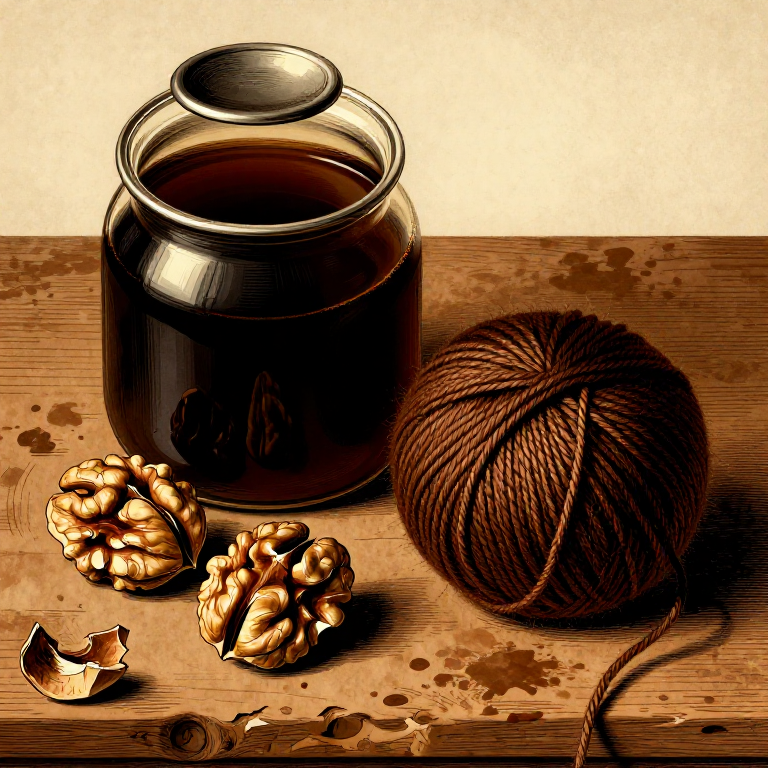


Dyeing with Walnut Hulls — Ancient Brown Dye
Leiðbeiningar
Collect Walnut Hulls
Collect Walnut Hulls
Collect fresh green or blackened walnut hulls — approximately 500 g for every 100 g of fibre to dye
Efni fyrir þetta skref:
 Valhnetuhýði500 grams
Nauðsynleg verkfæri:
 Leðurhanskar
Break Open Hulls
Break Open Hulls
Break or crush the hulls into smaller pieces to expose more surface area — wear gloves, juglone stains skin brown
Nauðsynleg verkfæri:
 Barsteinn
Fill Dye Pot
Fill Dye Pot
Place the crushed hulls in a large pot and cover with cold water — use enough to fully submerge the fibre later
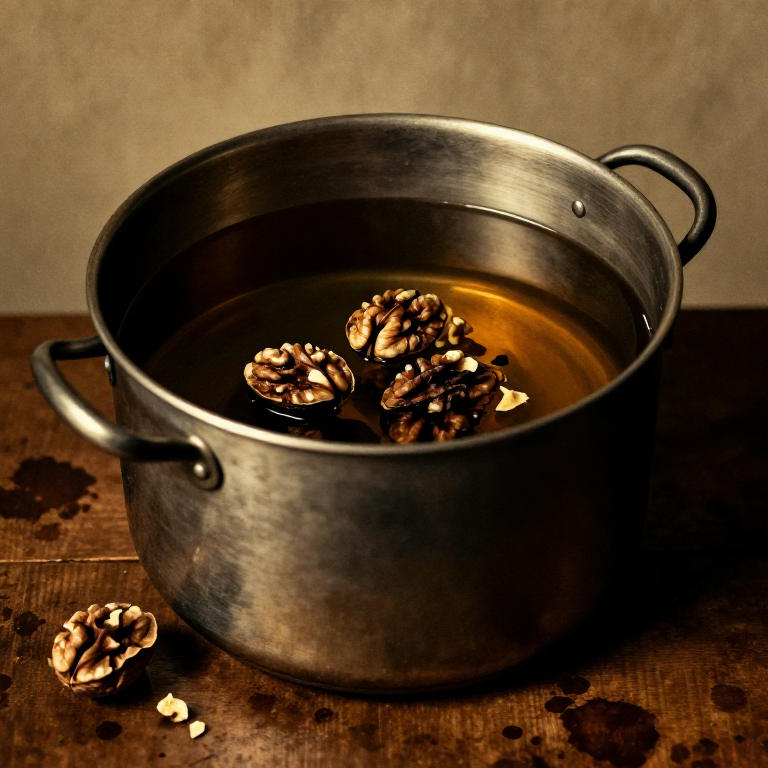
Efni fyrir þetta skref:
 Vatn10 lítrar
Nauðsynleg verkfæri:
 Soðpottur
Soak Overnight
Soak Overnight
Let the hulls soak in cold water for 12-24 hours — the water will turn dark brown as juglone leaches out
Simmer the Bath
Simmer the Bath
Heat the dye bath slowly to a gentle simmer (80-90°C) and hold for 1 hour to extract maximum colour
Efni fyrir þetta skref:
 Eldiviður1 búnt
Strain Out Hulls
Strain Out Hulls
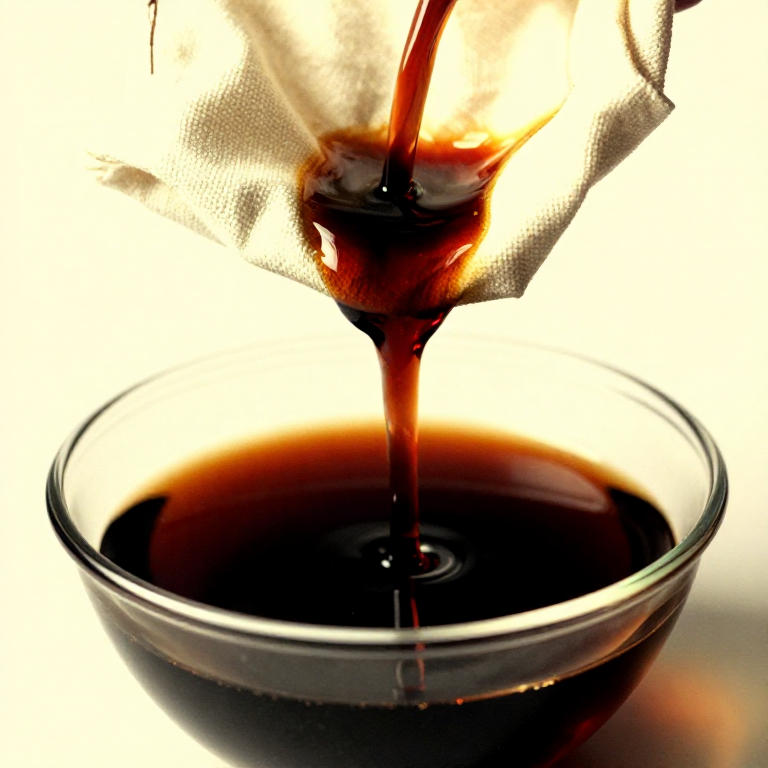
Strain the dye bath through cloth to remove all hull fragments — the liquid should be very dark brown
Nauðsynleg verkfæri:
 Klútur (til síunar)
Reheat Strained Bath
Reheat Strained Bath
Return the strained dye liquid to the pot and reheat to 70°C
Wet the Fibre
Wet the Fibre
Thoroughly wet the wool skein in warm water — this ensures even dye penetration with no dry spots
Efni fyrir þetta skref:
 Ullarbandshespa100 grams
Enter the Dye Bath
Enter the Dye Bath
Lower the wetted fibre gently into the walnut dye bath, pressing it below the surface
Simmer for 1 Hour
Simmer for 1 Hour
Heat to 80°C and hold for 1 hour, turning the fibre gently every 15 minutes
Check Depth of Colour
Check Depth of Colour
Lift the fibre to check — it will dry lighter than it looks wet, so aim darker than your target shade
Extend for Darker Brown
Extend for Darker Brown
For a deeper chocolate brown, leave the fibre in the cooling dye bath overnight
Remove and Rinse
Remove and Rinse
Remove the dyed fibre and rinse in progressively cooler water until the water runs clear
Efni fyrir þetta skref:
Vatn10 lítrarSqueeze Gently
Squeeze Gently
Squeeze out excess water between your palms — do not wring or twist the dyed wool
Dry in Shade
Dry in Shade
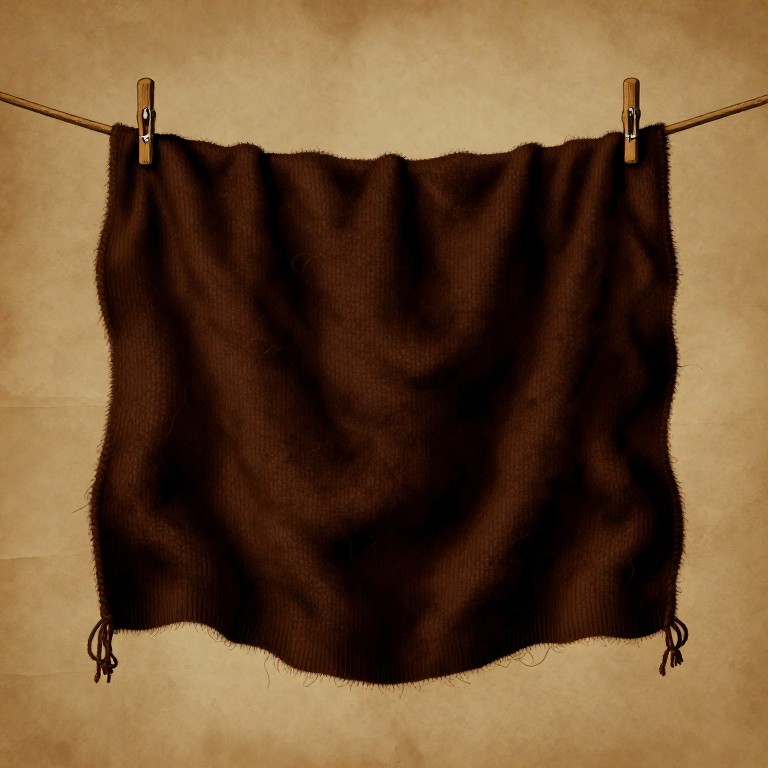
Hang the dyed skein in shade to dry completely — the finished walnut brown is one of the most permanent natural dyes known
Efni
4- 500 gramsStaðgengill
- 10 lítrarStaðgengill
- 1 búntStaðgengill
- 100 gramsStaðgengill
CC0 opinbert ríki
Þessi teikning er gefin út undir CC0. Þér er frjálst að afrita, breyta, dreifa og nota þetta verk í hvaða tilgangi sem er, án þess að biðja um leyfi.
Studdu smiðinn með því að kaupa vörur í gegnum teikningu hans þar sem hann fær þóknun smiða sem seljendur ákvarða, eða búðu til nýja endurskoðun á þessari teikningu og tengdu hana sem tengingu í þinni eigin teikningu til að deila tekjum.