Samvinna
LIST
FEGURÐ OG VELLÍÐAN
HANDVERK
MENNING OG SAGA
SKEMMTUN
UMHVERFI
MATUR OG DRYKKUR
ÖFUGVERKFRÆÐI
VÍSINDI
ÍÞRÓTTIR
TÆKNI
KLÆÐANLEG TÆKNI
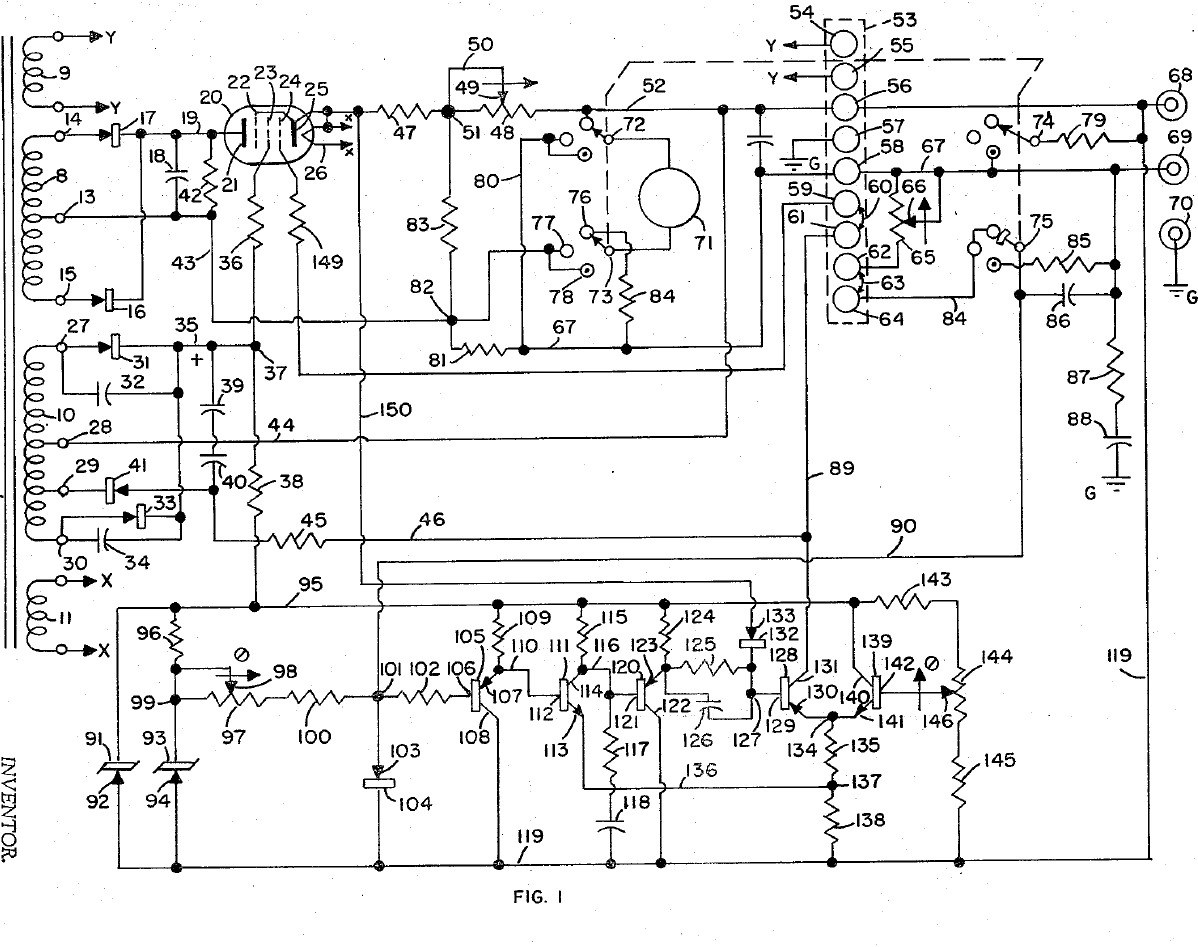


Bench Power Supply: Regulated, with Adjustable Current Limit and a Pentode Pass Tube (Gately, Forbro, US 3,243,690, 1966)
An adjustable bench supply that holds its output voltage steady and lets you set the most current it will deliver, so a circuit under test cannot be damaged. A pentode tube in series with the output is the regulator; a bridge with Zener references and a five-transistor amplifier keeps the output equal to the setting of one knob. A meter switch reads volts, amps, and the current limit, which can be set without disturbing the voltage.
Result: a regulated DC bench supply with adjustable current limiting.
Source: J. R. Gately (Forbro Design), US 3,243,690 (1966). Unknown: all component values and the output rating. Picture: the patent drawing.
Lengra kominn
Unknown
Leiðbeiningar
1
1
Wire the mains side
Wire the mains side
In a case, wire the power cord through a switch and a fuse to the primary of a transformer with four secondaries, and put a neon lamp across the primary to show the supply is on. One secondary (6.3 V) goes to two terminals for outside use, one heats the pentode, one is the main supply and one the bias supply. Ours: the case. Not given: the other winding voltages.
Efni fyrir þetta skref:
 Álkassi1 case
 Sveigjanleg snúra með kló1 stykki
 Stangarrofi1 stykki
 Vartappi1 stykki
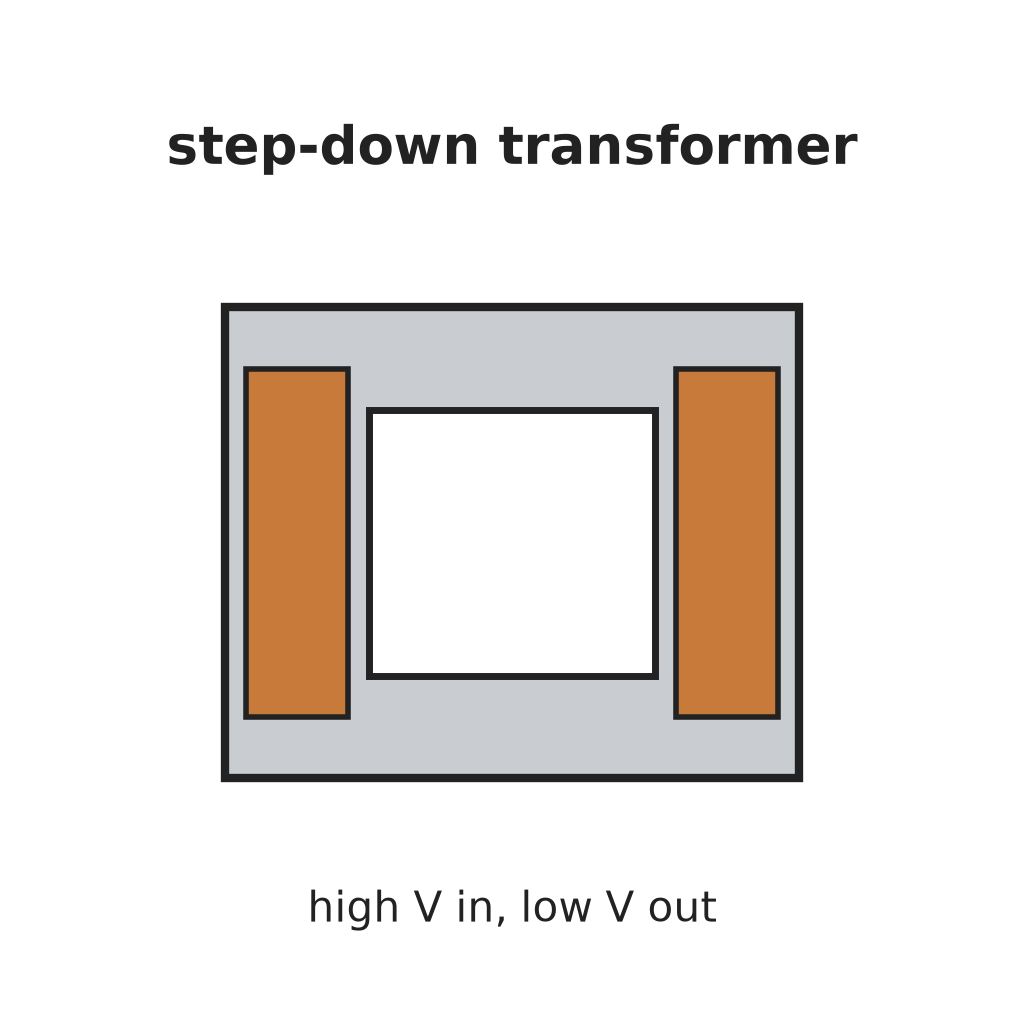 Niðurstigsspennir1 four secondaries
 Neonmerkjaljós1 stykki
 Tengipóstur2 6.3 V terminals
Nauðsynleg verkfæri:
 Handbor
 Skrúfjárnasett
2
2
Build the rectifiers
Build the rectifiers
Rectify the centre-tapped main winding with two rectifiers and smooth it with a capacitor. From the bias winding make two more supplies: one through two rectifiers with by-pass capacitors to a smoothing capacitor, for the pentode's screen and the reference circuit; the other through one rectifier and a capacitor, for the pentode's grid bias. Not given: the values.
Efni fyrir þetta skref:
 Díóða5 rectifiers
 Rafgreiningarþéttir3 smoothing
 Þéttasett1 by-pass
 Lóðtinsvír1 as needed
Nauðsynleg verkfæri:
 Lóðbolti
3
3
Fit the pass tube and reference
Fit the pass tube and reference
Put the pentode in series with the positive output: plate to the main supply, cathode through two current-sensing resistors (one fixed, one adjustable) to the + output terminal; suppressor tied to the cathode, screen fed through a resistor. Build the reference: a Zener fed through a resistor feeds a second Zener at constant current, giving a fixed voltage. Against it set two resistors and the voltage-control variable resistor: the output voltage is proportional to that resistor's setting. Not given: the tube type and values.
Efni fyrir þetta skref:
 Pentóðulampi1 series pass tube
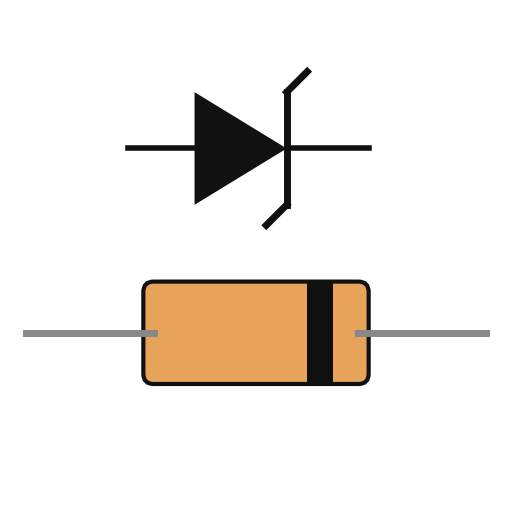 Zener-díóða2 stykki
 Viðnám1 sett
 Stilliviðnám2 voltage control, current-limit rangeTengipóstur2 output + and -Lóðtinsvír1 as needed
Nauðsynleg verkfæri:
Lóðbolti4
4
Build the error amplifier and current limit
Build the error amplifier and current limit
Build a five-transistor amplifier that drives the pentode's grid to keep the bridge balanced: a PNP emitter follower, an NPN stage, a PNP emitter follower with a resistor-capacitor roll-off against oscillation, a PNP driver whose base resistor has a capacitor across it for quick response, and an NPN clamp whose base is set by a potentiometer. Feed the voltage across the current-sensing resistors to the driver's base through a diode: above the limit it takes over and turns the pentode down. Choose the fixed sensing resistor to limit at about 125 % of rated current, trim with the potentiometer, and use the adjustable one to set lower limits. Not given: the transistor types and values.
Efni fyrir þetta skref:
 PNP-smári3 stykki
 NPN-smári2 stykkiDíóða1 stykki
 Rennistilliviðnám1 stykkiÞéttasett1 roll-off, speed-upViðnám1 settLóðtinsvír1 as needed
Nauðsynleg verkfæri:
Lóðbolti5
5
Fit the meter and use it
Fit the meter and use it
Fit a meter with a four-pole, three-position switch. Position 1 reads output volts through a multiplier resistor; position 2 reads current across a shunt in the negative line; position 3 (spring-return) puts a load resistor across the output and swaps a fixed resistor for the voltage control, so you can turn the limit control until the current limits at the value you want, without touching the voltage setting. Release the switch and use the supply.
Efni fyrir þetta skref:
 Snúningsspólumælir í töflu1 stykki
 Snúningsrofi1 4-pole, 3-positionViðnám1 multiplier, shunt, load resistors
 Óþekktur efniviður1 terminal strip
Nauðsynleg verkfæri:
LóðboltiSkrúfjárnasettEfni
21- 1 caseStaðgengill
- 1 stykkiStaðgengill
- frá$3.53
- 1 stykkiStaðgengill
- 1 four secondariesStaðgengill
- 1 stykkiStaðgengill
- frá$0.51
- 1 stykkiStaðgengill
- 3 smoothingStaðgengill
- 1 roll-off, speed-upStaðgengill
- 3 as neededStaðgengill
- 1 series pass tubeStaðgengill
- 2 stykkiStaðgengill
- 1 multiplier, shunt, load resistorsStaðgengill
- 2 voltage control, current-limit rangeStaðgengill
- 3 stykkiStaðgengill
- 2 stykkiStaðgengill
- frá$1.18
- 1 stykkiStaðgengill
- 1 4-pole, 3-positionStaðgengill
- 1 terminal stripStaðgengill
Þessi teikning býr til

CC0 opinbert ríki
Þessi teikning er gefin út undir CC0. Þér er frjálst að afrita, breyta, dreifa og nota þetta verk í hvaða tilgangi sem er, án þess að biðja um leyfi.
Studdu smiðinn með því að kaupa vörur í gegnum teikningu hans þar sem hann fær þóknun smiða sem seljendur ákvarða, eða búðu til nýja endurskoðun á þessari teikningu og tengdu hana sem tengingu í þinni eigin teikningu til að deila tekjum.