Samvinna
LIST
FEGURÐ OG VELLÍÐAN
HANDVERK
MENNING OG SAGA
SKEMMTUN
UMHVERFI
MATUR OG DRYKKUR
ÖFUGVERKFRÆÐI
VÍSINDI
ÍÞRÓTTIR
TÆKNI
KLÆÐANLEG TÆKNI
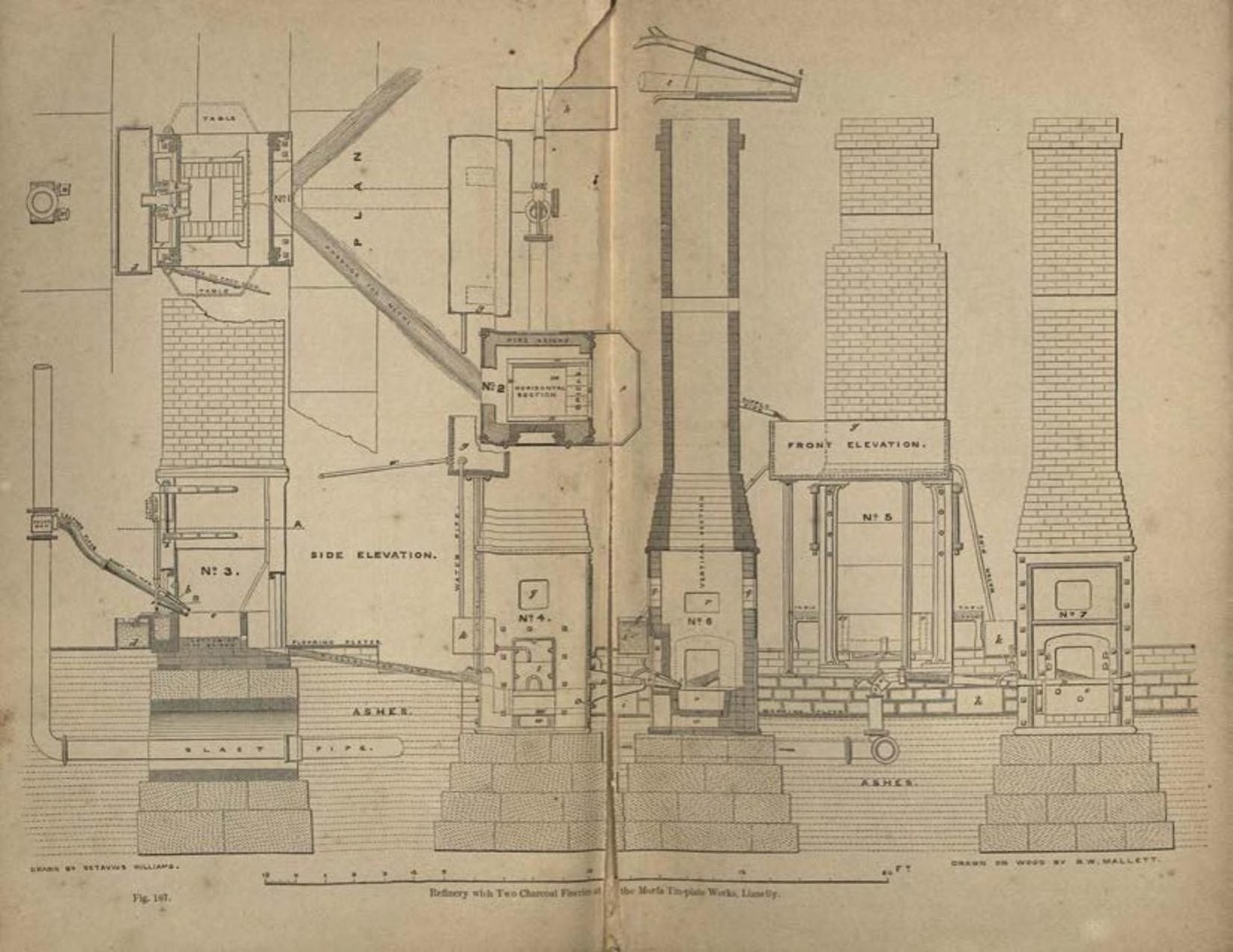


Charcoal Finery Iron: the South Wales Process, Ball Hammered into Stamps (Percy, 1864)
The best iron for charcoal tin-plates, as Percy watched it made at the Morfa Tin-plate Works, Llanelly, on 9 September 1859: pig iron melted under coke in a running-out fire flows into two charcoal fineries, where it is broken up with charcoal, melted down before a cold blast and worked into a ball, which is hammered into a slab and broken into 'stamps'.
Charcoal is used because it holds no sulphide of iron, so no sulphur passes into the iron.
Source: J. Percy, Metallurgy: Iron and Steel (1864), pp. 581-586. Picture: Fig. 107, the refinery and two charcoal fineries at Morfa.
Lengra kominn
Unknown
Leiðbeiningar
1
1
Melt the pig under coke
Melt the pig under coke
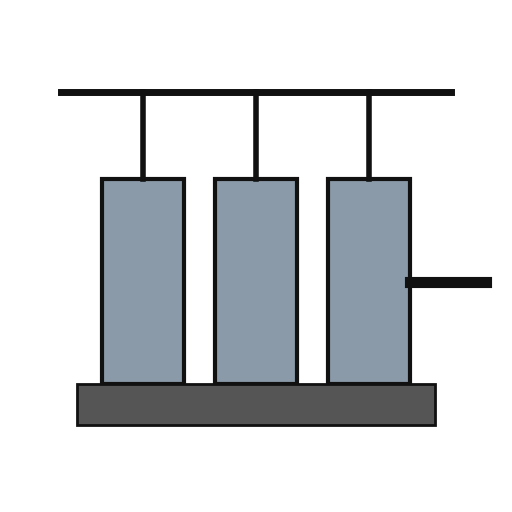
Melt Pembrokeshire pig iron and Cumberland haematite pig iron together under coke in the running-out fire (melting finery), enough to fill two charcoal fineries: 5 to 6 cwt at Pont-y-Mister; 200 to 250 lb for each finery at Pontypool. Tap it at the bottom so that metal flows first, and keep the slag apart as far as you can. Not given: the proportion of the two pigs.
Efni fyrir þetta skref:
 Hrájárnsstykki1 5-6 cwt for two fineries
 Málmvinnslukox1 stykki
Nauðsynleg verkfæri:
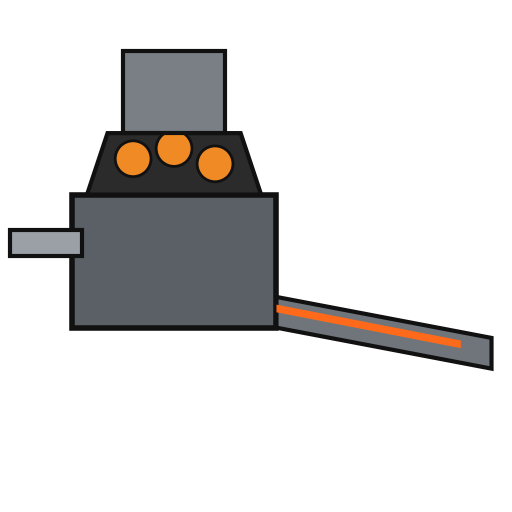 Hreinsieldur
 Blástursvél
2
2
Fill the charcoal fineries
Fill the charcoal fineries
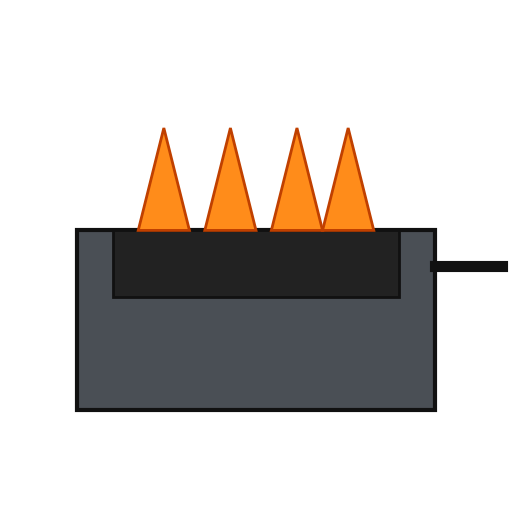
Run the molten metal into the two charcoal fineries, still hot from the last heat. Take off the slag that comes with it as a crust once it has set. Throw in a basket of charcoal and let the cold blast on full.
Efni fyrir þetta skref:
 Viðarkolamolar (harðviður)1 a basket per finery, more as needed
Nauðsynleg verkfæri:
 HreinsiaflBlástursvél
3
3
Break up and melt down
Break up and melt down
Break the friable, half-set metal with an iron bar, mix it with the charcoal and heap it towards the tuyere side, where it melts down before the blast ('sinking a lump'). Throw water on the charcoal at intervals so that it does not burn to waste. Keep loosening and raising the metal from the bottom and the tuyere side.
Nauðsynleg verkfæri:
 EldskörungurHreinsiafl
 Vatn
4
4
Gather the ball
Gather the ball
Put back pieces left from the last hammering with a two-pronged fork. Tap off the cinder several times and add charcoal, using the hooks at the sides as fulcra to press loose pieces down onto the ball. Lessen the blast at the end. At Morfa the metal went in at 2 h 10 m and the ball came out at 3 h 23 m.
Nauðsynleg verkfæri:
EldskörungurHreinsiafl5
5
Hammer the ball into a slab
Hammer the ball into a slab
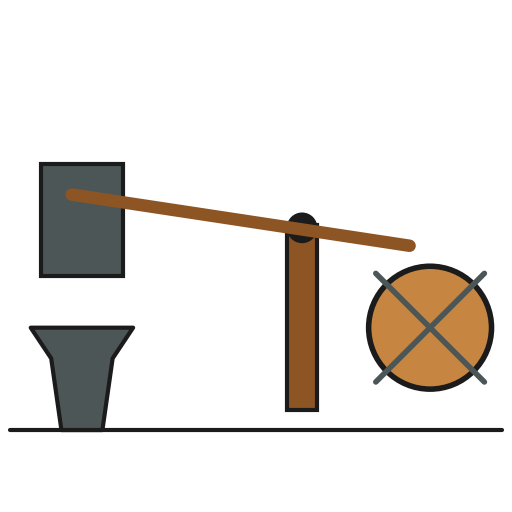
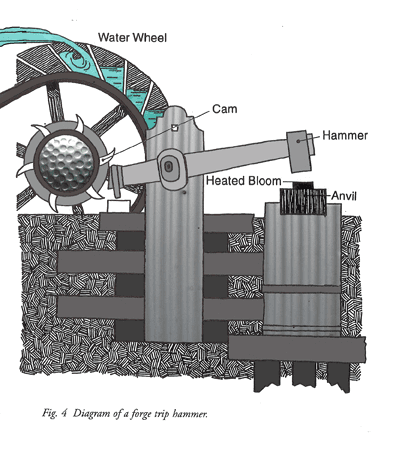
Put the ball under the cam hammer with the tuyere mark facing the hammerman. Hammer it into a narrow slab, rounded at the ends, about 1 3/4 to 2 1/4 in. thick. While it is hot, nick it across deeply in seven or eight places with a chisel-ended bar under the hammer.
Nauðsynleg verkfæri:
 Kambhamar
 Smiðjutöng
6
6
Quench and break into stamps
Quench and break into stamps
Plunge the nicked slab, still red-hot, into cold water to loosen the oxide. Lay it nicks down across a long ribbed anvil and break it with a narrow-ended sledge into 'stamps' of about 26 lb. Set the end pieces apart, sort the rest by soundness, and return broken bits to the next charge.
Nauðsynleg verkfæri:
Vatn Flatur steðji
 SleggjaSmiðjutöng
Efni
3- 1 5-6 cwt for two fineriesStaðgengill
- 1 stykkiStaðgengill
- 1 a basket per finery, more as neededStaðgengill
Efni úr tengdum teikningum
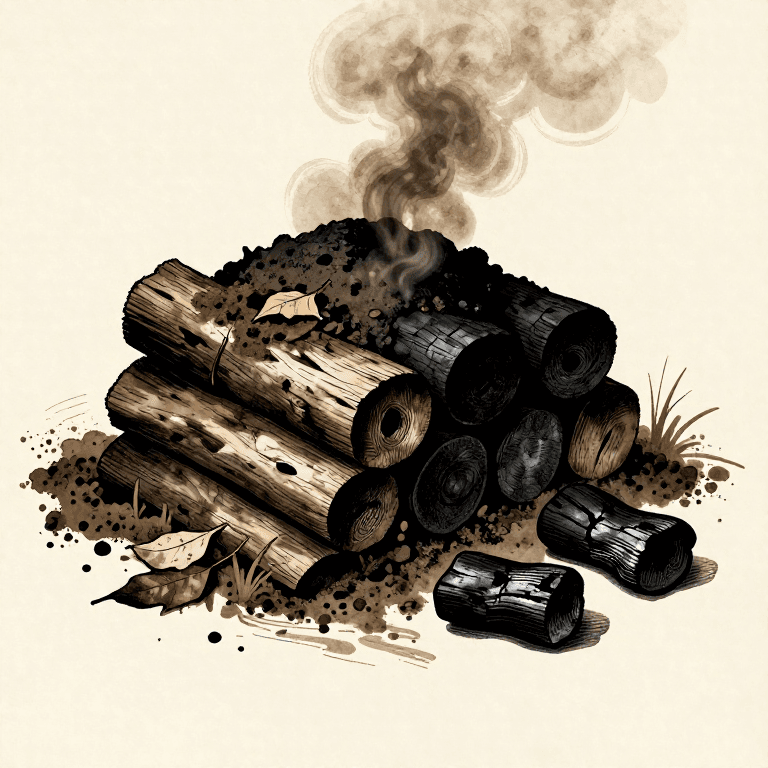

Þessi teikning býr til
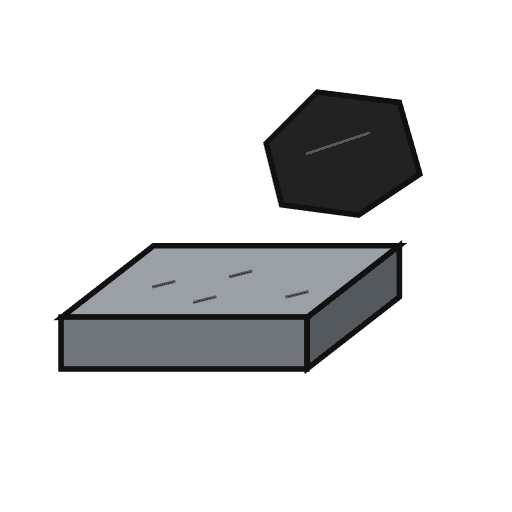
CC0 opinbert ríki
Þessi teikning er gefin út undir CC0. Þér er frjálst að afrita, breyta, dreifa og nota þetta verk í hvaða tilgangi sem er, án þess að biðja um leyfi.
Studdu smiðinn með því að kaupa vörur í gegnum teikningu hans þar sem hann fær þóknun smiða sem seljendur ákvarða, eða búðu til nýja endurskoðun á þessari teikningu og tengdu hana sem tengingu í þinni eigin teikningu til að deila tekjum.