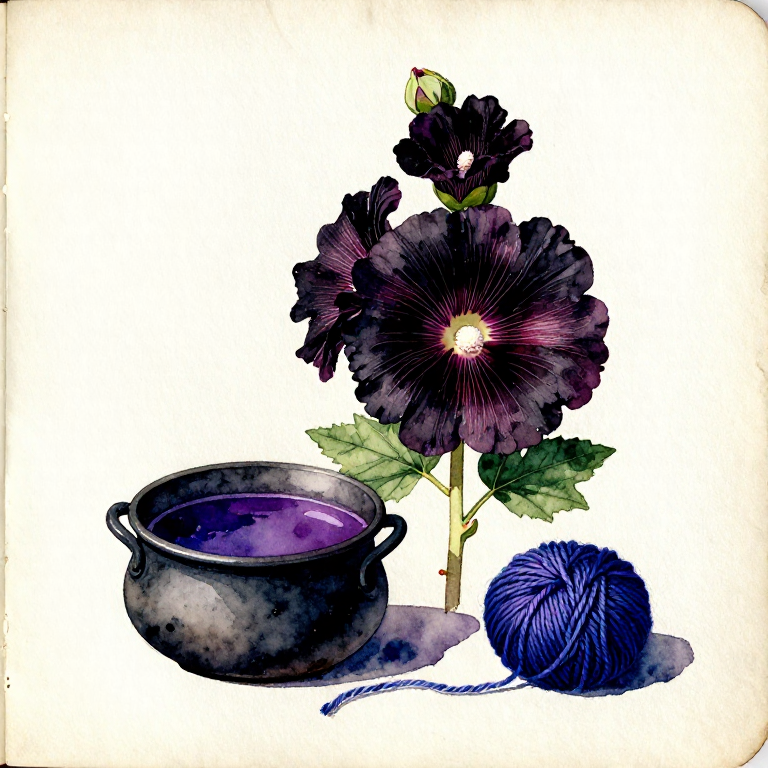

Dyeing Blue-Purple with Hollyhock — The Cottage Garden Dye of the Ancient World
Hollyhock (Alcea rosea) is one of the oldest cultivated ornamental plants in the world. Originally native to western and central Asia, hollyhocks were grown in Chinese gardens by at least 2000 BCE and spread westward along the Silk Road to the Mediterranean. The tall flower spikes — reaching 2-3 metres — were grown against walls and fences across medieval Europe, giving the plant its English name ('holy mallow' from the Crusader era). Dark-flowered varieties — deep purple, near-black, and dark red — contain anthocyanin and delphinidin pigments that produce blue-purple shades on alum-mordanted wool.
Only the darkest-coloured hollyhock flowers contain sufficient pigment for dyeing. Pale pink, white, and yellow varieties produce negligible dye. The ideal varieties are the deep purple-black single hollyhocks (Alcea rosea 'Nigra') or very dark red varieties. These contain the highest concentrations of delphinidin — the same anthocyanin found in Delphinium flowers, red grapes, and concord grapes. On alum-mordanted wool, dark hollyhock flowers produce a soft blue-purple to dusty violet.
Hollyhock dye shares the limitation of most anthocyanin-based dyes: moderate lightfastness. The blue-purple will gradually fade with prolonged sunlight exposure. However, the fresh colour is beautiful and distinctive — a soft, warm violet that sits between elderberry's grey-purple and alkanet's cold purple. For dyers with a cottage garden, dark hollyhocks are a rewarding and renewable dye source.
Leiðbeiningar
Gather and weigh the dark hollyhock flowers
Gather and weigh the dark hollyhock flowers
Use 300-400% WOF of fresh dark hollyhock flowers. For 100 g of wool, gather 300-400 g of fresh flowers. Use ONLY the darkest varieties — deep purple-black or very dark red. Pick flowers when fully open. Remove the green calyx (the cup-shaped base) — it contains no dye and adds unwanted green tannins. The petals should be soft and deeply pigmented. Frozen flowers work well — freezing helps break cell walls and release pigment.
Efni fyrir þetta skref:
 Stokkrósablóm, dökk (fersk)350 g
Nauðsynleg verkfæri:
 Stafræn eldhúsvog
Soak the flowers in cold water overnight
Soak the flowers in cold water overnight
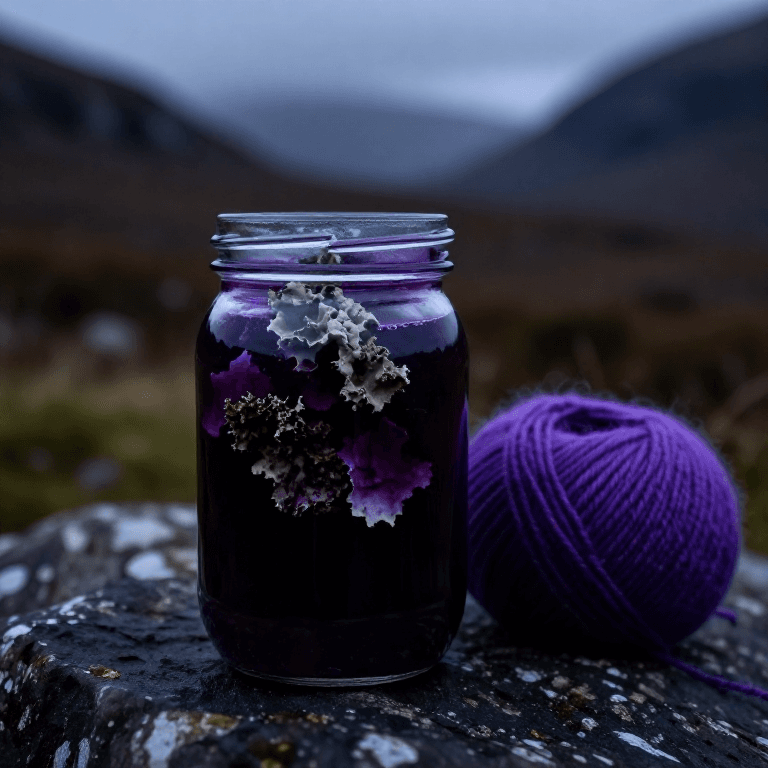
Place the flowers in a dye pot with 4 litres of cold water and soak overnight (8-12 hours). Cold water extraction preserves the anthocyanin pigments better than hot — anthocyanins degrade at high temperatures. The water will turn a deep purple-red within the first hour. By morning, the liquid should be an intensely dark purple. The flowers will have paled significantly as their pigment dissolves.
Nauðsynleg verkfæri:
 Soðpottur
Warm gently to 60-70°C for 30 minutes
Warm gently to 60-70°C for 30 minutes
Warm the pot GENTLY to 60-70°C and hold for 30 minutes. Do not exceed 70°C — anthocyanins are heat-sensitive and break down rapidly above this temperature, shifting the colour from purple toward dull brown. This is one of the coolest dyeing temperatures for any natural dye. Stir occasionally. The liquid will remain a deep purple.
Nauðsynleg verkfæri:
 Eldhúshitamælir
 Trésleif
Strain out the flower petals
Strain out the flower petals
Strain the dye liquor through a fine mesh strainer into a clean pot. Press the spent petals gently to extract remaining liquid. The petals will be pale and slimy — discard them. The strained liquor should be a clear, deep purple-red.
Nauðsynleg verkfæri:
 Fínt sigti
Dye alum-mordanted wool at 60-70°C for 45 minutes
Dye alum-mordanted wool at 60-70°C for 45 minutes
Pre-wet the alum-mordanted wool in lukewarm water for 15 minutes, squeeze gently, and lower it into the hollyhock dye bath at room temperature. Slowly raise to 60-70°C over 15 minutes, then hold for 45 minutes. Turn gently every 10 minutes. The same temperature limit applies — stay below 70°C to preserve the purple. The wool will develop a soft blue-purple to dusty violet. The alum mordant stabilises the anthocyanins and produces a cleaner blue-purple than un-mordanted wool.
Efni fyrir þetta skref:
 Ullarbandshespa100 g
 Álún (kalíumálún)10 g
Cool overnight, rinse, and dry in shade
Cool overnight, rinse, and dry in shade
Turn off the heat and let the wool cool in the dye bath overnight. Remove, squeeze gently, and rinse in cool water until the runoff is mostly clear. The final colour is a soft blue-purple to dusty violet — warmer and more violet than elderberry, with a gentle, garden-flower quality. Lightfastness is moderate — the purple will soften toward grey-lavender with prolonged sunlight exposure. Store hollyhock-dyed items away from direct sunlight for best colour retention. Dry in shade. Despite the moderate lightfastness, the unique colour and the pleasure of dyeing from your own garden make hollyhock a favourite among natural dyers.
Efni
3- Staðgengill
- 100 gStaðgengill
- Staðgengill
Nauðsynleg verkfæri
5- Staðgengill
- Staðgengill
- Staðgengill
- Staðgengill
- Staðgengill
Efni úr tengdum teikningum
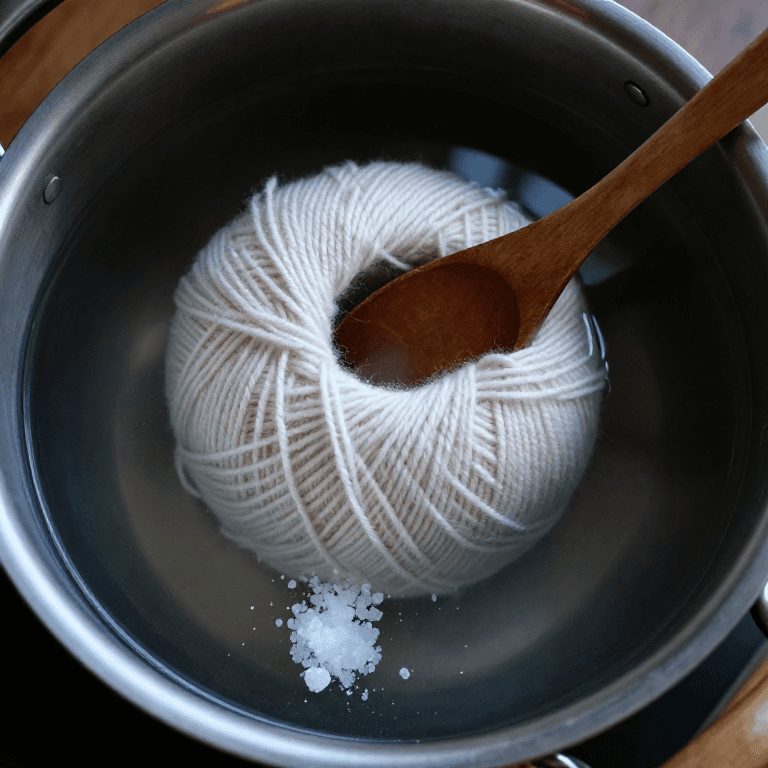
Mordanting Wool with Alum — The Foundation of Natural Dyeing
eftir Tex
Textíll og leður
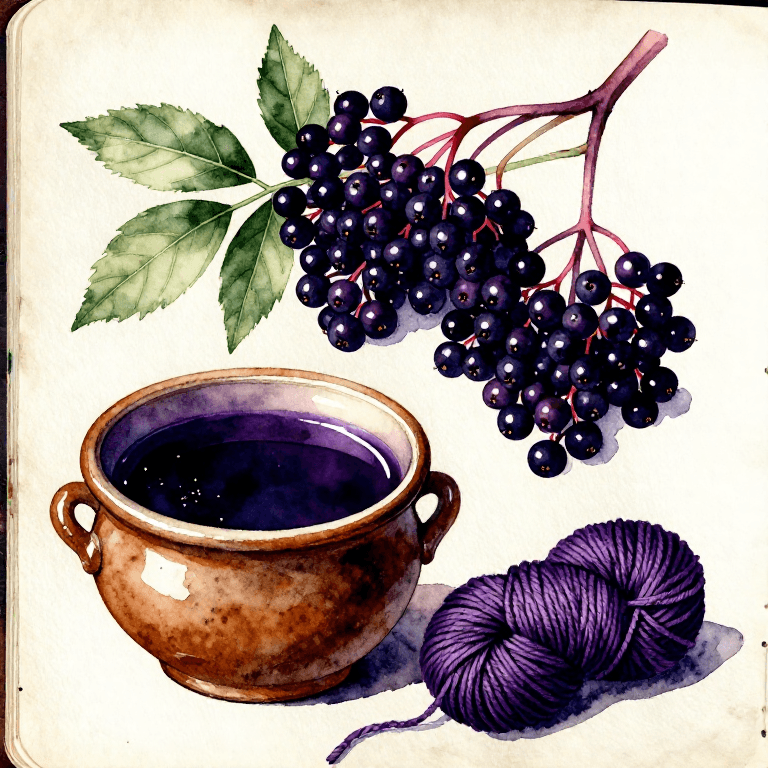
Dyeing with Elderberries — Fugitive Purple from the Hedgerow
eftir Tex
Textíll og leður
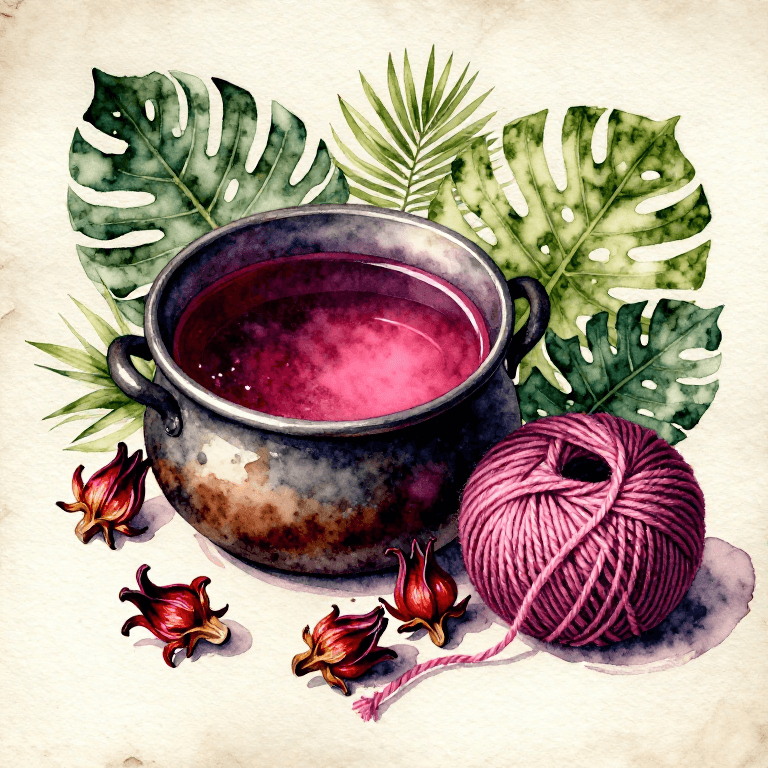
Dyeing Pink-Mauve with Hibiscus — The Tropical Flower Dye of Ancient Egypt
eftir Tex
Textíll og leður
Þessi teikning býr til

Tengd Blueprint
Þessi blueprint deila þekkingu — tækni, efni eða meginreglur
CC0 opinbert ríki
Þessi teikning er gefin út undir CC0. Þér er frjálst að afrita, breyta, dreifa og nota þetta verk í hvaða tilgangi sem er, án þess að biðja um leyfi.
Studdu smiðinn með því að kaupa vörur í gegnum teikningu hans þar sem hann fær þóknun smiða sem seljendur ákvarða, eða búðu til nýja endurskoðun á þessari teikningu og tengdu hana sem tengingu í þinni eigin teikningu til að deila tekjum.