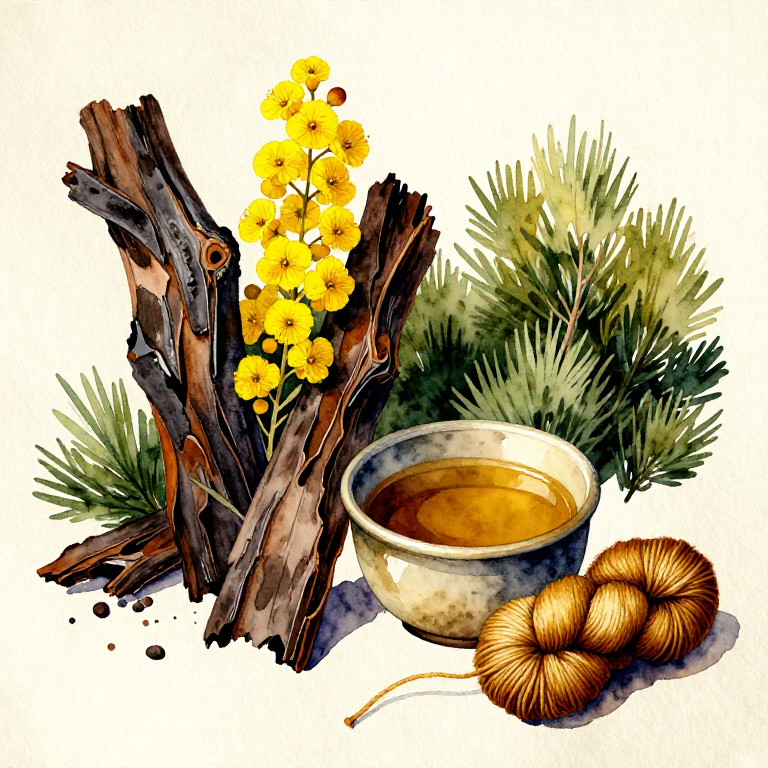


Dyeing Golden-Brown with Wattle Bark — The Australian Acacia Tannin Dye
Wattle is the common Australian name for Acacia species — particularly the golden wattle (Acacia pycnantha), black wattle (Acacia mearnsii), and silver wattle (Acacia dealbata). The bark of these trees is extraordinarily rich in tannins — black wattle bark contains 30-45% tannin by dry weight, making it one of the most concentrated tannin sources in the plant kingdom. Aboriginal Australians used wattle bark for dyeing, tanning, and medicine for thousands of years before European contact.
Black wattle (Acacia mearnsii) became one of the most important industrial tanning materials of the 19th and 20th centuries. The tree was planted in enormous plantations across South Africa, Brazil, and East Africa specifically for its tannin-rich bark. Wattle bark extract is still a major commercial product — used in leather tanning, adhesive manufacture, and water treatment. For the natural dyer, wattle bark produces warm golden-brown to rich amber shades — lighter and more golden than quebracho, with a distinctive warmth.
Wattle bark is the Australian counterpart to European oak bark and South American quebracho — a tannin-rich bark dye that bonds directly to protein fibres without mordanting. The golden-brown colour is uniquely warm and luminous, reflecting the sunlit Australian landscapes where these trees dominate the bush. With iron modification, wattle bark shifts to dark olive-brown to near-black.
Leiðbeiningar
Weigh the dried wattle bark
Weigh the dried wattle bark
Use 100% WOF of dried wattle bark, or 20-30% WOF of wattle bark extract. For 100 g of wool using raw bark, weigh out 100 g of dried, broken bark pieces. For extract, weigh out 20-30 g. Black wattle (Acacia mearnsii) bark has the highest tannin content. Golden wattle and silver wattle also work well. Break bark into 3-5 cm pieces. Wattle bark extract is sold as a dark brown powder by tanning and dye suppliers.
Efni fyrir þetta skref:
 Akasíubörkur (þurrkaður)100 g
Nauðsynleg verkfæri:
 Stafræn eldhúsvog
Soak the bark overnight in warm water
Soak the bark overnight in warm water
Place the bark pieces in a dye pot with 4 litres of warm water and soak overnight (8-12 hours). The water will turn a deep golden-brown rapidly — wattle bark releases tannins faster than most bark sources due to its extremely high tannin concentration. By morning, the liquid should be a rich, dark amber-brown. If using extract, simply dissolve in hot water — no soaking needed.
Nauðsynleg verkfæri:
 Soðpottur
Simmer at 80°C for 45 minutes
Simmer at 80°C for 45 minutes
Bring the pot to 80°C and hold for 45 minutes. Stir occasionally. The liquid will deepen to a very dark amber-brown. Wattle bark extracts fully within this time. Do not boil — gentle heat produces cleaner, more golden tones.
Nauðsynleg verkfæri:
 Eldhúshitamælir
 Trésleif
Strain out the bark
Strain out the bark
Strain the dye liquor through a fine mesh strainer into a clean pot. Press the bark to extract all remaining liquid. Bark fragments will tangle with wool — strain thoroughly. The strained liquor should be a rich, clear golden-brown to dark amber.
Nauðsynleg verkfæri:
 Fínt sigti
Dye wool at 80°C for 45 minutes
Dye wool at 80°C for 45 minutes
Pre-wet wool in lukewarm water for 15 minutes, squeeze gently, and lower into the wattle bark dye bath at room temperature. Slowly raise to 80°C and hold for 45 minutes. Turn gently every 10 minutes. No mordant is needed — wattle tannins are substantive and bond directly to wool. The wool will develop a warm golden-brown to amber — lighter and more golden than quebracho, darker and warmer than eucalyptus. The colour has a distinctive luminous warmth.
Efni fyrir þetta skref:
 Ullarbandshespa100 g
Cool overnight, rinse, and dry
Cool overnight, rinse, and dry
Turn off the heat and let the wool cool in the dye bath overnight. Remove, squeeze gently, and rinse in lukewarm water until the runoff is mostly clear. The final colour is a warm golden-brown to rich amber — the colour of the Australian bush in afternoon light. Washfastness is excellent. Lightfastness is good. Iron modification shifts the colour dramatically toward dark olive-brown. Wattle bark also serves as an excellent tannin pre-mordant for cotton. Dry in shade.
Efni
2- Staðgengill
- 100 gStaðgengill
Nauðsynleg verkfæri
5- Staðgengill
- Staðgengill
- Staðgengill
- Staðgengill
- Staðgengill
Efni úr tengdum teikningum
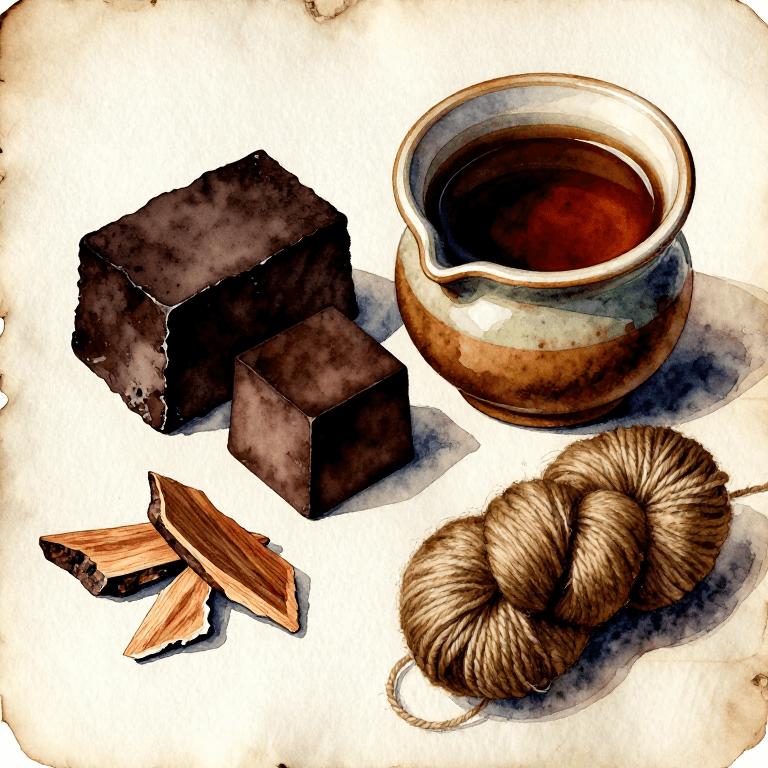
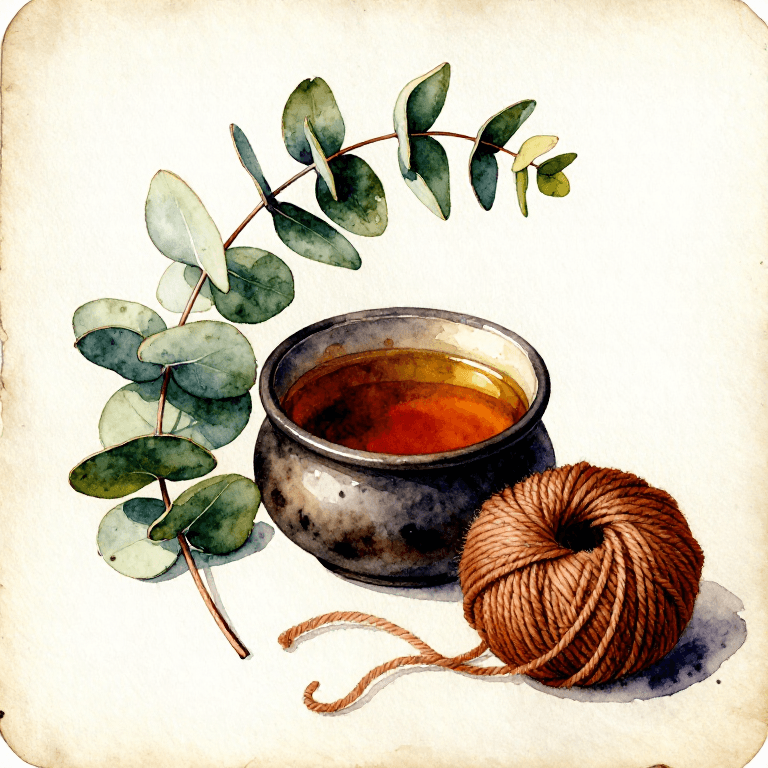
Þessi teikning býr til

Tengd Blueprint
Þessi blueprint deila þekkingu — tækni, efni eða meginreglur
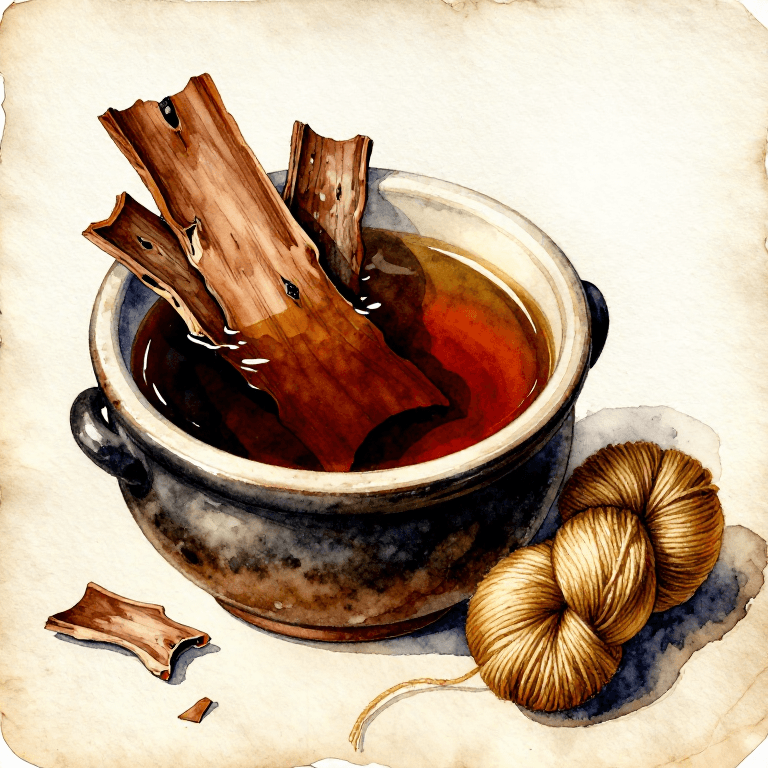
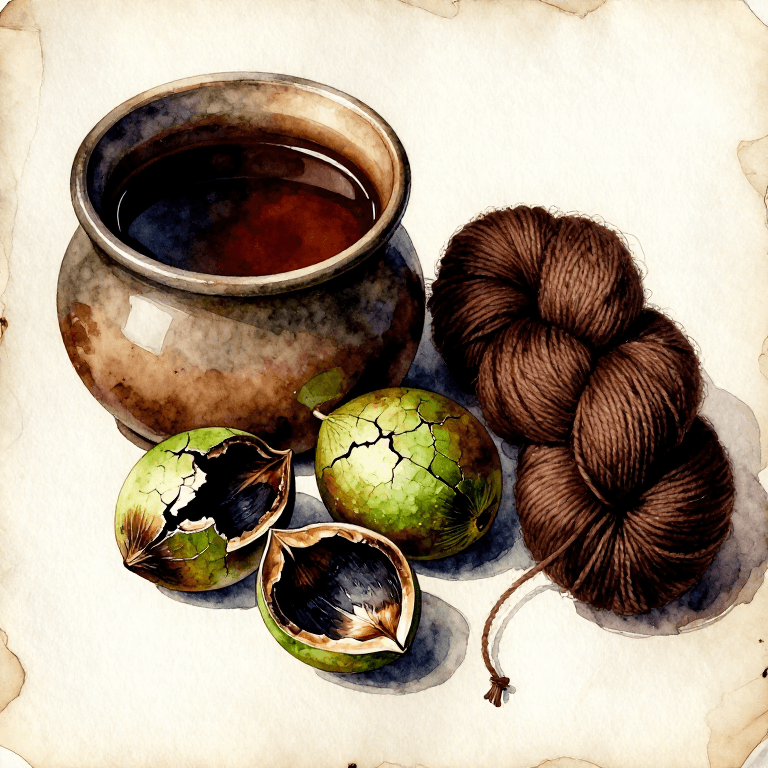
CC0 opinbert ríki
Þessi teikning er gefin út undir CC0. Þér er frjálst að afrita, breyta, dreifa og nota þetta verk í hvaða tilgangi sem er, án þess að biðja um leyfi.
Studdu smiðinn með því að kaupa vörur í gegnum teikningu hans þar sem hann fær þóknun smiða sem seljendur ákvarða, eða búðu til nýja endurskoðun á þessari teikningu og tengdu hana sem tengingu í þinni eigin teikningu til að deila tekjum.