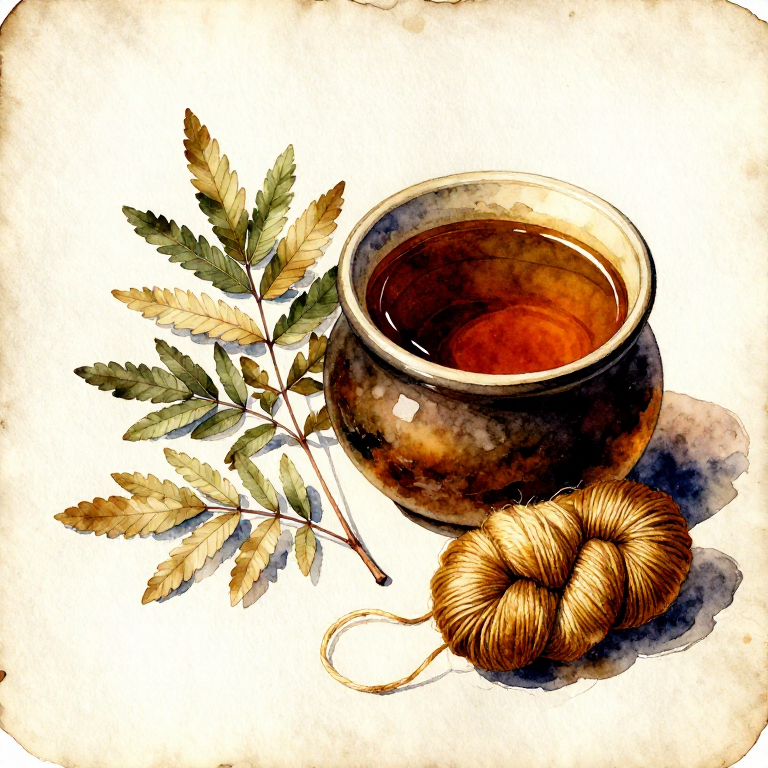

Dyeing Yellow-Brown with Sumac Leaves — The Tannin-Rich Dye of the Ancient Mediterranean
Sumac (Rhus coriaria and related species) is a shrub or small tree native to the Mediterranean, Middle East, and temperate Asia. Its leaves are extraordinarily rich in tannins — up to 25-30% by dry weight — making sumac one of the most important tanning and dyeing agents in pre-industrial history. On alum-mordanted wool, sumac leaves produce warm golden-brown to tan shades. With iron modification, the colour shifts to dark grey-brown to near-black. Sumac tannins also serve as an excellent mordant in their own right — a tannin pre-treatment allows cellulose fibres (cotton, linen) to take up mordant dyes that would otherwise not bond.
Sumac has been used in leather tanning and textile dyeing since at least 2000 BCE. The ancient Egyptians, Greeks, and Romans all used sumac extensively. In the medieval Mediterranean, Sicilian sumac (Rhus coriaria) was a major trade commodity — dried, ground sumac leaves were shipped in bulk across Europe for both the tanning and dyeing industries. The spice sumac used in Middle Eastern cuisine is the same plant — the dried, ground berries rather than the leaves.
For the natural dyer, sumac is valuable both as a standalone dye and as a tannin mordant for cellulose fibres. As a dye on wool, it gives warm golden-browns that are permanent and lightfast, thanks to the strong tannin-fibre bond. As a pre-mordant on cotton, a sumac soak before alum mordanting dramatically improves the uptake of plant dyes that would otherwise wash off cellulose.
Leiðbeiningar
Weigh the dried sumac leaves
Weigh the dried sumac leaves
Use 100% WOF of dried sumac leaves. For 100 g of wool, weigh out 100 g of dried leaves. Harvest sumac leaves in late summer when tannin content peaks — the leaves should be fully mature and dark green. Dry on racks in shade for 1-2 weeks. Dried sumac leaves are brittle and papery. Commercially, ground sumac leaf (used in the tanning industry) is also available and works well, extracting faster than whole leaves.
Efni fyrir þetta skref:
 Sumakblöð (þurrkuð)100 g
Nauðsynleg verkfæri:
 Stafræn eldhúsvog
Soak the leaves in warm water for one hour
Soak the leaves in warm water for one hour
Place the dried sumac leaves in a dye pot with 4 litres of warm water and soak for at least one hour. The water will turn a warm golden-brown within minutes as the tannins dissolve rapidly. Sumac releases dye faster than most bark or wood sources because the leaves are thin and have a large surface area relative to their mass.
Nauðsynleg verkfæri:
 Soðpottur
Simmer at 80°C for 30 minutes
Simmer at 80°C for 30 minutes
Bring the pot to a gentle simmer (80°C) and hold for 30 minutes. Stir occasionally. The liquid will deepen to a rich amber-brown. Sumac leaves extract fully within 30 minutes — longer simmering does not significantly increase colour depth. Do not boil, as excessive heat can produce muddy tones.
Nauðsynleg verkfæri:
 Eldhúshitamælir
 Trésleif
Strain out the leaf material
Strain out the leaf material
Strain the dye liquor through a fine mesh strainer into a clean pot. Press the leaves to extract all remaining liquid. Leaf fragments left in the dye bath will tangle with wool — strain thoroughly. The strained liquor should be a warm, clear amber-brown.
Nauðsynleg verkfæri:
 Fínt sigti
Dye wool at 80°C for 45 minutes
Dye wool at 80°C for 45 minutes
Pre-wet wool in lukewarm water for 15 minutes. Lower it into the sumac dye bath at room temperature. Slowly raise to 80°C and hold for 45 minutes. Turn gently every 10 minutes. Sumac is a substantive dye — tannins bond directly to protein fibres without a mordant. However, alum-mordanted wool gives a warmer, more golden tone. Un-mordanted wool gives a cooler, greyer brown. Both are permanent.
Efni fyrir þetta skref:
 Ullarbandshespa100 g
Cool, rinse, and dry
Cool, rinse, and dry
Turn off the heat and let the wool cool in the dye bath overnight. Remove, squeeze gently, and rinse in lukewarm water until the runoff is mostly clear. The final colour is a warm golden-brown to tan — similar in tone to cutch but lighter and more golden. Sumac-dyed wool has excellent washfastness due to the strong tannin-fibre bond. Lightfastness is good. Dry in shade.
Efni
2- 100 gStaðgengill
- 100 gStaðgengill
Nauðsynleg verkfæri
5- Staðgengill
- Staðgengill
- Staðgengill
- Staðgengill
- Staðgengill
Efni úr tengdum teikningum
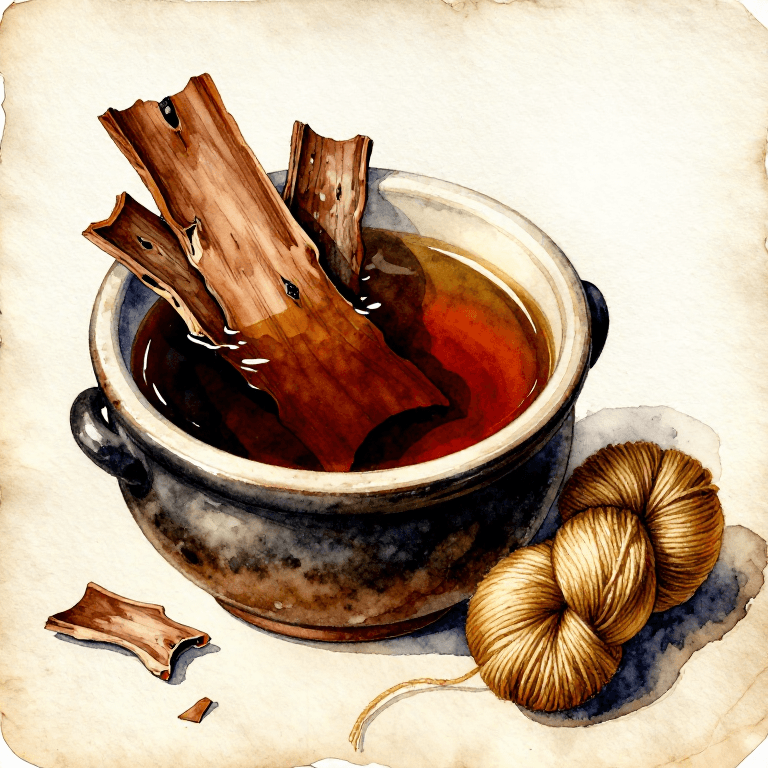
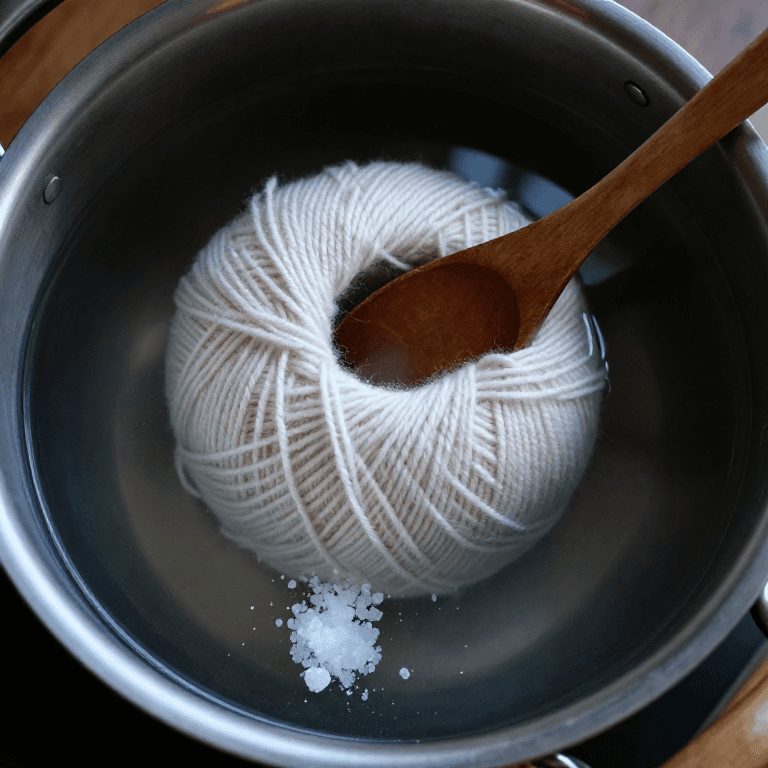
Þessi teikning býr til

Tengd Blueprint
Þessi blueprint deila þekkingu — tækni, efni eða meginreglur
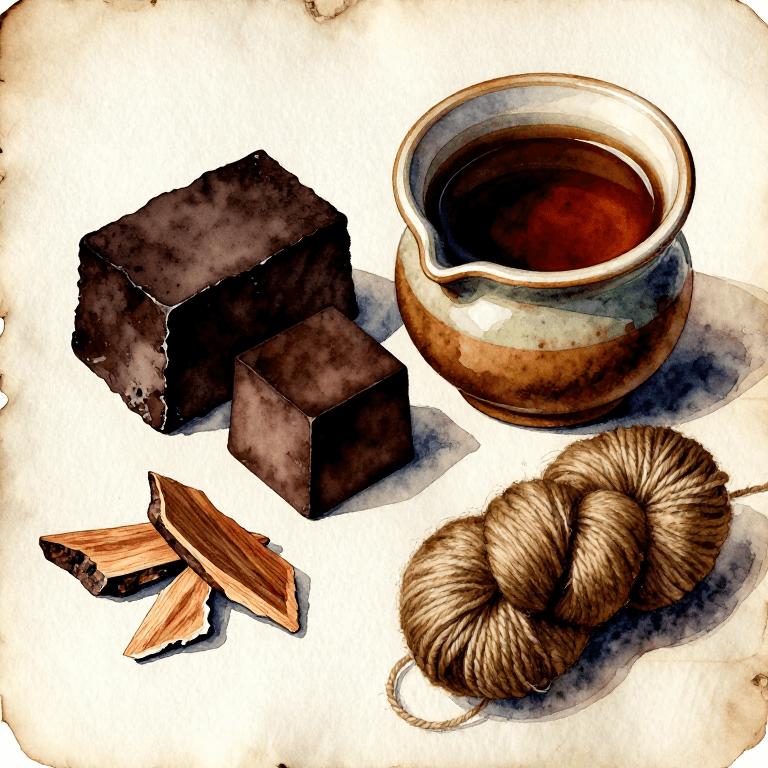
Dyeing Brown with Cutch — The Acacia Heartwood Dye of the Indian Subcontinent
eftir Tex
Textíll og leður
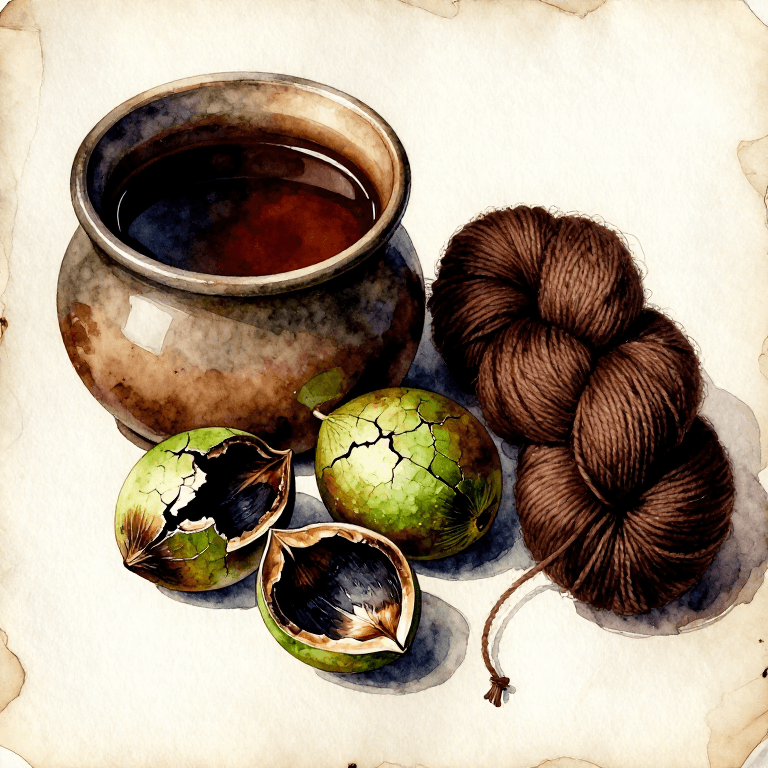
Dyeing Brown with Walnut Hulls — One of Humanity's Oldest and Most Permanent Dyes
eftir Tex
Textíll og leður
Dyeing Brown with Acorns — The Universal Tannin Dye of the Ancient World
eftir Tex
Textíll og leður
Dyeing Red with Dragon's Blood Resin — The Ancient Tree-Sap Pigment of the Spice Trade
eftir Tex
Textíll og leður
Dyeing Red-Brown with Quebracho — The Industrial Tannin of South American Hardwood
eftir Tex
Textíll og leður
CC0 opinbert ríki
Þessi teikning er gefin út undir CC0. Þér er frjálst að afrita, breyta, dreifa og nota þetta verk í hvaða tilgangi sem er, án þess að biðja um leyfi.
Studdu smiðinn með því að kaupa vörur í gegnum teikningu hans þar sem hann fær þóknun smiða sem seljendur ákvarða, eða búðu til nýja endurskoðun á þessari teikningu og tengdu hana sem tengingu í þinni eigin teikningu til að deila tekjum.