LIST
FEGURÐ OG VELLÍÐAN
HANDVERK
MENNING OG SAGA
SKEMMTUN
UMHVERFI
MATUR OG DRYKKUR
ÖFUGVERKFRÆÐI
VÍSINDI
ÍÞRÓTTIR
TÆKNI
KLÆÐANLEG TÆKNI
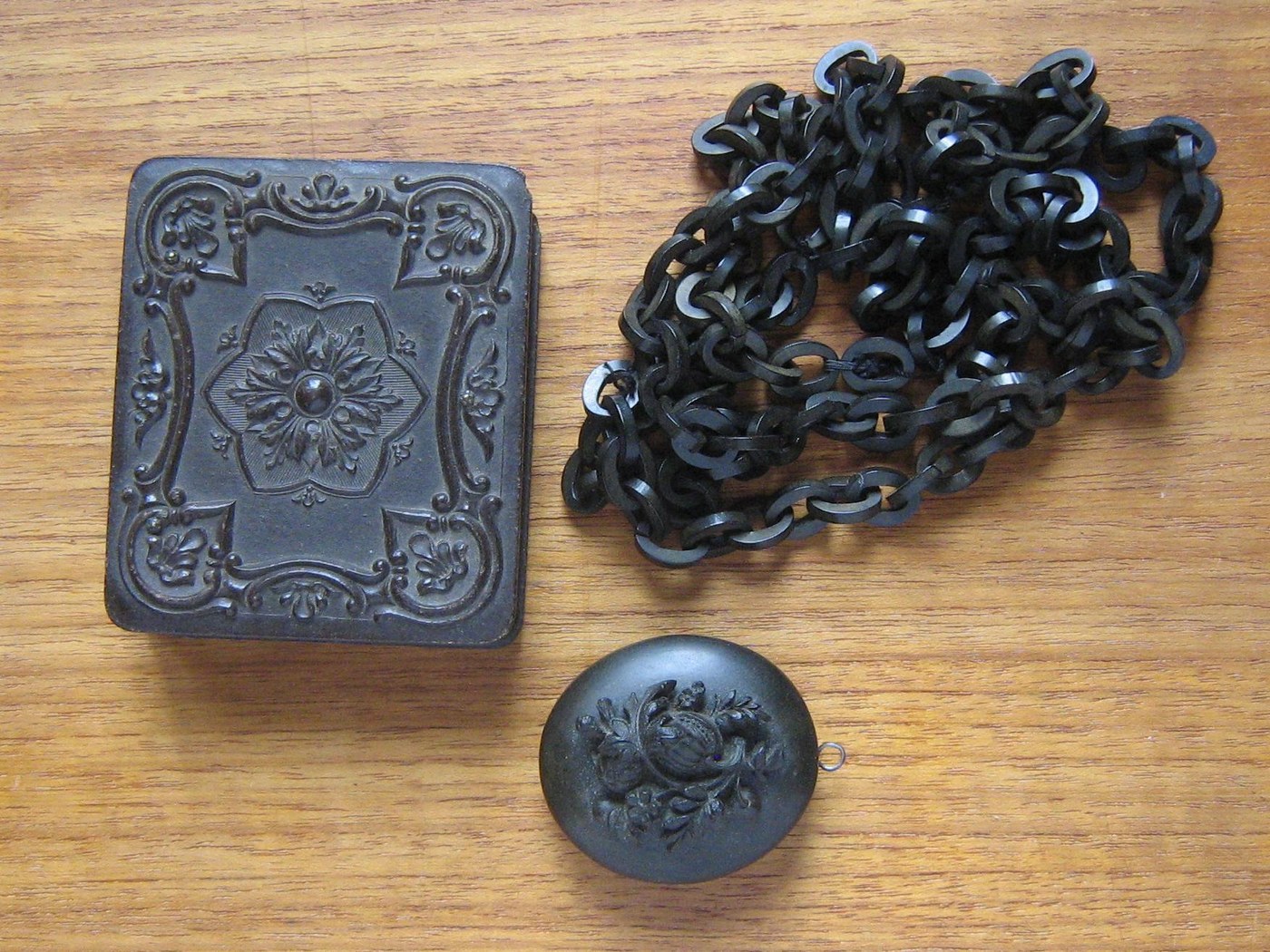


Ebonite (Hard Rubber)
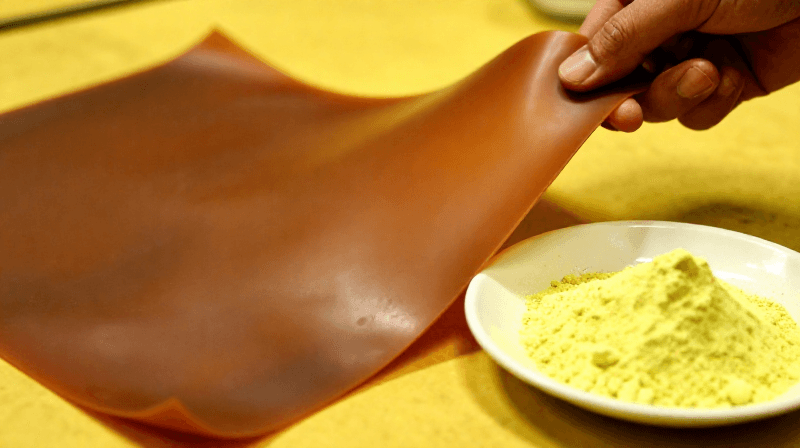
Vulcanised rubber is rubber with a few sulphur bridges between its chains. Keep adding sulphur and the bridges multiply until the chains cannot move at all: the soft, stretchy material turns into a hard black solid you can turn on a lathe, polish like ebony and use as an electrical insulator.
**US 8,075**, "Improvement in the Manufacture of India Rubber", Nelson Goodyear (brother of Charles), granted 6. May 1851, claims "the combining of india-rubber and sulphur… for making a hard and inflexible substance hitherto unknown": about equal parts by weight, heated to 260–275 °F for three to six hours. It was one of the first rigid materials made by chemically changing a natural polymer, over half a century before Bakelite.
**You turn a part from commercial ebonite rod and measure what the sulphur did** — its density, and its charge when rubbed. Curing ebonite needs a heated press and releases hydrogen sulphide, so the blueprint starts from finished rod; the notebook does the chemistry.
Miðlungs
3 hours
Leiðbeiningar
1
1
Cut the blank
Cut the blank
Clamp 20 mm ebonite rod in the vise between soft jaws. Saw off 60 mm. Ebonite chips like hard wood; saw slowly to avoid cracking the end.
Efni fyrir þetta skref:
 Ebónítstöng1 stykki
Nauðsynleg verkfæri:
 Járnsög
 Skrúfstykki
 Reglustika
 Tær öryggisgleraugu
2
2
Chuck and face
Chuck and face
Grip 20 mm of the blank in the lathe's 3-jaw chuck. Face the end square with a sharp HSS tool at about 800 rpm, light cuts.
Nauðsynleg verkfæri:
 Málmrennibekkur
 Rennijárnasett (HSS)Tær öryggisgleraugu
 Rykgríma
3
3
Turn to 16 mm
Turn to 16 mm
Turn 40 mm of length down to 16.0 mm. Check with the caliper every pass. The chips smell of sulphur - that is the bonded sulphur you measure later.
Nauðsynleg verkfæri:
MálmrennibekkurRennijárnasett (HSS) Stafrænn skífmælir 6 tommur
4
4
Drill the bore
Drill the bore
Spot the centre with a centre drill, then drill 3 mm through 35 mm from the tailstock. Clear chips every 5 mm - ebonite heats and gums if packed.
Nauðsynleg verkfæri:
 Sett af miðjuborum
 BorasettMálmrennibekkur
5
5
Taper the grip
Taper the grip
Set the compound to a shallow angle and taper 25 mm from 16 mm down to 10 mm. This is a fountain-pen grip section, the job ebonite still does today.
Nauðsynleg verkfæri:
MálmrennibekkurRennijárnasett (HSS)Stafrænn skífmælir 6 tommur6
6
Sand and polish
Sand and polish
At low speed, sand 400 then 800 grit, then run the Micro-Mesh grits in order. Finish with polishing compound on a cloth. Ebonite takes a deep gloss without lacquer.
Nauðsynleg verkfæri:
 Slípisett með örneti (9 kornastærðir)MálmrennibekkurRykgríma
 Sandpappír
 Fægiefni
7
7
Part off
Part off
Part off at 45 mm with the parting tool. Chamfer the cut end by hand with 800 grit.
Nauðsynleg verkfæri:
Rennijárnasett (HSS)Málmrennibekkur8
8
Measure the density
Measure the density
Weigh the part. Drop it into 50 ml of water in the graduated cylinder and read the rise. Do the same with a bundle of rubber bands. Enter both in the notebook.
Efni fyrir þetta skref:
 Teygjur1 pakki
Nauðsynleg verkfæri:
 Nákvæm stafræn vog
 Mæliglas
9
9
Rub it and pick up paper
Rub it and pick up paper
Tear tissue into 5 mm scraps. Rub the ebonite 10 strokes on wool felt and hold it 2 cm above the scraps. Repeat with an acrylic offcut. Count scraps lifted by each.
Nauðsynleg verkfæri:
 Ullarþóf
 Sýrufrír silkipappír
 Akrýlplata
10
10
The sulphur arithmetic
The sulphur arithmetic
Hleð Jupyter-vinnubók…
11
11
History & Context
History & Context
**What the patent specifies:** rubber and sulphur in about equal parts (or 2 : 1 with magnesia or lime), 260–275 °F, three to six hours. **Modern build (derived):** commercial ebonite rod, typically 25–32 % sulphur - the notebook shows why more than about 32 % cannot bond.
Ebonite was named for ebony, which it replaced in combs, pipe stems and instrument parts. It became a standard insulator of the electrical age and is still preferred for fountain-pen feeds because ink wets it. Its limits: it softens with heat, fades to brown and smells of sulphur in sunlight as the surface oxidises, and is brittle under impact.
Nauðsynleg verkfæri
18- Staðgengill
- Staðgengill
- Staðgengill
- Staðgengill
- Staðgengill
- Staðgengill
- Staðgengill
- Staðgengill
- Staðgengill
- Staðgengill
- Staðgengill
- Staðgengill
- Staðgengill
- Staðgengill
- Staðgengill
- Staðgengill
- Staðgengill
- Staðgengill
Tengd Blueprint
Þessi blueprint deila þekkingu — tækni, efni eða meginreglur

CC0 opinbert ríki
Þessi teikning er gefin út undir CC0. Þér er frjálst að afrita, breyta, dreifa og nota þetta verk í hvaða tilgangi sem er, án þess að biðja um leyfi.
Studdu smiðinn með því að kaupa vörur í gegnum teikningu hans þar sem hann fær þóknun smiða sem seljendur ákvarða, eða búðu til nýja endurskoðun á þessari teikningu og tengdu hana sem tengingu í þinni eigin teikningu til að deila tekjum.