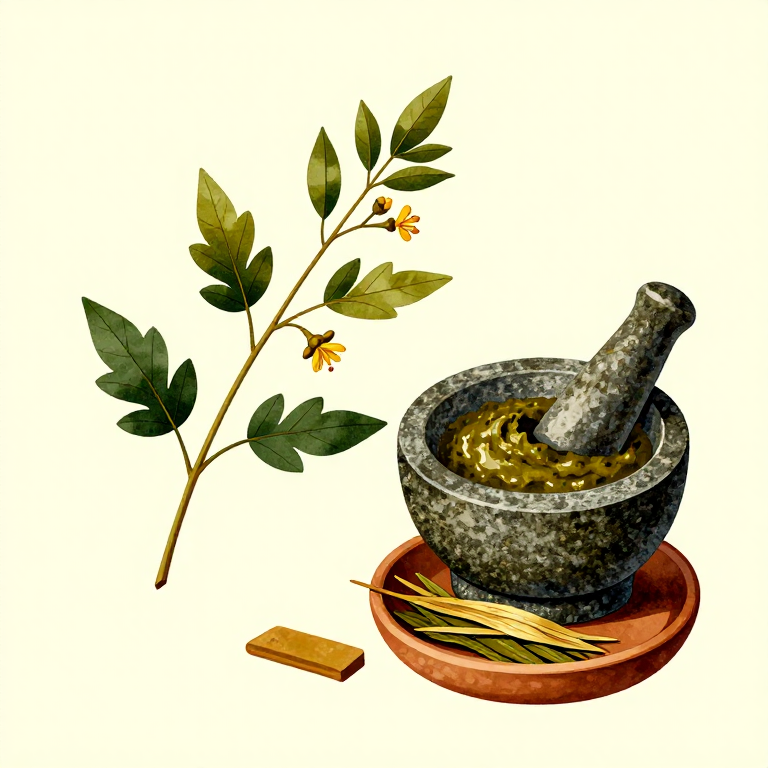


Egyptian Henna Dye — Preparing Henna Paste for Body Decoration
Leiðbeiningar
Grind the Dried Henna Leaves
Grind the Dried Henna Leaves
Place dried Lawsonia inermis leaves in a stone mortar and grind to a fine powder. Leaves should be bright green when freshly dried — brown or dull-colored leaves indicate age and produce weaker stain. Sieve through fine mesh to remove stems, leaf veins, or coarse particles. The finer the powder, the smoother the paste and the more even the stain. The active dye molecule is lawsone (2-hydroxy-1,4-naphthoquinone), concentrated in leaves at 1-2% by dry weight. This molecule binds to keratin protein in skin, hair, and nails through a Michael addition reaction, producing a permanent reddish-brown stain that fades only as stained cells naturally exfoliate.
Efni fyrir þetta skref:
 Sítróna3-4 for juice stykki
Nauðsynleg verkfæri:
 Mortél og mortélstautur
 Fínriðin tesía
Mix the Paste with Acidic Liquid
Mix the Paste with Acidic Liquid
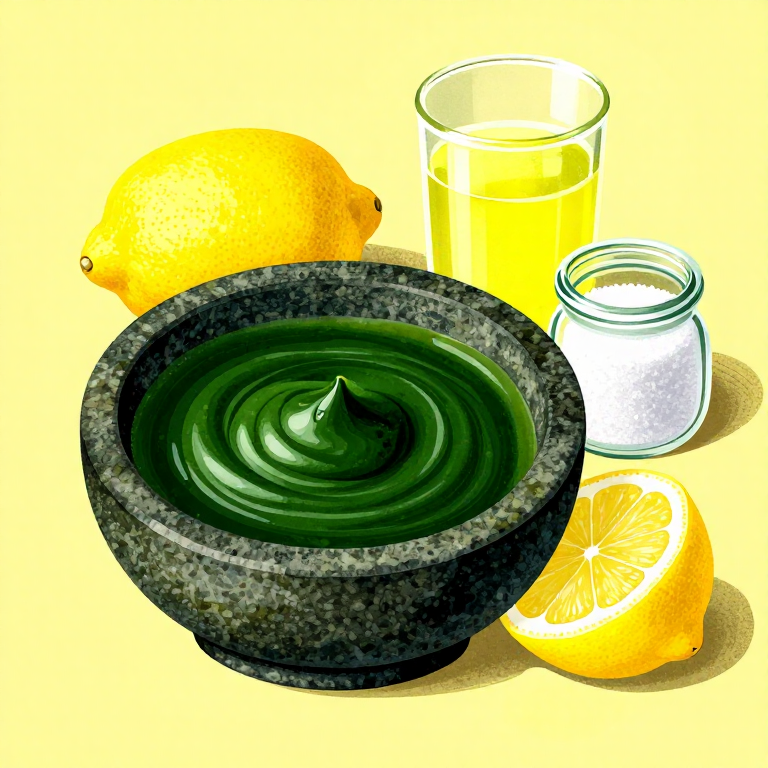
Place sifted henna powder in a non-metallic bowl (metal can react with lawsone). Gradually add lemon juice or mildly acidic liquid (pH 4-5.5) while stirring until the mixture forms thick paste with the consistency of mashed potatoes. The acid breaks down cellulose in leaf cells and releases lawsone from its bound sugar form (hennosides) into free lawsone. Add a tablespoon of sugar to improve skin adhesion without cracking. Optionally, add essential oil containing monoterpene compounds, which enhance lawsone release and skin penetration.
Efni fyrir þetta skref:
Sítróna150-200ml juice stykki Hvítur sykur1 tablespoon stykki
 Ilmkjarnaolía úr lofnarblómi (Lavandula angustifolia)5-10 drops stykki
Nauðsynleg verkfæri:
 Hrærskálasett
Allow the Dye to Release
Allow the Dye to Release
Cover the paste with plastic wrap or damp cloth pressed onto the surface. Allow to rest at room temperature (20-25 degrees Celsius) for 8-12 hours, or in warmth (30-35 degrees Celsius) for 4-6 hours. During this dye release period, lawsone molecules migrate from leaf cells into the liquid phase, becoming available to bind keratin. The paste darkens from bright green to brownish-green. Test by applying a small dot to a fingertip — if it stains orange within 10-15 minutes, dye release is complete. In ancient Egypt's warm climate, dye release would have occurred naturally within a few hours.
Nauðsynleg verkfæri:
 Klútur (til síunar)
Apply the Henna Paste
Apply the Henna Paste
Apply the rested paste to clean, dry skin in desired patterns using a small stick, cone, or brush, in a layer approximately 2-3 mm thick. Ancient Egyptians applied henna to fingernails, palms, soles, and hair. The mummy of Ramesses II showed henna-stained hair, suggesting its use even for pharaohs. The paste must remain moist and in contact with skin for 2-6 hours for light stains, 6-12 hours for deep color. Wrap the pasted area gently to maintain moisture. Body heat and paste moisture drive lawsone molecules into the keratin layer.
Remove the Paste and Develop the Stain
Remove the Paste and Develop the Stain
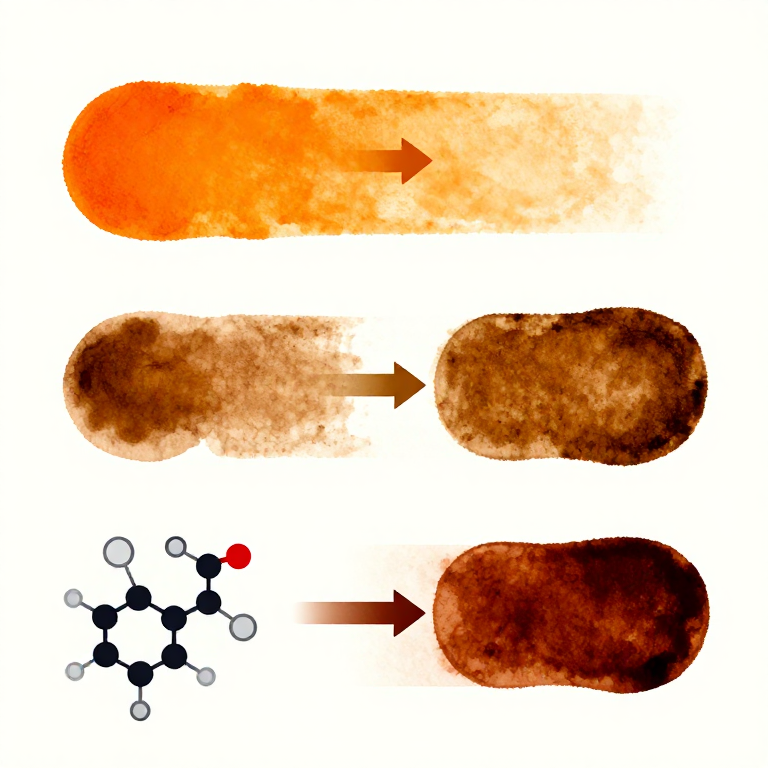
Scrape or peel the dried paste off — do not wash with water, as water interferes with the final oxidation stage. The initial stain appears bright orange. Over 24-48 hours, the lawsone-keratin complex oxidizes when exposed to air, deepening to rich reddish-brown or mahogany. The stain on palms and soles (thickest keratin) is darkest and longest-lasting, persisting 2-4 weeks. On thinner skin it fades within 1-2 weeks as epidermal cells naturally shed. Ancient Egyptian women were frequently depicted with reddish fingertips and palms, consistent with regular henna use.
Efni
6- 3-4 for juice stykkiStaðgengill
- 1 tablespoon stykkiStaðgengill
- 5-10 drops stykkiStaðgengill
- 100 g stykkiStaðgengill
- 150-200 ml stykkiStaðgengill
- 5-10 drops stykkiStaðgengill
Nauðsynleg verkfæri
4- Staðgengill
- Staðgengill
- Staðgengill
- Staðgengill
Þessi teikning býr til

CC0 opinbert ríki
Þessi teikning er gefin út undir CC0. Þér er frjálst að afrita, breyta, dreifa og nota þetta verk í hvaða tilgangi sem er, án þess að biðja um leyfi.
Studdu smiðinn með því að kaupa vörur í gegnum teikningu hans þar sem hann fær þóknun smiða sem seljendur ákvarða, eða búðu til nýja endurskoðun á þessari teikningu og tengdu hana sem tengingu í þinni eigin teikningu til að deila tekjum.