

Egyptian Limestone Cutting — Cutting Limestone Blocks with Copper Saws
Leiðbeiningar
Prepare the Limestone Block and Mark Cut Lines
Prepare the Limestone Block and Mark Cut Lines
Select a block of soft nummulitic limestone, the same type quarried at Giza and Tura in ancient Egypt. This sedimentary stone has a Mohs hardness of 3-4, making it workable with copper tools assisted by abrasive sand. Using a copper scriber or charcoal stick, mark your intended cut line on all visible faces of the block. Score a shallow starting groove along the marked line using a copper chisel — this groove will guide the saw blade and prevent it from wandering during the initial strokes. Secure the block firmly so it cannot shift during cutting.
Efni fyrir þetta skref:
 Kalksteinsblokk1 block, approx 30x20x15 cm for practice stykki
 Fínn sandur2-3 kg kg
 Vatncontinuous supply for lubrication stykki
Nauðsynleg verkfæri:
 Bandsagarblað
 Harðviðarefni í sköft
 Trésleggja
 Lokuð öryggisgleraugu
Set Up the Copper Saw with Abrasive Feed
Set Up the Copper Saw with Abrasive Feed
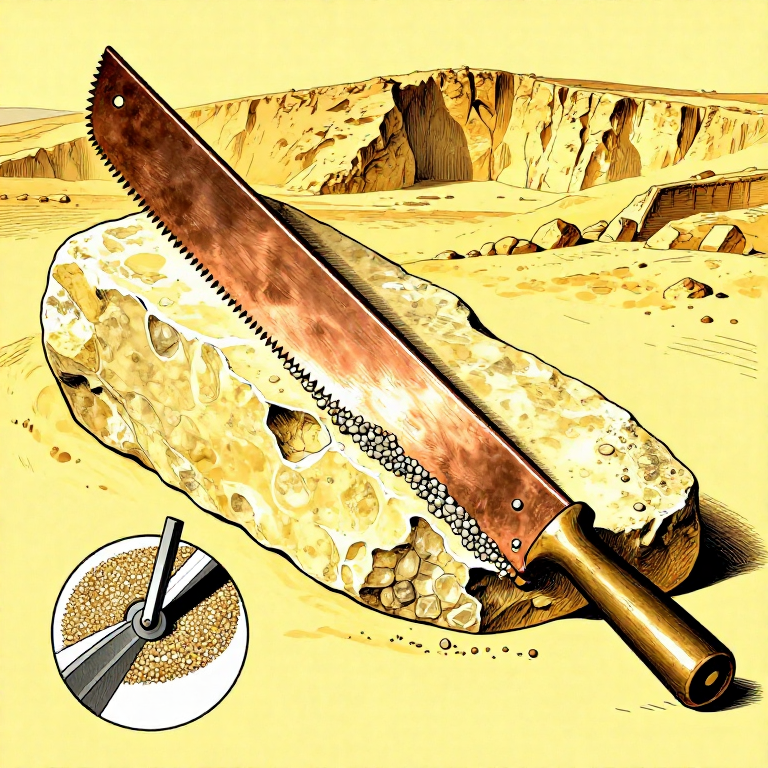
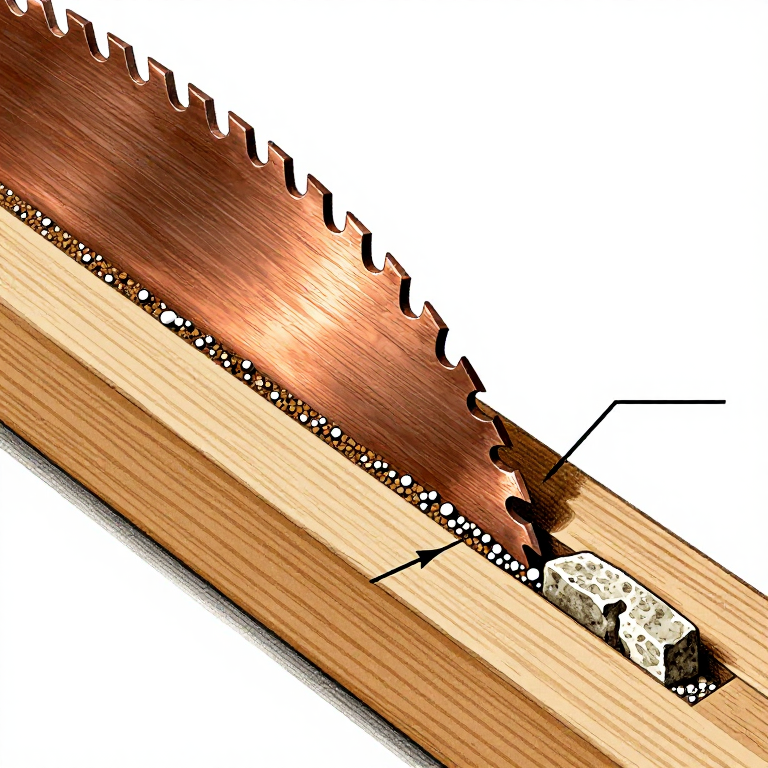
Mount the copper saw blade in its wooden frame. The blade should be flat copper sheet approximately 3-5 mm thick, as archaeological evidence from Giza and experimental archaeology by Denys Stocks confirms. Pure copper is too soft to cut limestone alone (Mohs 2.5-3 for copper versus 3-4 for limestone), so the actual cutting is performed by quartz sand particles (Mohs 7) trapped between the copper blade and the stone. Prepare a slurry of sharp quartz sand and water in a container near the work area. The sand grains must be angular, not rounded, to cut effectively.
Begin Cutting with Sand and Water Lubrication
Begin Cutting with Sand and Water Lubrication
Pour a generous amount of sand-water slurry into the scored groove on the limestone. Begin sawing with long, steady strokes, applying moderate downward pressure. The copper blade carries the quartz sand grains into the cut, where they abrade the limestone. Add more slurry frequently to keep the cut saturated — dry cutting causes the sand to clog and the copper to overheat. The characteristic green-grey copper residue found in ancient saw cuts at Giza confirms this abrasive technique. Expect a cutting rate of approximately 1-2 cm depth per hour in soft limestone, depending on sand quality and pressure applied.
Deepen the Cut and Maintain the Kerf
Deepen the Cut and Maintain the Kerf
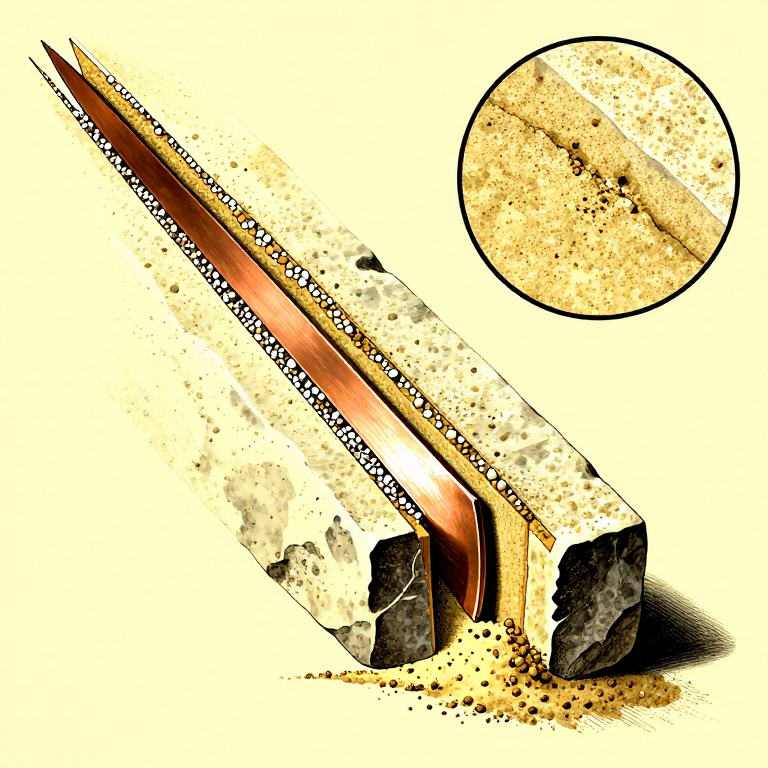
As the cut deepens, continue feeding sand slurry from both sides to ensure abrasive reaches the bottom of the kerf. The saw kerf will be slightly wider than the blade thickness due to the sand particles on either side — typically 6-10 mm wide for a 4 mm blade. Periodically withdraw the saw and flush the cut with water to remove accumulated stone dust and spent sand. Add fresh angular sand to maintain cutting speed. The copper blade will wear slowly during cutting but is consumed far less than the stone, as the quartz sand does the actual abrasive work. Ancient Egyptian quarry marks show saw cuts up to 2 meters long on granite sarcophagi.
Complete the Cut and Finish the Surface
Complete the Cut and Finish the Surface
Once the saw cut reaches the desired depth, the block can be split along the cut using wooden wedges driven into the kerf. Insert dry wooden wedges at intervals along the cut and soak them with water — as the wood swells it exerts enormous lateral pressure that splits the stone cleanly along the weakened plane. This wedge-splitting technique left characteristic slot marks visible on blocks at Giza, Saqqara, and Aswan quarries. The sawn surface will show fine parallel striations from the sand abrasive. For a finished architectural surface, the Egyptians smoothed these marks using flat sandstone rubbing stones with progressively finer grit, achieving surfaces flat to within fractions of a millimeter on the casing stones of the Great Pyramid.
Efni
3- 1 block, approx 30x20x15 cm for practice stykkiStaðgengill
- 2-3 kg kgStaðgengill
- continuous supply for lubrication stykkiStaðgengill
Nauðsynleg verkfæri
7- Staðgengill
- Staðgengill
- Copper chisels
- Staðgengill
- Staðgengill
- Staðgengill
- Staðgengill
Þessi teikning býr til
CC0 opinbert ríki
Þessi teikning er gefin út undir CC0. Þér er frjálst að afrita, breyta, dreifa og nota þetta verk í hvaða tilgangi sem er, án þess að biðja um leyfi.
Studdu smiðinn með því að kaupa vörur í gegnum teikningu hans þar sem hann fær þóknun smiða sem seljendur ákvarða, eða búðu til nýja endurskoðun á þessari teikningu og tengdu hana sem tengingu í þinni eigin teikningu til að deila tekjum.