
Extracting Antimony from Stibnite — The Ancient Cosmetic Turned Metal
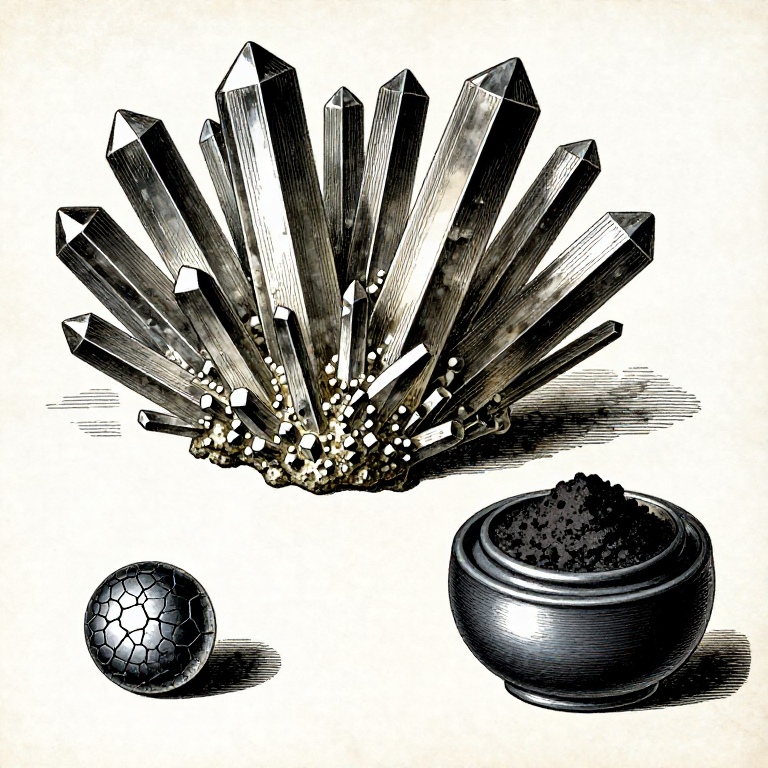
Antimony (Sb, element 51, from Latin stibium) has one of the longest histories of any element. Stibnite (antimony trisulfide, Sb₂S₃) — a lustrous, steel-grey mineral — was ground into powder and used as kohl eye cosmetic in ancient Egypt from at least 3100 BCE. The Ebers Papyrus (c. 1550 BCE) mentions it as a medicine. Yet metallic antimony was not reliably produced until the 16th century CE, when Vannoccio Biringuccio described its smelting in De la pirotechnia (1540).
Stibnite is the principal ore of antimony, containing 71.7% antimony by mass. The extraction involves two stages: first, stibnite is roasted in air to convert Sb₂S₃ to antimony trioxide (Sb₂O₃), releasing sulfur dioxide. Then the oxide is reduced with carbon at approximately 700–800 °C to yield metallic antimony. Alternatively, stibnite can be reduced directly using metallic iron in a precipitation reaction — the iron displaces antimony from the sulfide because iron has a greater affinity for sulfur.
HAZARD: Antimony and its compounds are toxic. Antimony trioxide is classified as a possible carcinogen (IARC Group 2B). Chronic exposure causes antimoniosis — a pneumoconiosis affecting the lungs. Stibine gas (SbH₃), while not produced in this process, is extremely toxic. Work outdoors with respiratory protection. Wash hands thoroughly after handling antimony or its ores.
Hættulegt efni
Þessi teikning inniheldur hættulegar aðferðir. Skráðu þig inn og virkjaðu hættulegt efni í stillingum reikningsins til að sjá skref-fyrir-skref leiðbeiningar.
Skrá innÞessi teikning býr til
CC0 opinbert ríki
Þessi teikning er gefin út undir CC0. Þér er frjálst að afrita, breyta, dreifa og nota þetta verk í hvaða tilgangi sem er, án þess að biðja um leyfi.
Studdu smiðinn með því að kaupa vörur í gegnum teikningu hans þar sem hann fær þóknun smiða sem seljendur ákvarða, eða búðu til nýja endurskoðun á þessari teikningu og tengdu hana sem tengingu í þinni eigin teikningu til að deila tekjum.