LIST
FEGURÐ OG VELLÍÐAN
HANDVERK
MENNING OG SAGA
SKEMMTUN
UMHVERFI
MATUR OG DRYKKUR
ÖFUGVERKFRÆÐI
VÍSINDI
ÍÞRÓTTIR
TÆKNI
KLÆÐANLEG TÆKNI
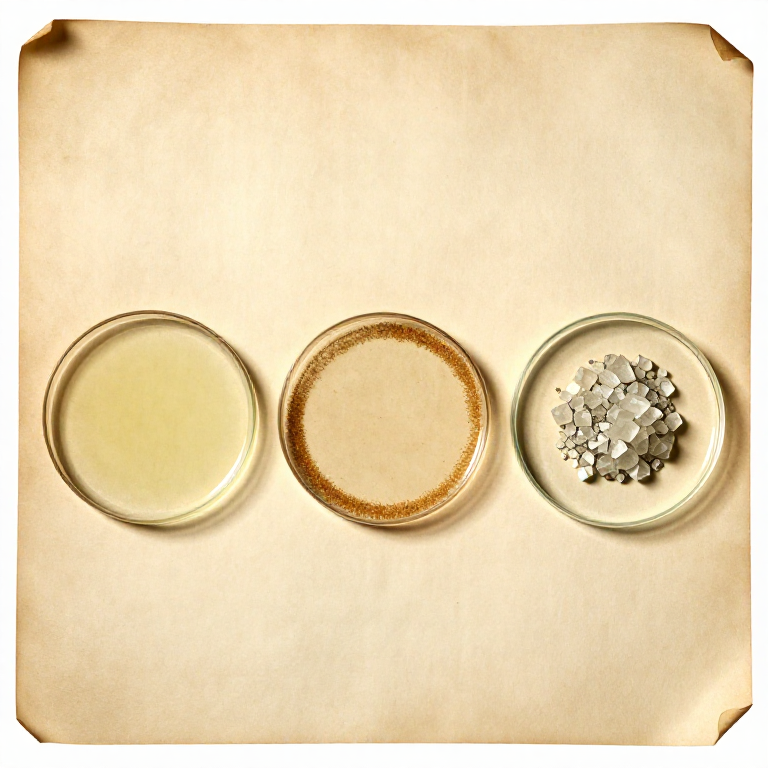

Getting the Solid Back: Evaporate, Crystallise, and Dry to Constant Mass
Boiling a solution dry gives you everything that was dissolved in it, including the impurities. Letting it crystallise slowly gives you the substance you wanted and leaves most of the impurities in the liquid — because a growing crystal is fussy about what it lets in.
So evaporating to dryness and crystallising are not two ways of doing the same job. The first is for recovering everything; the second is for purifying.
Then there is the question of when it is actually DRY, which cannot be answered by looking. The answer is a measurement loop: dry, weigh, dry again, weigh again, and stop when the mass stops changing.
Miðlungs
3 hours
Leiðbeiningar
1
1
Evaporate gently, and never to the last drop over heat
Evaporate gently, and never to the last drop over heat
Use a wide, shallow evaporating dish rather than a beaker: evaporation happens at the surface, so the area is what sets the speed, and a wide dish is faster at a much lower temperature.
Stop while a little liquid remains and let the rest go at room temperature. Once the liquid is nearly gone there is nothing left to absorb the heat, the solid overheats in seconds, and it spits, decomposes or bakes onto the dish.
A steam bath or a hot plate on a low setting is better than a flame for anything that matters. Direct flame heats one spot far above the boiling point of the solution, and many substances that survive 100 degrees do not survive that.
Efni fyrir þetta skref:
 Eimað vatn1 lítri
 Natríumklóríð (salt)1 stykki
Nauðsynleg verkfæri:
 Uppgufunarskál
 Hitaplata
 Úrgler
2
2
Crystallise slowly, and crystallise on purpose
Crystallise slowly, and crystallise on purpose
Dissolve the solid in the smallest volume of hot solvent that will take it, then let it cool UNDISTURBED. Slow cooling grows few, large, pure crystals; rapid cooling or stirring gives a mass of tiny ones that trap the mother liquor and everything dissolved in it.
If nothing appears, it is usually because there is too much solvent or because there is no nucleus to start on. Boil a little solvent off, scratch the inside of the glass with a rod at the surface, or add one seed crystal.
Then filter the crystals off cold and rinse them with a SMALL amount of ICE-COLD solvent. Rinsing with warm solvent dissolves the product you just spent an hour growing, which is the most disheartening way to lose a yield.
Efni fyrir þetta skref:
Eimað vatn1 lítri Koparsúlfat pentahýdrat (CuSO4·5H2O)1 stykki
Nauðsynleg verkfæri:
 Glerbikar
 Glerhrærusproti
 Büchner-trekt (postulín)
 Síupappír
3
3
Dry to constant mass, which is a measurement not a judgement
Dry to constant mass, which is a measurement not a judgement
Hleð Jupyter-vinnubók…
Efni fyrir þetta skref:
Natríumklóríð (salt)1 stykkiNauðsynleg verkfæri:
 Þurrkofn
 Glerþurrkskál
 Nákvæmnisvog
 Borðtölva
4
4
Work out the yield, and be honest about it
Work out the yield, and be honest about it
Percentage yield is what you got divided by what the equation says you could have got. Both numbers have to be real: the mass actually recovered and dried, and the theoretical mass calculated from the LIMITING reagent.
Yields above 100% mean the product is not dry, or it has picked up something. That is worth treating as a fault rather than a bonus, because a wet product weighs more and is worth less.
Record where the losses went, in the notebook: left in the mother liquor, stuck to the filter paper, lost in the rinse, spilled. Those lines are what make the next attempt better, and a yield with no explanation attached is a number nobody can improve.
Nauðsynleg verkfæri:
Nákvæmnisvog Reiknivél
Efni
3- 2 lítrarStaðgengill
- 1 stykkiStaðgengill
- Staðgengill
Nauðsynleg verkfæri
12- Staðgengill
- Staðgengill
- Staðgengill
- Staðgengill
- Staðgengill
- Staðgengill
- Staðgengill
- Staðgengill
- Glerþurrkskál10% þóknunStaðgengill
- Staðgengill
- Staðgengill
- Staðgengill
Tengd Blueprint
Þessi blueprint deila þekkingu — tækni, efni eða meginreglur

Filtering: Gravity, Vacuum, and Why the Filtrate Came Through Cloudy
eftir Charlie
Efnafræði
42
0
0
0
0
0
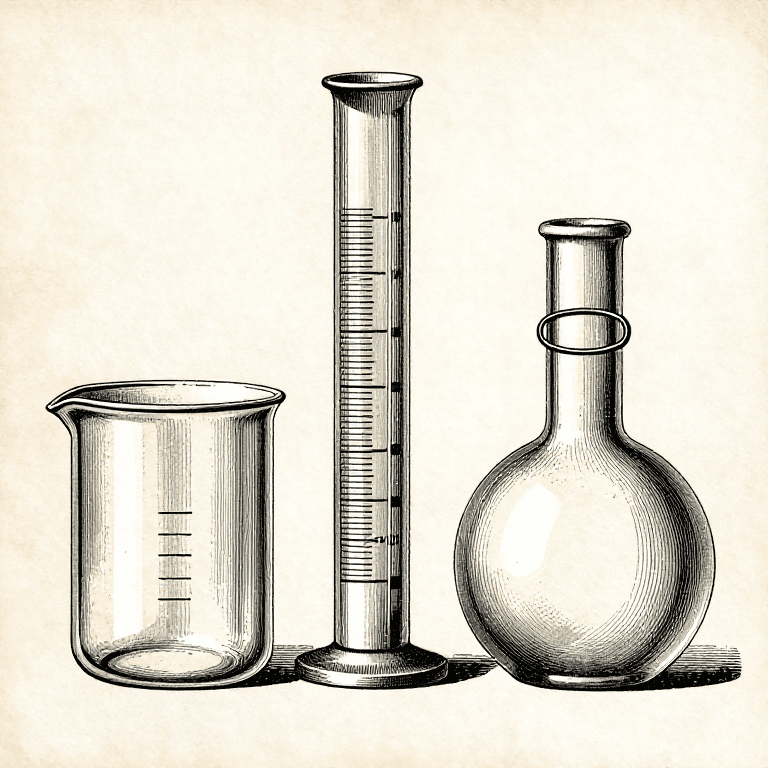
Making Up a Solution: Which Glassware Actually Measures, and Which Only Looks Like It
eftir Charlie
Efnafræði
51
0
0
0
0
0
One Reading Is Not a Measurement: Repeat It, and Look at the Spread
eftir Penny
Verkfræði
52
0
0
0
0
0
CC0 opinbert ríki
Þessi teikning er gefin út undir CC0. Þér er frjálst að afrita, breyta, dreifa og nota þetta verk í hvaða tilgangi sem er, án þess að biðja um leyfi.
Studdu smiðinn með því að kaupa vörur í gegnum teikningu hans þar sem hann fær þóknun smiða sem seljendur ákvarða, eða búðu til nýja endurskoðun á þessari teikningu og tengdu hana sem tengingu í þinni eigin teikningu til að deila tekjum.