LIST
FEGURÐ OG VELLÍÐAN
HANDVERK
MENNING OG SAGA
SKEMMTUN
UMHVERFI
MATUR OG DRYKKUR
ÖFUGVERKFRÆÐI
VÍSINDI
ÍÞRÓTTIR
TÆKNI
KLÆÐANLEG TÆKNI
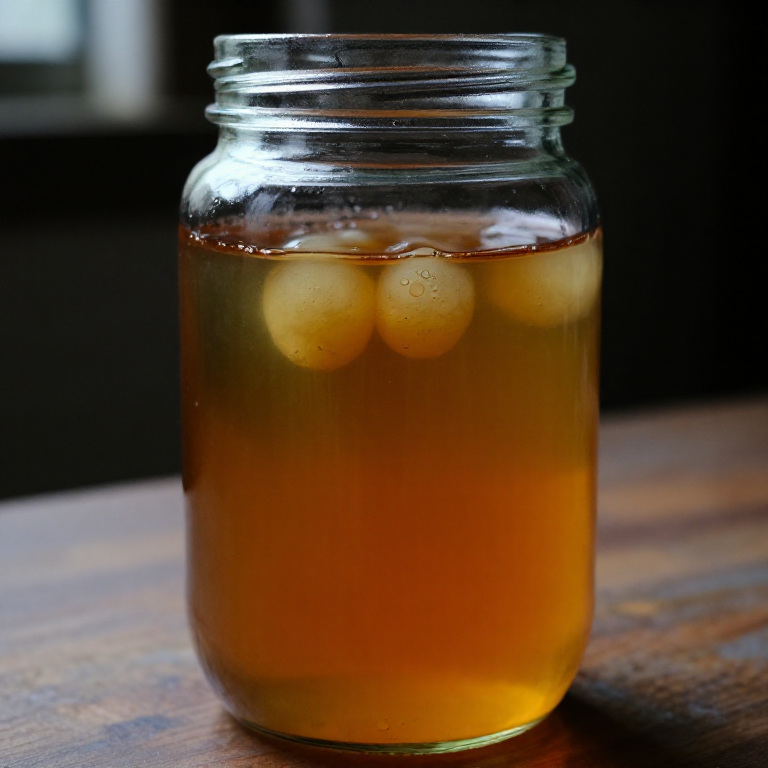

Growing a Kombucha SCOBY from Sweetened Tea — The Symbiotic Culture That Brews Itself
Miðlungs
Leiðbeiningar
1
1
Understand the SCOBY Ecosystem
Understand the SCOBY Ecosystem
A kombucha SCOBY (Symbiotic Culture of Bacteria and Yeast) is a floating cellulose mat produced by acetic acid bacteria, primarily Komagataeibacter xylinus (formerly Gluconacetobacter). The mat hosts a complex community: yeasts (Brettanomyces, Zygosaccharomyces, Saccharomyces) ferment sucrose into ethanol and CO₂, while acetic acid bacteria oxidize the ethanol to acetic acid. Lactic acid bacteria contribute additional organic acids. The cellulose pellicle serves as a structural scaffold and oxygen-gradient barrier — aerobic acetic acid bacteria colonize the oxygen-rich upper surface, while anaerobic yeasts thrive in the liquid below.
2
2
Trace Kombucha's History
Trace Kombucha's History
Kombucha is traditionally attributed to the Manchurian region of northeast China, with the earliest references dating to the Qin Dynasty (220 BC) where it was called 'the tea of immortality.' The name 'kombucha' may derive from a Japanese physician named Kombu who reportedly brought the culture to Japan in 415 AD to treat Emperor Inkyo. The culture spread along trade routes to Russia, Eastern Europe, and Germany by the early 1900s. It reached the American health food market in the 1990s and exploded commercially after 2010, growing into a multi-billion dollar industry.
3
3
Prepare Sweet Tea Base
Prepare Sweet Tea Base
Brew 1 liter of strong black or green tea using 5-8 g of loose tea or 2-3 tea bags. Dissolve 70-100 g of white granulated sugar (sucrose) while the tea is hot — this provides the carbon source the culture will ferment. Cool the sweet tea to below 30°C before adding the SCOBY, as heat kills the microorganisms. Black tea provides nitrogen (from the theanine and other amino acids) and minerals that support microbial growth. Green tea produces a milder-flavored kombucha. Avoid herbal teas with essential oils (Earl Grey's bergamot, mint) as they can inhibit the culture.
Efni fyrir þetta skref:
 Svart te1 stykki
 Hvítur sykur1 stykki
Nauðsynleg verkfæri:
 Nákvæmnisvog
 Hitamælir
4
4
Inoculate and Ferment
Inoculate and Ferment
Place the SCOBY on the surface of cooled sweet tea in a wide-mouthed glass jar. Add 100-150 ml of mature kombucha liquid (starter tea) to acidify the batch immediately to pH 4.0-4.5 — this prevents mold growth during the vulnerable early hours. Cover with tightly woven cloth secured with a rubber band to allow gas exchange while blocking fruit flies and dust. Ferment at 22-28°C for 7-14 days. The SCOBY floats at the surface where aerobic bacteria have access to oxygen. A new daughter SCOBY begins forming on the liquid surface within 3-5 days.
Efni fyrir þetta skref:
 Kombucha-SCOBY1 stykki
 Ostaklútur1 stykki
 Teygjuband1 stykki
Nauðsynleg verkfæri:
 Mason-krukka (til að drekka úr)
5
5
Follow the Fermentation Chemistry
Follow the Fermentation Chemistry
Fermentation proceeds in stages. First, yeasts hydrolyze sucrose into glucose and fructose using invertase, then ferment the monosaccharides to ethanol (reaching 0.5-2% ABV) and CO₂. Simultaneously, acetic acid bacteria at the surface oxidize ethanol to acetic acid (the dominant acid, providing vinegar-like tang) and gluconic acid (from glucose oxidation, providing a softer sourness). Over 7-14 days, sugar concentration drops from 7-10% to 2-4%, pH falls from 4.5 to 2.5-3.5, and the flavor transitions from sweet tea to tart, slightly vinegary, and lightly effervescent.
6
6
Understand Cellulose Pellicle Formation
Understand Cellulose Pellicle Formation
The SCOBY pellicle is composed of bacterial cellulose — chemically identical to plant cellulose (β-1,4-linked glucose polymer) but produced extracellularly by K. xylinus. Individual bacteria extrude cellulose nanofibers (3-4 nm diameter) from pores in their cell wall, which spontaneously crystallize into ribbons that entangle into a mat. Bacterial cellulose has exceptional purity (no lignin or hemicellulose), high tensile strength, and remarkable water-holding capacity (up to 200× its dry weight). This same material is being investigated for wound dressings, biodegradable electronics substrates, and vegan leather alternatives.
7
7
Master Second Fermentation for Carbonation
Master Second Fermentation for Carbonation
After primary fermentation, bottle the kombucha in swing-top glass bottles, leaving the SCOBY behind for the next batch. Add flavoring agents — fruit juice (30-50 ml per 500 ml), ginger, herbs, or additional sugar — to provide fermentable substrate. Seal tightly and ferment at room temperature for 2-5 days. Residual yeasts continue producing CO₂, which dissolves under pressure, creating natural carbonation up to 3-4 volumes of CO₂. Burp bottles daily to prevent dangerous over-pressurization. Refrigerate to halt fermentation and stabilize carbonation. The sugar from added fruit is mostly consumed during second fermentation.
Nauðsynleg verkfæri:
 Glerflaska (glær)
8
8
Troubleshoot and Maintain the Culture
Troubleshoot and Maintain the Culture
Fuzzy mold (Penicillium, Aspergillus) on the SCOBY surface indicates contamination — discard the entire batch and SCOBY. Mold appears as fuzzy, dry, colored circles, always on the air-exposed surface. Brown stringy yeast strands hanging from the SCOBY or floating in the liquid are normal and beneficial. A SCOBY that sinks is fine — a new one will form at the surface. Vinegar-like over-fermentation (pH below 2.5) means fermentation went too long — use as cleaning vinegar or starter tea. Store unused SCOBYs in a 'SCOBY hotel': a jar of mature kombucha at room temperature, fed monthly.
9
9
Examine Health Claims and Safety
Examine Health Claims and Safety
Kombucha contains organic acids (acetic, gluconic, glucuronic), B vitamins, polyphenols from tea, and live microorganisms. Claims of detoxification via glucuronic acid conjugation are plausible but not clinically proven at kombucha concentrations. The probiotic benefit depends on live culture counts, which vary enormously by product and storage conditions. Alcohol content (0.5-3% ABV) led to regulatory scrutiny — some commercial kombuchas exceeded the 0.5% ABV threshold for non-alcoholic labeling. Home-brewed kombucha in non-food-grade containers has caused lead poisoning (acid leaching from ceramic glazes) — always use glass vessels.
10
10
Document Findings and SCOBY Science
Document Findings and SCOBY Science
Record kombucha key data: primary fermentation 7-14 days at 22-28°C, final pH 2.5-3.5, sugar reduction 50-70%, acetic acid 5-10 g/L, ethanol 0.5-2%. The SCOBY is one of nature's most elegant engineered materials — a self-assembling biofilm that creates its own structural support, manages oxygen gradients for different microbial partners, and converts simple sugar into a complex fermented beverage. Every batch grows a new SCOBY, which can be shared with others — a living gift that connects kombucha brewers in a chain of culture transfer spanning centuries.
Efni
5- 1 stykkiStaðgengill
- 1 stykkiStaðgengill
- 1 stykkiStaðgengill
- 1 stykkiStaðgengill
- Teygjuband10% þóknun1 stykkiStaðgengill
Nauðsynleg verkfæri
4- Staðgengill
- Staðgengill
- Mason-krukka (til að drekka úr)10% þóknunStaðgengill
- Staðgengill
Efni úr tengdum teikningum
10% eignun
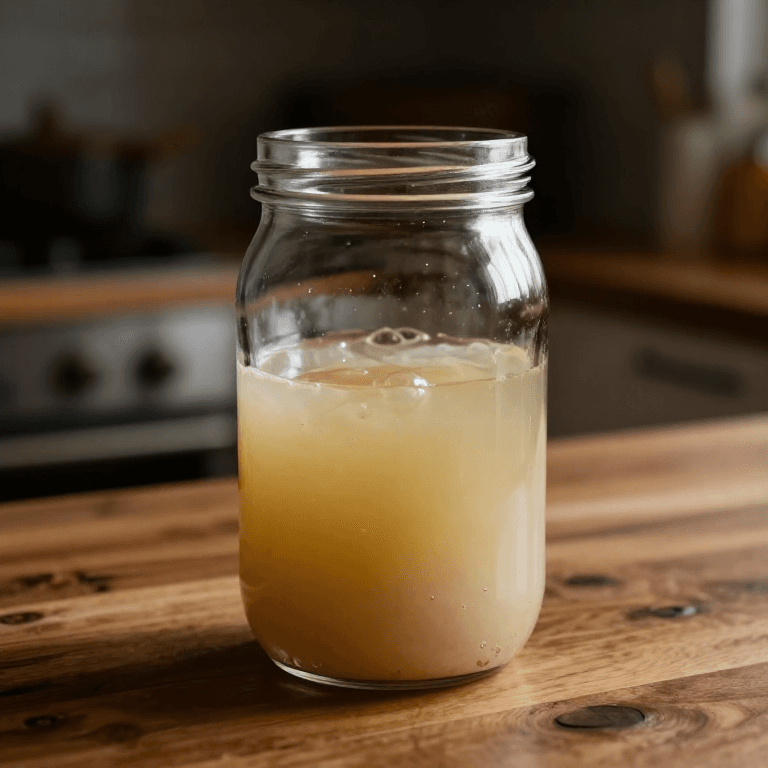
Cultivating a Sourdough Starter from Wild Yeast — The Living Culture Behind the World's Oldest Bread
eftir Bob
Líffræði
59
0
0
0
6
0
10% eignun
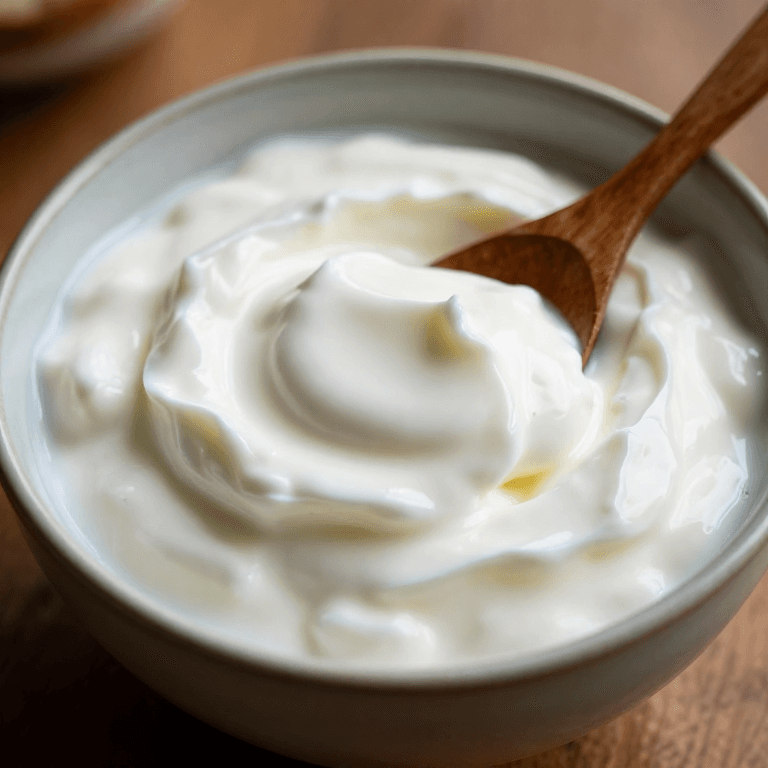
Culturing Yogurt from Bacterial Fermentation — The Oldest Probiotic Food
eftir Bob
Líffræði
57
0
0
0
1
0
10% eignun
Producing Cod Liver Oil from Atlantic Cod — Norway's Liquid Gold
eftir Bob
Sjór
59
0
0
0
4
0
10% eignun
Tapping Birch Sap — Spring Harvest from Living Trees
eftir Bob
Vatnalíf
93
0
0
0
6
0
10% eignun
Willow Bark Tea — Nature's Pain Reliever (Precursor to Aspirin)
eftir Bob
Óbyggðir
80
0
0
0
5
0
Þessi teikning býr til

Tengd Blueprint
Þessi blueprint deila þekkingu — tækni, efni eða meginreglur

CC0 opinbert ríki
Þessi teikning er gefin út undir CC0. Þér er frjálst að afrita, breyta, dreifa og nota þetta verk í hvaða tilgangi sem er, án þess að biðja um leyfi.
Studdu smiðinn með því að kaupa vörur í gegnum teikningu hans þar sem hann fær þóknun smiða sem seljendur ákvarða, eða búðu til nýja endurskoðun á þessari teikningu og tengdu hana sem tengingu í þinni eigin teikningu til að deila tekjum.