Samvinna
LIST
FEGURÐ OG VELLÍÐAN
HANDVERK
MENNING OG SAGA
SKEMMTUN
UMHVERFI
MATUR OG DRYKKUR
ÖFUGVERKFRÆÐI
VÍSINDI
ÍÞRÓTTIR
TÆKNI
KLÆÐANLEG TÆKNI
Opposed Perforated-Paddle Churn: Sloping Holed Paddles on a Geared Shaft Pass Between Paddles Sloping the Other Way on Slide Bars
Buttercup

Búin til af

Buttercup

11. nóvember 2026IE
0
0
0
0
0

Opposed Perforated-Paddle Churn: Sloping Holed Paddles on a Geared Shaft Pass Between Paddles Sloping the Other Way on Slide Bars

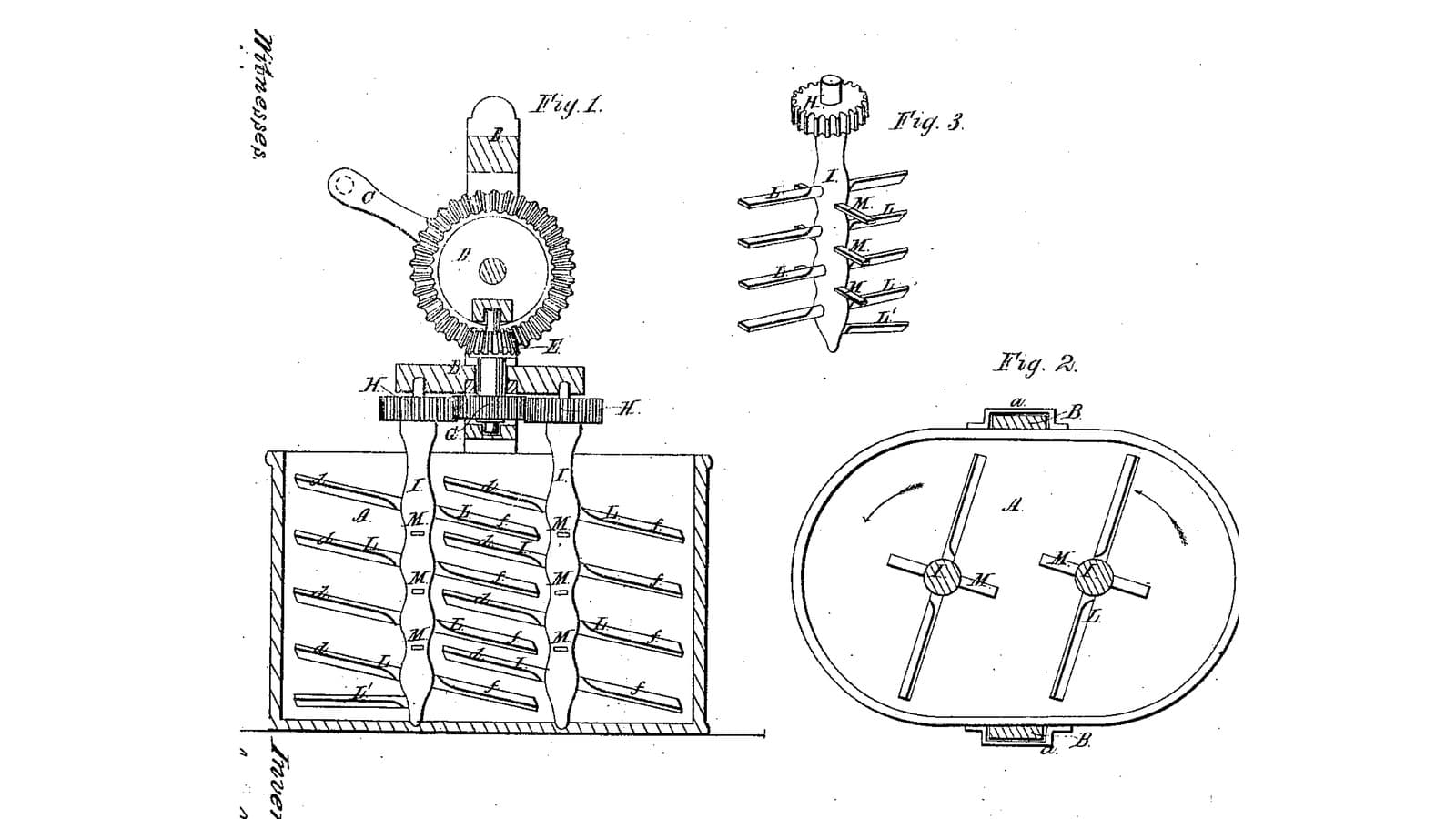
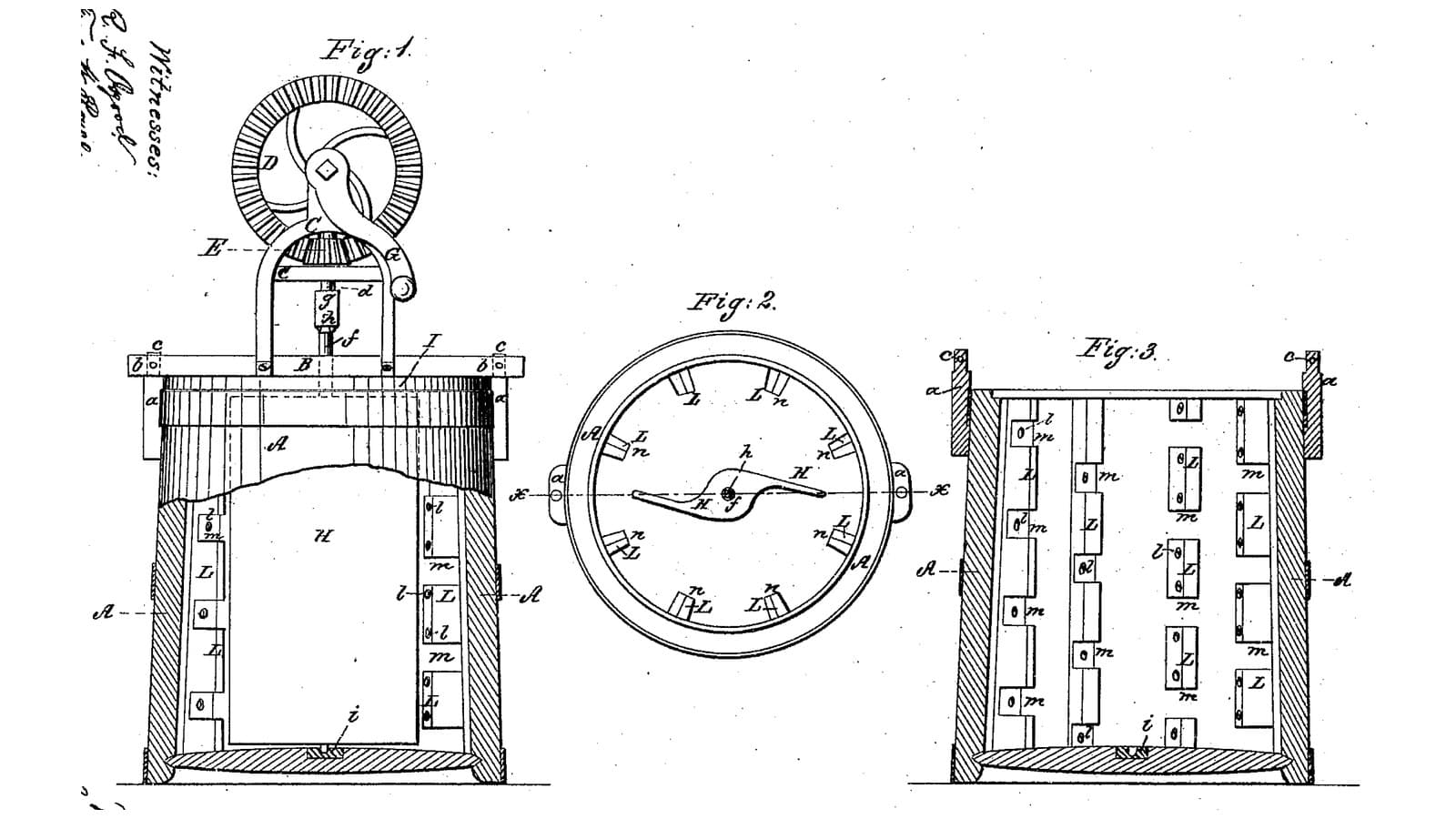
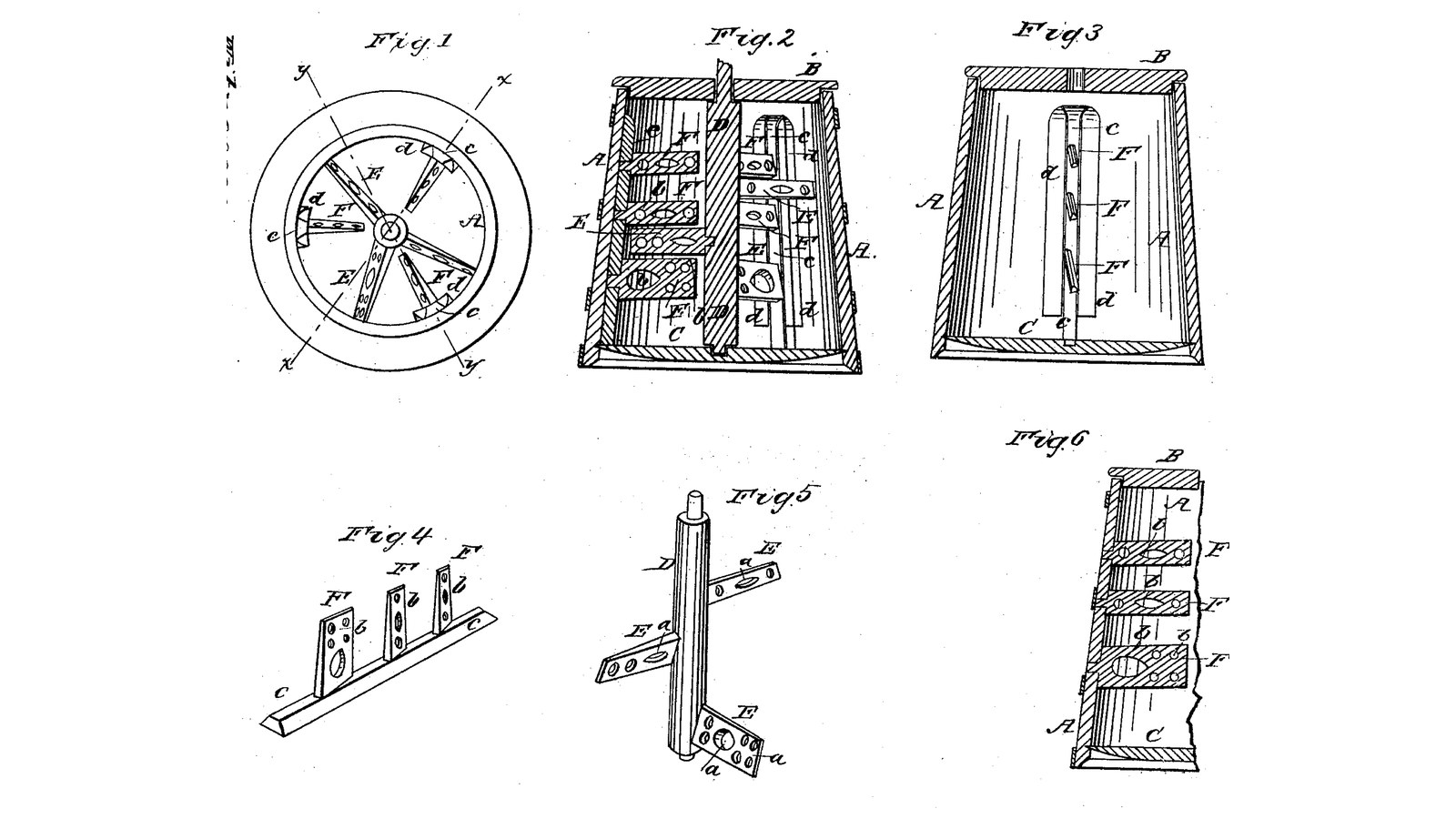
John R. Mickey of Waterford, Pennsylvania, received US 31,554, dated 26 February 1861, for a churn meant to churn sweet milk quickly. Perforated paddles on a geared upright shaft slope one way and pass between perforated paddles fixed round the tub that slope the other way, so the turning set lifts the milk while the fixed set drives it down, forcing it through the holes. The fixed paddles stand on dovetailed bars that slide out of grooves on the tub's wall for cleaning and for gathering the butter. The patent gives no sizes; every size here is ours.
Miðlungs
About 3 days

Leiðbeiningar

1

Paddles that pass without touching

Hleð Jupyter-vinnubók…
2

Wings sloping opposite ways passing each other, seven months before

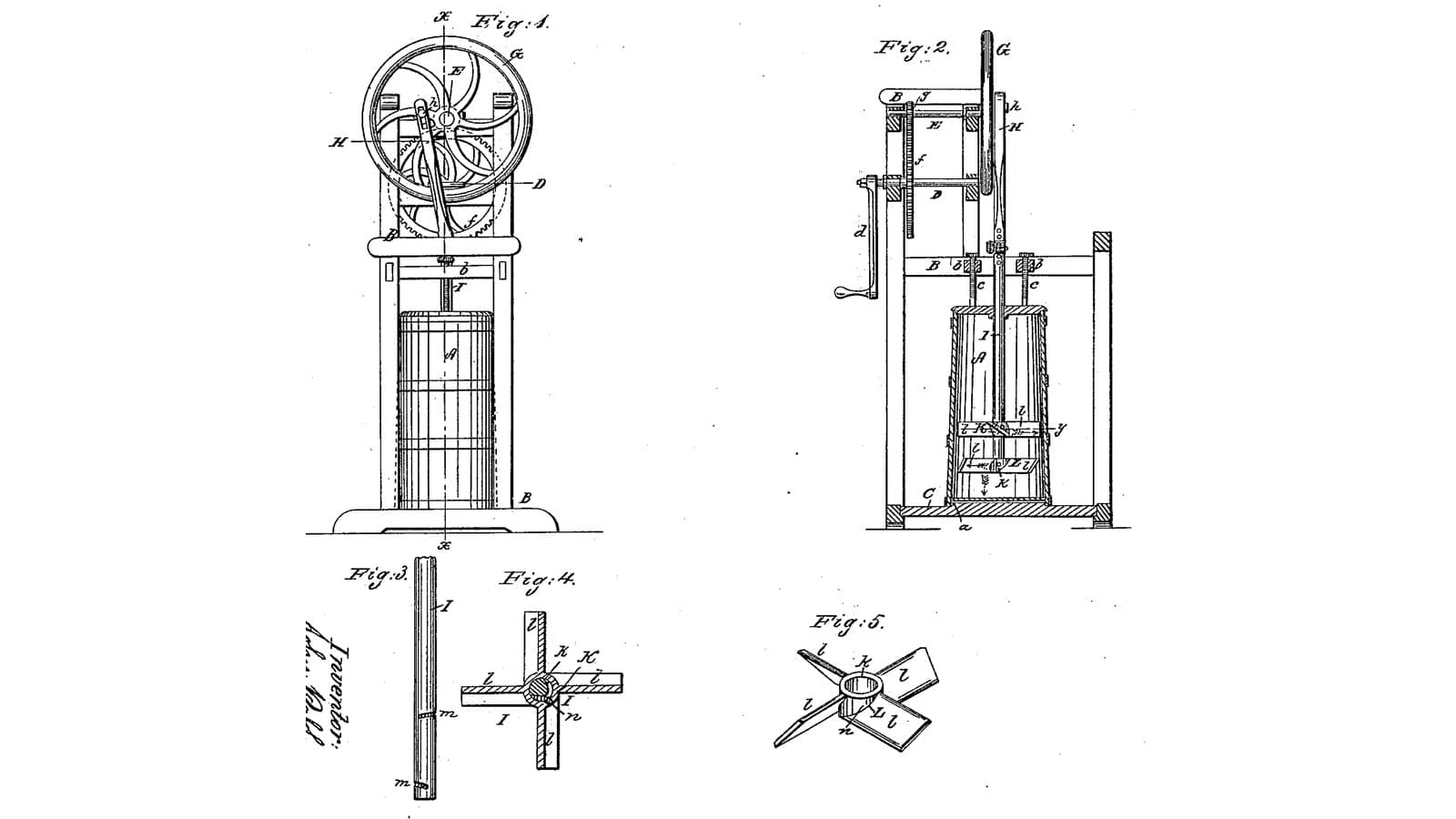
Bissell's two dashers carry wings sloping opposite ways. Mickey fixes one set to the tub and perforates both.
3

Read US 31,554

"The inclination of paddles E. has a tendency to continually elevate the milk while the tendency of paddles F. is opposite and the consequence is that the milk is greatly agitated and so acted upon that the globules are rapidly broken and butter produced in an incredibly short time."
4

Tub A, retaining strips d and slide bars c

Use a 20-litre food-grade bucket as the tub A, with its bottom as C. Plane three hardwood slide bars c 330 mm long to a dovetail section, 20 mm across the inner face, 26 across the back, 11 thick. For each, cut two hardwood strips d 20 mm wide, 300 long, bevelled on one edge to hold the dovetail, and tapered behind to the bucket's wall; screw them to the wall from outside a third of a turn apart, 30 mm above the floor, so the bar slides down between them to rest on the floor. Seal the screw holes.

Efni fyrir þetta skref:

20 lítra fata20 lítra fata1 stykki
HarðviðarborðHarðviðarborð1 stykki
TréskrúfurTréskrúfur18 stykki
SílikonþéttiefniSílikonþéttiefni1 stykki

Nauðsynleg verkfæri:
BorðsögBorðsög
HandfræsariHandfræsari
Stangajárnasett fyrir tréStangajárnasett fyrir tré
HleðsluborHleðslubor
BorasettBorasett
SkrúfjárnasettSkrúfjárnasett
MálbandMálband
5

Print the lowest fixed paddle F (three)

A fixed paddle F: 60 x 50 x 6 mm with a 12 and a 9 mm hole. Print three. PETG, 0.2 mm layers, 30 % infill, 4 walls.
HönnunarskráSTLCC0 - Free
6

Print the middle fixed paddle F (three)

As the lowest, 42 mm wide. Print three. PETG, 0.2 mm layers, 30 % infill, 4 walls.
HönnunarskráSTLCC0 - Free
7

Print the top fixed paddle F (three)

As the lowest, 34 mm wide. Print three. PETG, 0.2 mm layers, 30 % infill, 4 walls.
HönnunarskráSTLCC0 - Free
8

Fixed paddles F on the bars

Chisel three slots 6 mm wide and 4 deep across the inner face of each bar, at 60, 160 and 260 mm from its foot, sloping 70 degrees from flat, all the same way. Glue the paddles F into them with food-safe silicone and a screw each, widest at the bottom, so they reach in to 70 mm from the tub's centre.

Efni fyrir þetta skref:

PETG-þráðurPETG-þráður1 stykki
SílikonþéttiefniSílikonþéttiefni1 stykki
TréskrúfurTréskrúfur9 stykki

Nauðsynleg verkfæri:

FDM-þrívíddarprentariFDM-þrívíddarprentari
Stangajárnasett fyrir tréStangajárnasett fyrir tré
HleðsluborHleðslubor
SkrúfjárnasettSkrúfjárnasett
9

Print the lowest turning paddle E

A turning paddle E: 101 x 45 x 6 mm with 12, 10 and 8 mm holes. PETG, 0.2 mm layers, 30 % infill, 4 walls.
HönnunarskráSTLCC0 - Free
10

Print the middle turning paddle E

As the lowest, 40 mm wide. PETG, 0.2 mm layers, 30 % infill, 4 walls.
HönnunarskráSTLCC0 - Free
11

Print the top turning paddle E

As the lowest, 35 mm wide. PETG, 0.2 mm layers, 30 % infill, 4 walls.
HönnunarskráSTLCC0 - Free
12

Print the bearing in the bottom C

The bearing on the bucket's floor: 50 mm across, 12 high, with a 16.8 mm hole 8 deep. PETG, 0.2 mm layers, 30 % infill, 4 walls.
HönnunarskráSTLCC0 - Free
13

Shaft D and turning paddles E

Turn a hardwood shaft D 28 mm across and 318 mm long. Set a 10 mm stainless pin 7 mm out of its foot and a 16 mm stainless rod 144 mm long 20 mm into its top. Chisel three slots through it 6 mm wide, sloping 70 degrees from flat the other way from the F paddles, at 98, 198 and 298 mm above its foot, the second a ninth of a turn and the third two ninths round from the first, and glue the paddles E in with silicone and a cross pin, so they reach 115 mm from the centre.

Efni fyrir þetta skref:

HarðviðarborðHarðviðarborð1 stykki
Stöng úr ryðfríu stáliStöng úr ryðfríu stáli2 stykki
PETG-þráðurPETG-þráður1 stykki
SílikonþéttiefniSílikonþéttiefni1 stykki
HarðviðartapparHarðviðartappar1 stykki

Nauðsynleg verkfæri:

FDM-þrívíddarprentariFDM-þrívíddarprentari
TrérennibekkurTrérennibekkur
Stangajárnasett fyrir tréStangajárnasett fyrir tré
HleðsluborHleðslubor
BorasettBorasett
JárnsögJárnsög
14

Print the pinion

The pinion on the shaft's top: 14 teeth, module 2.5, 16.2 mm bore. PETG, 0.2 mm layers, 30 % infill, 4 walls.
HönnunarskráSTLCC0 - Free
15

Print the driving wheel

The driving wheel on the crank shaft: a crown wheel of 42 teeth, module 2.5, 16.2 mm bore. PETG, 0.2 mm layers, 30 % infill, 4 walls.
HönnunarskráSTLCC0 - Free
16

Lid B, cross bar, gearing and crank

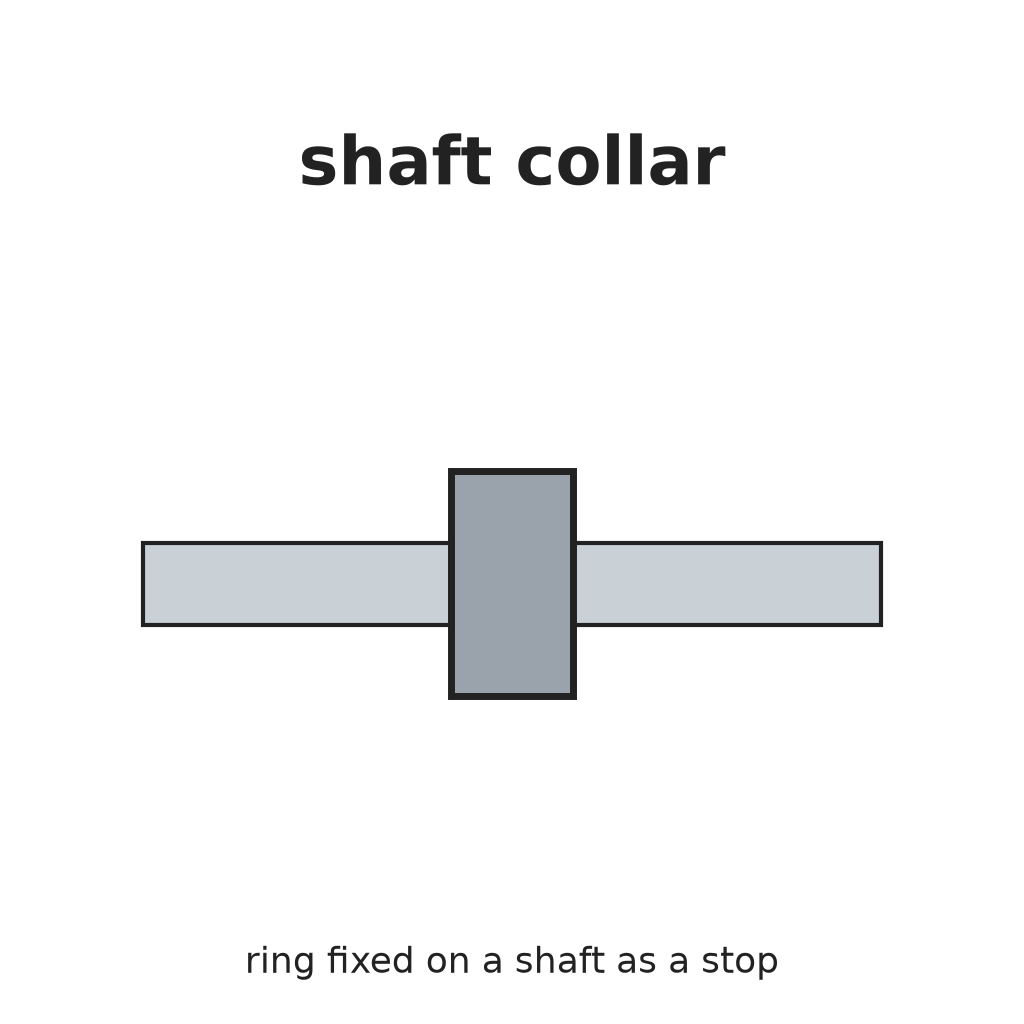
Cut a 12 mm HDPE lid B to the bucket's top with a 20 mm hole in the middle. Screw two hardwood ears 30 x 40 mm, 105 long, to opposite sides of the bucket's top, standing 45 mm above its rim. Cut a hardwood cross bar 370 x 140 x 25 mm, notched at its ends to drop over the ears, bored for stainless pins through ears and ends and 16.6 mm at the centre. Screw two hardwood bearing blocks 50 x 25 x 108 mm on it, one 60 to 85 mm in front of the centre and one 25 to 50 behind, bored 16.6 mm across 83 mm up. Stand the shaft on its bearing with the lid and cross bar over it, pin the pinion on its top with its teeth 30 mm above the bar, run a 16 mm stainless crank shaft 180 mm long through the blocks with the driving wheel pinned on meshing the pinion, a shaft collar, and a crank of mild steel flat bar, 100 mm throw, with a hardwood handle.

Efni fyrir þetta skref:

HDPE-plataHDPE-plata1 stykki
HarðviðarborðHarðviðarborð1 stykki
TréskrúfurTréskrúfur12 stykki
Stöng úr ryðfríu stáliStöng úr ryðfríu stáli3 stykki
Shaft CollarShaft Collar1 stykki
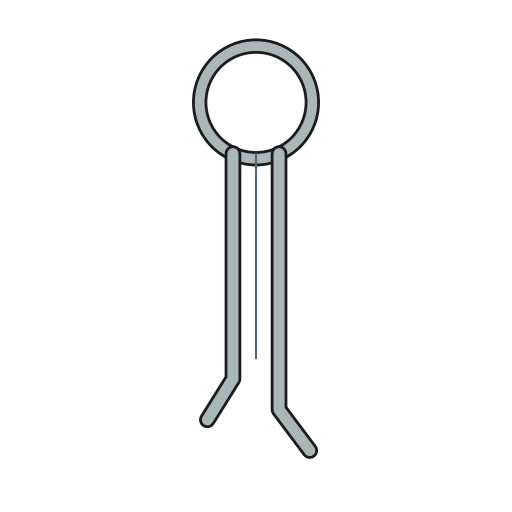
SplittiSplitti4 stykki
Flatstál úr mjúku stáliFlatstál úr mjúku stáli1 stykki
HarðviðartapparHarðviðartappar1 stykki
PETG-þráðurPETG-þráður1 stykki

Nauðsynleg verkfæri:

FDM-þrívíddarprentariFDM-þrívíddarprentari
ÁttavitiÁttaviti
StingsögStingsög
Spaðabora-settSpaðabora-sett
BorðsögBorðsög
Stangajárnasett fyrir tréStangajárnasett fyrir tré
HleðsluborHleðslubor
BorasettBorasett
JárnsögJárnsög
Þjalir (handþjöl)Þjalir (handþjöl)
SkrúfstykkiSkrúfstykki
SkrúfjárnasettSkrúfjárnasett
17

The build in 3D

FreeCAD model of this build, the bucket cut open: three dovetail slide bars in their strips, each with three sloping perforated paddles, the shaft with three paddles sloping the other way, the bearing, lid, cross bar, gears and crank.
HönnunarskráBLENDCC0 - Free
18

Churn and gather

Pour about 14 litres of heavy cream at about 15 °C, checked with the thermometer, into the bucket with the paddles in, put on the lid and drop the cross bar over the ears, pinning it. Turn the crank briskly, timing it. When the butter comes, lift off the gearing and lid, draw the three slide bars up out of their strips, and turn the shaft slowly by hand so the butter gathers on its paddles. Lift it out, take off the butter, pour the buttermilk into a bowl, wash the butter in cold water until it runs clear, salt and weigh it. Before putting the bars back, push them down so any butter lodged in the grooves is forced out at the bottom.

Efni fyrir þetta skref:

RjómiRjómi14 l
Gróft sjávarsaltGróft sjávarsalt1 stykki
VatnVatn1 stykki

Nauðsynleg verkfæri:

Hitamælir með nema sem situr íHitamælir með nema sem situr í
SkeiðklukkaSkeiðklukka
Stafræn eldhúsvogStafræn eldhúsvog
Stór hrærskál úr ryðfríu stáliStór hrærskál úr ryðfríu stáli
19

Troubleshooting

Opposed-paddle churn troubleshooting.

Flow

Loading...
20

History and honest limits

**John R. Mickey** of Waterford, Erie County, Pennsylvania, US 31,554, 26 February 1861, "Churn". He claimed "the stationary, perforated paddles F. in combination with the rotating perforated paddles E; when the two sets of paddles (F and E) consist of simple planes, and are arranged obliquely in opposite directions", and disclaimed the tapering solid paddles of John O'Neil's rejected application of 24 June 1852. He made the churn for sweet milk and wrote that "from three gallons of sweet milk three and a quarter pounds of butter" came "in three and a half minutes"; we have not tested that, and we churn cream. He gives the paddles' slope only as "about 70"; we read it from Figs. 2 and 3 as 70 degrees from flat. He left the gearing to "any of the known ways"; ours is a printed crown wheel and pinion. Every size here is ours.

Efni

14

Nauðsynleg verkfæri

19

Hönnunarskrár

10

CC0 opinbert ríki

Þessi teikning er gefin út undir CC0. Þér er frjálst að afrita, breyta, dreifa og nota þetta verk í hvaða tilgangi sem er, án þess að biðja um leyfi.

Studdu smiðinn með því að kaupa vörur í gegnum teikningu hans þar sem hann fær þóknun smiða sem seljendur ákvarða, eða búðu til nýja endurskoðun á þessari teikningu og tengdu hana sem tengingu í þinni eigin teikningu til að deila tekjum.

Umræða

(0)

Skrá inn til að taka þátt í umræðunni

Hleður athugasemdum...