LIST
FEGURÐ OG VELLÍÐAN
HANDVERK
MENNING OG SAGA
SKEMMTUN
UMHVERFI
MATUR OG DRYKKUR
ÖFUGVERKFRÆÐI
VÍSINDI
ÍÞRÓTTIR
TÆKNI
KLÆÐANLEG TÆKNI
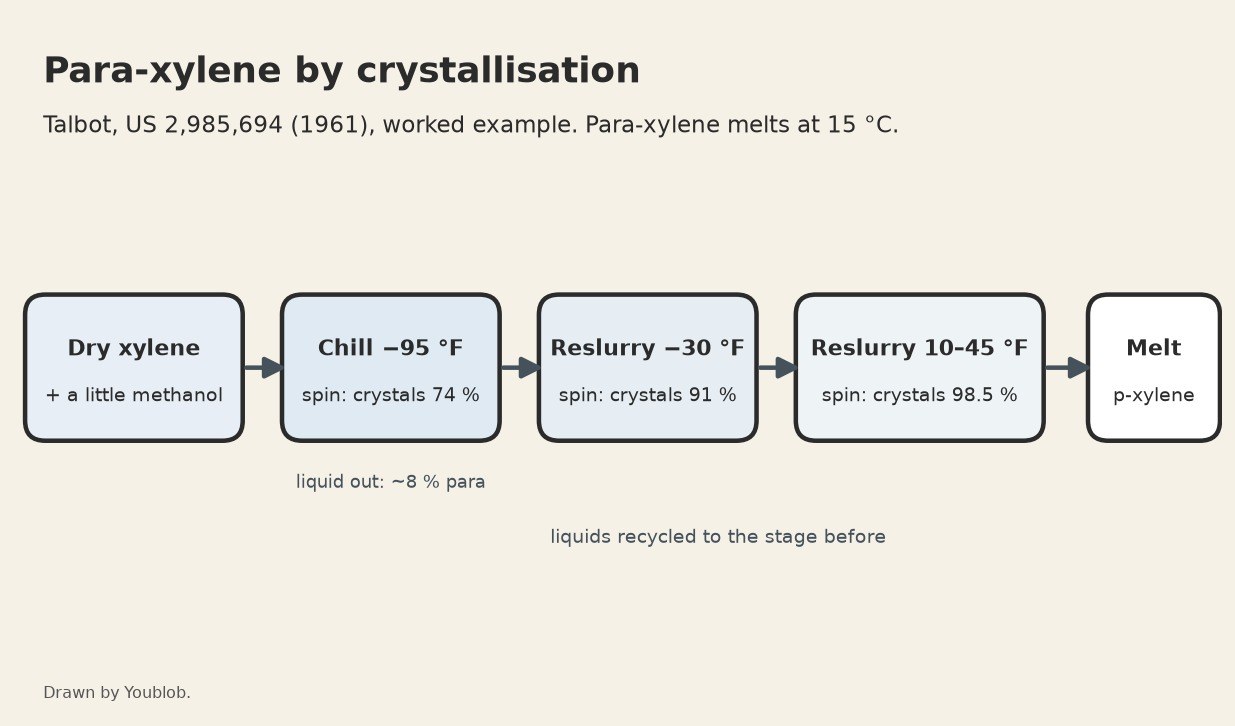


Para-Xylene by Three-Stage Crystallisation from Xylene
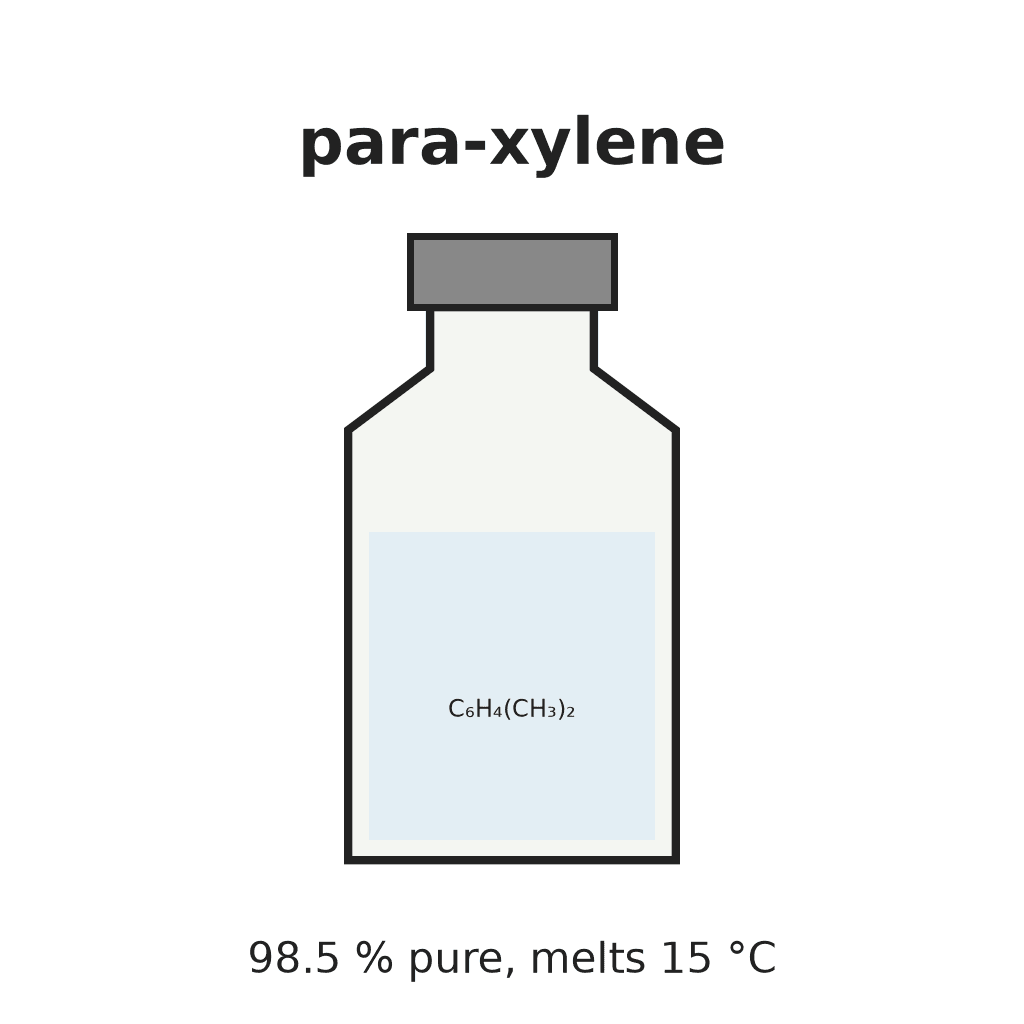
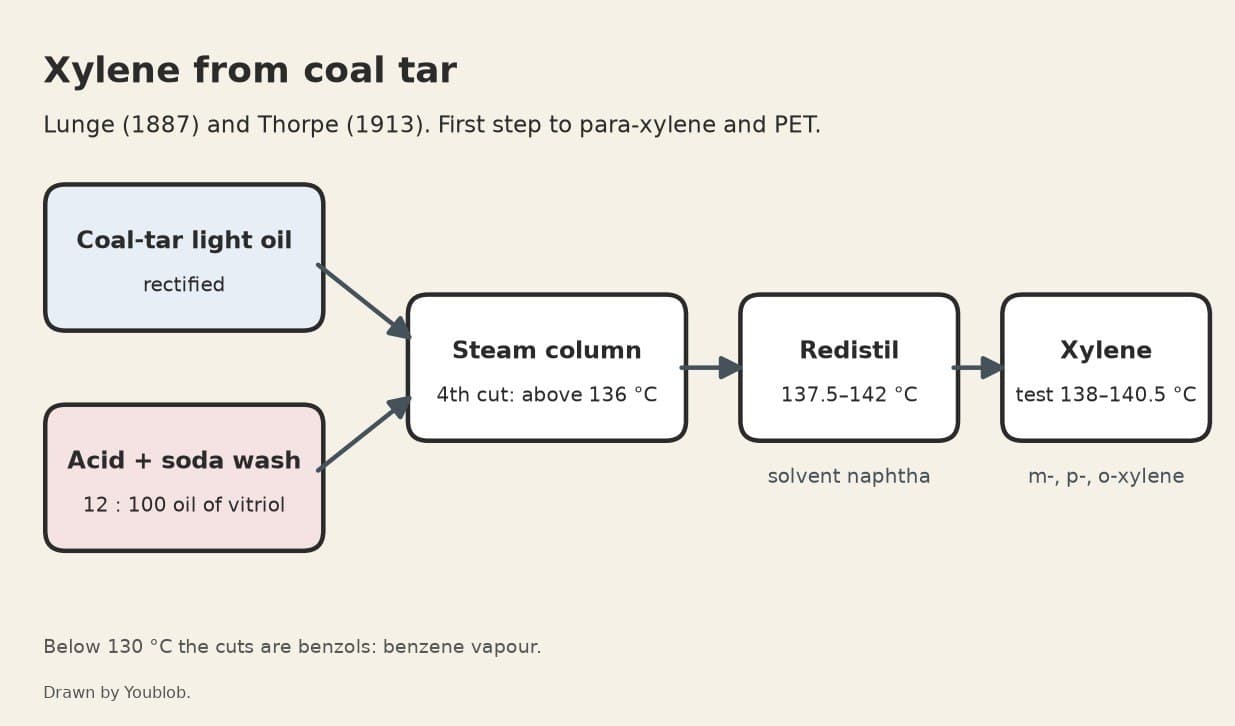
Para-xylene melts at 15 °C (Lunge, 1887), so it crystallises out of mixed xylene when this is chilled hard. This is Talbot's three-stage process (US 2,985,694, 1961): chill the dry feed to about −95 °F and spin off the crystals, then warm them in stages in their own recycled liquor and spin again, until they are 98.5 % para-xylene. Para-xylene is the raw material for terephthalic acid and so for PET.
The picture: our diagram of the three stages.
Lengra kominn
1 day
Leiðbeiningar
1
1
Take out the ortho-xylene (preferred)
Take out the ortho-xylene (preferred)
If you can, first distil off ortho-xylene as the bottoms of a tall column: more than 35, better about 60, theoretical plates. The patent prefers this but does not require it.
Efni fyrir þetta skref:
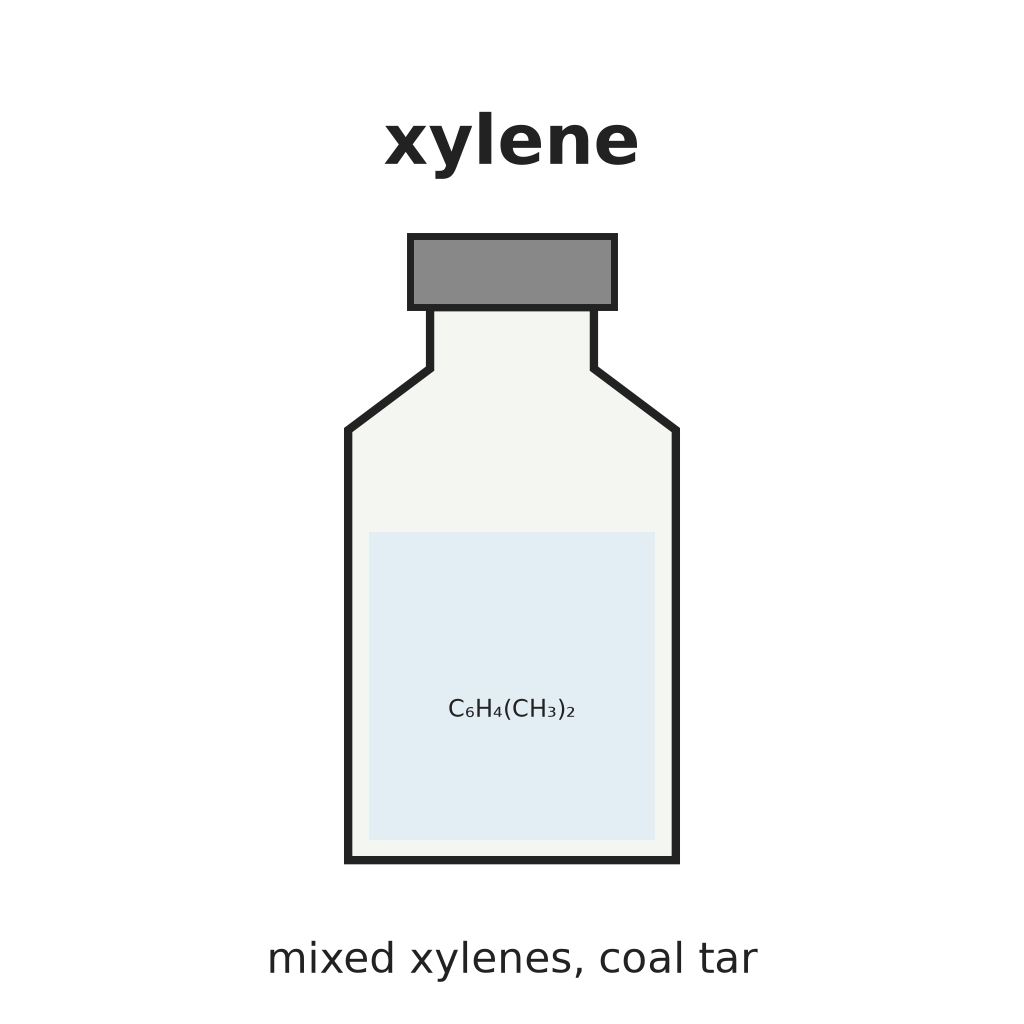 Xýlen1 as required
Nauðsynleg verkfæri:
 Eimingarsúlusamstæða
 Gufuketill
 Rannsóknastofuhitamælir
2
2
Dry the feed and add a little methanol
Dry the feed and add a little methanol
Remove all water from the xylene (calcium chloride is our choice of drier). Add methanol so ice does not plug the cold equipment: the patent's example uses 49 lb methanol to 13,430 lb feed.
Nauðsynleg verkfæri:
 Kalsíumklóríð
 Metanól
 Kristöllunarker
3
3
Chill to about −95 °F and spin
Chill to about −95 °F and spin
Cool slowly, over about 20 minutes, to between −75 and −120 °F (−59 to −84 °C); the example uses −95 °F (−71 °C). Spin the slurry in a centrifuge: the liquid (about 8 % para) goes out, the crystals are about 74 % para-xylene.
Nauðsynleg verkfæri:
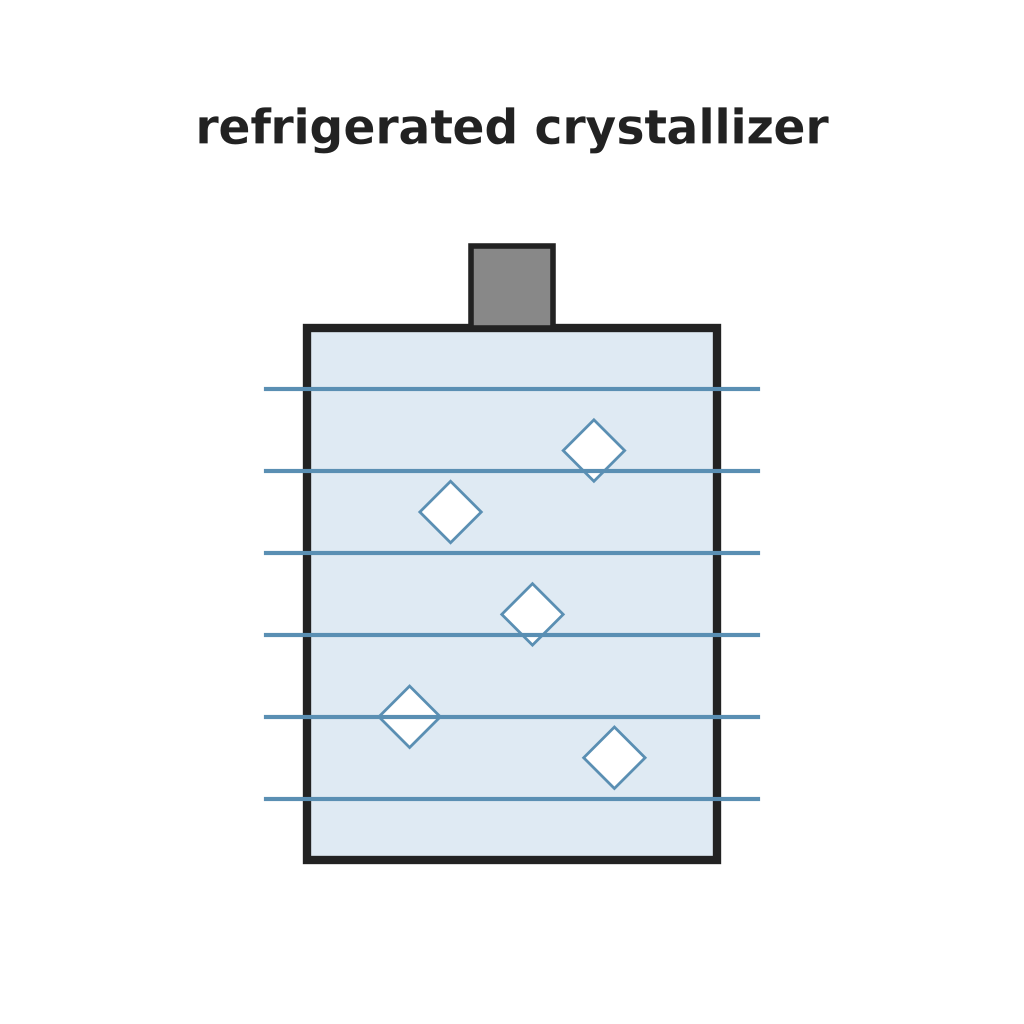 Kældur kristallari
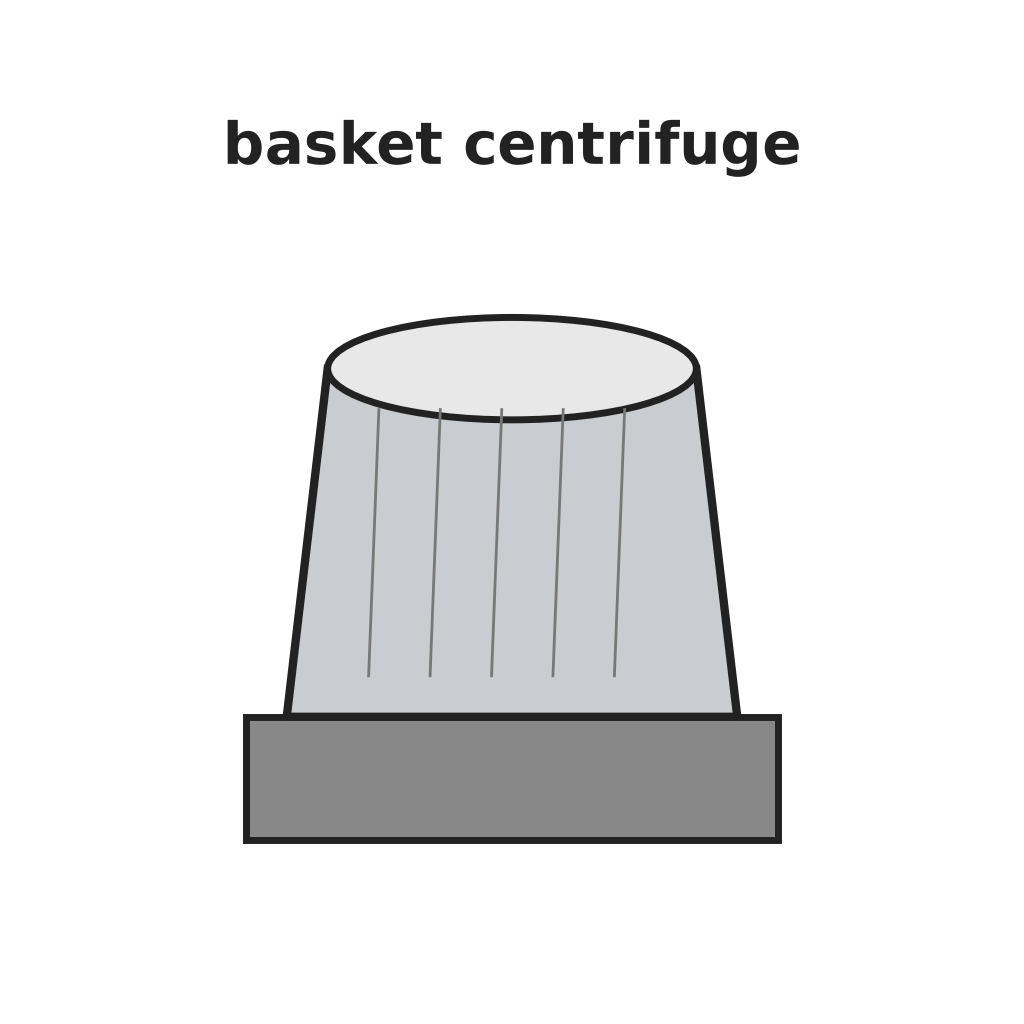 KörfuskilvindaRannsóknastofuhitamælir
 Hitaþolnir hanskar
 Hlífðargleraugu gegn efnaslettum
4
4
Reslurry, bring to −30 °F, spin
Reslurry, bring to −30 °F, spin
Stir the crystals into the liquid from the next stage and bring the slurry to between 0 and −30 °F (−18 to −34 °C); the example uses −30 °F. Centrifuge again: the crystals are now about 91 % para-xylene.
Nauðsynleg verkfæri:
KristöllunarkerKældur kristallariKörfuskilvindaRannsóknastofuhitamælirHitaþolnir hanskar5
5
Reslurry warmer, spin and melt
Reslurry warmer, spin and melt
Stir these crystals into the liquid from the last spin and bring to 10–45 °F (−12 to 7 °C). Centrifuge: the crystals are 98.5 % para-xylene. Melt them and bottle. Return the liquids to the earlier stages.
Nauðsynleg verkfæri:
KristöllunarkerKældur kristallariKörfuskilvindaRannsóknastofuhitamælir Glerflöskur með tappa
Nauðsynleg verkfæri
11- Staðgengill
- Staðgengill
- Staðgengill
- Staðgengill
- Staðgengill
- Staðgengill
- Staðgengill
- Staðgengill
- Staðgengill
- Staðgengill
- Staðgengill
Þessi teikning býr til
Tengd Blueprint
Þessi blueprint deila þekkingu — tækni, efni eða meginreglur
CC0 opinbert ríki
Þessi teikning er gefin út undir CC0. Þér er frjálst að afrita, breyta, dreifa og nota þetta verk í hvaða tilgangi sem er, án þess að biðja um leyfi.
Studdu smiðinn með því að kaupa vörur í gegnum teikningu hans þar sem hann fær þóknun smiða sem seljendur ákvarða, eða búðu til nýja endurskoðun á þessari teikningu og tengdu hana sem tengingu í þinni eigin teikningu til að deila tekjum.