LIST
FEGURÐ OG VELLÍÐAN
HANDVERK
MENNING OG SAGA
SKEMMTUN
UMHVERFI
MATUR OG DRYKKUR
ÖFUGVERKFRÆÐI
VÍSINDI
ÍÞRÓTTIR
TÆKNI
KLÆÐANLEG TÆKNI
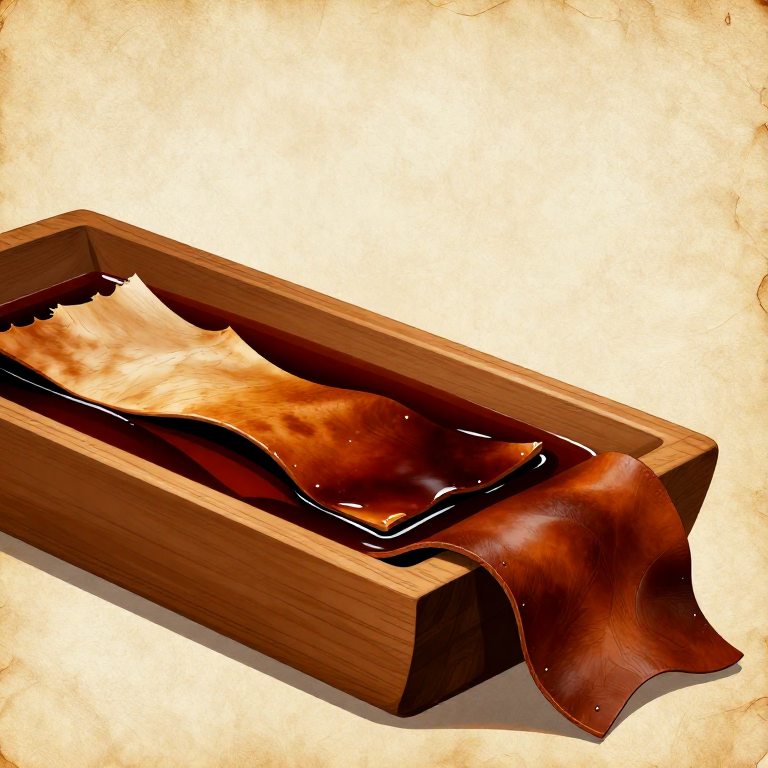


Bark Tanning Animal Hides — Vegetable Tanned Leather from Oak Bark
Bark tanning (vegetable tanning) is one of the oldest methods of preserving animal hides, using tannins extracted from tree bark to transform raw skin into durable, rot-resistant leather. Unlike brain tanning — which produces soft, washable buckskin — bark tanning yields firm, stiff leather that resists water and abrasion, making it ideal for shoe soles, belts, knife sheaths, armour, containers, and any application requiring structural rigidity. The chemistry is straightforward: tannins (polyphenolic compounds found in bark, wood, leaves, and fruits) bond irreversibly with the collagen protein in animal skin, cross-linking the fibres and making them resistant to bacterial decomposition and heat. Oak bark is the premier European tannin source, with a tannin content of 8 to 12 percent by dry weight. Other effective sources include willow bark, hemlock bark, chestnut wood, birch bark, and mimosa bark. The process requires patience — full penetration of a thick hide takes 2 to 4 weeks of soaking in progressively stronger bark solutions. Archaeological evidence of vegetable-tanned leather dates to at least 5,000 BCE in Mesopotamia, though the technique is almost certainly much older. This blueprint covers the complete process from hide preparation through final conditioning.
Miðlungs
2-4 weeks
Leiðbeiningar
1
1
Prepare the Raw Hide
Prepare the Raw Hide
Start with a freshly fleshed raw hide that has been scraped clean of all fat, meat, and membrane on the flesh side. If the hide has been salted or dried for storage, soak it in clean water for 24 to 48 hours until fully rehydrated and pliable. The hide must be soft and flexible before proceeding.
Efni fyrir þetta skref:
 Hrátt skinn1 stykki
2
2
Remove the Hair by Soaking in Wood Ash Lye
Remove the Hair by Soaking in Wood Ash Lye
Prepare a de-hairing solution by mixing hardwood ash with water in a ratio of approximately 1 part ash to 5 parts water by volume. Submerge the hide completely and soak for 3 to 7 days, stirring daily. The alkaline lye (potassium hydroxide from the ash) loosens the hair follicles. Test daily by pulling a tuft of hair — when it slips out easily with no resistance, the hide is ready.
Efni fyrir þetta skref:
 Viðarkol í molum2 kg
3
3
Scrape Off All Hair and Epidermis
Scrape Off All Hair and Epidermis
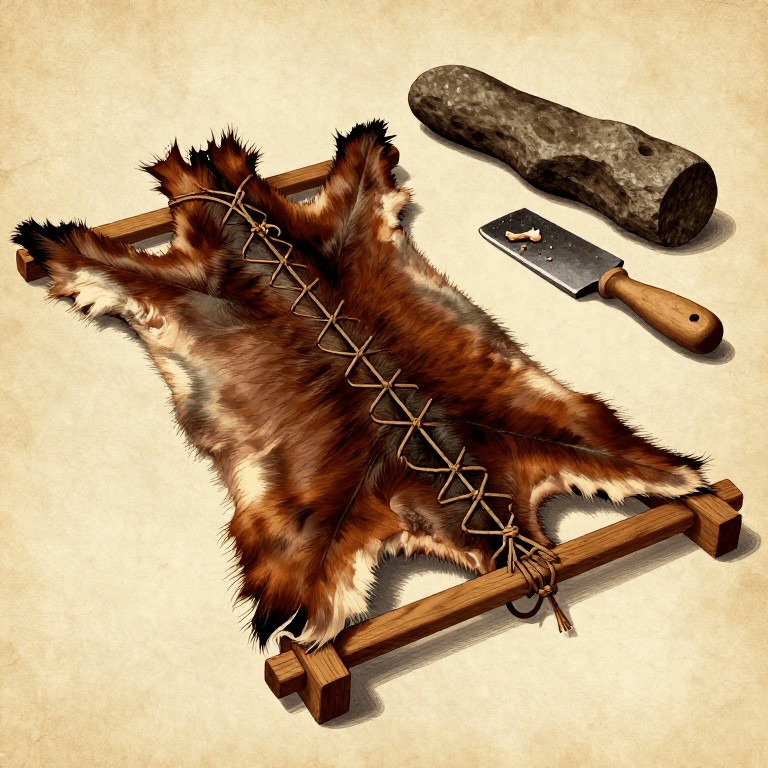
Drape the lye-soaked hide over a smooth log or beam, hair side up. Using a blunt scraping tool (a large flat bone, a wooden scraper, or the back of a flint knife), push firmly along the hide to scrape away all hair, the thin outer epidermis layer, and any remaining grain surface. Work from the centre outward. The hide should be uniformly white or pale grey when all hair is removed.
Nauðsynleg verkfæri:
 Tinnuhnífur
4
4
Rinse the Hide Thoroughly
Rinse the Hide Thoroughly
Rinse the de-haired hide in running water or through multiple changes of clean water to remove all traces of the alkaline lye. The hide should feel slippery-smooth, not soapy. Thorough rinsing is critical — residual alkali interferes with the tanning process by neutralising the acidic tannins before they can penetrate the skin.
5
5
Bate the Hide to Soften the Fibres
Bate the Hide to Soften the Fibres
Soak the rinsed hide in clean water for 24 hours, changing the water twice. This bating step removes residual alkali from deep within the hide and allows the collagen fibres to relax and separate slightly, which improves tannin penetration. Gently work the hide by hand, stretching and folding it to open up the fibre structure.
6
6
Harvest and Prepare Oak Bark
Harvest and Prepare Oak Bark
Strip bark from freshly felled oak branches or trunks. Spring is the ideal time — the bark peels most easily when the sap is flowing. You need approximately 1.5 to 2 kg of bark per kilogram of hide weight. Shred or chop the bark into small pieces no larger than 2 to 3 cm — smaller pieces release tannins faster. Freshly stripped bark has the highest tannin content.
Efni fyrir þetta skref:
 Birkibörkur í flögum3 kg
Nauðsynleg verkfæri:
Tinnuhnífur7
7
Make a Weak Initial Tannin Liquor
Make a Weak Initial Tannin Liquor
Place one-third of the shredded bark in a watertight container — a hollowed log, bark trough, or pit lined with hide. Add enough water to fully submerge the bark (approximately 10 litres per kg of bark). Let the bark steep for 24 to 48 hours, stirring occasionally. The water will turn a pale amber-brown as tannins leach out. This first liquor is deliberately weak.
8
8
Immerse the Hide in the Weak Liquor
Immerse the Hide in the Weak Liquor
Remove the bark pieces from the liquor (or strain through a grass filter). Submerge the prepared hide completely in the weak tannin liquor. Weight it down with clean stones to keep it fully submerged. The hide must remain below the surface at all times — any exposed areas will not tan and will rot. Leave for 5 to 7 days, turning the hide daily.
9
9
Prepare a Medium-Strength Tannin Liquor
Prepare a Medium-Strength Tannin Liquor
After the first week, prepare a second, stronger batch by steeping another third of the bark in fresh water for 48 hours. This liquor should be noticeably darker — a rich brown colour. Transfer the hide from the weak liquor into this medium liquor. The gradual increase in tannin concentration is important — immersing a raw hide directly into strong liquor causes the outer surface to tan so quickly it forms a barrier that prevents tannins from reaching the interior.
10
10
Soak in Medium Liquor for One Week
Soak in Medium Liquor for One Week
Leave the hide submerged in the medium-strength liquor for 7 days, turning it daily and ensuring it stays fully underwater. During this period, the tannins penetrate deeper into the collagen matrix. The hide will begin to stiffen and change colour from white to pale tan as the tannins bond with the collagen fibres.
11
11
Prepare the Final Strong Tannin Liquor
Prepare the Final Strong Tannin Liquor
Steep the remaining third of bark plus any leftover bark from previous batches in fresh water for 48 hours. This final liquor should be very dark brown, almost black. For maximum strength, you can gently warm the liquor by adding heated stones — warmth accelerates tannin extraction but do not boil, as temperatures above 60 degrees Celsius denature collagen and damage the hide.
12
12
Transfer to Strong Liquor and Pack with Bark
Transfer to Strong Liquor and Pack with Bark
Move the hide into the strong liquor. For the final soak, layer fresh shredded bark between folds of the hide so tannins are released directly against the leather surface. This pack-tanning approach ensures the highest possible tannin concentration at the hide surface. Leave for 7 to 14 days, turning every two days.
13
13
Test for Full Penetration
Test for Full Penetration
Cut a small sliver from the thickest part of the hide edge. A fully tanned hide is uniformly brown all the way through the cross-section. If the centre still shows a white or pale core, the tannins have not fully penetrated — return the hide to the strong liquor for another week. Incomplete tanning leaves the centre vulnerable to rot.
Nauðsynleg verkfæri:
Tinnuhnífur14
14
Remove and Rinse the Tanned Leather
Remove and Rinse the Tanned Leather
Once fully tanned, remove the hide from the liquor and rinse briefly in clean water to remove excess surface tannins and bark debris. Do not soak — just a quick rinse. The leather should feel firm and springy, not stiff and brittle. It will be a rich tan to dark brown colour throughout.
15
15
Dry the Leather Slowly
Dry the Leather Slowly
Hang the tanned leather in shade with good air circulation. Never dry in direct sunlight or near fire — rapid drying causes cracking and warping. The leather should dry gradually over 2 to 4 days. While still slightly damp (not dripping, but not yet stiff), work the surface with your hands or a smooth wooden stake to prevent the fibres from bonding rigidly together.
16
16
Apply a Light Fat Dressing
Apply a Light Fat Dressing
When the leather is dry but still slightly flexible, rub a thin layer of animal fat into both surfaces. Use rendered tallow or brain — work it in with your hands, paying special attention to any stiff areas. This fat dressing (called currying) lubricates the fibres and gives the finished leather water resistance and flexibility. Do not over-oil — bark-tanned leather should remain firm, not floppy.
Efni fyrir þetta skref:
 Dýrafita (tólg)50 g
17
17
Assess the Finished Leather
Assess the Finished Leather
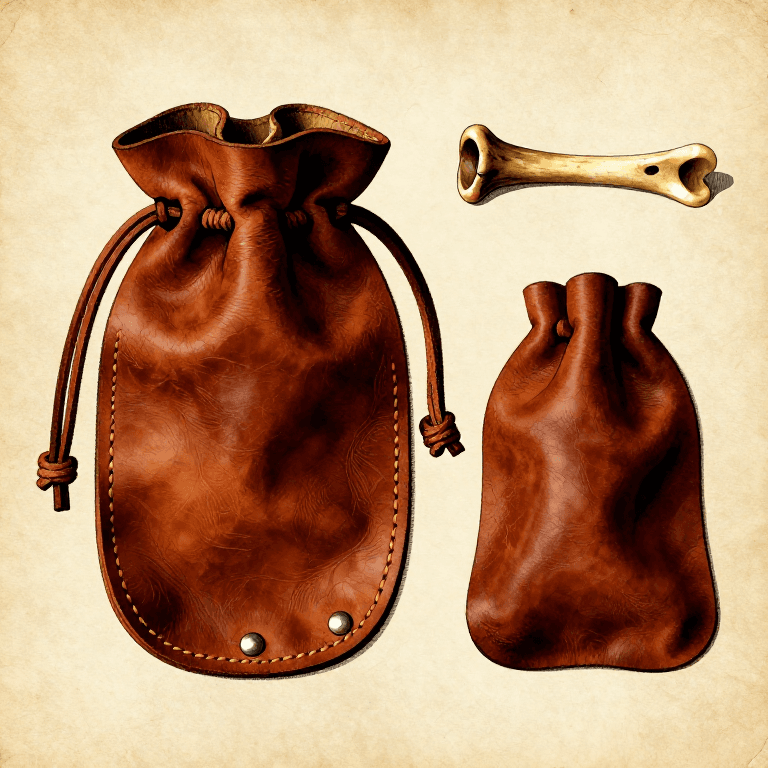
The completed bark-tanned leather should be firm, stiff enough to hold its shape when bent, dark brown throughout the cross-section, and have a slight waxy resistance to water. It should smell of tannin (a pleasant, earthy, tea-like scent). Bark-tanned leather is stronger and more water-resistant than brain-tanned buckskin but less soft and flexible. It is ideal for shoe soles, belts, sheaths, armour pieces, book covers, and any application requiring structural leather.
Efni
4- 1 stykkiStaðgengill
- 2 kgStaðgengill
- Staðgengill
- 50 gStaðgengill
Efni úr tengdum teikningum
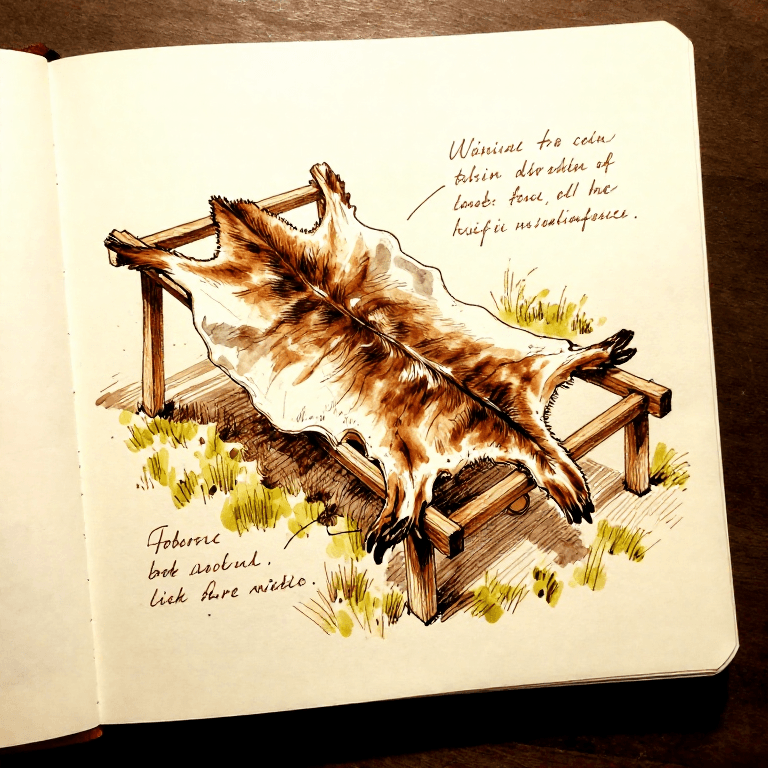
Tengd Blueprint
Þessi blueprint deila þekkingu — tækni, efni eða meginreglur

CC0 opinbert ríki
Þessi teikning er gefin út undir CC0. Þér er frjálst að afrita, breyta, dreifa og nota þetta verk í hvaða tilgangi sem er, án þess að biðja um leyfi.
Studdu smiðinn með því að kaupa vörur í gegnum teikningu hans þar sem hann fær þóknun smiða sem seljendur ákvarða, eða búðu til nýja endurskoðun á þessari teikningu og tengdu hana sem tengingu í þinni eigin teikningu til að deila tekjum.