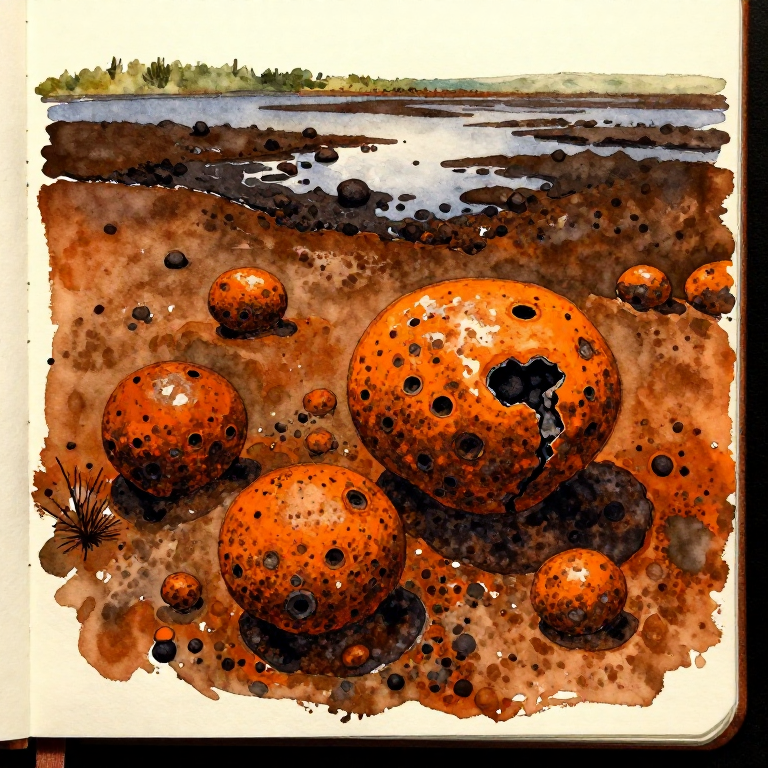


Collecting Bog Iron from Marshland — Extracting Iron Ore from Wetlands
Leiðbeiningar
Identify Iron-Rich Marsh
Identify Iron-Rich Marsh
Locate a marshy area where slow-moving groundwater drains through iron-rich soil — look for permanent wetlands with rusty water
Spot Surface Signs
Spot Surface Signs
Look for orange-brown staining on stones, roots, and mud at the water's edge
Check for Iron Film
Check for Iron Film
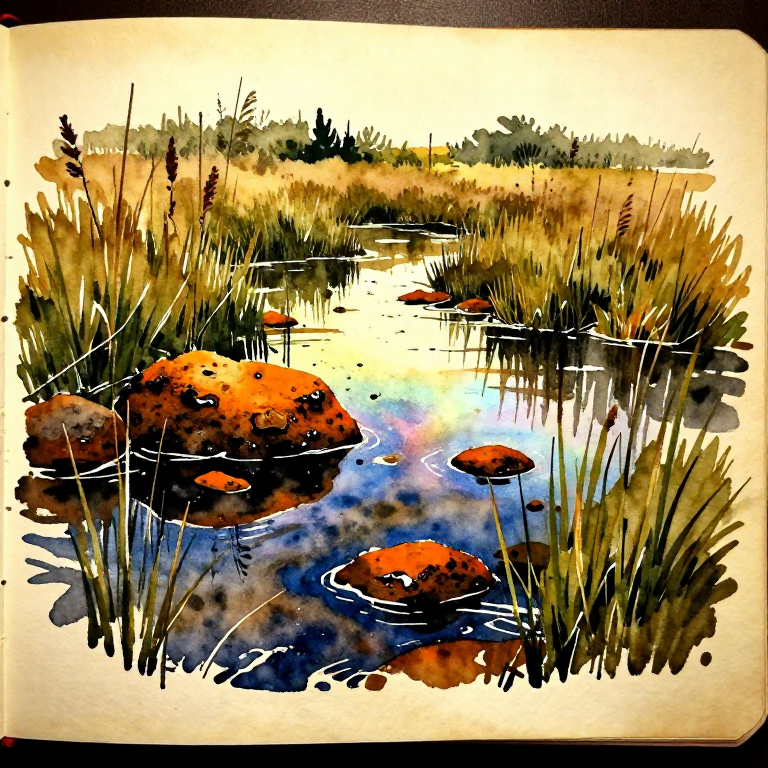
Check for thin iridescent films on standing water — this rainbow sheen indicates dissolved iron oxidising at the surface
Probe the Bed
Probe the Bed
Push a wooden pole into the marsh bed to test for a firm layer of ochre-coloured sediment 30-50 cm below the surface
Nauðsynleg verkfæri:
 Harðviðarstafur
Dig into Ore Layer
Dig into Ore Layer
Dig into the iron-rich layer with a shovel or digging stick, scooping out dark rust-coloured mud
Nauðsynleg verkfæri:
 Skófla
Extract Ore Nodules
Extract Ore Nodules
Pull out lumps of dark, rust-coloured bog ore — limonite nodules range from pebble-sized to fist-sized
Nauðsynleg verkfæri:
SkóflaRinse in Water
Rinse in Water
Rinse each lump in clean running water to wash away mud, roots, and organic debris
Efni fyrir þetta skref:
 Vatn1 bucket
Sort by Density
Sort by Density
Sort the ore — keep dense, heavy pieces that ring when struck; discard light, crumbly, or porous ones
Nauðsynleg verkfæri:
 Barsteinn
Break Large Lumps
Break Large Lumps
Break larger lumps into fist-sized pieces with a hammerstone to speed drying
Nauðsynleg verkfæri:
BarsteinnLay Out to Dry
Lay Out to Dry
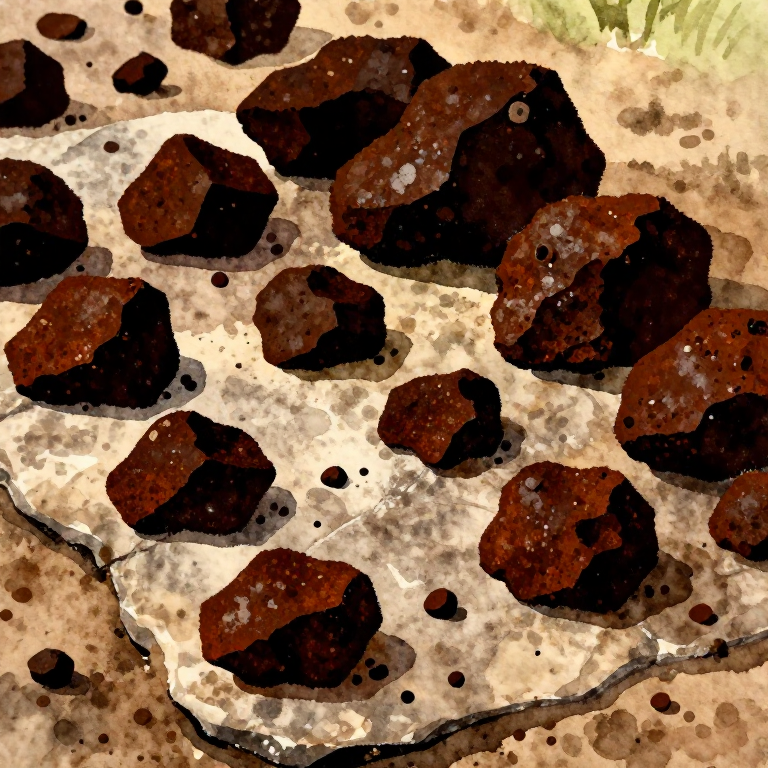
Spread the ore pieces on flat stones in direct sunlight and leave for 2-3 days to air-dry
Turn Daily
Turn Daily
Turn the pieces once daily to ensure even drying on all sides
Build Roasting Fire
Build Roasting Fire
Build a small open fire and let it burn down to a strong bed of coals
Efni fyrir þetta skref:
 Eldiviður1 búnt
Roast the Ore
Roast the Ore
Place dried ore chunks around the fire perimeter and roast for 1-2 hours to drive off remaining moisture
Listen for Cracking
Listen for Cracking
Listen for cracking and popping sounds — this indicates chemically-bound water escaping from the ore structure
Cool Completely
Cool Completely
Remove roasted ore from the fire area and allow it to cool completely before handling
Crush Roasted Ore
Crush Roasted Ore
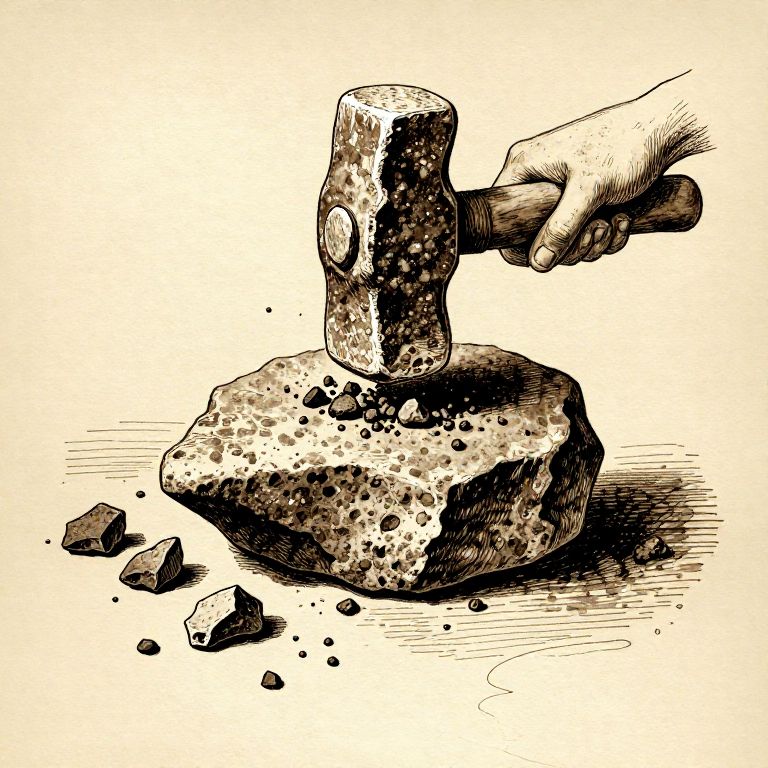
Crush the roasted ore into walnut-sized fragments with a hammerstone on a flat stone anvil
Nauðsynleg verkfæri:
BarsteinnSift the Fragments
Sift the Fragments
Sift the crushed ore through a coarse basket to separate fine powder from the usable fragments
Nauðsynleg verkfæri:
 Ílát
ÍlátStore for Smelting
Store for Smelting
Store the processed ore in a dry container — it is now ready to charge into a bloomery furnace for smelting
Nauðsynleg verkfæri:
ÍlátEfni úr tengdum teikningum
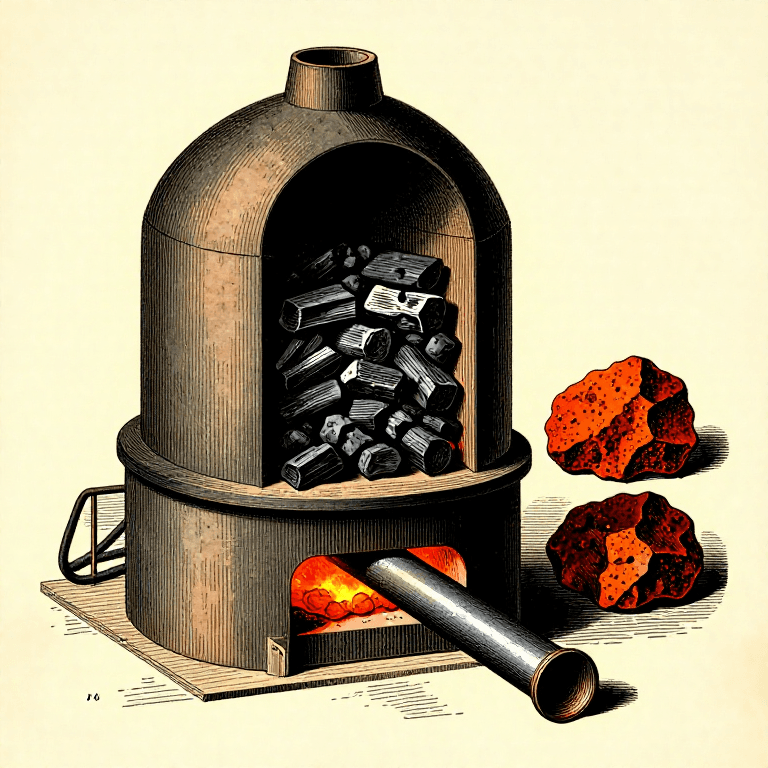

Þessi teikning býr til

Tengd Blueprint
Þessi blueprint deila þekkingu — tækni, efni eða meginreglur

CC0 opinbert ríki
Þessi teikning er gefin út undir CC0. Þér er frjálst að afrita, breyta, dreifa og nota þetta verk í hvaða tilgangi sem er, án þess að biðja um leyfi.
Studdu smiðinn með því að kaupa vörur í gegnum teikningu hans þar sem hann fær þóknun smiða sem seljendur ákvarða, eða búðu til nýja endurskoðun á þessari teikningu og tengdu hana sem tengingu í þinni eigin teikningu til að deila tekjum.