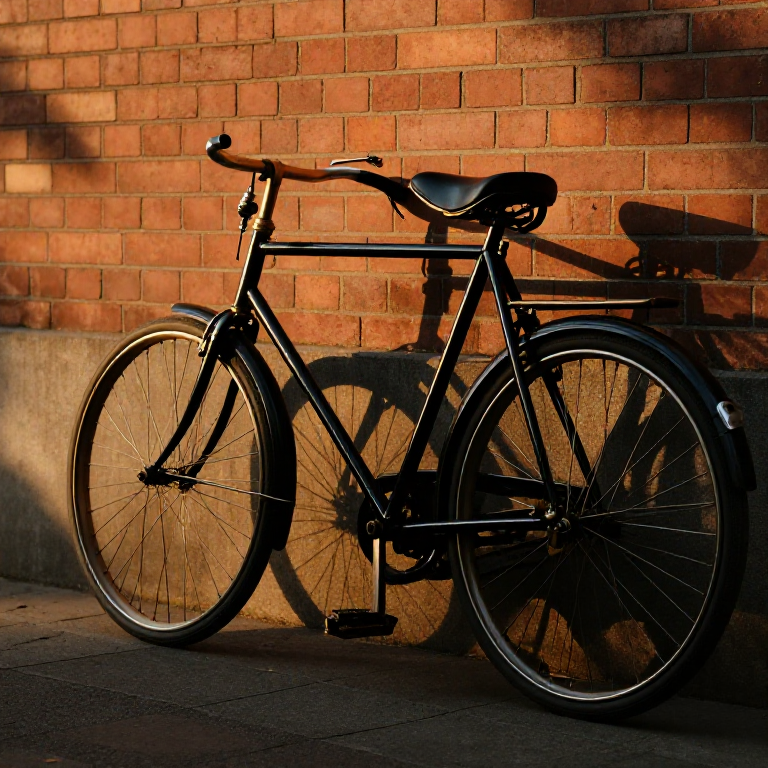


Building a Safety Bicycle — Chain Drive, Equal Wheels, and Personal Freedom
The bicycle that everyone rides today was settled in the 1880s and is still called, in the trade, the safety bicycle — to distinguish it from the terrifying high penny-farthing it replaced. Two equal wheels, a diamond frame, a chain driving the rear wheel, and soon air-filled tyres made cycling safe, fast, and available to ordinary people.
Each feature solves a problem. Equal wheels and a low frame mean you can put a foot down and cannot be pitched over the handlebars. The chain and gearing let a small wheel travel fast without the giant front wheel of the penny-farthing. The diamond frame, built of brazed steel tubes, is astonishingly light and strong for its weight. And Dunlop's pneumatic rubber tyres turned a bone-shaking ride into a smooth one.
The safety bicycle was more than transport. Cheap, simple, and needing no horse or fuel, it gave working people and especially women a freedom of movement they had never had — which is why it is often credited with as much social change as mechanical.
Leiðbeiningar
Understand the safety design
Understand the safety design
Braze the diamond frame
Braze the diamond frame
Efni fyrir þetta skref:
 Stálrör4 metrar
Nauðsynleg verkfæri:
 Harðlóðunarbrennari
Build the wheels
Build the wheels
Efni fyrir þetta skref:
 Stálteinar72 stykki
 Hjólgjörð (ál)2 stykki
Nauðsynleg verkfæri:
 Teinalykill
Fit pneumatic tyres
Fit pneumatic tyres
Efni fyrir þetta skref:
 Gúmmíhjólbarði2 stykki
Build the chain drive
Build the chain drive
Efni fyrir þetta skref:
 Rúllukeðja1 stykki
 Keðjuhjól1 sett
 Keðjuhjól1 sett
Fit the bottom bracket and cranks
Fit the bottom bracket and cranks
Efni fyrir þetta skref:
 Kúlulegur1 sett
Set up the steering
Set up the steering
Efni fyrir þetta skref:
 Stýrishandfang1 stykki
Fit brakes
Fit brakes
Efni fyrir þetta skref:
 Bremsudæla2 stykki
Fit the saddle
Fit the saddle
Efni fyrir þetta skref:
 Leðurhnakkur1 stykki
Assemble and true
Assemble and true
Nauðsynleg verkfæri:
 Rörtöng
Test and tune
Test and tune
Nauðsynleg verkfæri:
RörtöngAppreciate the freedom it gave
Appreciate the freedom it gave
Efni
11- 4 metrarStaðgengill
- 72 stykkiStaðgengill
- 2 stykkiStaðgengill
- 2 stykkiStaðgengill
- 1 stykkiStaðgengill
- 1 settStaðgengill
- 1 settStaðgengill
- 1 settStaðgengill
- 1 stykkiStaðgengill
- 2 stykkiStaðgengill
- 1 stykkiStaðgengill
Þessi teikning býr til

Tengd Blueprint
Þessi blueprint deila þekkingu — tækni, efni eða meginreglur

CC0 opinbert ríki
Þessi teikning er gefin út undir CC0. Þér er frjálst að afrita, breyta, dreifa og nota þetta verk í hvaða tilgangi sem er, án þess að biðja um leyfi.
Studdu smiðinn með því að kaupa vörur í gegnum teikningu hans þar sem hann fær þóknun smiða sem seljendur ákvarða, eða búðu til nýja endurskoðun á þessari teikningu og tengdu hana sem tengingu í þinni eigin teikningu til að deila tekjum.