LIST
FEGURÐ OG VELLÍÐAN
HANDVERK
MENNING OG SAGA
SKEMMTUN
UMHVERFI
MATUR OG DRYKKUR
ÖFUGVERKFRÆÐI
VÍSINDI
ÍÞRÓTTIR
TÆKNI
KLÆÐANLEG TÆKNI
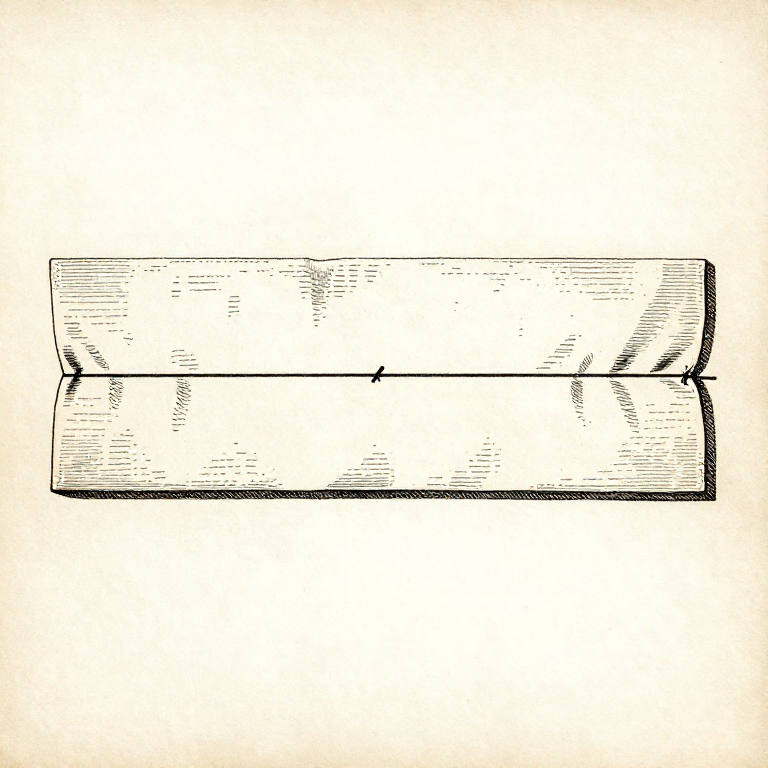


Seam Allowance: One Number, Everywhere, or Nothing Fits
The seam allowance is the strip of cloth between the cut edge and the line of stitching. It is not decoration and it is not spare: it is the difference between the size you cut and the size you get.
Every seam removes twice the allowance from the finished width, because there is an allowance on each of the two pieces. Sew a 15 mm allowance instead of a 10 mm one on a garment with eight seams and you have removed 80 mm from its circumference — a whole size.
Which is why the number has to be the SAME everywhere, and why it has to be the number the pattern was drafted with. A consistent wrong allowance produces a garment of the wrong size; an inconsistent one produces a garment that does not go together at all.
Byrjandi
2 hours
Leiðbeiningar
1
1
Know which number the pattern uses
Know which number the pattern uses
Commercial patterns usually include the allowance in the printed piece — often 15 mm, sometimes 10 mm — and say so on the instruction sheet. Many drafted and downloaded patterns do NOT include it, and expect you to add it yourself.
Find out before cutting. A pattern drafted to the finished line, cut as though it included allowance, produces a garment two allowances too small on every seam — and it is discovered at the fitting.
Write the number on the pattern piece, large. In six months, or halfway through a project that was interrupted, it is the first thing you will not remember and the hardest to work out from the pieces.
Efni fyrir þetta skref:
 Pappír1 stykki
Nauðsynleg verkfæri:
 Reglustika
2
2
Sew to the allowance, not to the edge
Sew to the allowance, not to the edge
The stitching line is a fixed distance from the cut edge, so the guide is the EDGE, not the seam. Use the marked plate on a machine, a piece of tape stuck to it, or a chalk line, and keep the cut edge running against the guide.
That is why an uneven cut edge matters so much: the stitching follows it, so a wobble in the cutting becomes a wobble in the seam and a bulge in the finished garment.
Different allowances have different jobs. A 15 mm allowance gives room to let out and to finish the edge; a 6 mm allowance is right for curved seams and small work, where a wide allowance cannot lie flat round the curve. Choosing per seam is fine — writing it down is what makes it work.
Efni fyrir þetta skref:
 Bómullardúkur1 stykki
 Bómullarþráður1 stykki
Nauðsynleg verkfæri:
 Saumavél
 KlæðskerakrítReglustika
3
3
What it costs to get it wrong
What it costs to get it wrong
Hleð Jupyter-vinnubók…
Efni fyrir þetta skref:
Bómullardúkur1 stykkiBómullarþráður1 stykkiNauðsynleg verkfæri:
 BorðtölvaReglustika
 Reiknivél
4
4
Notches and marks are how the pieces find each other
Notches and marks are how the pieces find each other
A notch is a small mark cut or snipped into the allowance to show where two pieces line up. Matching the notches is what makes a curved seam of two different-looking edges come out right.
Cut notches OUTWARD as little triangles, or snip inward no more than 3 mm. A deep snip into a 6 mm allowance leaves almost nothing holding the seam, and it will eventually tear from that point.
Transfer every mark before the pattern comes off — notches, dots, dart points, the grainline if you may need it again. Once the paper is removed those positions cannot be recovered, and finding out mid-assembly is the commonest reason a piece gets cut a second time.
Efni fyrir þetta skref:
Bómullardúkur1 stykkiPappír1 stykkiNauðsynleg verkfæri:
 SkæriKlæðskerakrít
 Saumaprjónar
Efni
3- 2 stykkiStaðgengill
- 3 stykkiStaðgengill
- 2 stykkiStaðgengill
Tengd Blueprint
Þessi blueprint deila þekkingu — tækni, efni eða meginreglur

CC0 opinbert ríki
Þessi teikning er gefin út undir CC0. Þér er frjálst að afrita, breyta, dreifa og nota þetta verk í hvaða tilgangi sem er, án þess að biðja um leyfi.
Studdu smiðinn með því að kaupa vörur í gegnum teikningu hans þar sem hann fær þóknun smiða sem seljendur ákvarða, eða búðu til nýja endurskoðun á þessari teikningu og tengdu hana sem tengingu í þinni eigin teikningu til að deila tekjum.