LIST
FEGURÐ OG VELLÍÐAN
HANDVERK
MENNING OG SAGA
SKEMMTUN
UMHVERFI
MATUR OG DRYKKUR
ÖFUGVERKFRÆÐI
VÍSINDI
ÍÞRÓTTIR
TÆKNI
KLÆÐANLEG TÆKNI
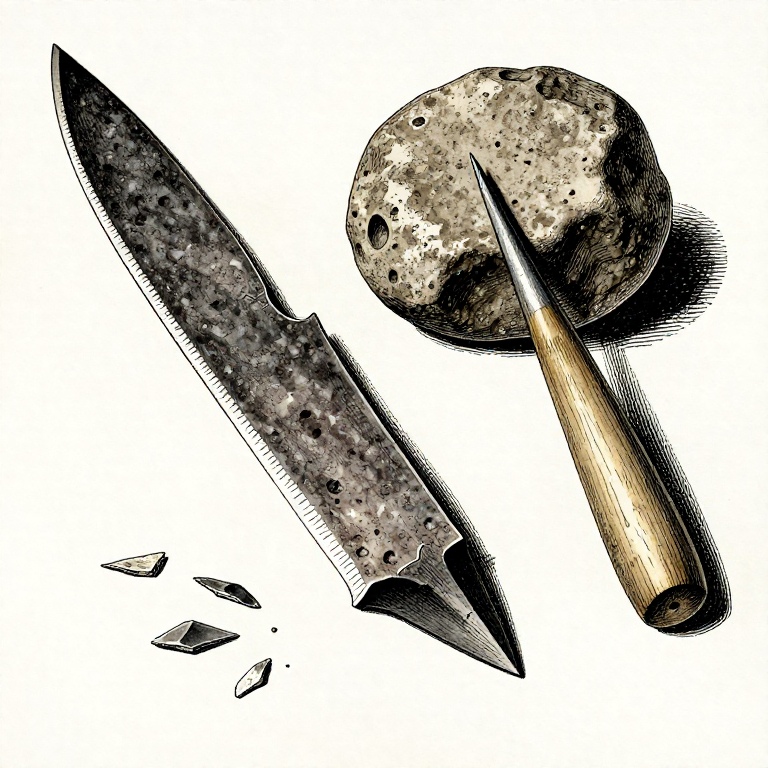


Knapping a Flint Knife — Stone Age Cutting Tool
Flint knapping: 2 million years old, still sharper than surgical steel. Learn percussion flaking to produce a usable knife from stone. Safety: wear eye protection and gloves.
Lengra kominn
1-2 hours
Leiðbeiningar
1
1
Select Stone
Select Stone
Flint, chert, or obsidian. Waxy luster, rings when tapped, no granular texture. Check riverbeds and limestone outcrops. Avoid cracked stones.
2
2
Platform & Primary Flaking
Platform & Primary Flaking
Strike off a small piece to create a flat platform. Hit 1cm from the edge with hammerstone — strike through the stone, not at it. Each flake creates a new platform.
Hönnun
Diagram: striking angle, platform edge, flake removal direction
Efni fyrir þetta skref:
 Barsteinn1 stykki
3
3
Shape the Blade
Shape the Blade
Work around the nodule removing flakes to create a leaf shape. Alternate sides to thin evenly. Target: 10-15cm long, thin enough for a sharp edge.
Efni fyrir þetta skref:
 Tinnuhnullungur1 stykki
4
4
Refine Edge
Refine Edge
Switch to antler or hardwood baton. Lighter strikes, thinner flakes. Work along the cutting edge for a straight, sharp line.
Efni fyrir þetta skref:
 Hornsleggja1 stykki
5
5
Haft (Optional)
Haft (Optional)
Split a wooden handle, insert blade, bind with cordage and pine pitch glue.
Efni
6- 1 stykkiStaðgengill
- 1 stykkiStaðgengill
- 1 stykkiStaðgengill
- 1 stykkiStaðgengill
- 1 stykkiStaðgengill
- 1 stykkiStaðgengill
Nauðsynleg verkfæri
3- Staðgengill
- Staðgengill
- Staðgengill
CC0 opinbert ríki
Þessi teikning er gefin út undir CC0. Þér er frjálst að afrita, breyta, dreifa og nota þetta verk í hvaða tilgangi sem er, án þess að biðja um leyfi.
Studdu smiðinn með því að kaupa vörur í gegnum teikningu hans þar sem hann fær þóknun smiða sem seljendur ákvarða, eða búðu til nýja endurskoðun á þessari teikningu og tengdu hana sem tengingu í þinni eigin teikningu til að deila tekjum.