LIST
FEGURÐ OG VELLÍÐAN
HANDVERK
MENNING OG SAGA
SKEMMTUN
UMHVERFI
MATUR OG DRYKKUR
ÖFUGVERKFRÆÐI
VÍSINDI
ÍÞRÓTTIR
TÆKNI
KLÆÐANLEG TÆKNI
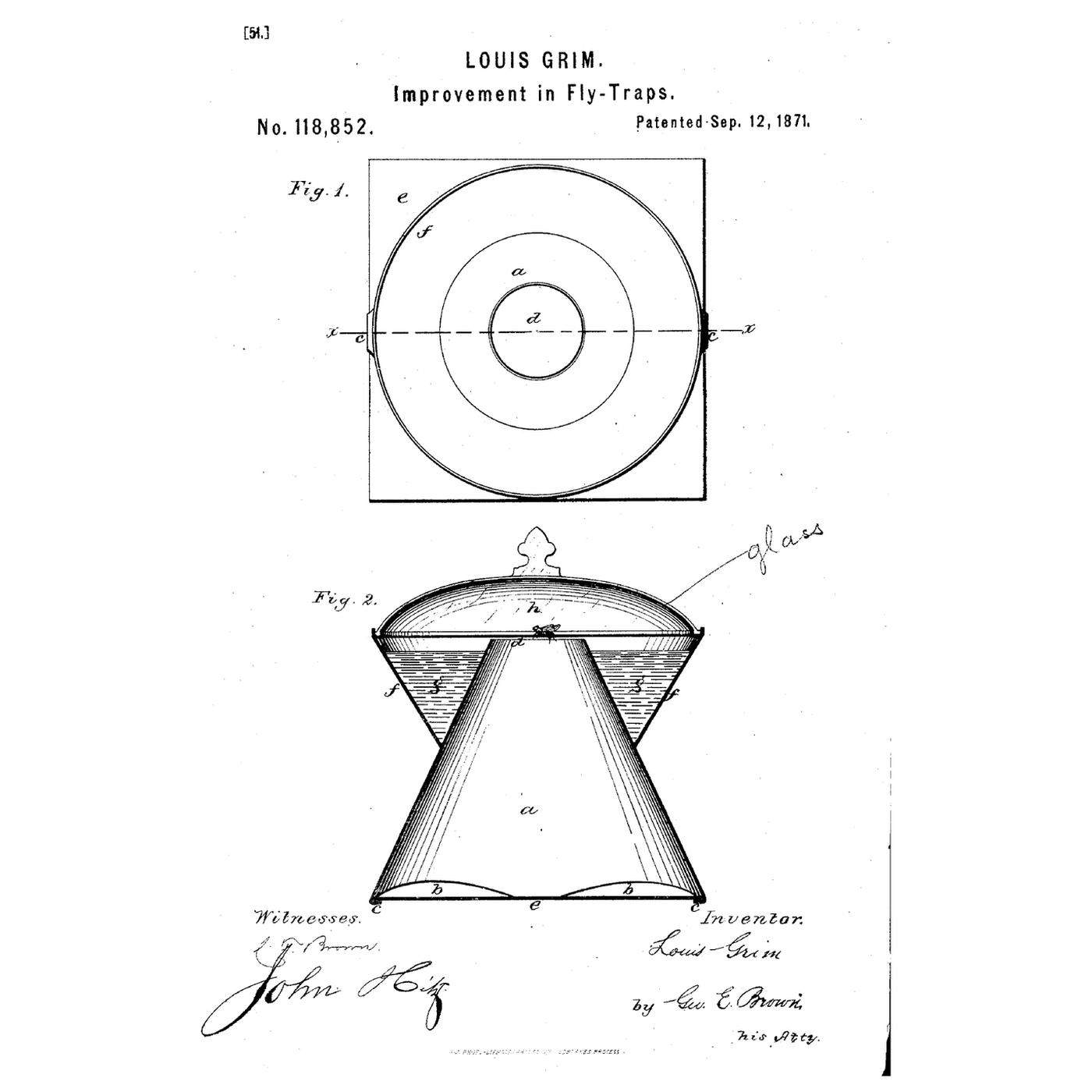


The Cone Fly Trap: Up to the Light, Down Into the Water
A fly trap uses what flies do anyway: go to food, and fly up towards the light. A trap only has to make the way in easy and the way out hard to find.
Louis Grim of Fort Branch, Indiana, received US 118,852, dated 12 September 1871, for a fly-trap of two truncated cones with a glass cover. The bait "allures the insects"; "Having eaten their fill they naturally fly upward toward the light", and "On striking the glass cover they are thereby dashed downward and fall into the channel" of water between the cones.
This rung models how rarely a fly finds the way back out, then builds a funnel trap from a bottle and counts the catch.
Byrjandi
About 1 hour, then a week
Leiðbeiningar
1
1
How often a fly finds the way out
How often a fly finds the way out
Hleð Jupyter-vinnubók…
2
2
The same funnel, for fish
The same funnel, for fish
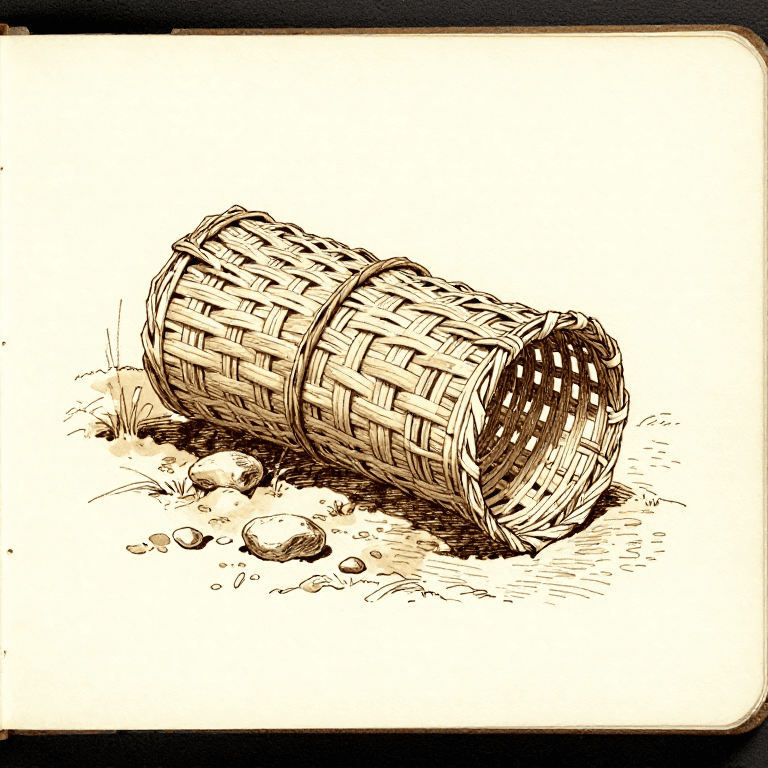
The embedded blueprint weaves a funnel-entry fish trap: easy in, hard to find the way out. Grim's trap adds light to steer the flies.
3
3
Read US 118,852
Read US 118,852
"This invention consists in the combination of a vessel in the shape of a truncated cone, open at the top, and having guides at its lower end, in which is placed a sliding bottom, above which are notches at the base of the cone, in combination with another vessel, also in the shape of a truncated cone, but inverted and secured at its lower end to the outside of the one first mentioned in such manner as to form a channel annular and V-shaped, in cross-section, between the two cones, the upper of which is provided with a glass cover, all for the purpose of trapping flies in the manner hereinafter set forth."
Fly-bait "allures the insects, which pass through the notches". "Having eaten their fill they naturally fly upward toward the light shining through the aperture". "On striking the glass cover they are thereby dashed downward and fall into the channel", "which should contain water".
4
4
Build a bottle funnel trap and count
Build a bottle funnel trap and count
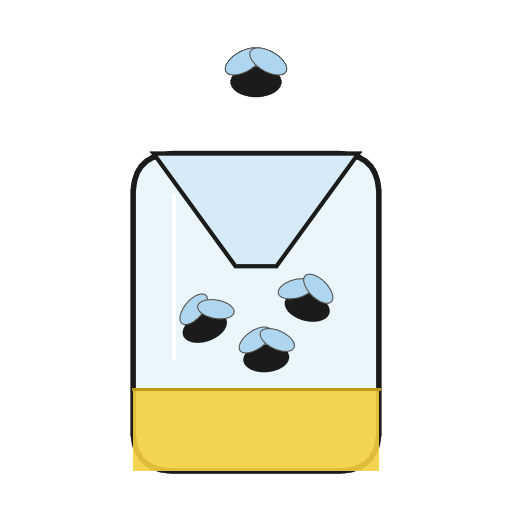
Cut the top third off a clear plastic bottle, turn it upside down and push it into the bottom part as a funnel, and tape the join. Pour in a little bait: sugar dissolved in water with a splash of vinegar.
Set it in a sunny place where flies gather, next to an open saucer of the same bait for comparison. Count the flies in the trap, and on the saucer, at the same time each day for a week. Note how many leave the saucer and how few leave the trap.
Efni fyrir þetta skref:
 PET-flaska (kolsýrður drykkur)1 stykki
 Hvítur sykur50 g
 Edik1 stykki
 Vatn1 stykki
Nauðsynleg verkfæri:
 Flugnagildra
 Skæri
Skæri Skál
Skál Málningarlímband
5
5
A trap that catches nothing, or lets them out
A trap that catches nothing, or lets them out
Fly trap troubleshooting.
Flow
Loading...
6
6
History and honest limits
History and honest limits
**Louis Grim** of Fort Branch, Gibson County, Indiana, received US 118,852, dated 12 September 1871; half the right was assigned to Alexander I. Moore of the same place.
**Honest limits.** The model treats each escape attempt as independent and the floor as uniformly likely; real flies follow walls and light more cleverly and less. Sizes and bias are examples. Your daily counts are the measurement.
Efni
4- 1 stykkiStaðgengill
- 50 gStaðgengill
- 1 stykkiStaðgengill
- 1 stykkiStaðgengill
Þessi teikning býr til
Tengd Blueprint
Þessi blueprint deila þekkingu — tækni, efni eða meginreglur

CC0 opinbert ríki
Þessi teikning er gefin út undir CC0. Þér er frjálst að afrita, breyta, dreifa og nota þetta verk í hvaða tilgangi sem er, án þess að biðja um leyfi.
Studdu smiðinn með því að kaupa vörur í gegnum teikningu hans þar sem hann fær þóknun smiða sem seljendur ákvarða, eða búðu til nýja endurskoðun á þessari teikningu og tengdu hana sem tengingu í þinni eigin teikningu til að deila tekjum.