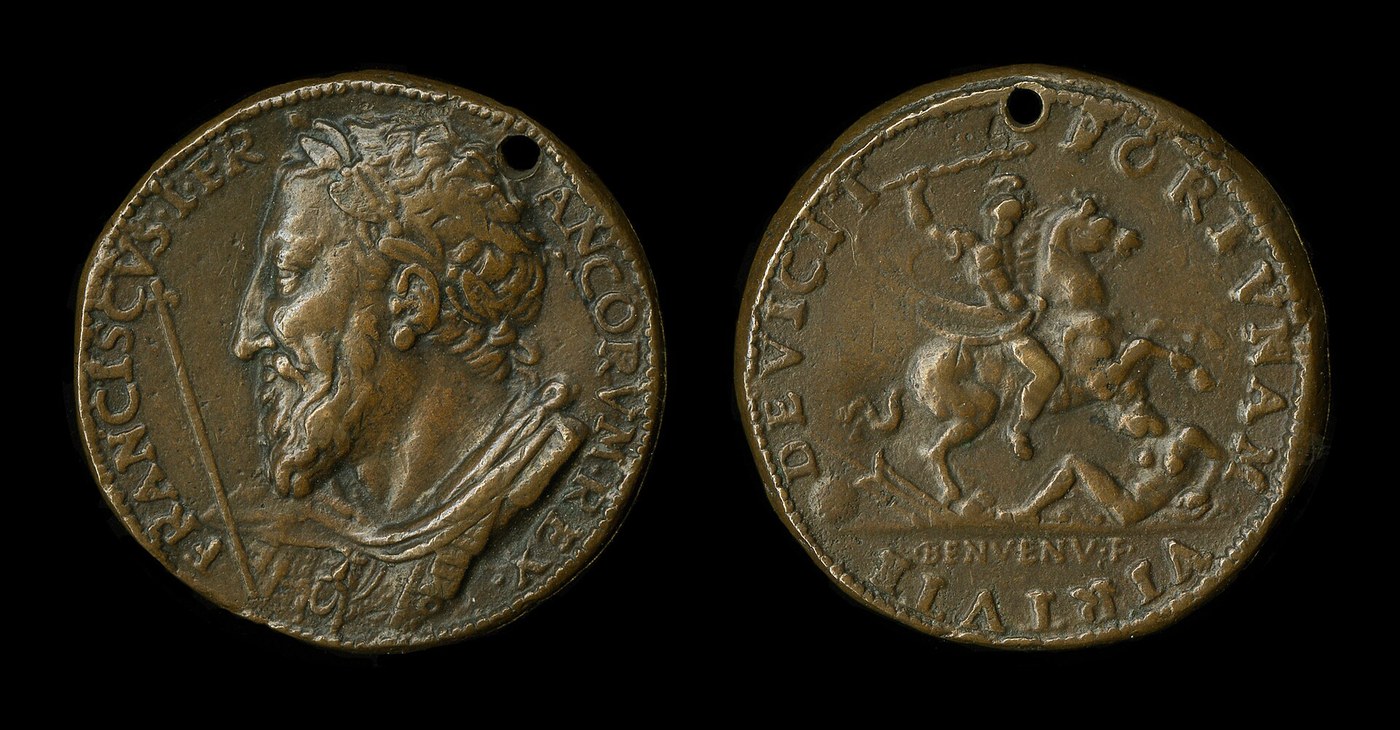


The Medal
A medal is a portable, permanent, non-transferable record that something happened. It is one of the oldest objects humans make for purely social reasons, and almost every design decision in one is about making the record hard to fake and hard to lose.
There are two ways to make one and they produce genuinely different objects. Striking drives a hardened steel die into a blank under enormous force; the metal flows into the die and the result is dense, sharp and — because cutting the die is expensive — effectively impossible to reproduce casually. Casting pours molten metal into a mould; the tooling is cheap and the detail is softer, which is why cast medals are made in tens and struck medals in thousands.
The bench version is casting, and the interesting engineering is in the mould rather than the metal. Detail is limited by how well the mould captures the master, and by how the metal fills it: a cavity needs a gate for metal to enter, a vent for air to leave, and thick sections positioned so the last metal to freeze is fed from a reservoir rather than pulling a hollow into the face.
Model a master, mould it, cast it, and then measure how faithfully the detail came through.
Leiðbeiningar
Model the master with relief you can actually cast
Model the master with relief you can actually cast
Model a master in clay or carve it in wax, keeping the relief shallow and undercut-free and every edge slightly tapered.
Measure the deepest relief.
An undercut locks the casting into the mould, and shallow relief with draft is what lets a rigid pattern release. Judge the design by whether it can leave the mould, not by whether it looks good on the bench.
Efni fyrir þetta skref:
 Mótunarvax (til skurðar, hart)200 g
Nauðsynleg verkfæri:
 Nálaþjalasett
 Stafrænn skífmælir 6 tommur
Make a silicone mould with a gate and a vent
Make a silicone mould with a gate and a vent
Build a wall around the master, mix and degas the silicone, and pour in a thin stream from one corner to let air escape.
Cut a funnel-shaped gate into the thickest part and a fine vent at the highest point.
Air is the enemy, twice — trapped in the silicone it gives a pitted mould, and trapped in the cavity it gives a short cast.
Nauðsynleg verkfæri:
 Sílikonmótasett
Cast pewter at a controlled temperature
Cast pewter at a controlled temperature
Melt pewter and bring it just above its melting point — check with a thermometer rather than by eye. Pour steadily into the gate in one go.
Let it cool fully before opening.
Too cold and it freezes before filling; too hot and it degrades the silicone and gives a rough surface. One pour, no hesitation — a stop-start pour leaves a cold shut, a visible seam where two fronts met and did not fuse.
Efni fyrir þetta skref:
 Tinstöng300 g
Nauðsynleg verkfæri:
 Hraðmælandi hitamælir
 Háhliða pottur
Measure how much detail survived
Measure how much detail survived
Under a loupe, find the smallest feature you modelled and check whether it is present in the casting. Measure the master and the casting across the same dimension.
Expect the casting to be slightly smaller and the finest detail to be softened or lost.
Two losses compound — the silicone does not capture everything, and the metal shrinks on freezing. Both are why struck medals look sharper than cast ones.
Nauðsynleg verkfæri:
 Stækkunarlúpa
 Stafræn vog
Add the lettering by striking
Add the lettering by striking
Stamp a name, date or number into the rim or the reverse with letter punches, working from the centre outwards and checking spacing on scrap first.
Note how much less force this needs than striking the whole face would.
Striking a small area is easy and striking a whole medal is a press job — the force needed scales with the area you are asking the metal to flow across, which is the entire economic difference between the two methods.
Nauðsynleg verkfæri:
 Sett af málmstimplum (skartgripir)
Finish, and make the wear deliberate
Finish, and make the wear deliberate
File the gate off, work through abrasives, and polish. Then darken the recesses and polish the high points back, so the relief reads at arm's length.
Fit a suspension loop or ribbon bar.
A uniformly bright medal is unreadable — the eye needs tonal contrast between raised and recessed areas, which is why patination is a legibility technique before it is a decorative one.
Nauðsynleg verkfæri:
 Fægiklútur fyrir skartgripi
 Fægiefni
History & Context
History & Context
The medal is a Renaissance invention with an ancient ancestor. Commemorative coinage is Roman, but the medal as a distinct object — not currency, made to record a person or an event, usually with a portrait on one side and an allegorical reverse on the other — begins with Pisanello in fifteenth-century Italy. Those early medals were cast, exactly as in this blueprint, and the shift to struck medals came with the screw press and the growing capability of die-cutting.
Why striking took over. A struck medal is made by compressing a blank between two engraved dies under hundreds of tonnes. The metal flows, work-hardens and takes detail far finer than casting allows, and once the die exists each additional piece is nearly free. That combination — very expensive tooling, very cheap copies — is the same economic shape as injection moulding, and it produces the same outcome: struck medals for anything issued in quantity, cast medals for short runs and for artists' work. Die-cutting also made counterfeiting hard, which is precisely why coinage went the same way.
The reverse carries the meaning. The convention that the obverse shows who and the reverse shows why is remarkably persistent, and it is why medals are read as documents rather than ornaments. Military awards extend it further with ribbons, clasps and bars that encode campaign, date and repeat awards, so an entire service record is legible from a chest at a distance. The object is a database, and the design conventions are its schema.
Materials and their meaning. The gold-silver-bronze hierarchy is not about material cost in any modern sense — it is a legible ranking that survives because everyone can read it instantly. Pewter is the right material to learn on: it melts at a low temperature, casts beautifully in silicone, files easily and takes a good polish. Modern pewter is tin-based and lead-free; older pewter frequently contains lead, so never melt down unknown scrap pewter and never use antique pewter for anything that will touch food or a child's hands.
Safe practice. Molten metal is the hazard: work over a heatproof surface, never near water — a drop of water in molten metal flashes to steam and throws metal — and wear eye protection, closed shoes and cotton rather than synthetics. Ventilate: even lead-free pewter should not be overheated, and any fumes mean you are too hot. Let castings cool on their own; quenching a hot casting in water is how people get burned in this craft.
Nauðsynleg verkfæri
10- Staðgengill
- Staðgengill
- Staðgengill
- Staðgengill
- Staðgengill
- Staðgengill
- Staðgengill
- Staðgengill
- Staðgengill
- Staðgengill
Efni úr tengdum teikningum
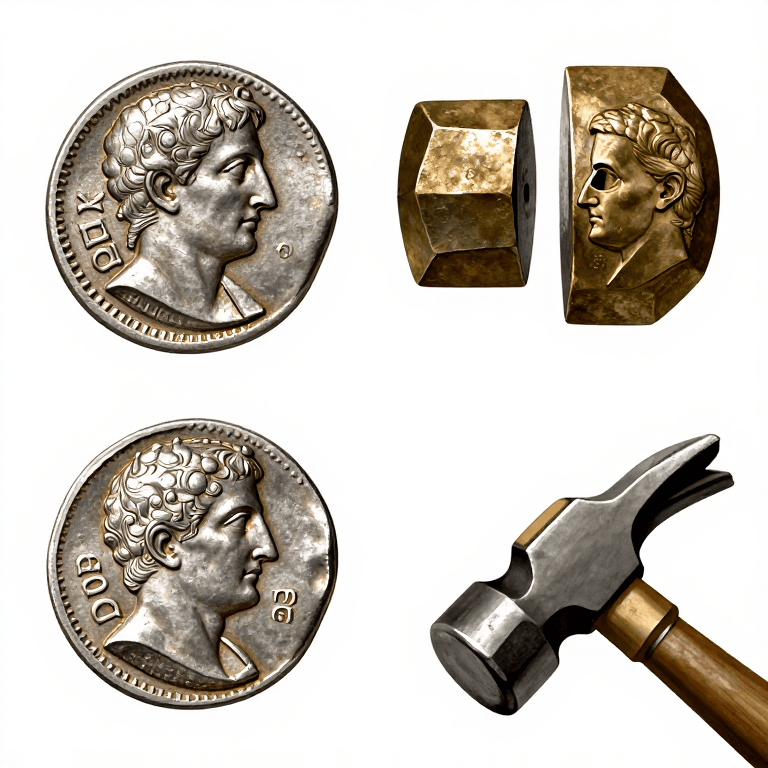
Þessi teikning býr til

Tengd Blueprint
Þessi blueprint deila þekkingu — tækni, efni eða meginreglur
CC0 opinbert ríki
Þessi teikning er gefin út undir CC0. Þér er frjálst að afrita, breyta, dreifa og nota þetta verk í hvaða tilgangi sem er, án þess að biðja um leyfi.
Studdu smiðinn með því að kaupa vörur í gegnum teikningu hans þar sem hann fær þóknun smiða sem seljendur ákvarða, eða búðu til nýja endurskoðun á þessari teikningu og tengdu hana sem tengingu í þinni eigin teikningu til að deila tekjum.