LIST
FEGURÐ OG VELLÍÐAN
HANDVERK
MENNING OG SAGA
SKEMMTUN
UMHVERFI
MATUR OG DRYKKUR
ÖFUGVERKFRÆÐI
VÍSINDI
ÍÞRÓTTIR
TÆKNI
KLÆÐANLEG TÆKNI
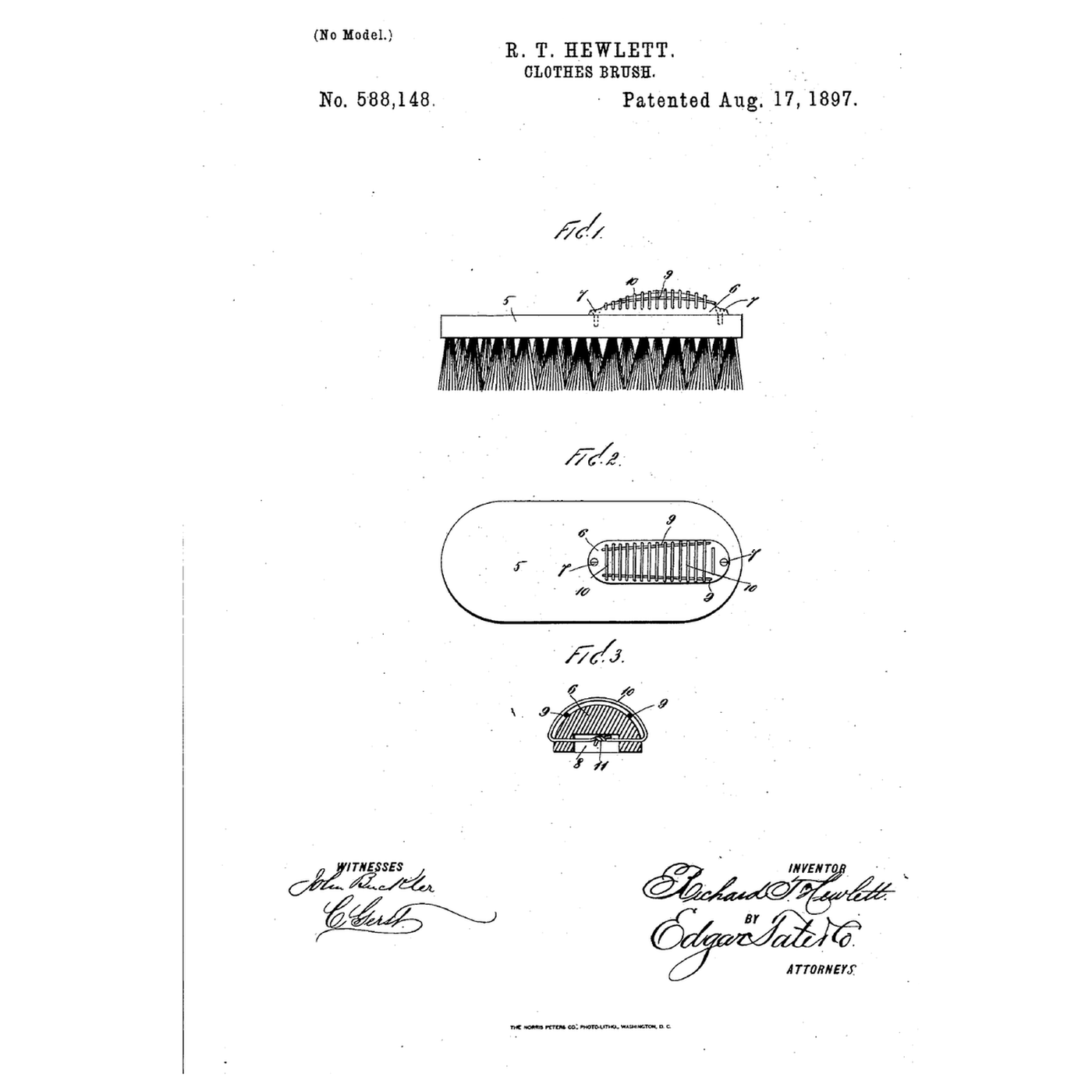


The Mud-Scraper Clothes Brush: Wire on the Back, Bristles on the Front
A clothes brush sweeps loose dust off cloth, but mud that has dried hard needs to be broken up first.
Richard Tanner Hewlett of London received US 588,148, dated 17 August 1897, for a clothes-brush "with an attachment for removing mud and other dirt from clothing after it has become caked or dried thereon": a convex block screwed to the brush's back and wrapped with wire lengthwise and crosswise.
This rung works out how the wires concentrate the push of the hand, then fits a wired block to a clothes brush and tests it on dried mud.
Byrjandi
About 2 hours, then a day to dry
Leiðbeiningar
1
1
Pressure under the wires
Pressure under the wires
Hleð Jupyter-vinnubók…
2
2
Ridges loosen dirt
Ridges loosen dirt
The embedded blueprint scrubs cloth over ridges to loosen dirt. Hewlett puts the ridges on the back of the brush and rubs them over the cloth.
3
3
Read US 588,148
Read US 588,148
"This invention relates to brushes for cleaning clothes; and the object thereof is to provide a brush of this class with an attachment for removing mud and other dirt from clothing after it has become caked or dried thereon."
"Whenever it is desired to remove dried mud or other dirt from clothing, the attachment is rubbed thereover, the corrugated surface formed by the wires 9 and 10 operating to loosen and break up the dirt or mud, after which the same may be brushed off in the usual manner."
4
4
Fit a wired block and test it on dried mud
Fit a wired block and test it on dried mud
Cut a block of hardwood the length and width of the brush's back. Sand its face into a gentle curve both ways, and cut a groove along the middle of its flat side. Wrap steel wire round it three times lengthwise and eight times crosswise, pulling each turn tight, and twist the ends together in the groove. Screw the block to the brush's back with its flat side down.
Mix garden soil with water to a thick mud. Smear equal patches on two pieces of cotton fabric and let them dry for a day. Clean one with the brush alone and one with the wired block then the brush, counting the strokes until each is clean.
Efni fyrir þetta skref:
 Harðviðarborð1 stykki
 Stálvír1 stykki
 Tréskrúfur2 stykki
 Bómullarefni (létt)1 stykki
 Garðjörð200 g
 Vatn100 ml
Nauðsynleg verkfæri:
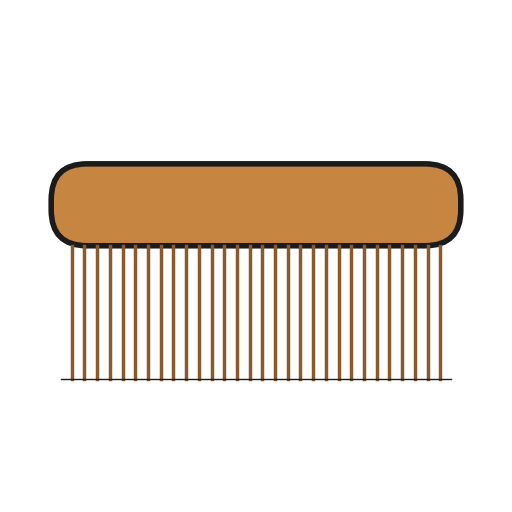 Fatabursti
 Laufsög
 Sandpappír
 Hleðslubor
 Borasett
 Nefjatöng
 Hliðarbítur
 Reglustika
5
5
A scraper that snags the cloth or leaves the mud
A scraper that snags the cloth or leaves the mud
Clothes-brush scraper troubleshooting.
Flow
Loading...
6
6
History and honest limits
History and honest limits
**Richard Tanner Hewlett** of London filed US 588,148 on 25 February 1897; it is dated 17 August 1897. He noted that "any suitable roughened surface" would serve as well as the wires.
**Honest limits.** The notebook assumes each wire presses an even strip and the wood none; a curved block presses harder at its crown. Sizes and counts are examples. Your stroke counts are the measurement.
Efni
6- 1 stykkiStaðgengill
- 1 stykkiStaðgengill
- 2 stykkiStaðgengill
- 1 stykkiStaðgengill
- 200 gStaðgengill
- 100 mlStaðgengill
Nauðsynleg verkfæri
8- Staðgengill
- Staðgengill
- Staðgengill
- Hleðslubor3% þóknunMagento Legacy Storeships internationallyStaðgengill
- Staðgengill
- Staðgengill
- Staðgengill
- Staðgengill
Tengd Blueprint
Þessi blueprint deila þekkingu — tækni, efni eða meginreglur
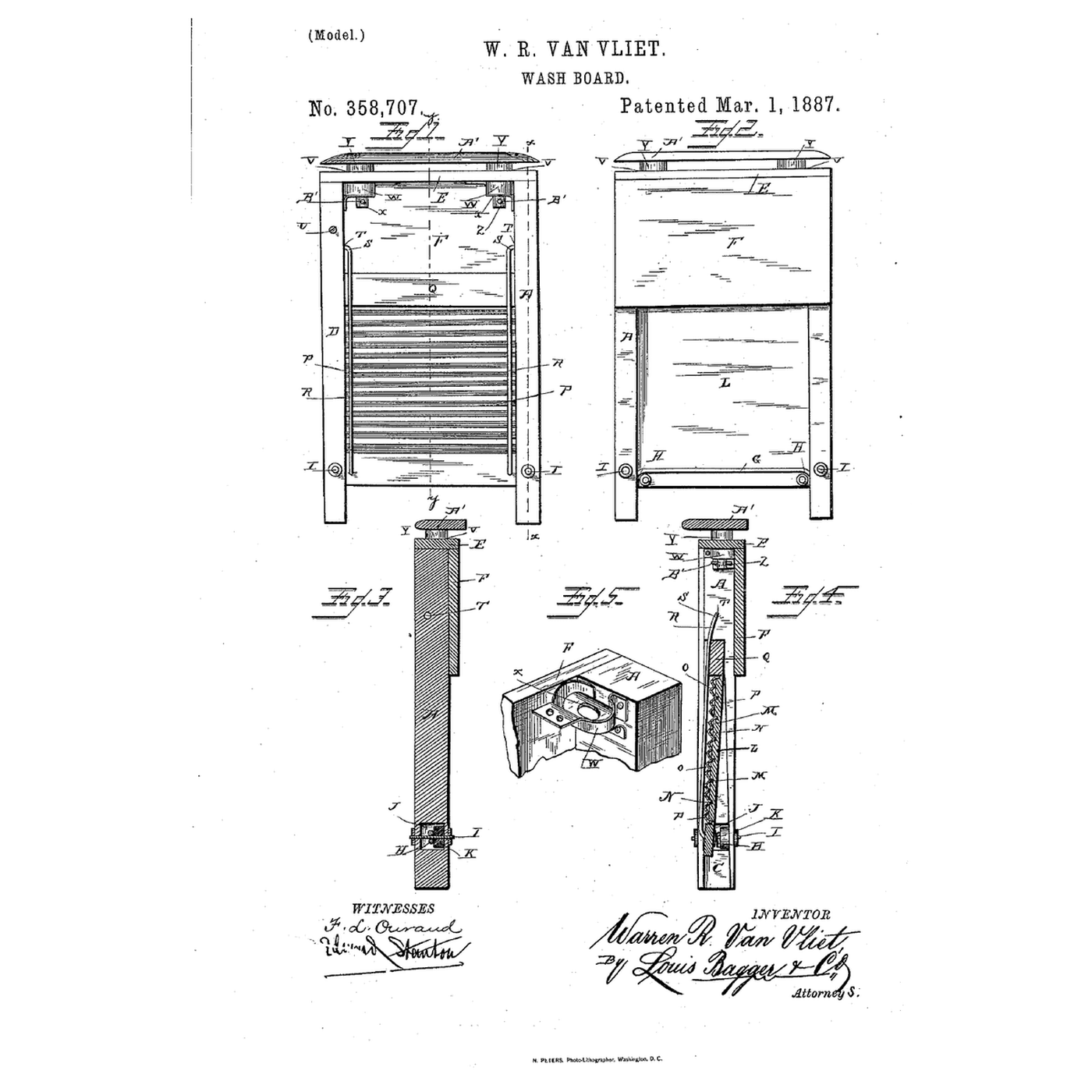



CC0 opinbert ríki
Þessi teikning er gefin út undir CC0. Þér er frjálst að afrita, breyta, dreifa og nota þetta verk í hvaða tilgangi sem er, án þess að biðja um leyfi.
Studdu smiðinn með því að kaupa vörur í gegnum teikningu hans þar sem hann fær þóknun smiða sem seljendur ákvarða, eða búðu til nýja endurskoðun á þessari teikningu og tengdu hana sem tengingu í þinni eigin teikningu til að deila tekjum.