Samvinna
LIST
FEGURÐ OG VELLÍÐAN
HANDVERK
MENNING OG SAGA
SKEMMTUN
UMHVERFI
MATUR OG DRYKKUR
ÖFUGVERKFRÆÐI
VÍSINDI
ÍÞRÓTTIR
TÆKNI
KLÆÐANLEG TÆKNI
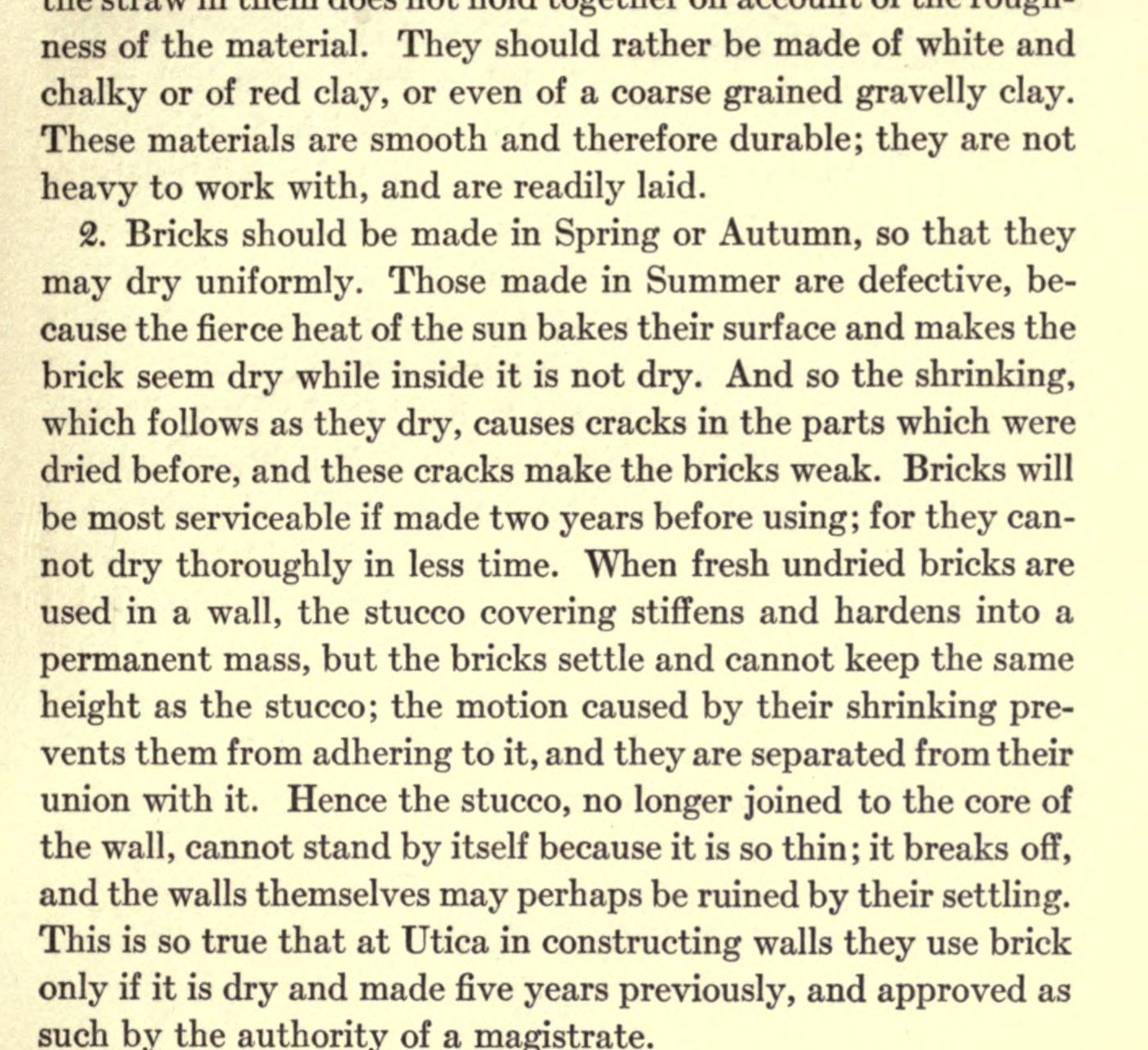


Roman Sun-Dried Bricks: Chalky or Red Clay with Straw, Moulded in Spring or Autumn, Dried Two Years (Vitruvius)
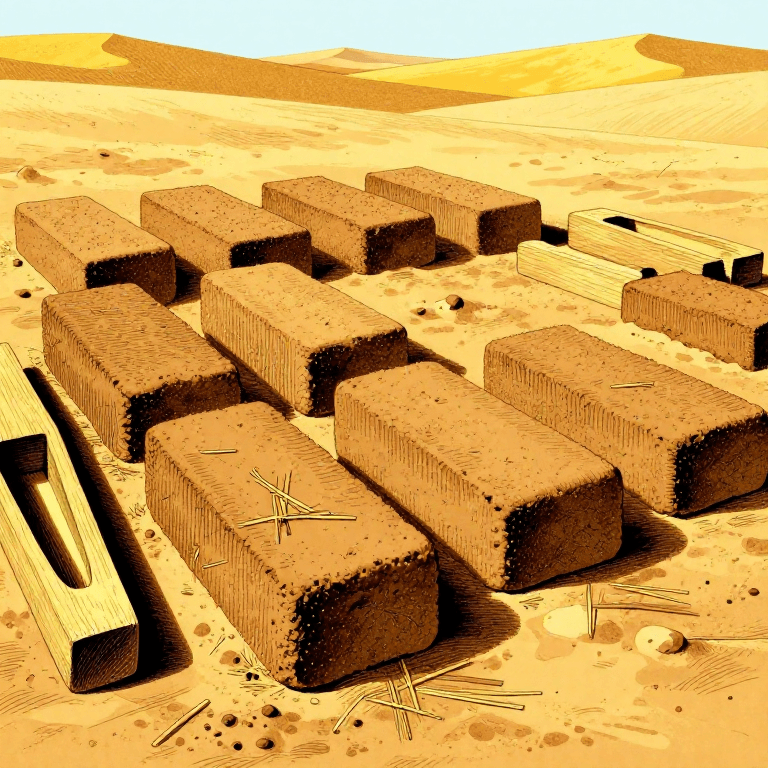
Unburnt brick as Vitruvius describes it in Book II: smooth white-chalky or red clay (never sandy or pebbly) with straw, moulded in spring or autumn so it dries evenly, and left two years before building, in the Roman Lydian size of 1 1/2 by 1 foot or the Greek four- and five-palm squares.
Byrjandi
A day to mould; two years to dry
Leiðbeiningar
1
1
His sizes
His sizes
Hleð Jupyter-vinnubók…
2
2
Read Vitruvius
Read Vitruvius
"Bricks will be most serviceable if made two years before using; for they cannot dry thoroughly in less time."
3
3
Choose the clay
Choose the clay
Use white chalky clay, red clay, or even a coarse-grained gravelly clay. Not sandy or pebbly clay or fine gravel: such bricks are heavy, break up in the rain, and the straw will not hold in them.
Efni fyrir þetta skref:
 Leir1 stykki
Nauðsynleg verkfæri:
 Skófla
4
4
Temper with straw
Temper with straw
Work the clay with water and straw into a stiff mass (amounts ours).
Efni fyrir þetta skref:
Leir1 stykki Saxað hálmstrá1 stykki
 Vatn1 stykki
Nauðsynleg verkfæri:
 Haki (garðhaki)
 Fata
5
5
Mould in spring or autumn
Mould in spring or autumn
Mould the bricks in spring or autumn, never summer, when the sun bakes the face dry over a wet core and the shrinking cracks them. Size: Lydian 1 1/2 x 1 ft (about 440 x 300 mm) for Roman work, or the Greek tetradoron (4 palms square) and pentadoron (5 palms square). Make half-bricks too.
Nauðsynleg verkfæri:
 Tréform fyrir múrsteina
6
6
Dry two years
Dry two years
Stack and let them dry two years before building. Fresh bricks shrink and settle in the wall, the stucco parts from them and breaks off. (At Utica only bricks five years old, passed by a magistrate, were allowed.)
Nauðsynleg verkfæri:
Skófla7
7
Troubleshooting
Troubleshooting
Brick troubleshooting.
Flow
Loading...
8
8
History and honest limits
History and honest limits
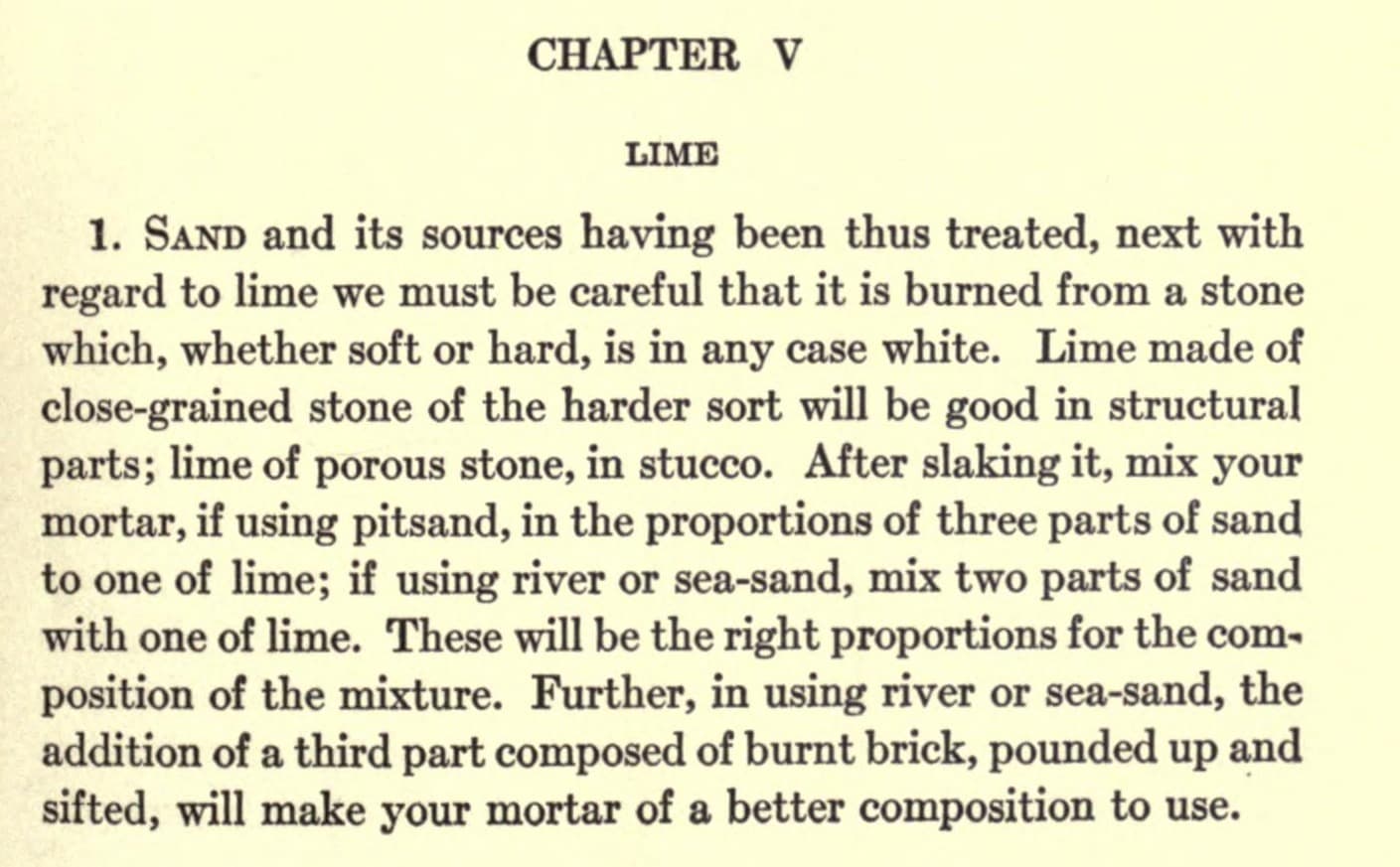
From Vitruvius, **The Ten Books on Architecture**, Book II ch. III, tr. M. H. Morgan (1914), pp. 42-44 (checked on the archive.org scan vitruviustenbook00vitruoft). He gives no thickness, mould or straw amount; those and the metric sizes (Roman foot taken as about 296 mm) are ours.
Þessi teikning býr til
Tengd Blueprint
Þessi blueprint deila þekkingu — tækni, efni eða meginreglur

CC0 opinbert ríki
Þessi teikning er gefin út undir CC0. Þér er frjálst að afrita, breyta, dreifa og nota þetta verk í hvaða tilgangi sem er, án þess að biðja um leyfi.
Studdu smiðinn með því að kaupa vörur í gegnum teikningu hans þar sem hann fær þóknun smiða sem seljendur ákvarða, eða búðu til nýja endurskoðun á þessari teikningu og tengdu hana sem tengingu í þinni eigin teikningu til að deila tekjum.