

Making Paper from Wood Pulp — The Groundwood Process That Made Paper Cheap
For nearly two thousand years, paper was made from rags — worn-out linen and cotton beaten to pulp. It was good paper, but rags were scarce, and as literacy spread the world simply ran out of them. The answer, found in the 1840s, was to make paper from the most abundant fibre on Earth: wood.
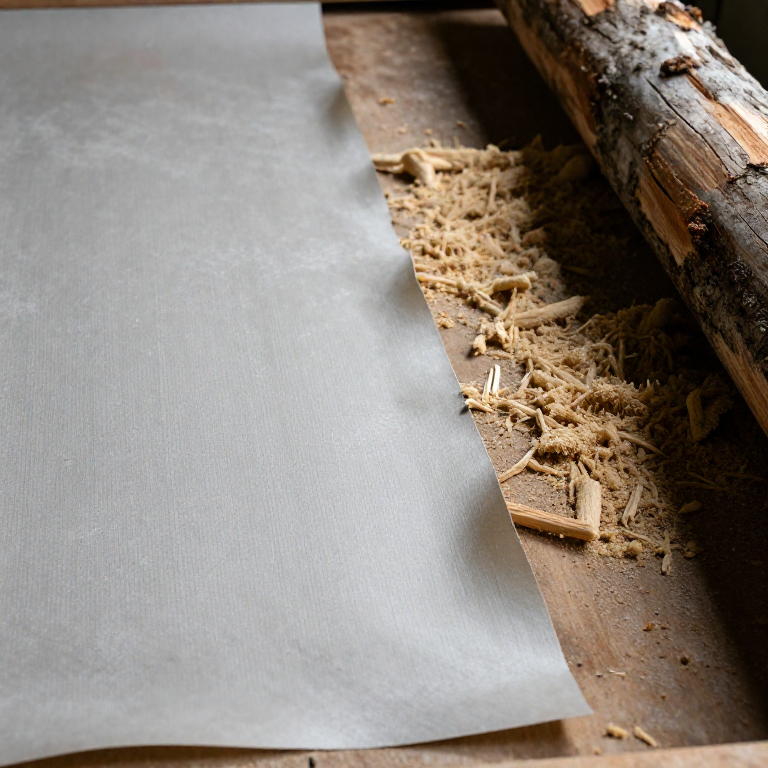
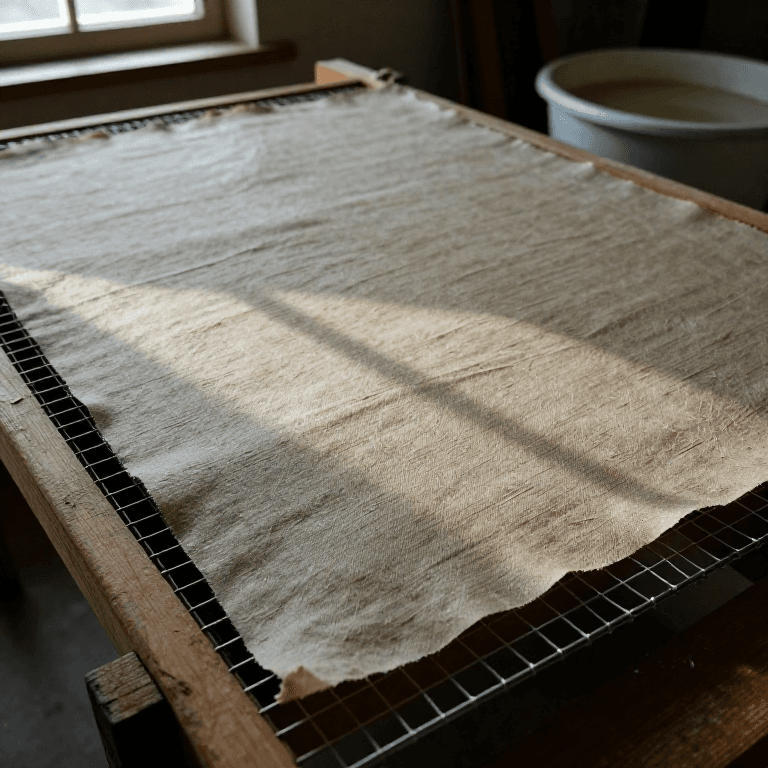
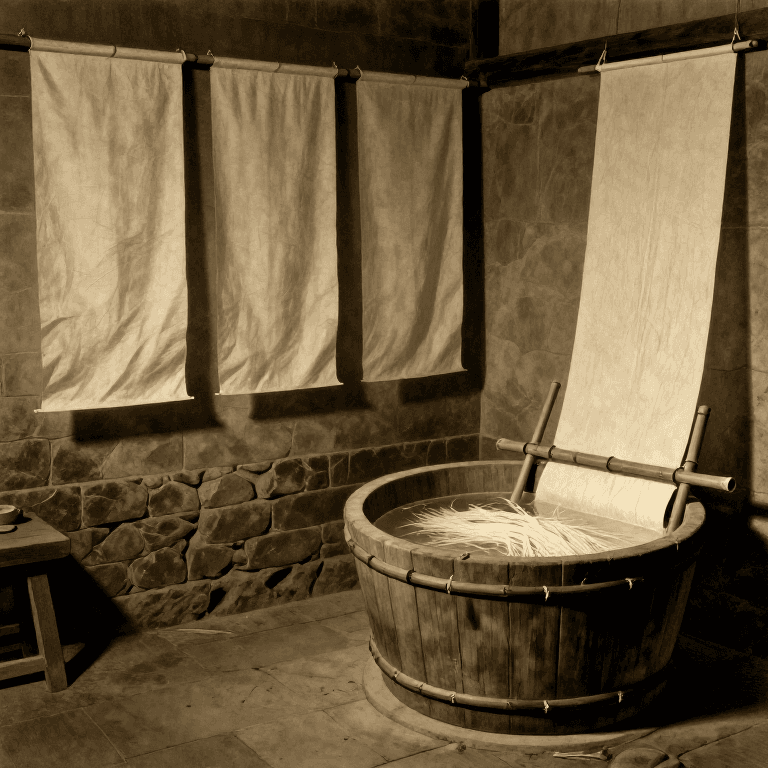
The simplest method is mechanical groundwood pulp. A log is pressed against a wet, spinning grindstone, which tears the wood into a slush of short fibres. Screened, refined, and matted on a wire, those fibres dry into paper. It is fast and cheap and turns a forest into newsprint — which is exactly what put a daily newspaper into every household.
Groundwood pulp keeps the wood's lignin, so the paper is weak and yellows with age, as old newspapers show. Removing the lignin by chemical pulping gives the white, durable paper of books — a more advanced step that built on this one. But it was cheap wood paper that truly democratised the printed word.
Leiðbeiningar
Understand the shift to wood
Understand the shift to wood
Select softwood
Select softwood
Efni fyrir þetta skref:
 Mjúkviðarbolir5 kg
Debark the logs
Debark the logs
Nauðsynleg verkfæri:
 Bandhefill
Grind the wood to pulp
Grind the wood to pulp
Efni fyrir þetta skref:
 Vatn40 lítrar
Nauðsynleg verkfæri:
 Brýnsluhjól
Screen the pulp
Screen the pulp
Nauðsynleg verkfæri:
 Sigti með 60 möskva
Refine the stock
Refine the stock
Add sizing and filler
Add sizing and filler
Efni fyrir þetta skref:
 Fiðluharpix (úrvals, dökkt)50 g
 Álún (kalíumálún)30 g
Form the sheet
Form the sheet
Nauðsynleg verkfæri:
 Pappírsmót
Couch and press
Couch and press
Efni fyrir þetta skref:
 Ullarþóf2 stykki
Nauðsynleg verkfæri:
 Pressa
Dry the sheets
Dry the sheets
Finish the paper
Finish the paper
Nauðsynleg verkfæri:
PressaKnow its strength and weakness
Know its strength and weakness
Efni
5- 5 kgStaðgengill
- 40 lítrarStaðgengill
- Staðgengill
- Staðgengill
- 2 stykkiStaðgengill
Nauðsynleg verkfæri
5- Staðgengill
- Staðgengill
- Staðgengill
- Staðgengill
- Staðgengill
Tengd Blueprint
Þessi blueprint deila þekkingu — tækni, efni eða meginreglur


CC0 opinbert ríki
Þessi teikning er gefin út undir CC0. Þér er frjálst að afrita, breyta, dreifa og nota þetta verk í hvaða tilgangi sem er, án þess að biðja um leyfi.
Studdu smiðinn með því að kaupa vörur í gegnum teikningu hans þar sem hann fær þóknun smiða sem seljendur ákvarða, eða búðu til nýja endurskoðun á þessari teikningu og tengdu hana sem tengingu í þinni eigin teikningu til að deila tekjum.