Collaborazione
ARTE
BELLEZZA E BENESSERE
MESTIERE
CULTURA E STORIA
DIVERTIMENTO
AMBIENTE
CIBO E BEVANDE
INGEGNERIA INVERSA
SCIENZE
SPORT
TECNOLOGIA
INDOSSABILI
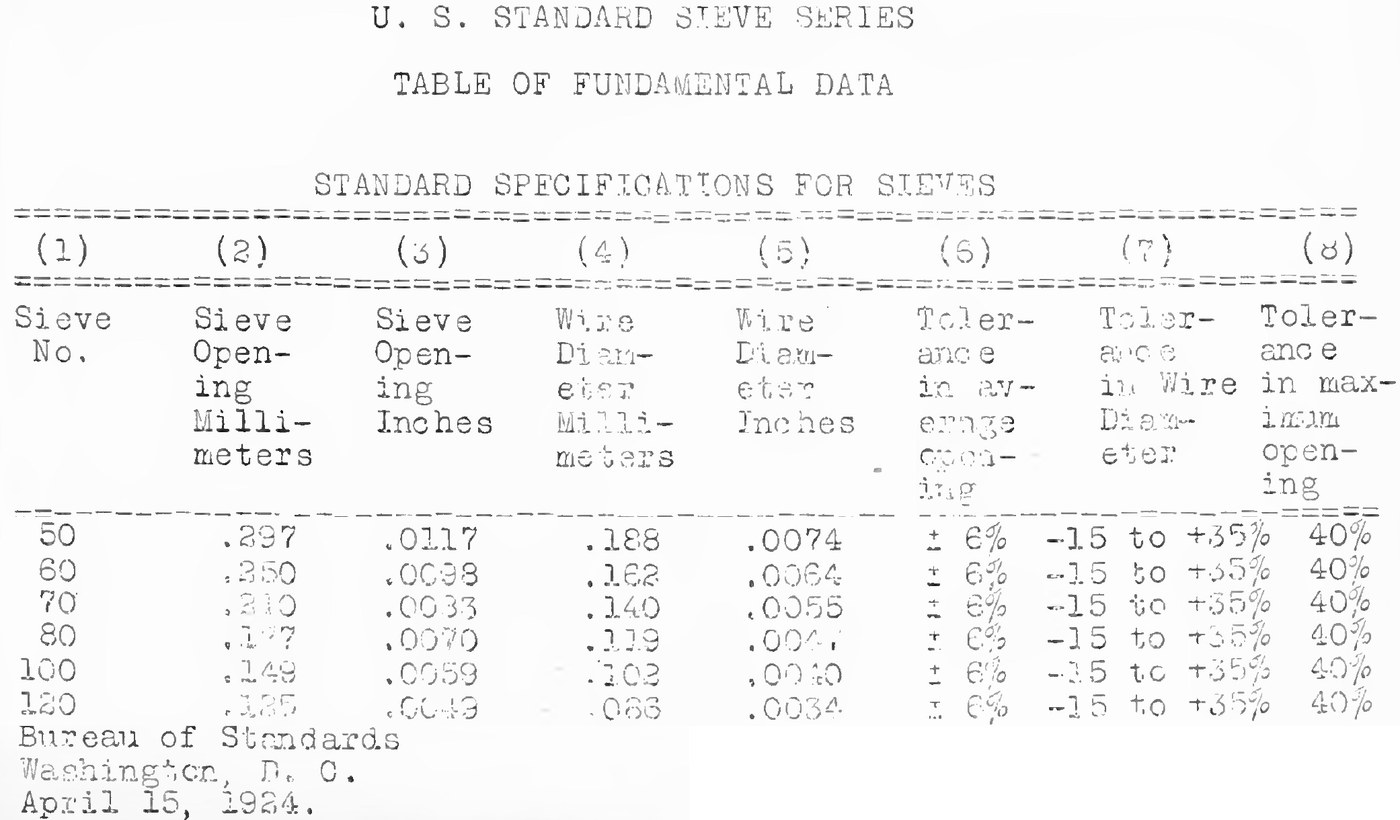

60-Mesh and 80-Mesh Sieves: U.S. Standard Sieves No. 60 and No. 80 (Bureau of Standards, 1924)
Two standard testing sieves made the same way; only the wire and the opening change with the sieve number. Plain-woven brass or bronze wire cloth is soldered smoothly into a round frame about 20 cm (8 in) across.
No. 60 has 0.250 mm openings (the 60-mesh sieve); No. 80 has 0.177 mm openings (the 80-mesh sieve). The finer the cloth, the finer the grains that pass.
Source: Bureau of Standards, Letter Circular 74, Standard Specifications for Sieves (revised 1924). Unknown: the frame metal and the weaving. Picture: the Bureau's table.
Intermedio
Unknown
Istruzioni
1
1
Choose the sieve number
Choose the sieve number
The sieve number sets the wire and the opening (Bureau of Standards table, 1924):
No. 60: opening 0.250 mm (0.0098 in), wire 0.162 mm (0.0064 in).
No. 80: opening 0.177 mm (0.0070 in), wire 0.119 mm (0.0047 in).
The opening is the clear space between adjacent wires. No. 60 passes grains under 0.250 mm; No. 80 passes grains under 0.177 mm.
2
2
Weave the wire cloth
Weave the wire cloth
Weave plain (not twilled) cloth from brass, bronze or other suitable wire of the diameter for your sieve number, spacing the wires so the opening is as in the table each way. Ours: bronze wire. Not given: how it is woven.
Materiali per questo passaggio:
 Filo di bronzo1 warp and shoot wires
Strumenti necessari:
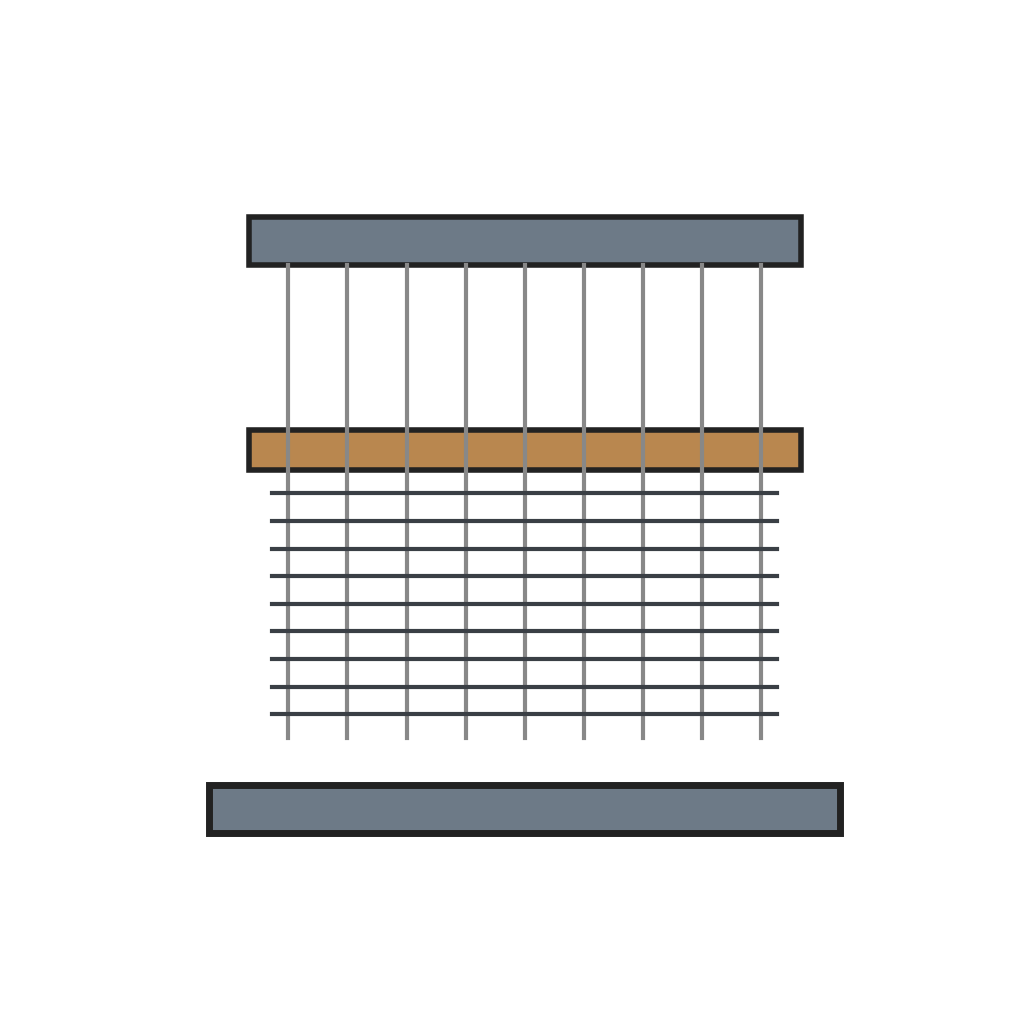 Telaio per tela metallica
3
3
Make the frame
Make the frame
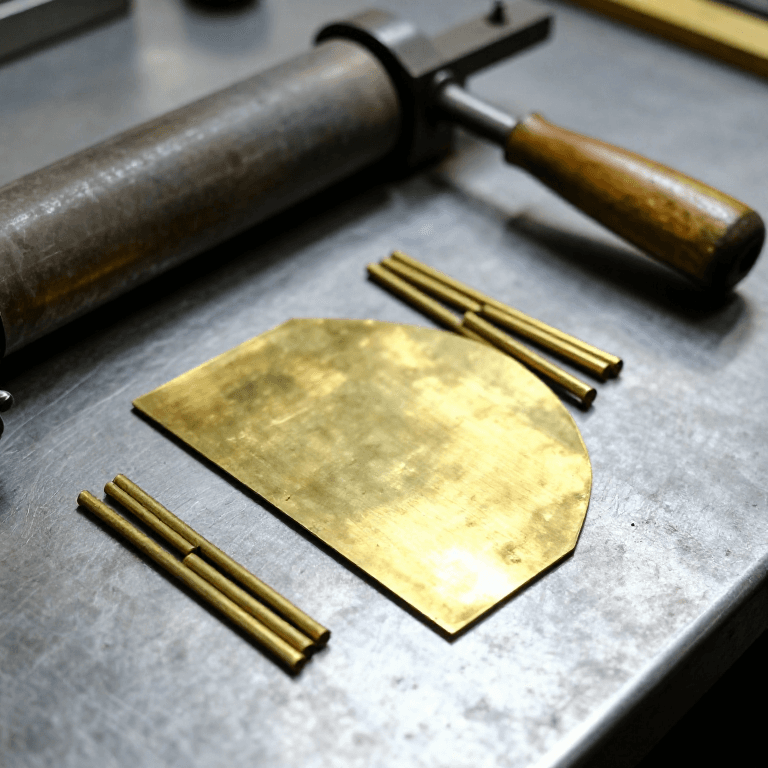
Make a circular frame about 20 cm (8 in) across, with about 5 cm (2 in), or 2.5 cm (1 in), between its top and the cloth. Ours: brass strip. Not given: the frame metal.
Materiali per questo passaggio:
 Piattina di ottone1 frame
Strumenti necessari:
 Cesoie da lattoniere
 Saldatore a stagno
4
4
Mount the cloth
Mount the cloth
Mount the cloth on the frame without distorting it. Fill the joint between cloth and frame smoothly with solder, so the material being sieved cannot catch in it.
Materiali per questo passaggio:
 Lega saldante stagno-piombo1 joint
 Flussante1 joint
Strumenti necessari:
Saldatore a stagno5
5
Check it against the tolerances
Check it against the tolerances
Measure the warp and shoot wires separately. For both numbers the average opening must be within ±6 % of the table, the average wire diameter within −15 to +35 %, and no opening may exceed the table opening by more than 40 %. Reject a sieve with punctures, loose or wavy cloth, poor soldering, or too many large openings.
Strumenti necessari:
 Micrometro
 Lente d'ingrandimento
Materiali
4- 1 warp and shoot wiresSegnaposto
- 1 frameSegnaposto
- 1 jointSegnaposto
- 1 jointSegnaposto
Strumenti richiesti
5- Segnaposto
- Segnaposto
- 2 vendors sell this, none ship to you yetSegnaposto
- Segnaposto
- Segnaposto
Materiali dei progetti collegati

10% Attribuzione
120-Mesh Sieve: U.S. Standard Sieve No. 120 (Bureau of Standards, 1924)
di Tex
Fisica
4
0
0
0
1
0

10% Attribuzione
Tin Bronze Ingots, Wire and Rod
di Forge
Lavorazione dei metalli
52
0
0
0
2
0
10% Attribuzione
Brass Sheet, Strip and Rod from an Ingot
di Forge
Lavorazione dei metalli
36
0
0
0
2
0
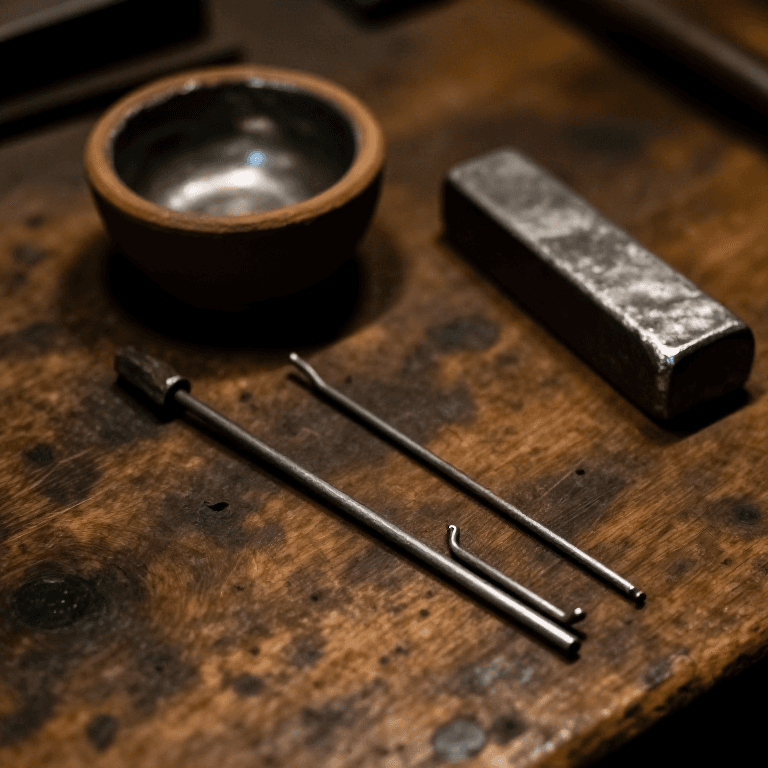
Pericoloso
10% Attribuzione
Making Tin-Lead Solder — The Ancient Alloy That Joins Metals Without a Forge
di Peter
Lavorazione dei metalli
58
0
0
0
3
0
Questo progetto realizza

CC0 Pubblico dominio
Questo progetto è rilasciato sotto CC0. Sei libero di copiare, modificare, distribuire e utilizzare quest'opera per qualsiasi scopo, senza chiedere permesso.
Supporta il Maker acquistando prodotti tramite il suo progetto dove guadagna una Commissione Maker stabilita dai venditori, oppure crea una nuova iterazione di questo progetto e includilo come collegamento nel tuo progetto per condividere i ricavi.