

Extracting Indigo Dye from Woad Leaves — Vat Dyeing Blue
Istruzioni
Harvest and Prepare Woad Leaves
Harvest and Prepare Woad Leaves
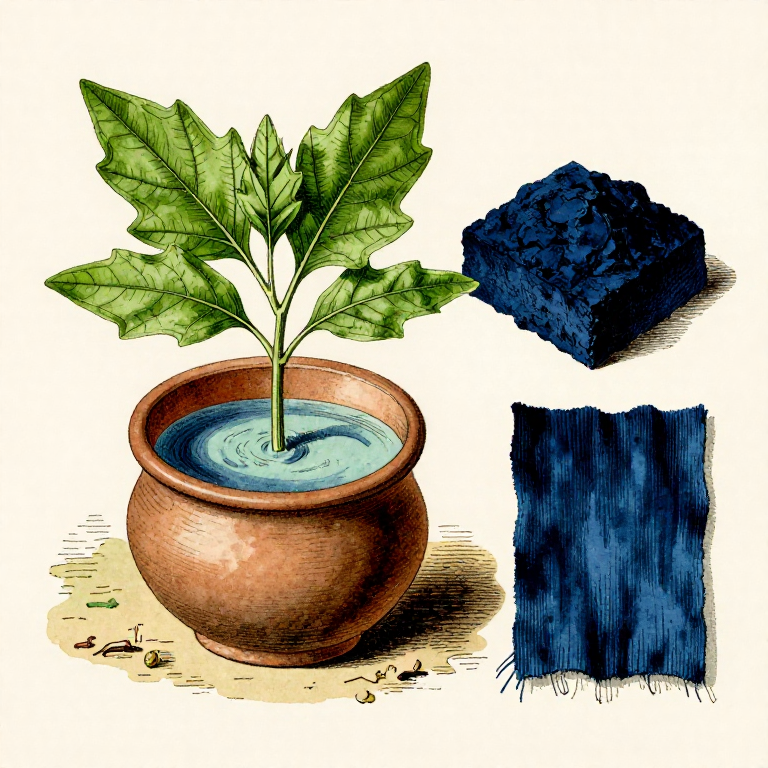
Harvest fresh woad leaves (Isatis tinctoria) when the plant is in its first year of growth, before flowering. The leaves contain the indigo precursor indican, which is most concentrated in young, green leaves harvested in warm weather. Pick the leaves in the morning after the dew has dried. The indican content varies significantly — summer-harvested leaves produce more dye than spring or autumn leaves. You need approximately 2-5 kg of fresh leaves to produce enough indigo for dyeing 200-500 g of textile. Tear or chop the leaves roughly to expose more surface area.
Extract and Oxidise the Indigo
Extract and Oxidise the Indigo
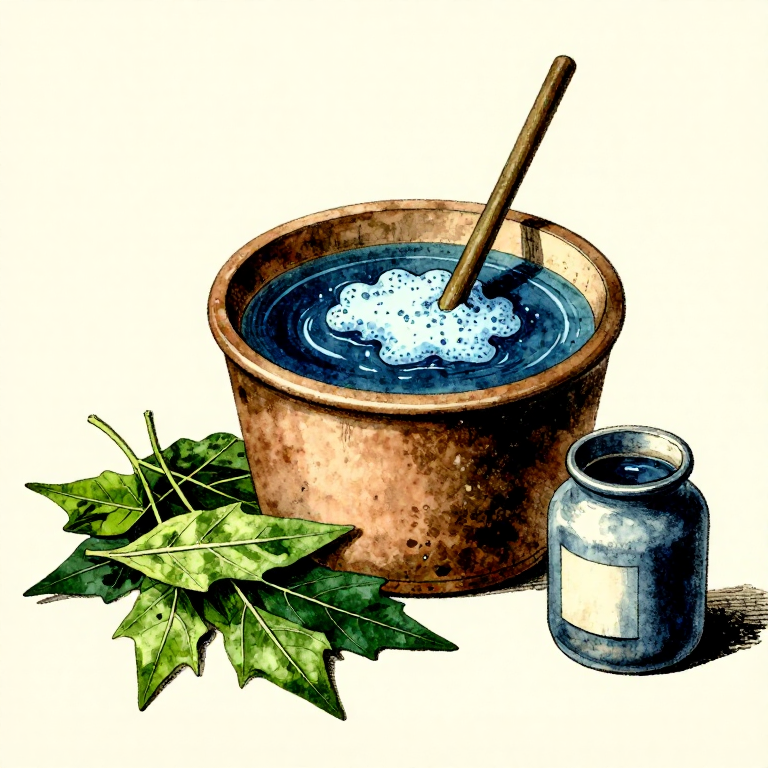
Place the torn leaves in a large vat and cover with warm water (about 50-60 degrees C — hot but not boiling). Steep for 12-24 hours. During this soak, enzymes in the leaves break down indican into indoxyl (a colourless compound) and glucose. Strain out the spent leaf material. Add wood ash lye (a strongly alkaline solution made by filtering water through hardwood ash) to the liquid — this raises the pH to approximately 10-12, which promotes the next step. Vigorously beat or stir the alkaline liquid for 15-30 minutes, introducing air. Oxygen from the air converts the dissolved indoxyl into indigotin (indigo), which is insoluble and precipitates as fine blue particles.
Settle and Collect the Pigment
Settle and Collect the Pigment
Allow the beaten liquid to settle undisturbed for several hours. The insoluble indigo particles slowly sink to the bottom as a blue sediment. Carefully pour off the clear yellowish liquid above without disturbing the sediment. Collect the blue paste from the bottom — this is crude indigo pigment. It can be dried into cakes for storage or used immediately for dyeing. The dried indigo pigment is insoluble in water, which is both its strength (it produces extremely wash-fast colours) and its challenge (it cannot dye fiber in its oxidised form and must be chemically reduced back to the soluble form).
Build the Dye Vat
Build the Dye Vat
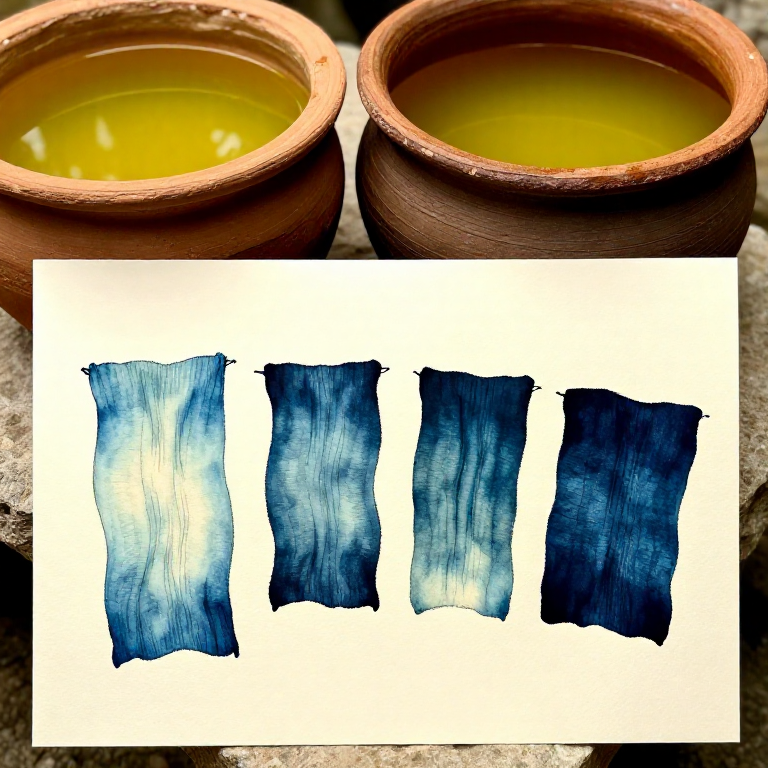
To dye fabric, the insoluble indigo must be reduced (de-oxygenated) back to soluble leuco-indigo. In an alkaline vat (pH 10-12 from wood ash lye), add a reducing agent — historically, this was fermented wheat bran, urine (which contains urea that bacteria convert to ammonia), madder root, or honey. The bacteria and/or chemical reducing agents strip oxygen from the indigotin, converting it to leuco-indigo (a yellowish-green, water-soluble form). The vat is ready when the liquid turns a clear yellow-green colour with a coppery metallic sheen on the surface. Maintaining the vat at 30-50 degrees C speeds the reduction process.
Materiali per questo passaggio:
 Tronchetto di frassino2-3 litres pezzo
 Acqua10-15 litres pezzo
 Mielesmall handful pezzo
 Tessuto di linofor testing dye pezzo
Dye the Textile
Dye the Textile
Wet the fabric thoroughly before immersing it in the dye vat. Submerge the fabric gently — avoid introducing air, which prematurely oxidises the dye. Leave the fabric in the vat for 15-30 minutes per dip. When removed, the fabric appears yellow-green. Within minutes of air exposure, the leuco-indigo in the fiber re-oxidises to indigotin, and the fabric turns blue before your eyes. This colour-change is one of the most dramatic reactions in traditional dyeing. For deeper blue, repeat the dip-and-oxidise cycle 3-10 times, allowing full oxidation between each dip. Each cycle deposits another layer of indigo in the fiber. The resulting blue is remarkably lightfast and wash-resistant because the indigo molecules are physically trapped within the fiber structure rather than chemically bonded to it.
Materiali
7- 2-3 litres pezzoSegnaposto
- 10-15 litres pezzoSegnaposto
- small handful pezzoSegnaposto
- for testing dye pezzoSegnaposto
- 2-5 kg pezzoSegnaposto
- 1 pezzoSegnaposto
- 1 pezzoSegnaposto
Strumenti richiesti
4- Segnaposto
- Segnaposto
- Segnaposto
- Segnaposto
Questo progetto realizza
CC0 Pubblico dominio
Questo progetto è rilasciato sotto CC0. Sei libero di copiare, modificare, distribuire e utilizzare quest'opera per qualsiasi scopo, senza chiedere permesso.
Supporta il Maker acquistando prodotti tramite il suo progetto dove guadagna una Commissione Maker stabilita dai venditori, oppure crea una nuova iterazione di questo progetto e includilo come collegamento nel tuo progetto per condividere i ricavi.