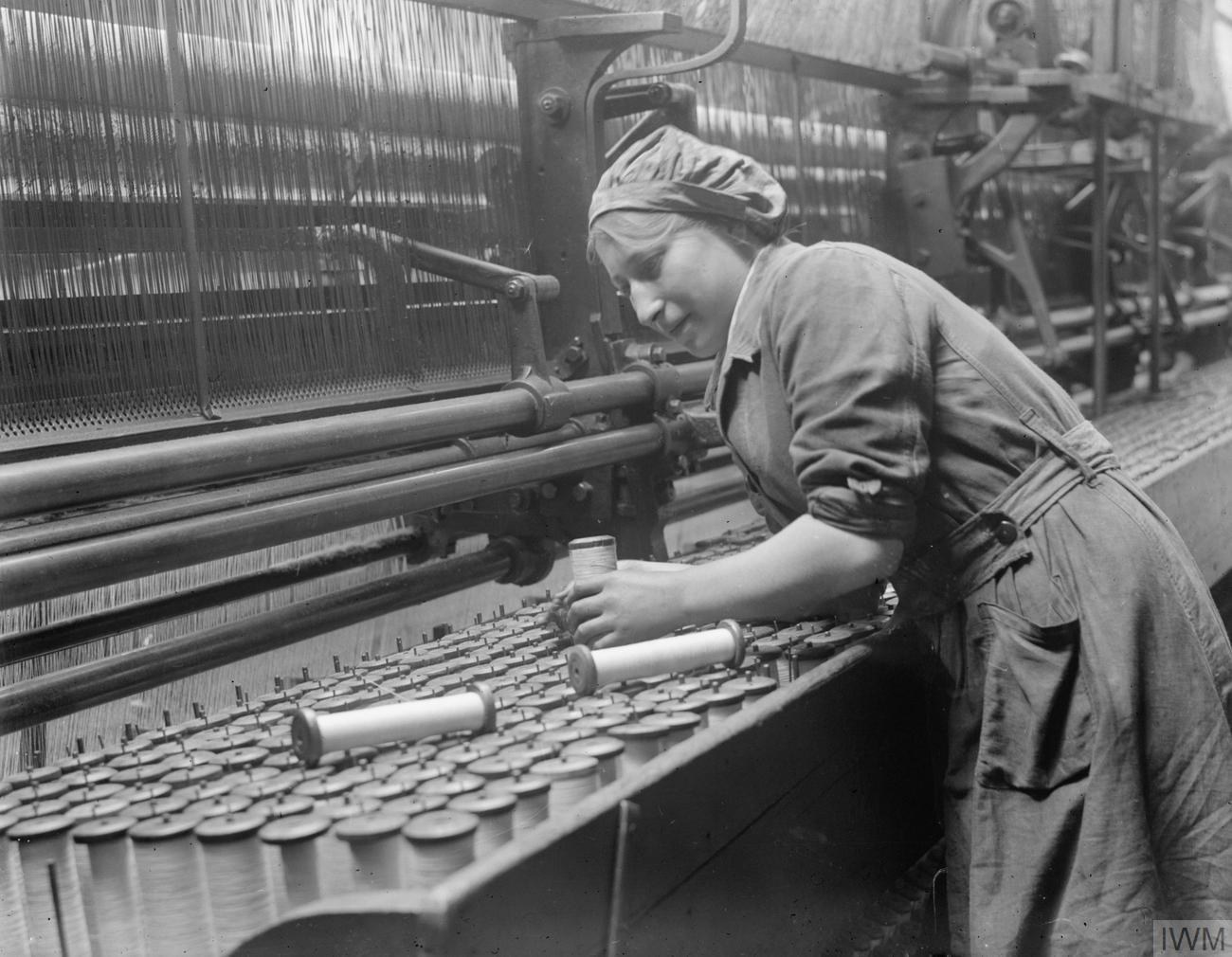


Bobbinet Lace Machine
Istruzioni
Look at the ground you are copying
Look at the ground you are copying
Examine real net closely before trying to reproduce it.
- Take a piece of net or tulle and look at it under magnification.
- Find a single hexagonal hole and trace its sides.
- Note that the threads are twisted around one another, not interlaced over and under.
Materiali per questo passaggio:
 Lente convessa1 pezzo
Set up the warp
Set up the warp
Vertical threads under even tension, evenly spaced.
- Stretch parallel threads on a frame, a few millimetres apart.
- Tension them equally — uneven tension gives uneven holes.
- Fix a comb or reed at top and bottom to hold the spacing.
Materiali per questo passaggio:
 Filo di lino cerato1 rocchetto
Make flat bobbins
Make flat bobbins
The bobbin has to carry a useful length of thread and still slip between two warp threads.
- Cut thin discs from sheet brass or stiff card.
- Wind thread around the rim so the disc stays flat.
- Check it passes freely through your warp spacing.
Materiali per questo passaggio:
 Lamiera di rame1 foglio
Traverse and twist by hand
Traverse and twist by hand
Work one course slowly to see the mesh appear.
- Pass a bobbin between two warp threads, around one, and back.
- Move it one warp position sideways and repeat.
- Alternate the direction of the sideways shift on each course.
History and context
History and context
John Heathcoat (1783-1861) was a Leicestershire framesmith who reportedly took apart the problem by pinning out a piece of pillow lace and following every thread. His bobbinet patent dates from 1808, and it is often described as one of the most valuable British textile patents of the century.
The 1816 attack. Luddites broke into his Loughborough mill and destroyed the frames. Heathcoat was awarded compensation on condition he rebuilt in Loughborough; he refused, and moved the business to Tiverton in Devon — taking the work away from the district that had attacked it. The Tiverton factory operated for well over a century.
What it did to lace. Machine net supplied the ground, and hand workers could then embroider or apply patterns onto it — so hand lace did not vanish, it moved up the value chain onto machine-made ground. Prices fell far enough that lace stopped being a marker of rank and became ordinary trimming. Nottingham became the world centre of machine lace.
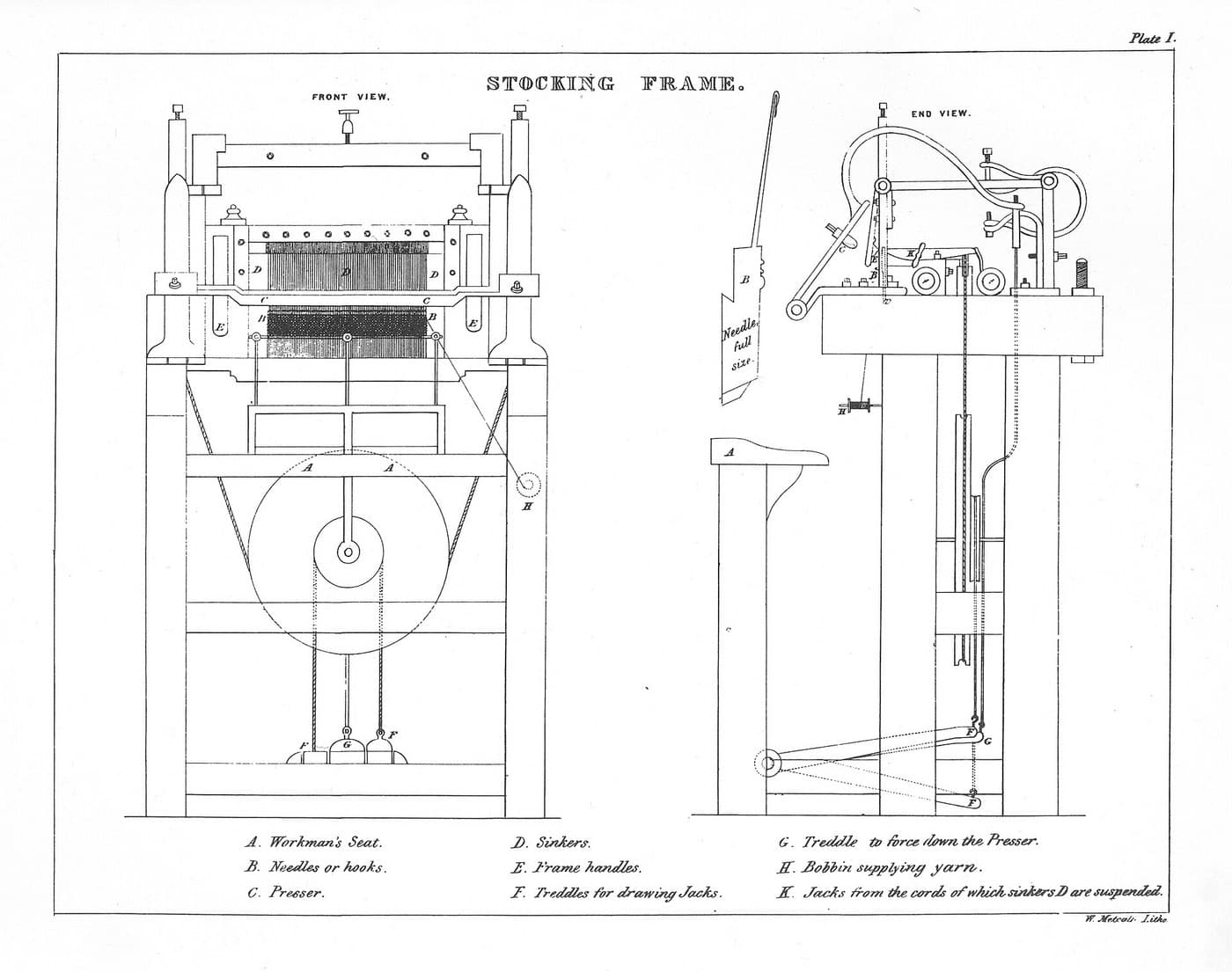
Why this is the hardest machine in this batch. The bobbins must pass through a moving warp, be caught on the far side, carried sideways and returned, all without snagging thread. Heathcoat's machine had rows of bobbin carriages driven by cams and it was, by the standards of 1808, an extraordinarily complicated piece of engineering. A bench model shows the thread path honestly; it does not begin to show the mechanism that automates it.
Materiali
3- 1 pezzoSegnaposto
- 1 rocchettoSegnaposto
- 1 foglioSegnaposto
Blueprint correlati
Questi blueprint condividono conoscenze — tecniche, materiali o principi
CC0 Pubblico dominio
Questo progetto è rilasciato sotto CC0. Sei libero di copiare, modificare, distribuire e utilizzare quest'opera per qualsiasi scopo, senza chiedere permesso.
Supporta il Maker acquistando prodotti tramite il suo progetto dove guadagna una Commissione Maker stabilita dai venditori, oppure crea una nuova iterazione di questo progetto e includilo come collegamento nel tuo progetto per condividere i ricavi.