Collaborazione
ARTE
BELLEZZA E BENESSERE
MESTIERE
CULTURA E STORIA
DIVERTIMENTO
AMBIENTE
CIBO E BEVANDE
INGEGNERIA INVERSA
SCIENZE
SPORT
TECNOLOGIA
INDOSSABILI
Rocking Bucket-Dasher Churn: A Crank and Rod Rock a Dasher of Bucketed Arms, a Fixed Bucket Breaks the Current
Buttercup

Creato da

Buttercup

11. novembre 2026IE
2
0
0
0
0

Rocking Bucket-Dasher Churn: A Crank and Rod Rock a Dasher of Bucketed Arms, a Fixed Bucket Breaks the Current

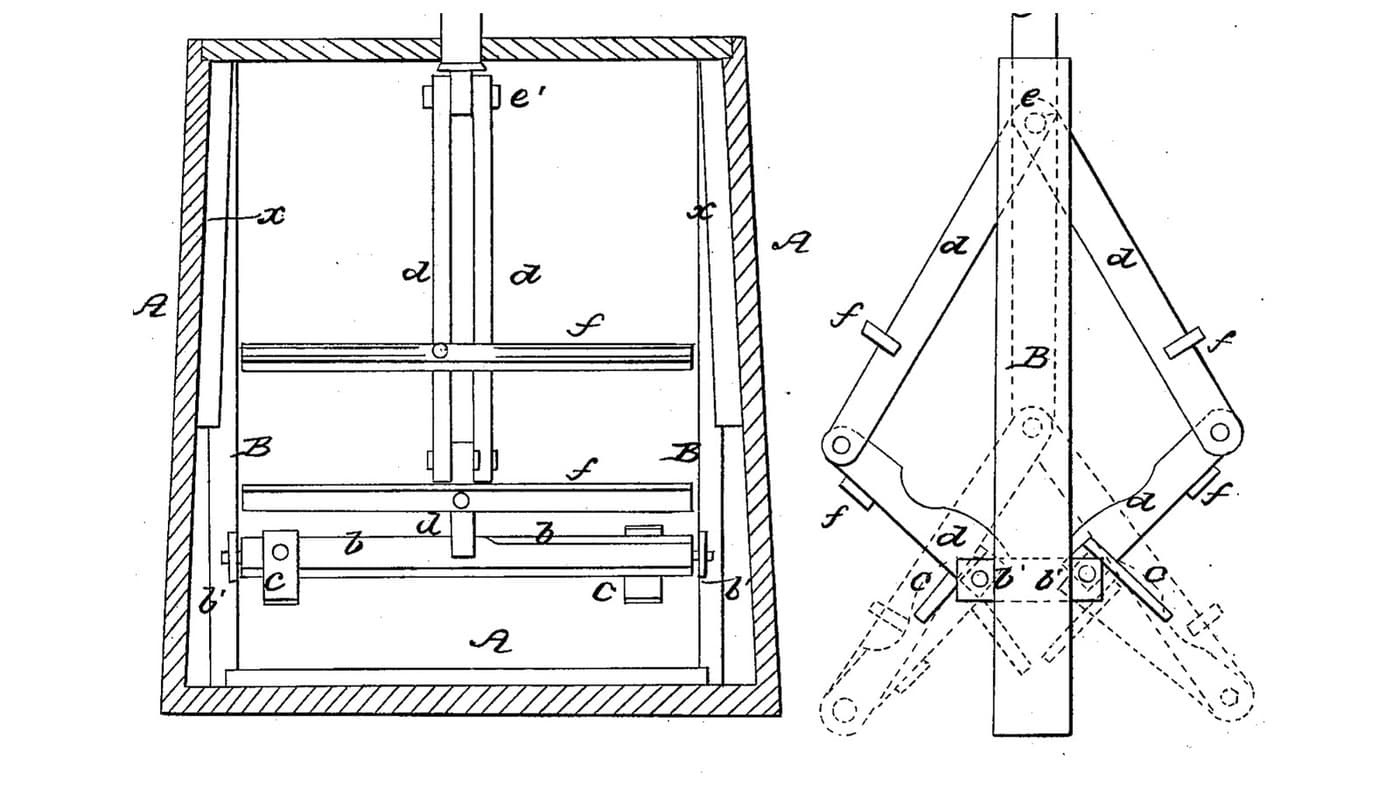
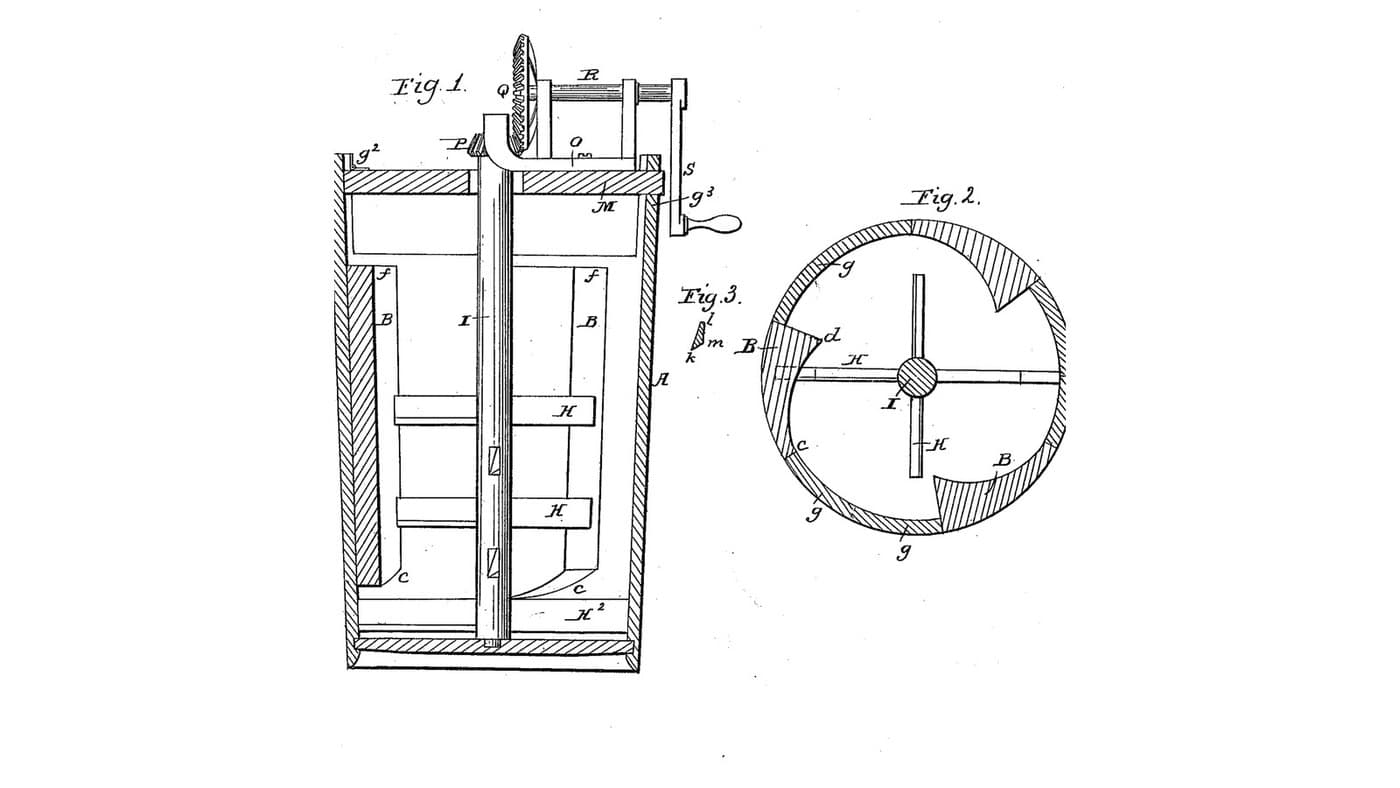
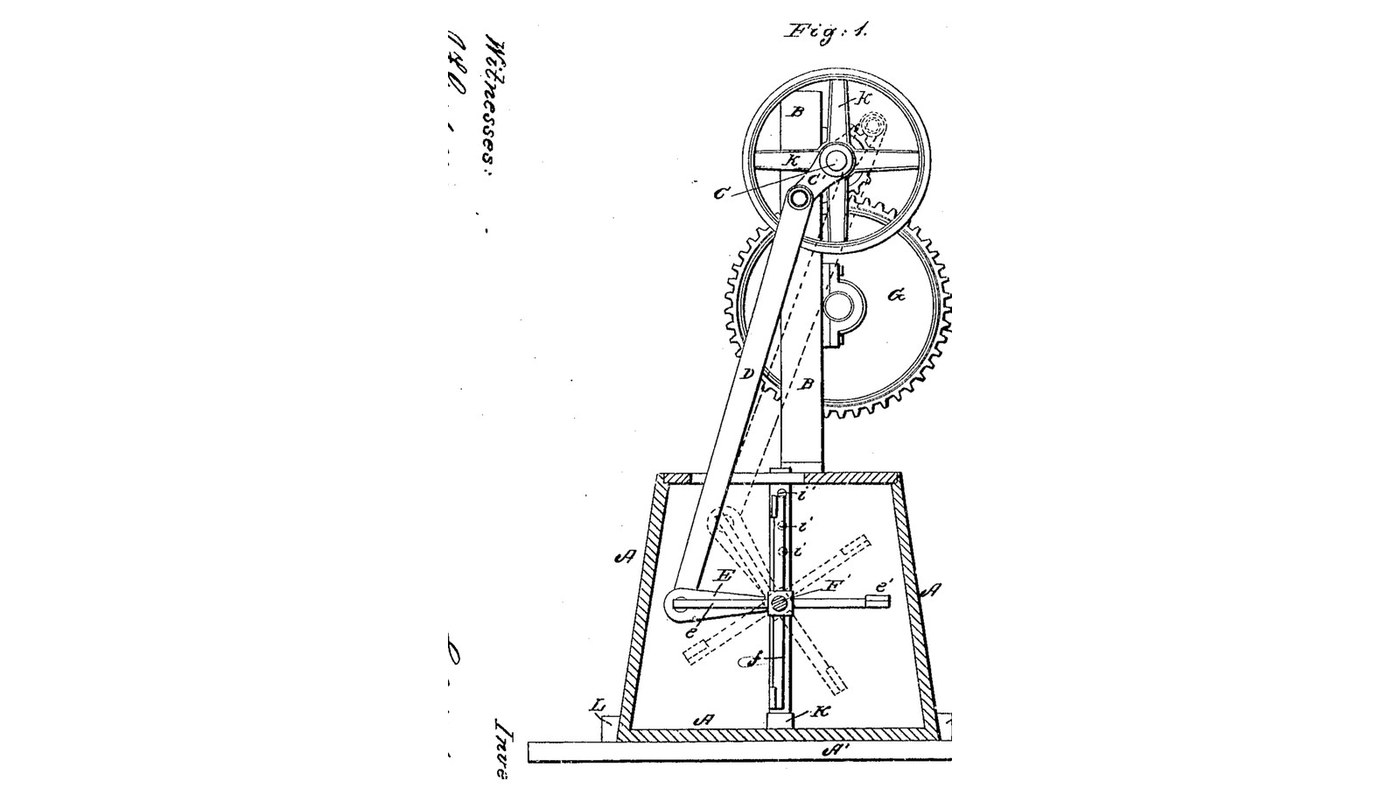
Gillett Bunting of Liberty, Indiana, received US 26,226, dated 22 November 1859, for a churn-dasher. A dasher of crossed arms with buckets on their ends rocks on a level shaft whose bearings slide up or down to suit the amount of cream. A crank above, turned through a pair of cog wheels with a balance wheel, rocks it by a long rod, throwing the cream into opposing currents, and a fixed bucket on the bottom breaks the current along the floor. The patent gives no sizes; every size here is ours.
Intermedio
About 2 days, plus printing

Istruzioni

1

How far the dasher rocks

Caricamento del notebook Jupyter…
2

Agitators swung on pivots, two weeks before

Cooper swings his agitators from a dash rod worked by hand. Bunting rocks a whole dasher from a crank.
3

Read US 26,226

"the rapid oscillating motion thus imparted to the dasher, through the medium of buckets (e' g', K) forces the cream into violent opposing currents, at the same time, the concussive action of the buckets (e', g') and arms (e, g) and bar (E) upon the cream is fully developed, thereby producing, a rapid and violent agitation of the cream"
4

Print the driving wheel G

Spur wheel, 48 teeth, module 3, 15 mm face, with a hub bored 20.6 mm. PETG, 0.2 mm layers, 40 % infill, 4 walls.
File di designSTLCC0 - Free
5

Print the wheel h

Spur pinion, 16 teeth, module 3, 15 mm face, with a hub bored 12.6 mm and a cross hole for a pin. PETG, 0.2 mm layers, 40 % infill, 4 walls.
File di designSTLCC0 - Free
6

Shell A, bed A', guides L and bucket K

Use a wooden tub 360 mm across inside at the floor, 320 mm at the top and 420 mm deep. Stand it on a bed board 520 x 560 mm between two guide strips. Glue and screw a hardwood block K, 60 x 300 x 60 mm, across the middle of the floor, with a 24 x 24 mm socket 50 mm deep near each end for the slides. Fill the tub with water overnight so it swells tight, then empty it.

Materiali per questo passaggio:

Tinozza di legnoTinozza di legno1 pezzo
Tavola di legno duroTavola di legno duro2 pezzi
Colla da legnoColla da legno1 pezzo
Viti da legnoViti da legno12 pezzi

Strumenti necessari:
Sega circolare da bancoSega circolare da banco

Sega a manoSega a mano
Scalpello da mortaseScalpello da mortase
Mazzuolo di legnoMazzuolo di legno
Trapano a batteriaTrapano a batteria
Serie di punte da trapanoSerie di punte da trapano
Morsetto a barraMorsetto a barra
Metro a nastroMetro a nastro
AcquaAcqua
7

Slides f and the dasher

Cut two slides 20 x 24 mm, 255 mm long, bore each 21 mm 225 mm from its foot for the shaft's journal, and a row of 6 mm holes near the foot for a set screw through the block K. Make the shaft F a 20 mm hardwood dowel 280 mm long. Mortise through it two arms e 20 x 30 mm, 210 mm long, 150 mm apart, two arms g 20 x 30 mm, 260 mm long, at right angles to them, 80 mm apart, and the bar E 20 x 30 mm, 235 mm long, between the arms e, its long end reaching 100 mm past the shaft and bored 12.6 mm. Screw three U-channel buckets 170 x 40 x 20 mm of hardwood across the ends: one on the arms e and E's short end, one on each end of the arms g. Stand the slides in K with the shaft's ends in them, 240 mm up.

Materiali per questo passaggio:

Tavola di legno duroTavola di legno duro2 pezzi
Tasselli di legno duroTasselli di legno duro1 pezzo
Colla da legnoColla da legno1 pezzo
Viti da legnoViti da legno24 pezzi
Assortimento di bulloni a testa esagonaleAssortimento di bulloni a testa esagonale2 pezzi

Strumenti necessari:

Sega circolare da bancoSega circolare da banco
Fresatrice verticaleFresatrice verticale
Scalpello da mortaseScalpello da mortase
Mazzuolo di legnoMazzuolo di legno
Trapano a batteriaTrapano a batteria
Serie di punte da trapanoSerie di punte da trapano
Carta abrasivaCarta abrasiva
Metro a nastroMetro a nastro
8

Frame B, crank shaft C, wheels and rod D

Bolt two posts of 40 x 30 mm hardwood to the bed beside the tub, 400 mm apart, 850 mm tall, and bore them 12.6 mm 690 mm above the tub's floor. Bend a 12 mm stainless shaft C into a crank of 50 mm throw in its middle, heating the bends red with the torch, and run it through the posts over the bar E's end. Pin the wheel h on one end and a hardwood balance wheel k, 260 mm across and 30 mm thick, on the other. Fix a 20 mm stud above h for the wheel G, meshing, with a crank handle H. Join the crank to E's end with a hardwood rod D, 450 mm between its pins.

Materiali per questo passaggio:

Legno tenero 70x70 mmLegno tenero 70x70 mm1 pezzo
Tavola di legno duroTavola di legno duro2 pezzi
Barra di acciaio inossidabileBarra di acciaio inossidabile2 pezzi
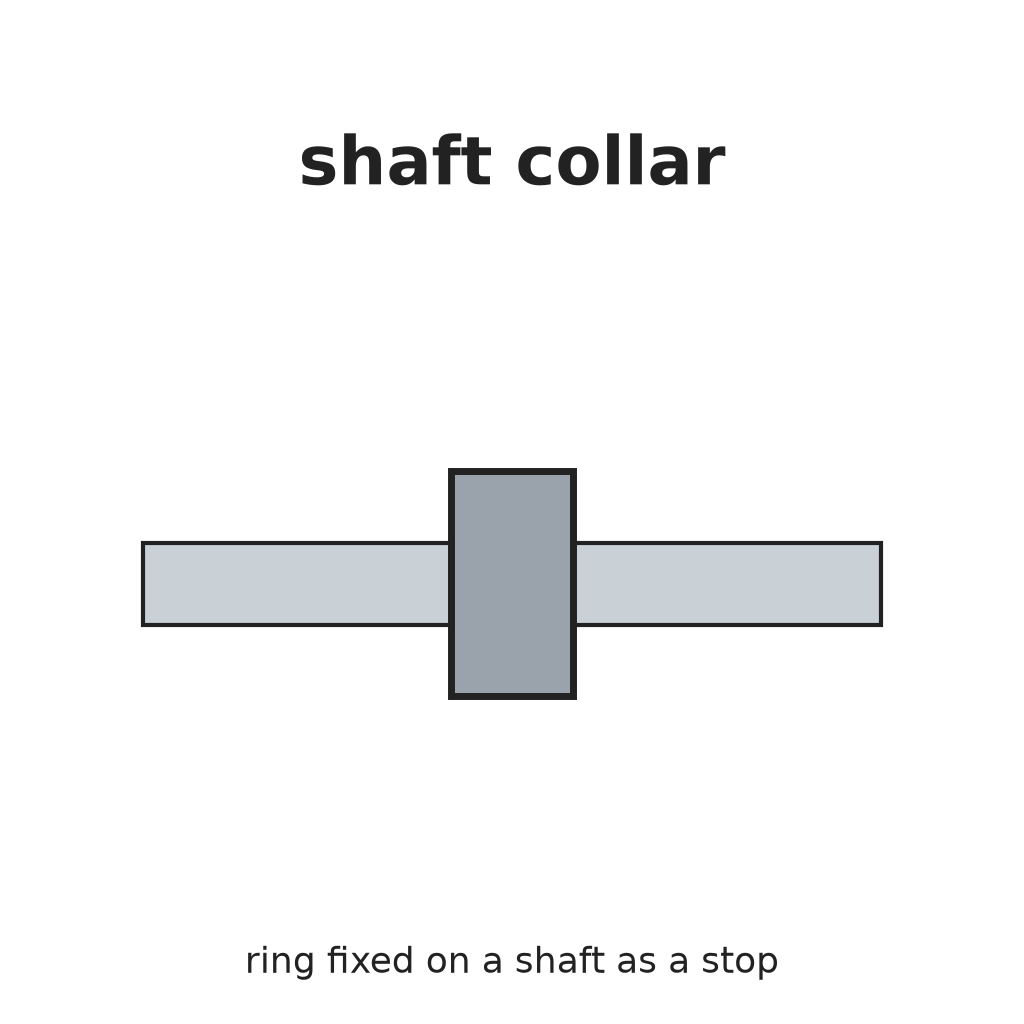
Shaft CollarShaft Collar2 pezzi
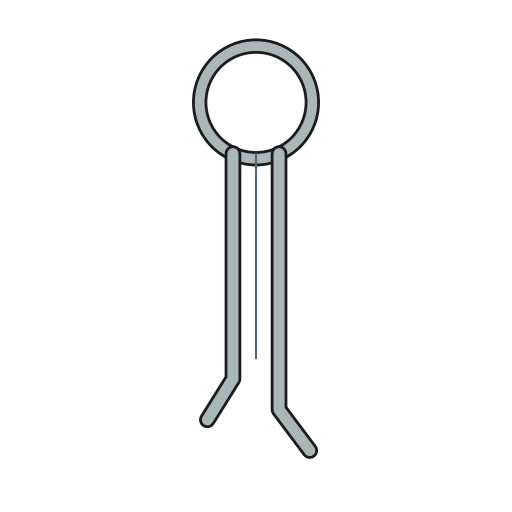
CoppigliaCoppiglia4 pezzi
Rondella pianaRondella piana6 pezzi
Assortimento di bulloni a testa esagonaleAssortimento di bulloni a testa esagonale4 pezzi

Dado autobloccante con inserto in nylonDado autobloccante con inserto in nylon4 pezzi

Filamento PETGFilamento PETG1 pezzo

Strumenti necessari:

Stampante 3D a filamento (FDM)Stampante 3D a filamento (FDM)
Cannello a propanoCannello a propano
Morsa da bancoMorsa da banco
MartelloMartello
Guanti resistenti al caloreGuanti resistenti al calore
Seghetto alternativoSeghetto alternativo
BussolaBussola
Seghetto per metalliSeghetto per metalli
Lime (lima a mano)Lime (lima a mano)
Trapano a batteriaTrapano a batteria
Serie di punte da trapanoSerie di punte da trapano
Chiave regolabile a rullinoChiave regolabile a rullino
9

The build in 3D

FreeCAD model of this build, the tub cut through the middle: the bed and guides, the fixed bucket K with the two slides, the dasher with its arms, bar E and three buckets, the rod D up to the cranked shaft C, the wheels G and h, the crank H and the balance wheel. The crank was turned through 24 positions.
File di designBLENDCC0 - Free
10

Churn

Pour in heavy cream at about 15 °C, checked with the thermometer; for less cream, lower the slides in K so the dasher still works in it. Turn the crank H steadily, timing it. When the butter comes, lift the rod off the crank and the dasher out on its slides, take out the butter, drain the buttermilk, wash the butter in cold water until it runs clear, salt and weigh it.

Materiali per questo passaggio:

Panna da montarePanna da montare15 l
Sale marino grossoSale marino grosso1 pezzo
AcquaAcqua1 pezzo

Strumenti necessari:

Termometro a sonda permanenteTermometro a sonda permanente
CronometroCronometro
Bilancia digitale da cucinaBilancia digitale da cucina
Grande ciotola da impasto in acciaio inossidabileGrande ciotola da impasto in acciaio inossidabile
11

Troubleshooting

Rocking dasher troubleshooting.

Flow

Loading...
12

History and honest limits

**Gillett Bunting** of Liberty, Union County, Indiana, assignor to himself and W. M. Jarrell, US 26,226, 22 November 1859, "Churn-Dasher". He disclaimed hinged churn-dashers and oscillating movement as such, and claimed the vibrating movement of the dasher by the arms with the crank, driving wheel and connecting rod, with the current breaker K. The patent gives no sizes; every size here is ours. His frame B stands on the shell's top; ours is two posts on the bed beside it.

Materiali

16

Strumenti richiesti

25

File di progetto

3

CC0 Pubblico dominio

Questo progetto è rilasciato sotto CC0. Sei libero di copiare, modificare, distribuire e utilizzare quest'opera per qualsiasi scopo, senza chiedere permesso.

Supporta il Maker acquistando prodotti tramite il suo progetto dove guadagna una Commissione Maker stabilita dai venditori, oppure crea una nuova iterazione di questo progetto e includilo come collegamento nel tuo progetto per condividere i ricavi.

Commenti

(0)

Accedi per partecipare alla discussione

Caricamento commenti...