ARTE
BELLEZZA E BENESSERE
MESTIERE
CULTURA E STORIA
DIVERTIMENTO
AMBIENTE
CIBO E BEVANDE
INGEGNERIA INVERSA
SCIENZE
SPORT
TECNOLOGIA
INDOSSABILI



Choosing the Adhesive: Open Time, Gap Fill, and What It Has to Survive
There is no best adhesive. There is a right one for a given pair of materials, a given gap, a given assembly time and a given service condition — and the wrong one will fail however carefully it is applied.
Four questions settle it almost every time: what am I sticking to what, how long do I need to position it, is there a gap, and will it get wet, hot or loaded?
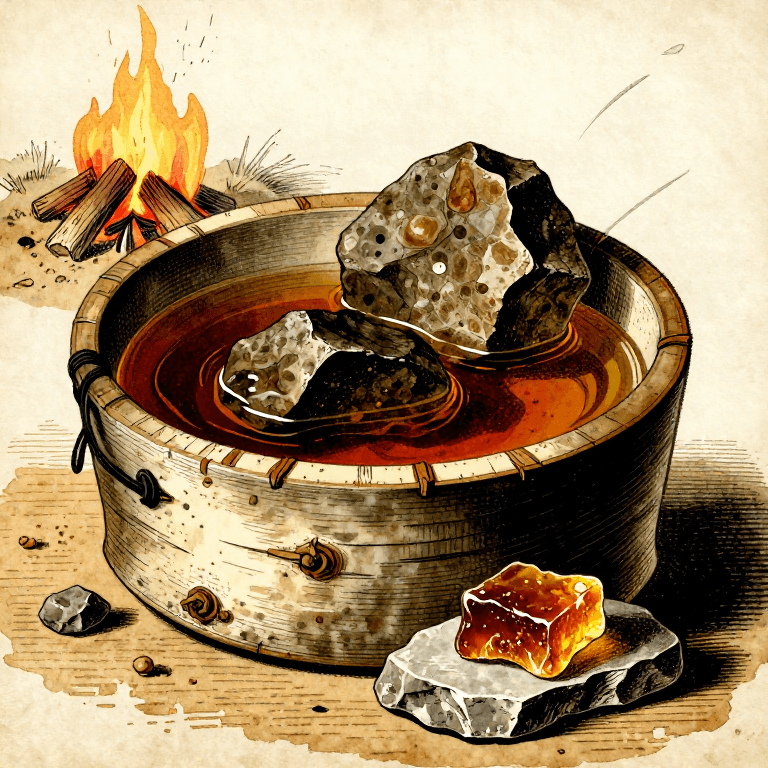
This rung answers those for the adhesives a workshop actually has, including the two traditional ones already published on Youblob — hide glue and pine pitch — which remain the right choice for specific jobs rather than historical curiosities.
Intermedio
3 hours
Istruzioni
1
1
The workshop shortlist, and what each is actually for
The workshop shortlist, and what each is actually for
PVA (white or yellow wood glue): the default for wood-to-wood. Strong, cheap, easy, no gap fill, not waterproof unless it says so. EPOXY: two parts, sticks to almost anything, genuinely fills gaps, waterproof, and the only one on this list that will bond metal reliably.
CYANOACRYLATE (super glue): instant, brittle, poor in shear and peel, excellent for tiny parts and for tacking something while a stronger adhesive cures. POLYURETHANE: expands as it cures, waterproof, fills gaps — but the foam it creates has little strength, so the expansion is not filling anything usefully.
HIDE GLUE: reversible with heat and moisture, which is why instruments and antiques use it — a joint that can be taken apart in fifty years without destroying the piece. HOT MELT: fast, weak, temperature-sensitive; a jig and mock-up adhesive, not a structural one.
Materiali per questo passaggio:
 Colla vinilica per legno (PVA)1 pezzo
 Resina epossidica bicomponente1 pezzo
 Colla di pelle1 pezzo
Strumenti necessari:
 Pennello per colla
 Occhiali di sicurezza trasparenti
 Colla istantanea (cianoacrilato)
 Colla poliuretanica
2
2
Open time is the one that ruins glue-ups
Open time is the one that ruins glue-ups
Caricamento del notebook Jupyter…
Strumenti necessari:
 Calcolatrice
3
3
Gap fill: which ones genuinely do it
Gap fill: which ones genuinely do it
EPOXY fills gaps properly. It cures by chemical reaction rather than by losing water or solvent, so the bulk material in the gap is as strong as the film — which is why it is the right answer for a joint that cannot be made to fit.
PVA and hide glue do not. They cure by losing water, so a thick line shrinks, cracks internally and ends up weaker than no gap at all. Adding sawdust to PVA makes a filler, not a structural joint.
POLYURETHANE is the one people get wrong. It expands and the foam fills the space, but the foam is weak. It looks as if the gap is bridged and structurally it is not — and the expansion will also push a loosely clamped joint apart while it cures.
Materiali per questo passaggio:
Resina epossidica bicomponente1 pezzoColla vinilica per legno (PVA)1 pezzoStrumenti necessari:
Pennello per colla Morsetto a C
 Lente da orologiaioColla poliuretanica
4
4
Water, heat and load: what the joint has to survive
Water, heat and load: what the joint has to survive
Ordinary PVA softens when wet. For anything outdoors or in a kitchen, use a water-resistant grade (D3) or waterproof (D4), or epoxy. The label matters here — 'wood glue' covers all three grades.
Heat is the limit people forget. Hot melt lets go at the temperature it was applied at, PVA creeps above about 50 C, and hide glue releases with steam by design. A joint in a car, a loft or beside a stove needs epoxy or a mechanical fastening.
Sustained load is the subtlest. Most adhesives CREEP — they deform slowly under constant stress — and a shelf glued with PVA will sag over years in a way it would not with epoxy or a proper joint. Where the load is permanent, let the joinery carry it and the glue merely hold it together.
Materiali per questo passaggio:
Colla vinilica per legno (PVA)1 pezzoResina epossidica bicomponente1 pezzoColla di pelle1 pezzoStrumenti necessari:
Occhiali di sicurezza trasparentiMateriali
3- Segnaposto
- Segnaposto
- 1 pezzoSegnaposto
Strumenti richiesti
7- Segnaposto
- Segnaposto
- Segnaposto
- Colla poliuretanica10% commissioneSegnaposto
- Segnaposto
- Segnaposto
- Segnaposto
Blueprint correlati
Questi blueprint condividono conoscenze — tecniche, materiali o principi




CC0 Pubblico dominio
Questo progetto è rilasciato sotto CC0. Sei libero di copiare, modificare, distribuire e utilizzare quest'opera per qualsiasi scopo, senza chiedere permesso.
Supporta il Maker acquistando prodotti tramite il suo progetto dove guadagna una Commissione Maker stabilita dai venditori, oppure crea una nuova iterazione di questo progetto e includilo come collegamento nel tuo progetto per condividere i ricavi.