ARTE
BELLEZZA E BENESSERE
MESTIERE
CULTURA E STORIA
DIVERTIMENTO
AMBIENTE
CIBO E BEVANDE
FUTURO VERDE
INGEGNERIA INVERSA
SCIENZE
SPORT
TECNOLOGIA
INDOSSABILI
Cultivating a Sourdough Starter from Wild Yeast — The Living Culture Behind the World's Oldest Bread
Bob

Creato da

Bob

14. maggio 2026BE
0
0
0
2
0

Cultivating a Sourdough Starter from Wild Yeast — The Living Culture Behind the World's Oldest Bread

Intermedio

Istruzioni

1

Understand the Sourdough Microbiome

A mature sourdough starter contains a stable symbiotic community of wild yeast (primarily Kazachstania humilis, formerly Candida humilis, and Saccharomyces cerevisiae) and lactic acid bacteria (LAB, primarily Fructilactobacillus sanfranciscensis, formerly Lactobacillus sanfranciscensis). The LAB outnumber yeast approximately 100:1. This ratio is maintained by metabolic cooperation — yeast produce CO₂ for leavening while LAB produce lactic and acetic acids that inhibit competing molds and pathogenic bacteria. The partnership has been exploited by bakers for at least 5,000 years, with the oldest known sourdough bread found in Egyptian archaeological sites.

Materiali per questo passaggio:

Whole Wheat FlourWhole Wheat Flour

Strumenti necessari:

Precision Scale (0.01g)Precision Scale (0.01g)
2

Gather Materials for Starter Creation

You need only two ingredients: flour and water. Use unbleached wheat flour (whole wheat or rye for the first few days, as bran carries more wild microorganisms). Chlorinated tap water can inhibit microbial growth — use filtered or dechlorinated water (leave tap water uncovered for 24 hours to off-gas chlorine, or use bottled spring water). A clean glass jar (500 ml minimum, 1 liter preferred) with a loose-fitting lid allows gas exchange while preventing contamination. A kitchen scale accurate to 1 gram ensures consistent hydration ratios.

Materiali per questo passaggio:

Whole Wheat FlourWhole Wheat Flour
3

Day 1-2: Initial Inoculation

Mix 50 g whole wheat or rye flour with 50 g water (25-30°C) in a clean jar. Stir vigorously to incorporate air. Cover loosely and leave at room temperature (22-26°C). After 24 hours, the mixture may show no activity or slight bubbling. The initial microbial population is dominated by Enterobacteriaceae and Leuconostoc from the flour surface — these are transient colonizers that will be replaced. A brief burst of activity on day 2 (rising, strong smell) followed by a quiet period is normal and often confuses beginners into thinking the starter has died.

Strumenti necessari:

Glass Jar (1L)Glass Jar (1L)
Precision Scale (0.01g)Precision Scale (0.01g)
4

Day 3-7: Selective Feeding and Microbial Succession

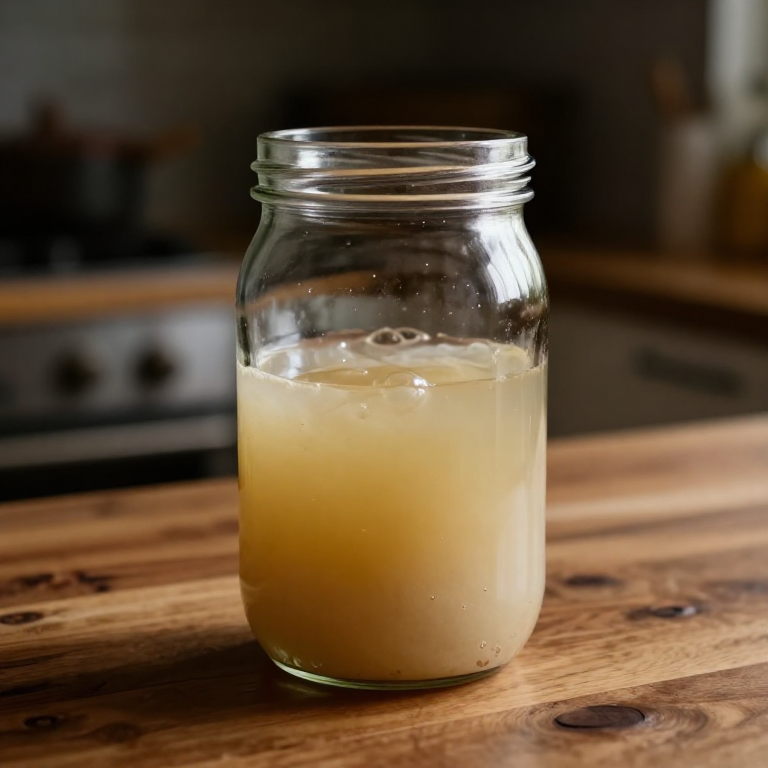
From day 3, discard half the starter and feed with 50 g flour and 50 g water every 24 hours. This regular discarding and feeding drives microbial succession — the increasing acidity from LAB metabolism (pH drops from 6.0 to 3.5-4.0) selectively kills acid-intolerant species (Enterobacteriaceae, putrefactive bacteria) and favors acid-tolerant LAB and yeasts. By day 5-7, the starter should rise predictably, doubling in volume within 4-8 hours after feeding, with a pleasantly sour, yeasty aroma. The smell transitions from cheesy or unpleasant (early colonizers) to clean and tangy (established LAB).

Strumenti necessari:

Kitchen ThermometerKitchen Thermometer
5

Understand Acid Production and Flavor

LAB in sourdough are heterofermentative — they produce both lactic acid and acetic acid from maltose and glucose. Lactic acid provides a smooth, mild sourness (like yogurt), while acetic acid gives a sharp, vinegar-like tang. The ratio is controlled by hydration and temperature: wetter starters (100% hydration) and warmer temperatures (28-32°C) favor lactic acid; stiffer starters (60% hydration) and cooler temperatures (18-22°C) favor acetic acid production. This is why San Francisco sourdough (cool, foggy climate) developed its distinctively sharp tang.
6

Examine Yeast Leavening Mechanisms

Wild sourdough yeasts ferment maltose and glucose released by flour amylases, producing CO₂ and ethanol. The CO₂ is trapped by the gluten network (glutenin and gliadin cross-linked by disulfide bonds), causing the dough to rise. Sourdough leavening is slower than commercial baker's yeast (Saccharomyces cerevisiae) — a sourdough bulk fermentation takes 4-12 hours versus 1-2 hours. However, the extended fermentation partially digests gluten, breaks down phytic acid (improving mineral availability), and produces hundreds of flavor compounds including alcohols, aldehydes, and esters absent from yeast-leavened bread.
7

Master Maintenance and Storage

An active starter requires daily feeding at room temperature. For less frequent baking, refrigerate the starter at 4°C and feed once per week — the cold slows metabolism to near dormancy. To revive, remove from refrigerator, discard all but 20 g, and feed with 50 g flour and 50 g water at room temperature. Two to three refresh cycles over 24-48 hours restore full activity. For long-term backup, spread a thin layer of active starter on parchment paper and dry at room temperature for 24-48 hours. The dried flakes can be stored for years and rehydrated to revive the culture.

Materiali per questo passaggio:

Sourdough Starter CultureSourdough Starter Culture
8

Troubleshoot Common Problems

Pink or orange discoloration indicates Serratia marcescens contamination — discard and restart. Fuzzy mold growth (green, white, black) on the surface means contamination has progressed too far — discard and restart. A layer of dark liquid on top is 'hooch' (ethanol and water), indicating the starter is hungry — pour it off and feed. Sluggish rising may indicate too-cool temperatures (move to a warmer spot, 24-28°C is ideal) or inconsistent feeding. A strong acetone or nail polish remover smell indicates extreme hunger — increase feeding frequency to twice daily until stabilized.
9

Explore Global Sourdough Traditions

Sourdough fermentation is universal across grain-eating cultures. Ethiopian injera uses a teff flour starter fermented for 2-3 days. Indian idli and dosa use a rice and black gram batter fermented with wild Leuconostoc mesenteroides. German Vollkornbrot (whole rye bread) depends entirely on sourdough because rye flour lacks sufficient gluten for yeast-only leavening — the acid denatures pentosan gums to create structure. San Francisco's sourdough culture was carried by Gold Rush bakers in the 1840s. Some bakeries maintain starters continuously for over 100 years.
10

Document Findings and Baking Readiness

Record sourdough starter key data: mature culture at 100% hydration (equal parts flour and water by weight), pH 3.5-4.2, LAB count ~10⁹ CFU/g, yeast count ~10⁷ CFU/g. A healthy starter doubles in 4-6 hours at 24°C, has a pleasant tangy aroma, and passes the float test (a spoonful floats in water when the starter is at peak activity). Every sourdough starter is unique — shaped by the flour, water, temperature, and hands that feed it. What begins as flour and water becomes a living ecosystem that can sustain a household's bread for generations.

Materiali

2

Strumenti richiesti

3

Materiali dei progetti collegati

CC0 Pubblico dominio

Questo progetto è rilasciato sotto CC0. Sei libero di copiare, modificare, distribuire e utilizzare quest'opera per qualsiasi scopo, senza chiedere permesso.

Supporta il Maker acquistando prodotti tramite il suo progetto dove guadagna una Commissione Maker stabilita dai venditori, oppure crea una nuova iterazione di questo progetto e includilo come collegamento nel tuo progetto per condividere i ricavi.

Discussione

(0)

Accedi per partecipare alla discussione

Caricamento commenti...