ARTE
BELLEZZA E BENESSERE
MESTIERE
CULTURA E STORIA
DIVERTIMENTO
AMBIENTE
CIBO E BEVANDE
INGEGNERIA INVERSA
SCIENZE
SPORT
TECNOLOGIA
INDOSSABILI
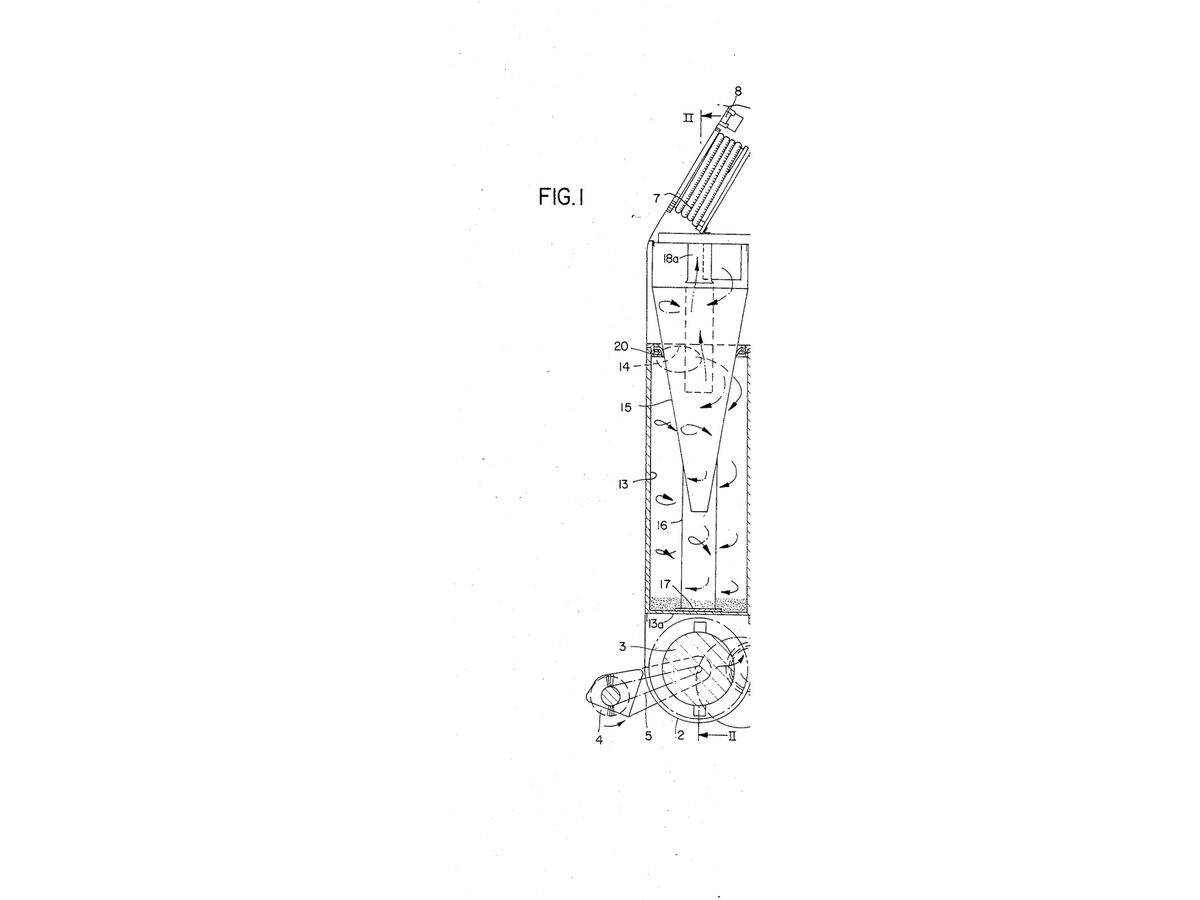


Cyclone Vacuum Separator
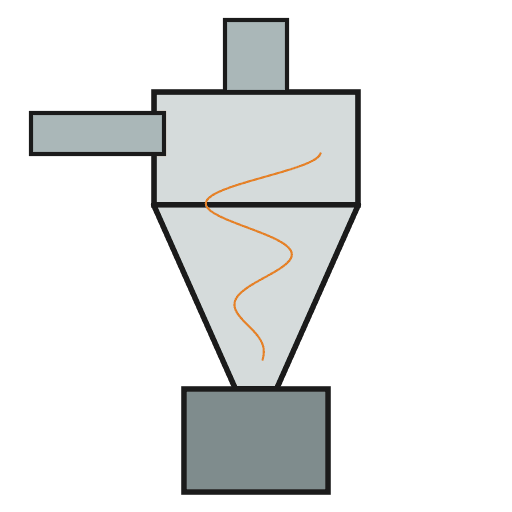
Spangler's cleaner, already published, pulls air through a bag: the bag is both the filter and the bin, so suction falls away as it fills. James Dyson, who had used industrial cyclones in a sawmill, put the same idea in a cleaner - and then a second, finer cyclone behind the first, so both grit and dust come out of the air before any filter.
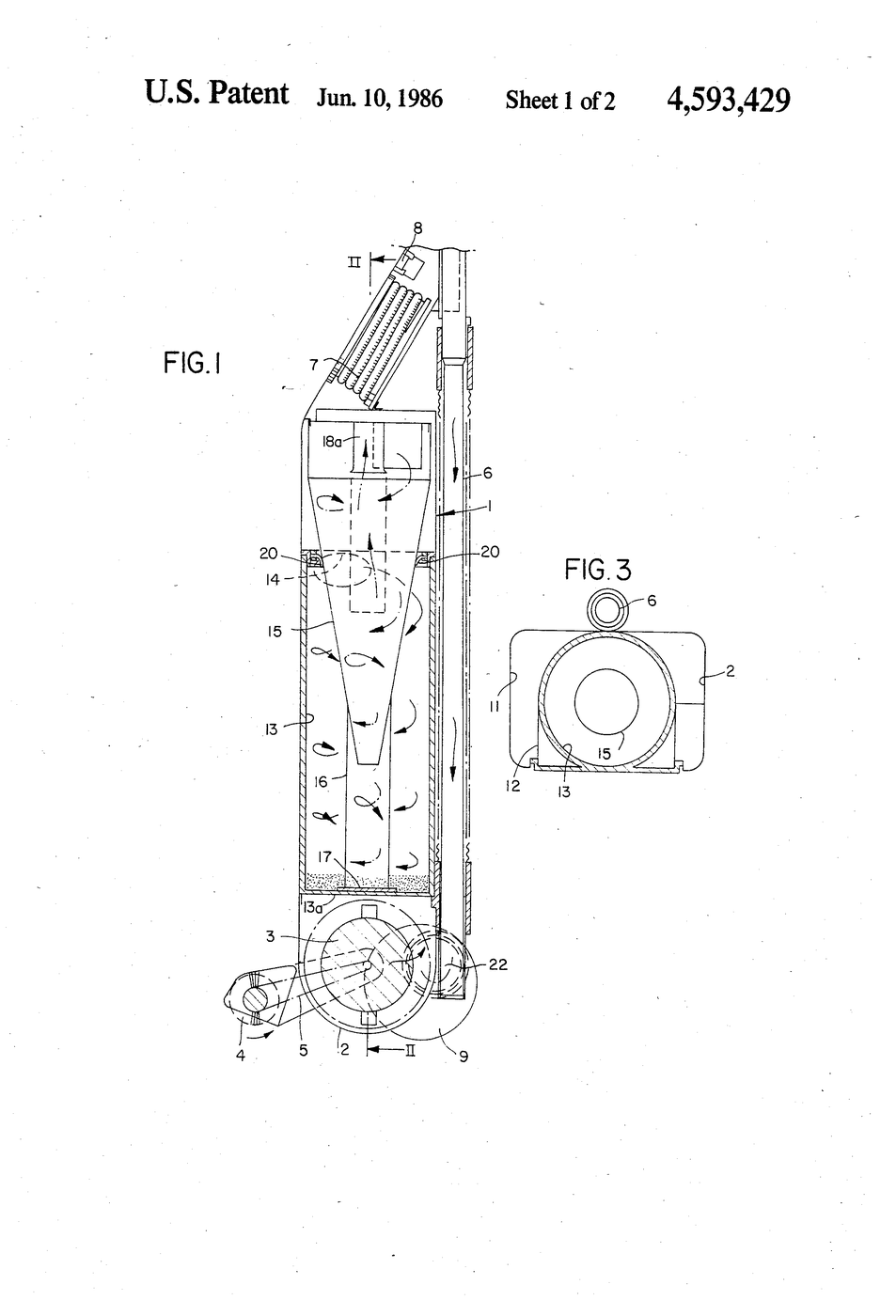
**US 4,593,429**, "Vacuum cleaning appliance", Dyson, filed 14. August 1984, granted 10. June 1986: a lower-efficiency outer cyclone and a high-efficiency inner cyclone in series, so "dust bags are not required".
**You build the outer cyclone** from a bottle and pipe on a workshop vacuum, and weigh what it separates - sawdust and flour - to find where it stops working, and how far a home-made cyclone falls short of the textbook.
Intermedio
3 hours
Istruzioni
1
1
Cut the body
Cut the body
Cut the bottom from a 2 litre bottle: that is the cone, open end down into a jar. The neck end carries the outlet.
Materiali per questo passaggio:
 Bottiglia di plastica per bevande (2 L)1 pezzo
 Barattolo di vetro1 pezzo
Strumenti necessari:
 Taglierino di precisione
 Occhiali di sicurezza trasparenti
2
2
Tangential inlet
Tangential inlet
Cut a 20 x 45 mm slot high on the bottle's side and glue in a short PVC pipe so the air enters along the wall, not towards the middle. This is what makes the air spin.
Materiali per questo passaggio:
 Tubo in PVC1 pezzo
 Sigillante siliconico20 ml
Strumenti necessari:
Taglierino di precisione Righello
3
3
Vortex finder
Vortex finder
Fit a pipe down the centre from the neck so it reaches just below the inlet slot: clean air leaves up this tube. Seal round it. Connect the vacuum to the tube and the inlet to the hose.
Materiali per questo passaggio:
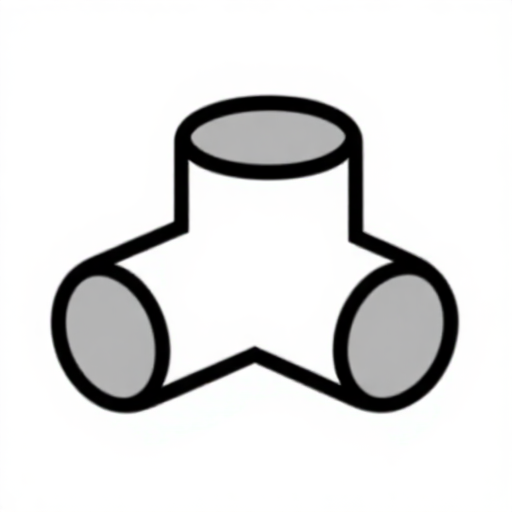 Assortimento di raccordi in PVC1 set
 Tubo in vinile trasparente1 metro
Strumenti necessari:
 Pistola per colla a caldo
 Nastro di carta per mascherature
4
4
A filter you can weigh
A filter you can weigh
Tape a weighed coffee filter paper over the vacuum's own inlet as a catch filter. Everything the cyclone misses lands there.
Materiali per questo passaggio:
 Filtri da caffè / carta da filtro2 pezzi
Strumenti necessari:
 Bilancia digitale di precisione
5
5
Feed it two dusts
Feed it two dusts
Weigh 50 g of sawdust and feed it slowly into the hose with the vacuum running. Weigh what lands in the jar and what the stocking gained. Repeat with 50 g of flour, and once more with the cyclone bypassed.
Materiali per questo passaggio:
 Segatura50 g
 Farina 0050 g
Strumenti necessari:
 Aspiratore da officinaBilancia digitale di precisione
6
6
Cut size and your efficiency
Cut size and your efficiency
Caricamento del notebook Jupyter…
7
7
History & Context
History & Context
**What the patent specifies:** two cyclones in series - a coarse one and a fine one - so no dust bag is needed and the air leaving is substantially clean. **Modern build (derived):** the coarse stage alone, on a workshop vacuum, with a weighed filter behind it.
Cyclones were old in industry - sawmills and cement works had used them for a century - and the invention was bringing them, in series, into a domestic cleaner. Their limits: fine dust below the cut size still needs a filter, cyclones cost pressure drop, and a full bin upsets the flow.
Materiali
9- Segnaposto
- 1 pezzoSegnaposto
- 1 pezzoSegnaposto
- Segnaposto
- Segnaposto
- 1 metroSegnaposto
- Segnaposto
- 50 gSegnaposto
- 50 gSegnaposto
Strumenti richiesti
7- Segnaposto
- Segnaposto
- Segnaposto
- Segnaposto
- Segnaposto
- Segnaposto
- Segnaposto
Questo progetto realizza
Blueprint correlati
Questi blueprint condividono conoscenze — tecniche, materiali o principi

CC0 Pubblico dominio
Questo progetto è rilasciato sotto CC0. Sei libero di copiare, modificare, distribuire e utilizzare quest'opera per qualsiasi scopo, senza chiedere permesso.
Supporta il Maker acquistando prodotti tramite il suo progetto dove guadagna una Commissione Maker stabilita dai venditori, oppure crea una nuova iterazione di questo progetto e includilo come collegamento nel tuo progetto per condividere i ricavi.