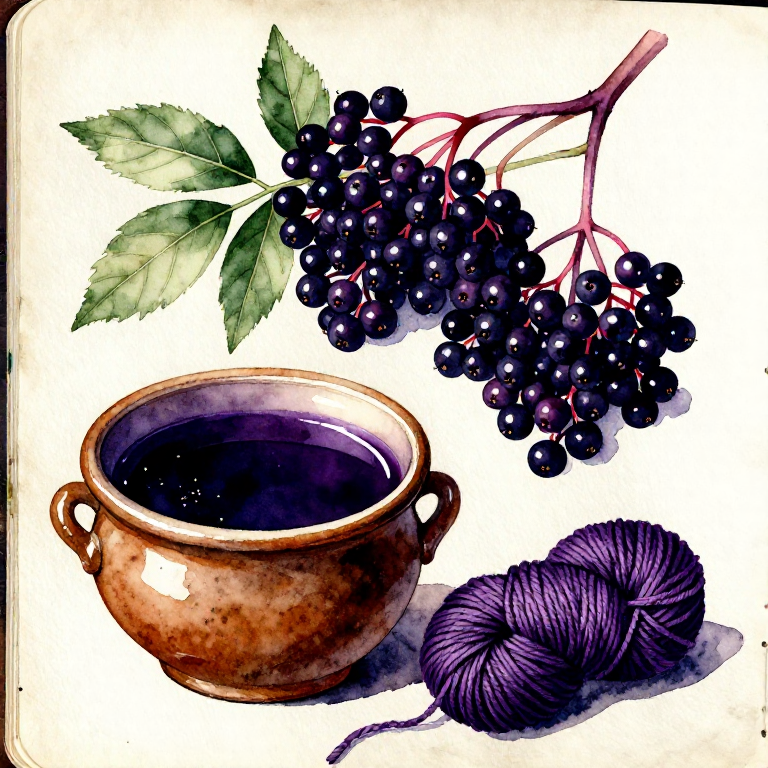

Tingere con le bacche di sambuco — il viola fuggevole della siepe
Le bacche di sambuco (Sambucus nigra) danno uno dei bagni di tintura viola più vividi della natura: un viola profondo, color inchiostro, spettacolare nella pentola. Le bacche sono gratuite e abbondano nelle siepi d'Europa (in Nord America cresce spontaneo il sambuco americano, Sambucus canadensis, una specie affine), e il colore è immediato e intenso. Ma il sambuco nasconde un segreto che ogni tintore naturale deve imparare: è una tintura fuggevole. I pigmenti antocianici che rendono il succo di sambuco così spettacolarmente viola sono per natura instabili: sbiadiscono rapidamente alla luce e se ne vanno con i lavaggi nel tempo, qualunque sia il mordente.
Per questo il sambuco è una delle tinture didattiche più importanti delle arti tessili. Dimostra un principio fondamentale: non tutti i colori vividi sono colori permanenti. Un tintore alle prime armi che salta il sambuco finirà per sprecare tempo e fibra inseguendo pigmenti instabili senza capire perché. Il sambuco insegna la differenza tra una tintura solida alla luce, che resta nella fibra, e un colore fuggevole, che sbiadisce alla luce e se ne va col lavaggio. La lezione vale bene una matassa di lana.
Nonostante la scarsa solidità alla luce, il colore del sambuco non è inutile: il succo di sambuco è oggi un colorante alimentare naturale autorizzato (per esempio negli Stati Uniti e in Giappone). Sulla fibra, con mordente d'allume, dà un viola smorzato. Il colore è bello finché dura, e resiste molto più a lungo negli oggetti tenuti al riparo dalla luce: sacchetti, fodere, pezzi esposti all'ombra.
Istruzioni
Raccogli e pesa le bacche di sambuco
Raccogli e pesa le bacche di sambuco
Usa il 200-300% del peso della fibra (WOF) in bacche fresche, oppure il 100% in bacche secche. Per 100 g di lana raccogli 200-300 g di bacche fresche e mature o 100 g di bacche secche. Le bacche devono essere completamente mature, di un viola quasi nero, non rosse né verdi. Le bacche acerbe contengono meno antociani e danno un colore più debole e spento. Sgrana le bacche dai rametti passando una forchetta tra i grappoli e togli quanto più gambo possibile: tranne i fiori e le bacche mature, tutte le parti del sambuco, compresi gambi, foglie e semi, contengono un glucoside cianogenico e sono velenose crude. Non mangiare nulla dal bagno di tintura e usa una pentola e attrezzi riservati solo alla tintura. Il succo inoltre macchia molto le mani, quindi indossa i guanti.
Materiali per questo passaggio:
 Bacche di sambuco (essiccate)100 g
Strumenti necessari:
 Bilancia digitale da cucina
 Guanti di gomma
Scalda le bacche per estrarre la tintura
Scalda le bacche per estrarre la tintura
Metti le bacche nella pentola da tintura con circa 4 litri d'acqua. Scalda a circa 80 °C, sotto il sobbollire, e mantieni per 45 minuti, schiacciando di tanto in tanto le bacche con il cucchiaio per far uscire più succo. Il liquido diventerà di un viola intenso e opaco: uno dei bagni più spettacolari della tintura naturale. Non far bollire forte: il calore alto degrada gli antociani e sposta il colore verso un marrone torbido.
Strumenti necessari:
 Pentola alta
 Cucchiaio di legno per mescolare
Filtra la polpa delle bacche
Filtra la polpa delle bacche
Filtra il bagno di tintura con un colino a maglia fine in una pentola pulita, pressando la polpa per estrarre tutto il liquido viola. Il bagno filtrato deve essere di un viola profondo e vivo, quasi nero per la concentrazione. Butta o metti nel compost la polpa esausta. Il colore di questo bagno è ingannevolmente bello: sembra capace di dare un viola permanente, ed è proprio questa la lezione che insegna il sambuco.
Strumenti necessari:
 Colino a maglia fine
Aggiungi la lana mordenzata all'allume e tingi a 80 °C per 45 minuti
Aggiungi la lana mordenzata all'allume e tingi a 80 °C per 45 minuti
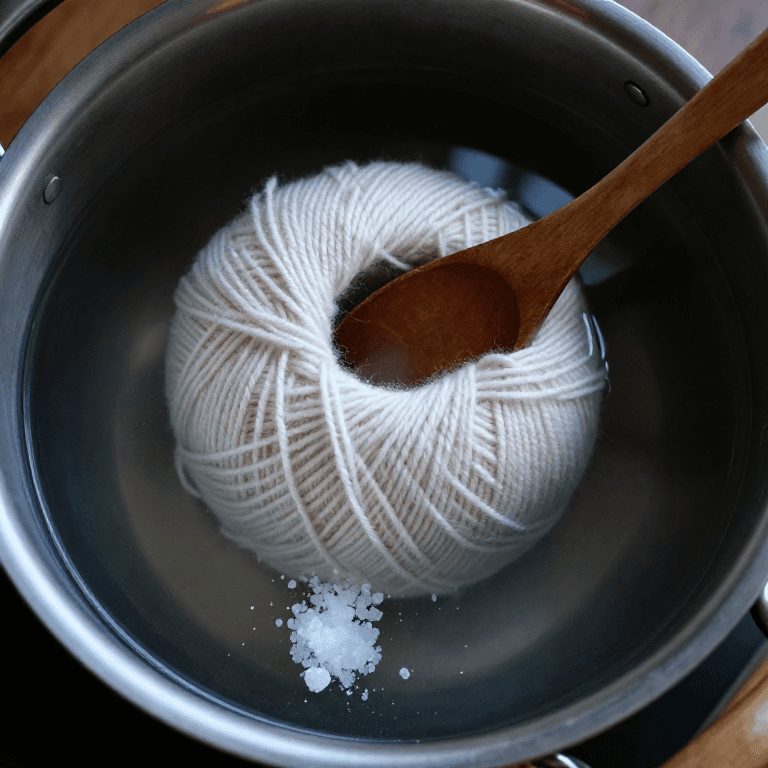
Lascia raffreddare il bagno filtrato a temperatura ambiente. Bagna prima la lana mordenzata all'allume, strizzala e immergila nel bagno. Porta lentamente a 80 °C e mantieni per 45 minuti, girando ogni 10 minuti. La lana assorbirà il viola in fretta. La matassa uscirà di un viola-violetto ricco e profondo, magnifico finché è bagnata.
Materiali per questo passaggio:
 Matassa di lana100 g
 Allume (allume di potassio)10 g
Strumenti necessari:
 Termometro da cucina
Raffredda, risciacqua e osserva il colore iniziale
Raffredda, risciacqua e osserva il colore iniziale
Lascia raffreddare la lana nel bagno per tutta la notte, poi toglila e sciacquala in acqua tiepida. L'acqua di risciacquo uscirà viola: se ne va più colore che con tinture a mordente ben fissate come la robbia o la cocciniglia, ed è il primo segno della natura fuggevole del sambuco. La lana asciutta sarà di un tenue lavanda-viola, più chiara di quanto ci si aspetterebbe da un bagno così scuro. Stendila all'ombra ad asciugare.
Prova la solidità alla luce — la lezione delle tinture fuggevoli
Prova la solidità alla luce — la lezione delle tinture fuggevoli
Taglia a metà la matassa asciutta. Riponi una metà in un cassetto buio. Appunta l'altra metà alla tua finestra più soleggiata. Confronta i due campioni fianco a fianco dopo due settimane e di nuovo dopo un mese. Il campione alla finestra sbiadirà, dal viola verso toni grigi o brunastri, e la differenza cresce quanto più a lungo resta appeso. È questa la lezione centrale: gli antociani del sambuco sono sensibili al pH, sensibili alla luce e debolmente legati. Nessun mordente li rende solidi alla luce: è la molecola stessa del pigmento a essere instabile. Capire questo principio evita al tintore di sprecare fibra costosa con altre tinture fuggevoli (more fresche, cavolo rosso, barbabietola) che danno colori vivi ma non duraturi.
Materiali
3- Segnaposto
- 100 gSegnaposto
- Segnaposto
Strumenti richiesti
6- Segnaposto
- Segnaposto
- Segnaposto
- Segnaposto
- Segnaposto
- Segnaposto
Materiali dei progetti collegati
Mordanting Wool with Alum — The Foundation of Natural Dyeing
di Tex
Tessile e pelle
Dyeing Purple-Grey with Blackberries — The Hedgerow Dye of Prehistoric Europe
di Tex
Tessile e pelle
Dyeing Blue-Purple with Hollyhock — The Cottage Garden Dye of the Ancient World
di Tex
Tessile e pelle
Blueprint correlati
Questi blueprint condividono conoscenze — tecniche, materiali o principi
CC0 Pubblico dominio
Questo progetto è rilasciato sotto CC0. Sei libero di copiare, modificare, distribuire e utilizzare quest'opera per qualsiasi scopo, senza chiedere permesso.
Supporta il Maker acquistando prodotti tramite il suo progetto dove guadagna una Commissione Maker stabilita dai venditori, oppure crea una nuova iterazione di questo progetto e includilo come collegamento nel tuo progetto per condividere i ricavi.