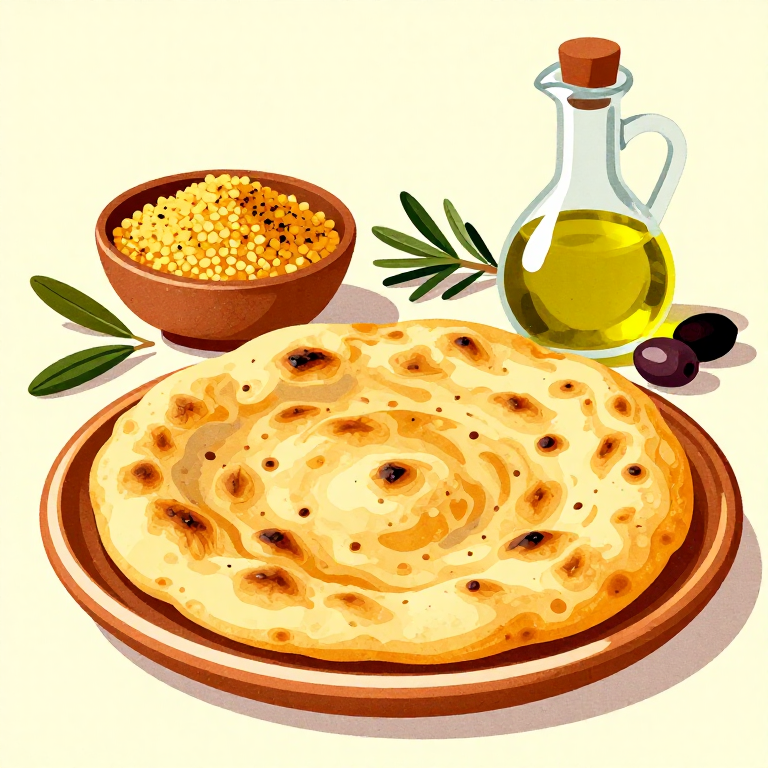


Greek Barley Bread — Baking Maza Barley Flatbread
Istruzioni
Roast and Grind the Barley
Roast and Grind the Barley
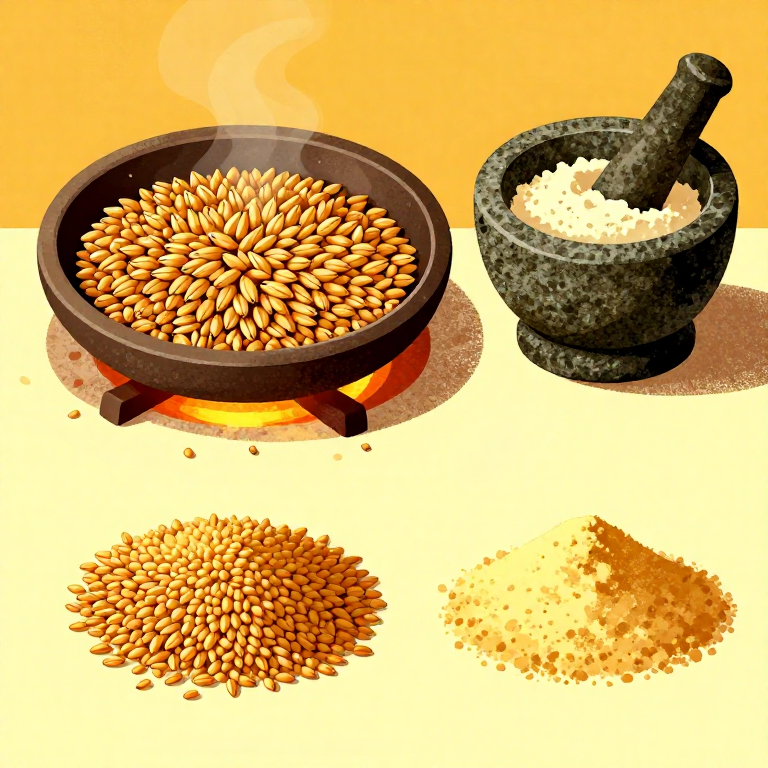
If starting with whole barley grains, spread them in a single layer on a flat pan or griddle and roast over moderate heat, stirring constantly, until they turn golden-brown and fragrant — approximately 10-15 minutes. Roasting develops flavor and makes the grain easier to grind, as well as gelatinizing some of the starches. Grind the roasted grain to a coarse flour using a mortar and pestle or hand mill. This roasted barley flour (alphita) was the most common form of grain preparation in ancient Greece. Unlike wheat, barley has very low gluten content and cannot form an elastic, leavened bread dough. This is why the Greeks ate barley as maza (a dense cake or paste) rather than as risen loaves. Wheat bread (artos) was a luxury food associated with higher social status.
Materiali per questo passaggio:
 Chicco d'orzo300-400 g g
 Acqua150-200 ml ml
 Sale marino finepinch pezzo
 Mielesmall amount pezzo
Strumenti necessari:
 Set di ciotole per impastare
 Pietra refrattaria per pizza
 Mortaio e pestello
Mix the Maza Dough
Mix the Maza Dough
Place the roasted barley flour in a mixing bowl and add salt. Gradually add water, olive oil, or a mixture of both, stirring until a stiff, cohesive dough forms. The dough will be dense and crumbly rather than smooth and elastic like wheat dough. Some ancient Greek recipes describe mixing maza with honey, wine, milk, or animal fat for richer versions. The poet Hesiod described maza made from alphita mixed with water as the basic food of the working farmer. Knead briefly to combine all ingredients — overworking does nothing for barley dough since there is no gluten network to develop.
Shape the Flatbreads
Shape the Flatbreads
Divide the dough into portions of approximately 80-100 g each. Press each portion into a flat disc approximately 10-12 cm in diameter and 1-1.5 cm thick. Barley dough does not roll easily, so pat and press it flat with dampened palms. The shape can be round, oval, or even pressed into a mold for a decorative form. Maza was sometimes simply eaten raw as a thick paste rather than baked — the roasted flour is already cooked and nutritious without further heating. For a more palatable product, however, baking on a hot griddle significantly improves both texture and flavor by creating a crisp exterior crust while the interior remains dense and chewy.
Bake on a Hot Griddle
Bake on a Hot Griddle
Heat a flat griddle, baking stone, or the floor of a clay oven until very hot. Lightly oil the surface to prevent sticking. Place the shaped maza cakes on the hot surface and bake for 3-5 minutes per side until golden-brown spots appear and the surface develops a dry, slightly crisp texture. The bread will not rise or puff like wheat bread — it remains flat and dense. Greek households baked on a simple ceramic disc called a klibanos, essentially a portable baking dome placed over hot coals. Turn the cakes once to brown both sides evenly. The finished maza should be firm but not hard, with a nutty, toasted barley flavor.
Serve with Traditional Accompaniments
Serve with Traditional Accompaniments
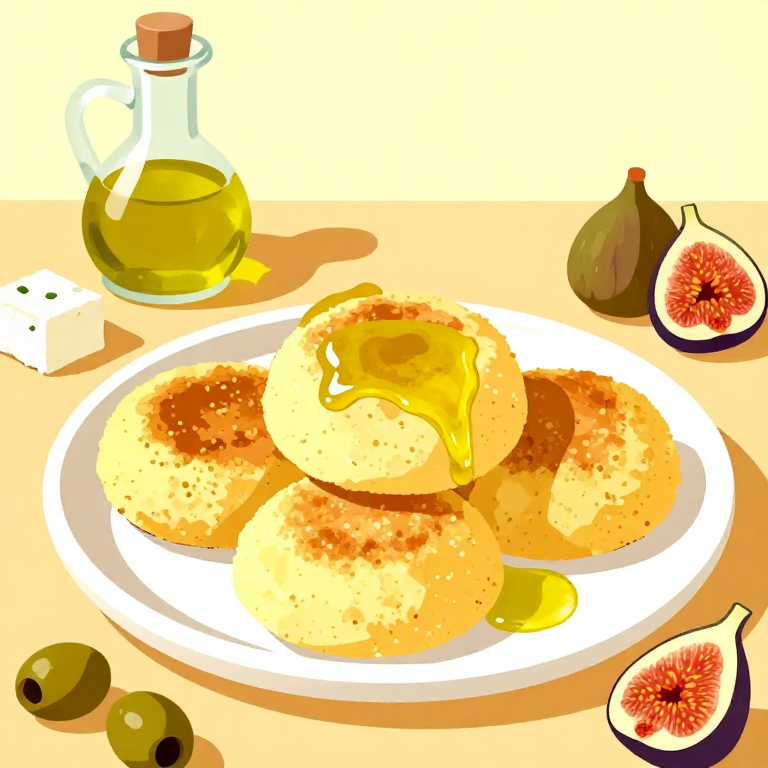
Serve maza warm or at room temperature with traditional Greek accompaniments: olive oil for drizzling, fresh or pickled olives, goat cheese, raw onion or garlic, and dried figs or honey for a sweeter dish. The combination of maza, olive oil, and wine was called the Mediterranean triad and formed the dietary foundation of Greek civilization. Maza was the food of soldiers on campaign, sailors at sea, and laborers in the fields — portable, nutritious, and requiring no elaborate preparation. Despite its humble reputation compared to wheat bread, well-made maza from quality roasted barley is genuinely tasty, with a deep, nutty flavor. Store extra maza in a dry place; it keeps well for several days due to its low moisture content.
Materiali
4- 300-400 g gSegnaposto
- 150-200 ml mlSegnaposto
- small amount pezzoSegnaposto
- pinch pezzoSegnaposto
Strumenti richiesti
4- Segnaposto
- Segnaposto
- Segnaposto
- Segnaposto
Questo progetto realizza
CC0 Pubblico dominio
Questo progetto è rilasciato sotto CC0. Sei libero di copiare, modificare, distribuire e utilizzare quest'opera per qualsiasi scopo, senza chiedere permesso.
Supporta il Maker acquistando prodotti tramite il suo progetto dove guadagna una Commissione Maker stabilita dai venditori, oppure crea una nuova iterazione di questo progetto e includilo come collegamento nel tuo progetto per condividere i ricavi.