Collaborazione
ARTE
BELLEZZA E BENESSERE
MESTIERE
CULTURA E STORIA
DIVERTIMENTO
AMBIENTE
CIBO E BEVANDE
INGEGNERIA INVERSA
SCIENZE
SPORT
TECNOLOGIA
INDOSSABILI
Water-and-Air Tube Churn: Two Tubes of Warm or Cold Water and an Open Air Tube Stand by the Wall, Blades Sweep Under and Between
Buttercup

Creato da

Buttercup

12. novembre 2026IE
0
0
0
0
0

Water-and-Air Tube Churn: Two Tubes of Warm or Cold Water and an Open Air Tube Stand by the Wall, Blades Sweep Under and Between

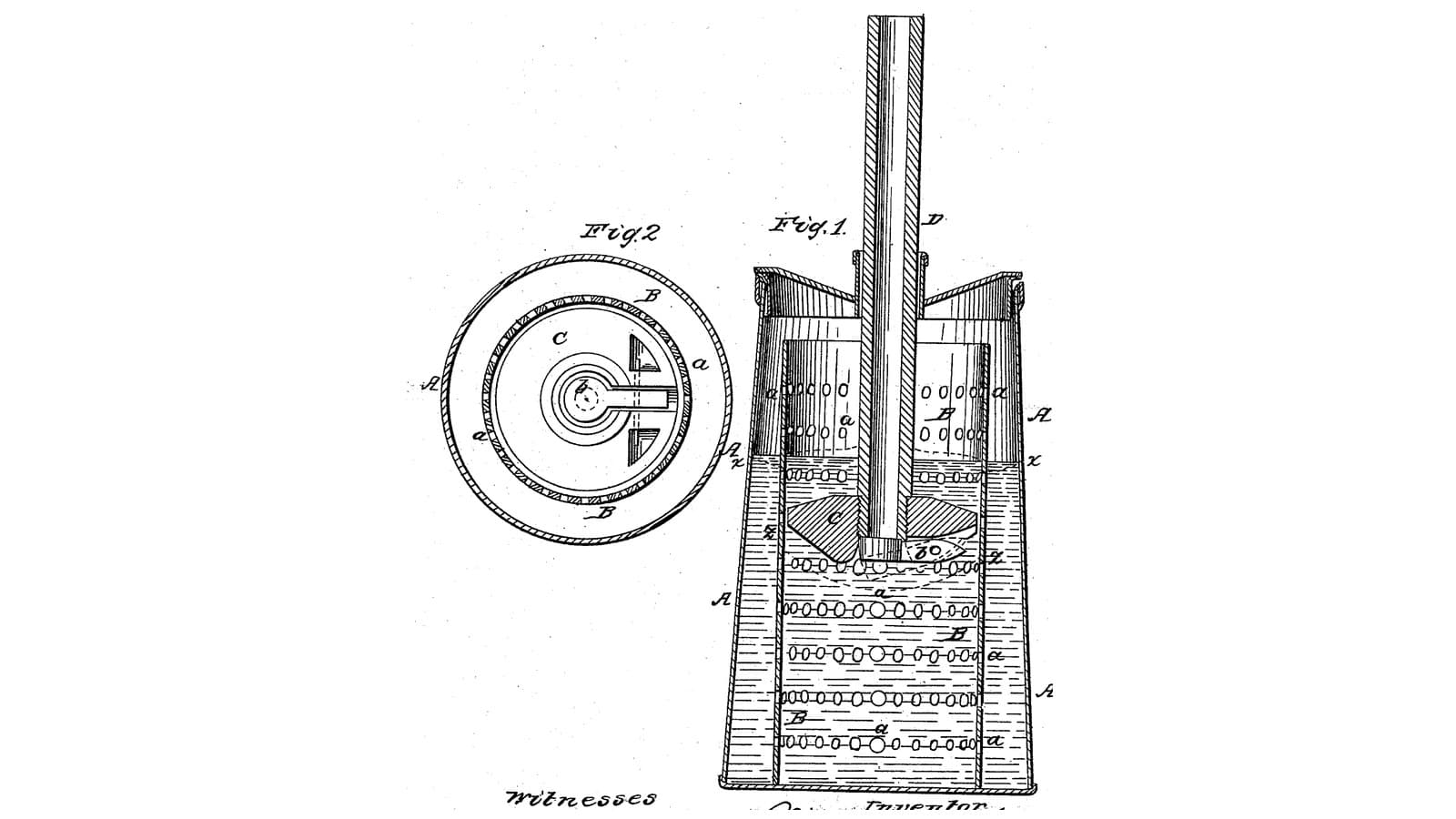
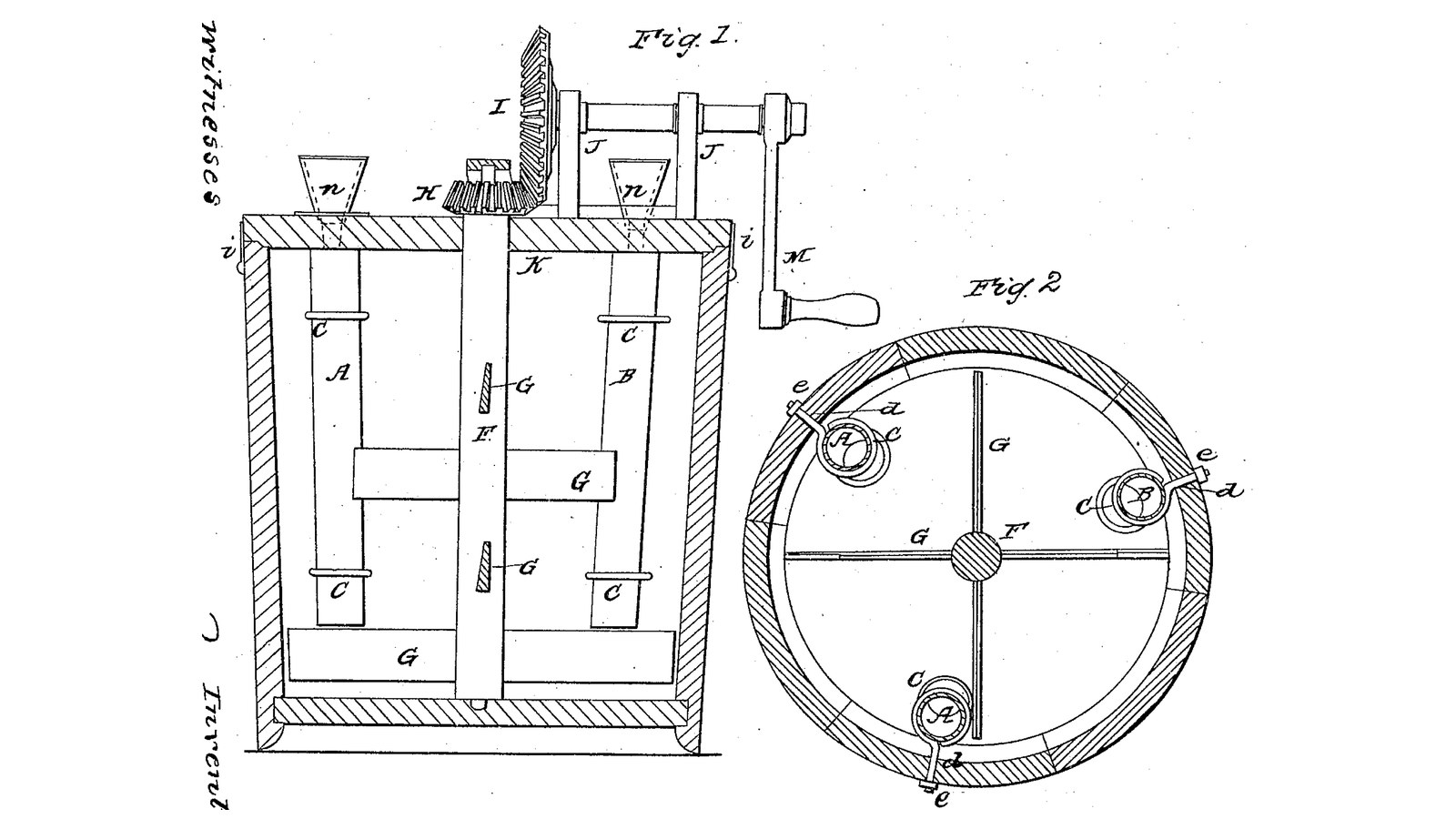
Thomas A. Jebb of Buffalo, New York, received US 32,697, dated 2 July 1861, for a geared churn with three tubes standing just inside its wall. Two are closed at the bottom and filled with cold water or ice in summer, warm water in winter, to bring the cream to the right warmth; the third is open at both ends, and the long lower dash blade, sweeping under its foot, draws air down it into the cream. The tubes also split the swirling cream, part through the gap by the wall and part back toward the shaft. Funnels in the cover feed the tubes without lifting it. The gap between the tubes and the wall is the patent's; every other size here is ours.
Intermedio
About 2 days

Istruzioni

1

Tempering the cream from inside

Caricamento del notebook Jupyter…
2

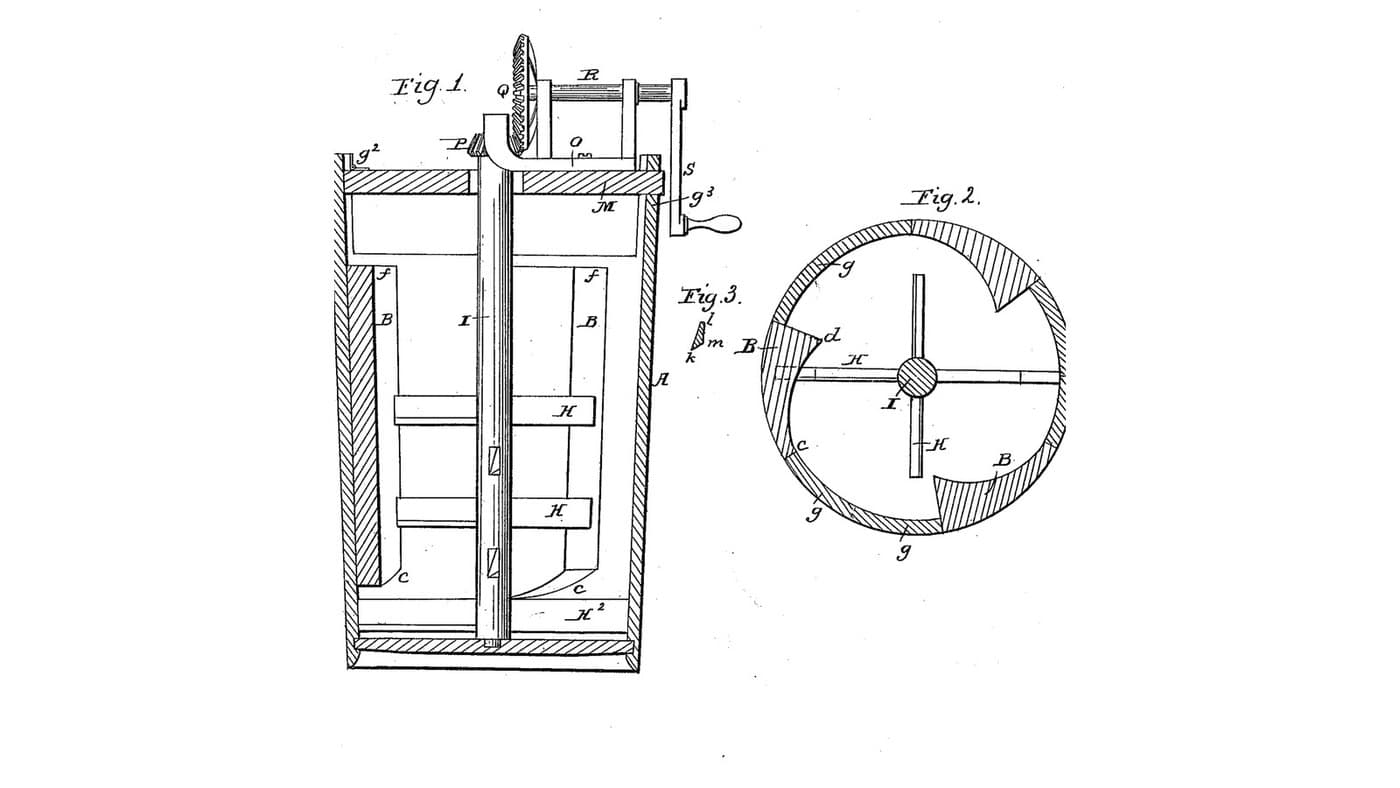
Jebb's earlier churn, a year and a half before

In his first churn Jebb split the current with thick staves and swept a long blade beneath them. Here tubes do the splitting, and also temper and air the cream.
3

Read US 32,697

"The nature of this invention relates to the application and use of three tubes (A, A,) and (B) so arranged within the churn as to serve the threefold purpose of, 1st, breaking and dividing the body of cream, as it is set in motion by the dash blades, 2d, graduating the temperature of the cream by the use of warm or cold water in the tubes (A, A,) and 3d, ventilating, by causing a current of air to pass down the tube (B,) into the midst of the cream."
4

Print the tube plugs (two)

A plug sealing the bottom of a water tube: 37.6 mm across, 15 long, with a 42 mm lip. Print two; seal them in with silicone. PETG, 0.2 mm layers, 30 % infill, 4 walls.
File di designSTLCC0 - Free
5

Print the rings C (six)

A ring round a tube: 50 mm across, 40.2 bore, 12 high, with a boss and a 5.2 mm hole for the shank. Print six. PETG, 0.2 mm layers, 30 % infill, 4 walls.
File di designSTLCC0 - Free
6

Tubes A, A and B, rings C, shanks d and nuts e

Use a 20-litre food-grade bucket as the churn. Cut three 40 mm stainless tubes 315 mm long. Seal a printed plug into the bottom of two of them, the water tubes A; leave the third, the air tube B, open at both ends. Stand them a third of a turn apart round the inside, 40 mm off the floor, their outsides 15 mm from the wall all the way up (the patent's half to three quarters of an inch), leaning with the wall. Put two rings C on each, 110 and 280 mm up, run an M6 threaded rod shank d from each ring out through a hole in the wall, and tighten a nut e and washer on it outside, sealed with silicone.

Materiali per questo passaggio:

Secchio da 20 litriSecchio da 20 litri1 pezzo
Tubo di acciaio inossidabileTubo di acciaio inossidabile1 pezzo
Filamento PETGFilamento PETG1 pezzo
Sigillante siliconicoSigillante siliconico1 pezzo
Barra filettataBarra filettata1 pezzo
Dado esagonaleDado esagonale12 pezzi
Rondella pianaRondella piana12 pezzi

Strumenti necessari:

Stampante 3D a filamento (FDM)Stampante 3D a filamento (FDM)
Seghetto per metalliSeghetto per metalli
Lime (lima a mano)Lime (lima a mano)
Trapano a batteriaTrapano a batteria
Serie di punte da trapanoSerie di punte da trapano
Chiave regolabile a rullinoChiave regolabile a rullino
Metro a nastroMetro a nastro
7

Print the step

The step on the floor: 40 mm across, 12 high, with a 16.8 mm hole 8 deep. PETG, 0.2 mm layers, 30 % infill, 4 walls.
File di designSTLCC0 - Free
8

Shaft F and dash blades G

Cut a 16 mm stainless shaft 440 mm long. Mortise three hardwood dash blades G 24 x 8 mm through hardwood hubs on it: the lower 250 mm long, 20 mm above the floor, sweeping under the tubes' ends; the other two 140 mm long, at 150 and 260 mm, turned 60 and 120 degrees from it, sweeping between the tubes. Stand the shaft in the step.

Materiali per questo passaggio:

Barra di acciaio inossidabileBarra di acciaio inossidabile1 pezzo
Tavola di legno duroTavola di legno duro1 pezzo
Tasselli di legno duroTasselli di legno duro1 pezzo
Colla da legnoColla da legno1 pezzo

Strumenti necessari:
Sega circolare da bancoSega circolare da banco
Serie di scalpelli da legnoSerie di scalpelli da legno
Trapano a batteriaTrapano a batteria
Serie di punte da trapanoSerie di punte da trapano
Seghetto per metalliSeghetto per metalli
9

Print the pinion H

The pinion on the shaft's top: 14 teeth, module 2.5, 16.2 mm bore. PETG, 0.2 mm layers, 30 % infill, 4 walls.
File di designSTLCC0 - Free
10

Print the wheel I

The driving wheel: a crown wheel of 42 teeth, module 2.5, 16.2 mm bore. PETG, 0.2 mm layers, 30 % infill, 4 walls.
File di designSTLCC0 - Free
11

Cover K, tunnels n, frame J, wheels H and I, winch M, hooks l

Cut a 12 mm HDPE cover K to the bucket's top, bored 16.8 mm at the centre and 21 mm over each tube's mouth. Set a small kitchen funnel in each of those holes, its spout reaching down into the tube, as the tunnels n. Pin the pinion H on the shaft 40 mm above the cover. Screw two hardwood blocks 50 x 25 x 118 mm, the frame J, to the cover 60 and 125 mm from the centre, bored 16.6 mm across 93 mm up; run a 16 mm stainless shaft 150 mm long through them with the wheel I pinned on meshing H, a shaft collar, and a winch M of mild steel flat bar, 100 mm throw, with a hardwood handle. Fix two hooks and eyes l to hold the cover to the bucket.

Materiali per questo passaggio:

Lastra di HDPELastra di HDPE1 pezzo
Imbuto da cucinaImbuto da cucina3 pezzi
Tavola di legno duroTavola di legno duro1 pezzo
Barra di acciaio inossidabileBarra di acciaio inossidabile1 pezzo
Shaft CollarShaft Collar1 pezzo
CoppigliaCoppiglia3 pezzi
Piatto di acciaio dolcePiatto di acciaio dolce1 pezzo
Tasselli di legno duroTasselli di legno duro1 pezzo
Viti da legnoViti da legno6 pezzi
Gancio e occhielloGancio e occhiello2 pezzi
Filamento PETGFilamento PETG1 pezzo

Strumenti necessari:

Stampante 3D a filamento (FDM)Stampante 3D a filamento (FDM)
BussolaBussola
Seghetto alternativoSeghetto alternativo
Set di punte a lanciaSet di punte a lancia
Trapano a batteriaTrapano a batteria
Serie di punte da trapanoSerie di punte da trapano
Seghetto per metalliSeghetto per metalli
Lime (lima a mano)Lime (lima a mano)
Morsa da bancoMorsa da banco
Set di cacciavitiSet di cacciaviti
12

The build in 3D

FreeCAD model of this build, the bucket cut open: the two closed water tubes and the open air tube on their rings and shanks, the shaft with the long lower blade under the tubes and two short blades between them, the cover with its funnels, and the gearing and winch.
File di designBLENDCC0 - Free
13

Temper and churn

Pour about 10 litres of heavy cream into the bucket and hook on the cover. Pour cold water or ice water into the two water tubes through their funnels if the cream is warm, warm water if it is cold; each filling moves the cream only a degree or two, so start with cream near 15 °C, checked with the thermometer, and refill the tubes as it drifts. Leave the air tube's funnel open. Turn the winch steadily, timing it. When the butter comes, unhook and lift off the cover and gearing, lift out the shaft, take out the butter, pour the buttermilk into a bowl, wash the butter in cold water until it runs clear, salt and weigh it. Empty the water tubes.

Materiali per questo passaggio:

Panna da montarePanna da montare10 l
AcquaAcqua1 pezzo
Sale marino grossoSale marino grosso1 pezzo

Strumenti necessari:

Termometro a sonda permanenteTermometro a sonda permanente
CronometroCronometro
Bilancia digitale da cucinaBilancia digitale da cucina
Grande ciotola da impasto in acciaio inossidabileGrande ciotola da impasto in acciaio inossidabile
14

Troubleshooting

Tube churn troubleshooting.

Flow

Loading...
15

History and honest limits

**Thomas A. Jebb** of Buffalo, Erie County, New York, US 32,697, 2 July 1861, "Churn". He claimed "the described arrangement of the water tubes A, A, air tube B, and dash blades G, G, G within the churn tub, so that a space may be left between the said tubes and the sides of the churn tub, and so that the lower dash blade shall revolve under the lower ends of said tubes, while the other dash blades shall revolve in the space between said tubes". His text calls the shaft both F and E. His tub widened toward the bottom; ours, a bucket, widens toward the top, and our tubes lean with it. The gap of half to three quarters of an inch is his; every other size here is ours.

Materiali

21

Strumenti richiesti

18

File di progetto

6

CC0 Pubblico dominio

Questo progetto è rilasciato sotto CC0. Sei libero di copiare, modificare, distribuire e utilizzare quest'opera per qualsiasi scopo, senza chiedere permesso.

Supporta il Maker acquistando prodotti tramite il suo progetto dove guadagna una Commissione Maker stabilita dai venditori, oppure crea una nuova iterazione di questo progetto e includilo come collegamento nel tuo progetto per condividere i ricavi.

Commenti

(0)

Accedi per partecipare alla discussione

Caricamento commenti...