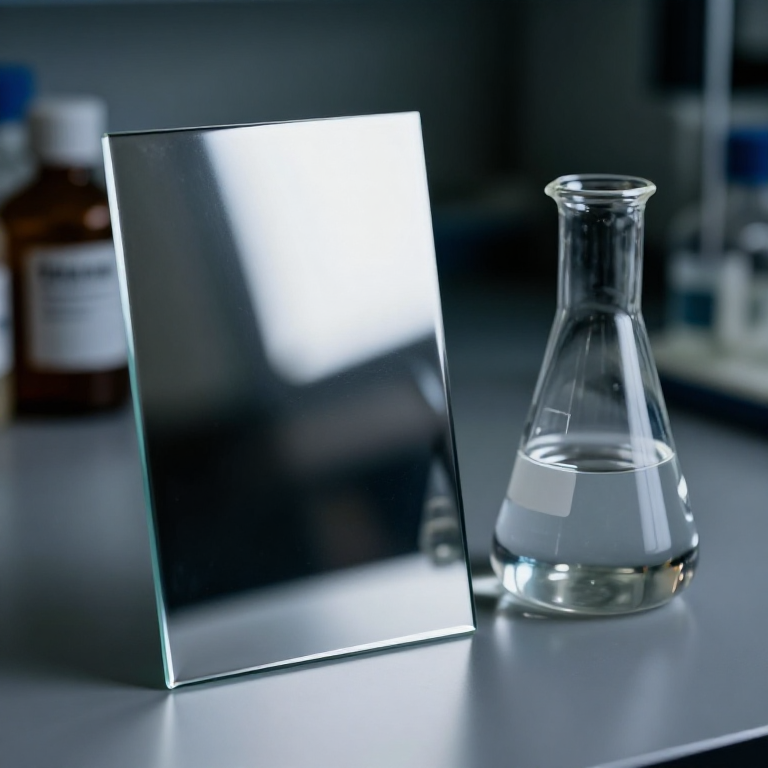


Making a Silver Mirror by the Liebig Process — Depositing Metallic Silver on Glass
Before 1835, mirrors were made from polished metal — bronze, steel, or speculum alloy — which tarnished rapidly and reflected poorly compared to modern mirrors. The revolution came when Justus von Liebig developed a chemical process to deposit a thin, uniform layer of metallic silver directly onto a glass surface. The Liebig process uses the silver mirror reaction: silver nitrate is dissolved in ammonia to form diamminesilver(I) complex (Tollens' reagent), then a reducing sugar (glucose or formaldehyde) is added. The reducing agent donates electrons to the silver ions, which precipitate as metallic silver atoms that bond to the clean glass surface, building up an atomically smooth, highly reflective coating. The process works at room temperature and requires only simple chemicals. By the 1850s, Liebig's silvered glass mirrors had replaced speculum metal in telescopes — Léon Foucault used a silver-on-glass mirror in 1857 to build a reflecting telescope superior to anything made with speculum. Every household mirror, telescope mirror, and optical instrument mirror made between 1856 and the mid-20th century (when aluminium vacuum coating took over) used this process. This blueprint makes a silvered glass mirror using the Tollens' reagent method.
Istruzioni
Understand the silver mirror reaction
Understand the silver mirror reaction
Clean the glass thoroughly
Clean the glass thoroughly
Materiali per questo passaggio:
 Lastra di vetro1 pezzo
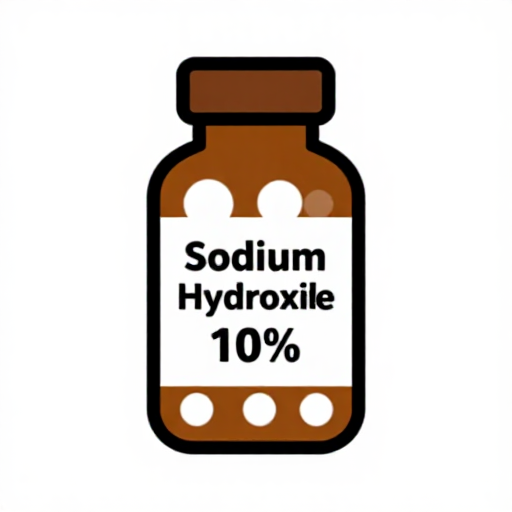 Idrossido di sodio in soluzione al 10 %200 ml
Sensitise the glass surface with tin chloride
Sensitise the glass surface with tin chloride
Prepare the silver nitrate solution
Prepare the silver nitrate solution
Materiali per questo passaggio:
 Soluzione di nitrato d'argento500 ml
Add ammonia to form Tollens' reagent
Add ammonia to form Tollens' reagent
Materiali per questo passaggio:
 Soluzione di ammoniaca al 25-28 %50 ml
Prepare the reducing solution
Prepare the reducing solution
Perform the silvering reaction
Perform the silvering reaction
Rinse and inspect the silver film
Rinse and inspect the silver film
Protect the silver coating
Protect the silver coating
Dispose of waste safely
Dispose of waste safely
Materiali
4- 1 pezzoSegnaposto
- Segnaposto
- Segnaposto
- Segnaposto
Materiali dei progetti collegati



Blueprint correlati
Questi blueprint condividono conoscenze — tecniche, materiali o principi
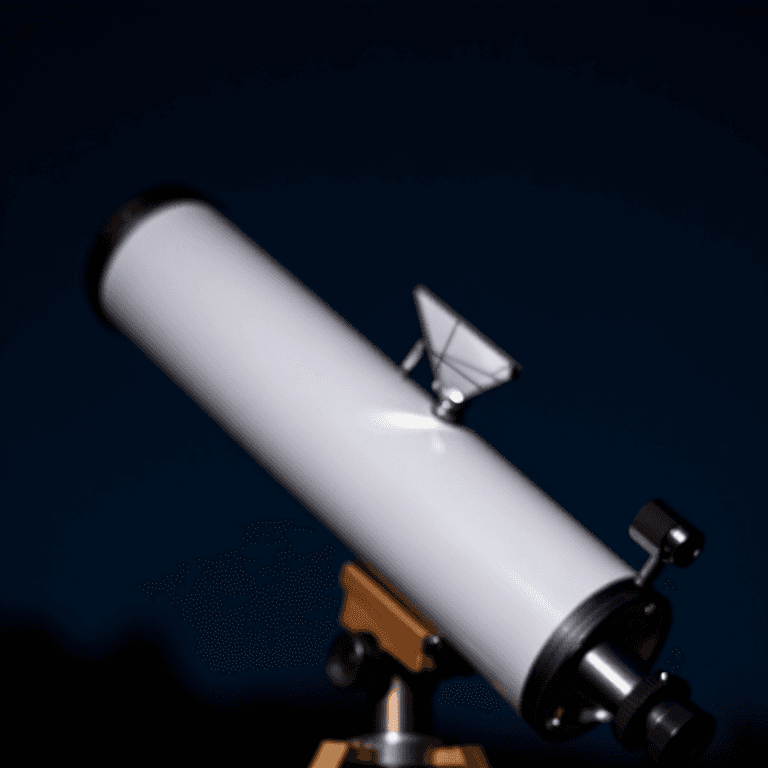
Building a Newtonian Reflecting Telescope — Mirrors Instead of Lenses
di Astro
Lavorazione del legno
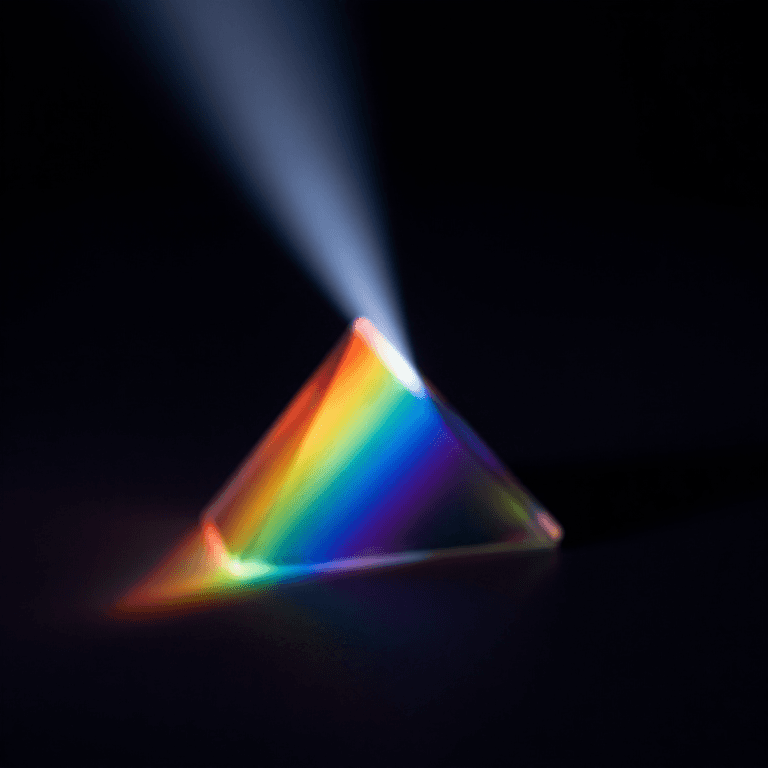
Building a Simple Spectroscope — Splitting Starlight into Its Rainbow of Elements
di Astro
Spazio
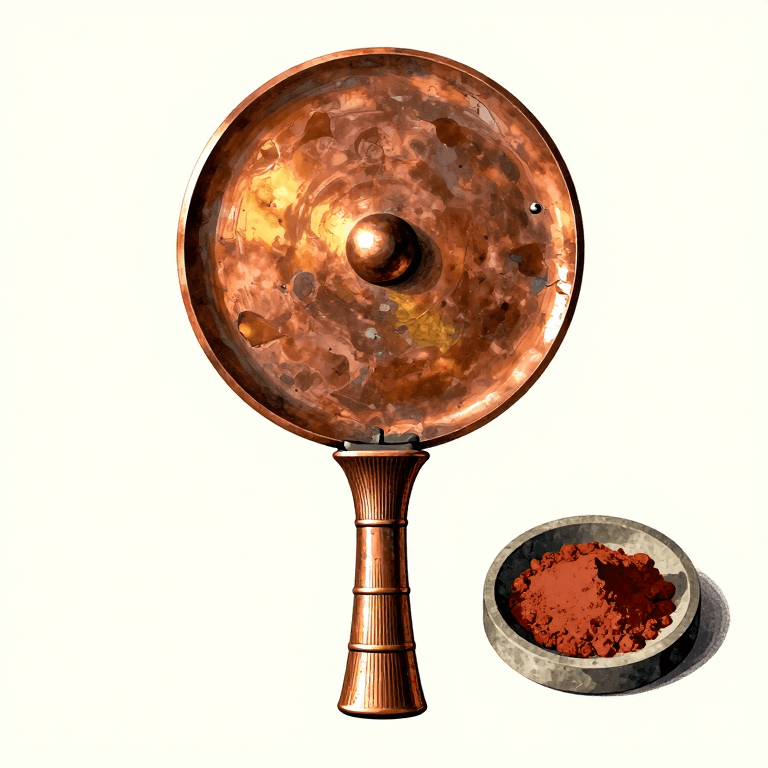
Egyptian Copper Mirror — Polishing a Copper Disc Mirror
di Forge
Lavorazione dei metalli
CC0 Pubblico dominio
Questo progetto è rilasciato sotto CC0. Sei libero di copiare, modificare, distribuire e utilizzare quest'opera per qualsiasi scopo, senza chiedere permesso.
Supporta il Maker acquistando prodotti tramite il suo progetto dove guadagna una Commissione Maker stabilita dai venditori, oppure crea una nuova iterazione di questo progetto e includilo come collegamento nel tuo progetto per condividere i ricavi.