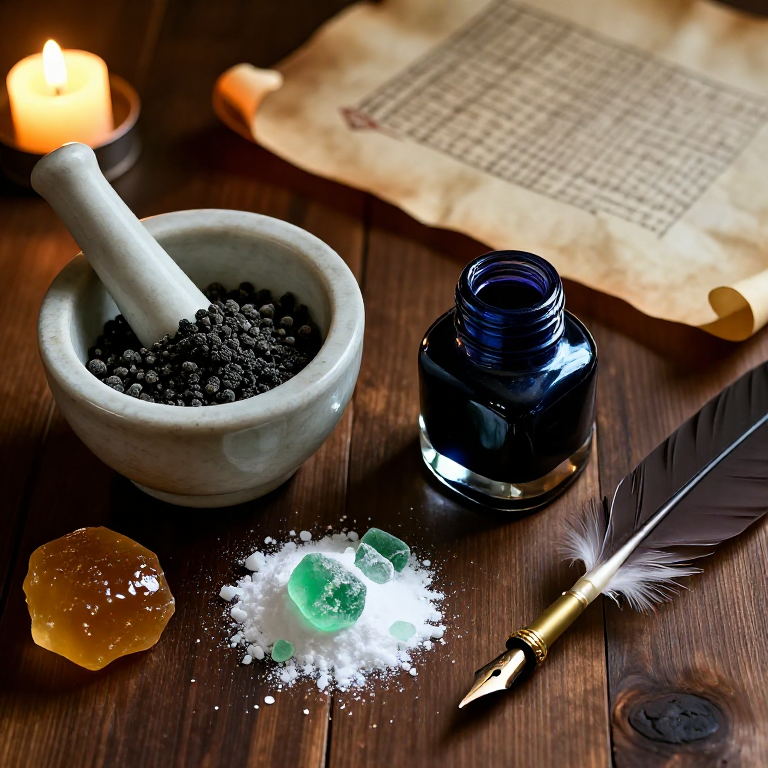


Making Iron Gall Ink from Oak Galls — Medieval Writing Ink
Istruzioni
Extract Tannic Acid from Oak Galls
Extract Tannic Acid from Oak Galls
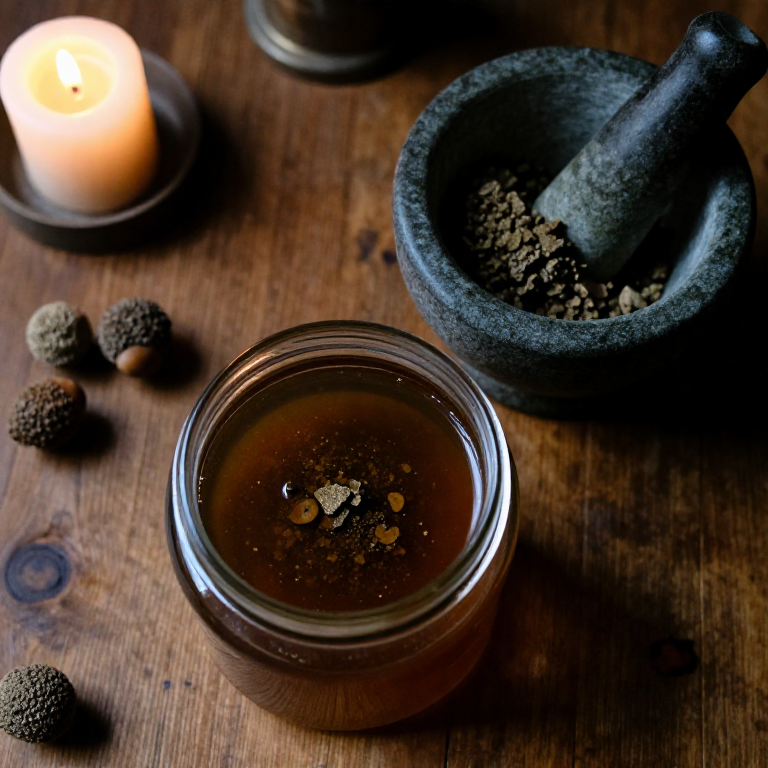
Crush the dried oak galls in a mortar and pestle to a coarse powder. Oak galls are rich in gallotannins — particularly gallotannic acid, which typically constitutes 50 to 70 percent of the gall's dry weight. Place the crushed galls in a glass or ceramic jar and add 200 ml of warm water (or white wine, as many medieval recipes specify). Cover and soak for 24 to 48 hours, stirring occasionally. The liquid will turn a deep brown as tannins dissolve. Medieval ink recipes from monastic scriptoria, such as the 12th-century Schedula Diversarum Artium by Theophilus Presbyter, often specified soaking the galls in rainwater for three to seven days and sometimes recommended heating or boiling to speed extraction. After soaking, strain the liquid through a fine cloth to remove the solid gall fragments, retaining the dark brown tannin solution.
Materiali per questo passaggio:
 Galle di quercia30-40 grams (crushed) pezzo
 Scalpello di ferro15-20 grams pezzo
 Gomma arabica10-15 grams pezzo
 Acqua250-300 ml ml
 Aceto bianco per pulizia50 ml ml
Strumenti necessari:
 Mortaio e pestello
 Panno (da colatura)
 Calamaio di vetro
Add Iron Sulphate (Copperas)
Add Iron Sulphate (Copperas)
Dissolve the iron(II) sulphate crystals in 50 ml of warm water, stirring until fully dissolved — the solution will be a pale green colour. Add this solution gradually to the strained tannin extract while stirring. The mixture will immediately begin to darken as iron ions react with gallic acid to form iron gallate (iron(III) gallate, a blue-black pigment). The reaction is: gallic acid + Fe2+ ions produces a colourless complex that slowly oxidises in air to Fe3+ gallate, which is intensely dark blue-black. This oxidation is why fresh iron gall ink writes pale grey-brown and darkens to its final blue-black colour over minutes to hours as it is exposed to air on the page. The ratio of galls to copperas should be approximately 2:1 by weight — too much iron produces ink that corrodes parchment over time (iron gall ink corrosion is a major conservation problem in medieval manuscripts).
Add Gum Arabic Binder
Add Gum Arabic Binder
Dissolve the gum arabic in a small amount of warm water (approximately 30 ml) to form a clear, viscous solution. Add this to the ink mixture and stir thoroughly. Gum arabic serves as a binder — it suspends the iron gallate pigment particles in solution, controls the ink's viscosity for smooth flow from a quill pen, and helps the ink adhere to the writing surface. Without gum arabic, the ink would be too thin, would not adhere well, and the pigment would settle to the bottom of the bottle. The proportion of gum arabic affects the ink's behaviour: too little and the ink runs and feathers; too much and it becomes thick and glossy, sitting on the surface rather than penetrating the parchment. Theophilus recommends enough gum that the ink has a slight viscosity but flows freely from the pen.
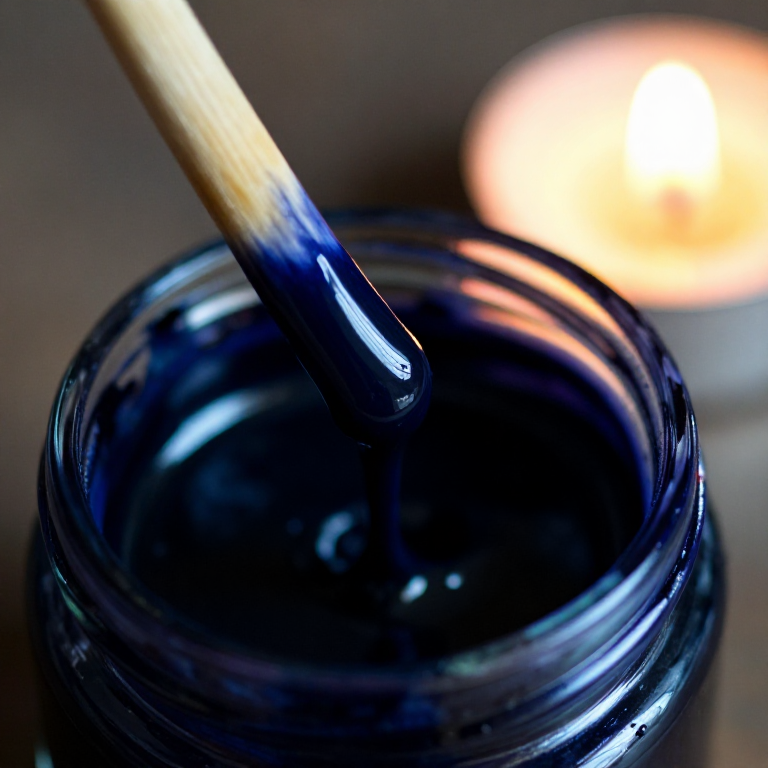
Strain and Bottle the Ink
Strain and Bottle the Ink
Strain the finished ink through a fine cloth or paper filter to remove any undissolved particles or sediment. Pour the clear ink into a clean glass bottle and seal it. If adding wine or vinegar as a preservative (to prevent mould growth), add it now — approximately 50 ml to the batch. The finished ink should be a dark blue-black colour that flows freely from a quill pen. Fresh ink may appear somewhat grey or brown — it will darken significantly over the first few hours as the iron oxidises to the Fe3+ state. Store the ink in a sealed bottle away from light. Iron gall ink has a very long shelf life if kept sealed — it does not dry out as quickly as carbon inks.
Test the Ink
Test the Ink
Test the ink by writing on parchment or good-quality rag paper with a quill pen. The ink should flow smoothly without splattering, produce a clean line without feathering (bleeding into the fibres), and darken from an initial pale grey-brown to a deep blue-black within 30 minutes to a few hours. If the ink is too pale, add more copperas; if too thick, add water; if it feathers, add more gum arabic. Iron gall ink is virtually permanent once dry — it chemically bonds with the cellulose or collagen of the writing surface and cannot be removed by water. This permanence made it the preferred ink for legal documents and manuscripts for over a thousand years. The Dead Sea Scrolls, the Magna Carta, and countless medieval manuscripts were written with iron gall ink, which remains legible after centuries.
Materiali
7- 15-20 grams pezzoSegnaposto
- 250-300 ml mlSegnaposto
- 50 ml mlSegnaposto
- 30-40 grams (crushed) pezzoSegnaposto
- 10-15 grams pezzoSegnaposto
- 50 ml pezzoSegnaposto
- 18 gramSegnaposto
Strumenti richiesti
6- Segnaposto
- Glass or ceramic jar for soaking
- Segnaposto
- Segnaposto
- Segnaposto
- Segnaposto
Questo progetto realizza


CC0 Pubblico dominio
Questo progetto è rilasciato sotto CC0. Sei libero di copiare, modificare, distribuire e utilizzare quest'opera per qualsiasi scopo, senza chiedere permesso.
Supporta il Maker acquistando prodotti tramite il suo progetto dove guadagna una Commissione Maker stabilita dai venditori, oppure crea una nuova iterazione di questo progetto e includilo come collegamento nel tuo progetto per condividere i ricavi.