

ARTE
BELLEZZA E BENESSERE
MESTIERE
CULTURA E STORIA
DIVERTIMENTO
AMBIENTE
CIBO E BEVANDE
INGEGNERIA INVERSA
SCIENZE
SPORT
TECNOLOGIA
INDOSSABILI
Neoprene
Tex

Creato da

Tex

22. settembre 2026FO
1
0
0
0
0

Neoprene

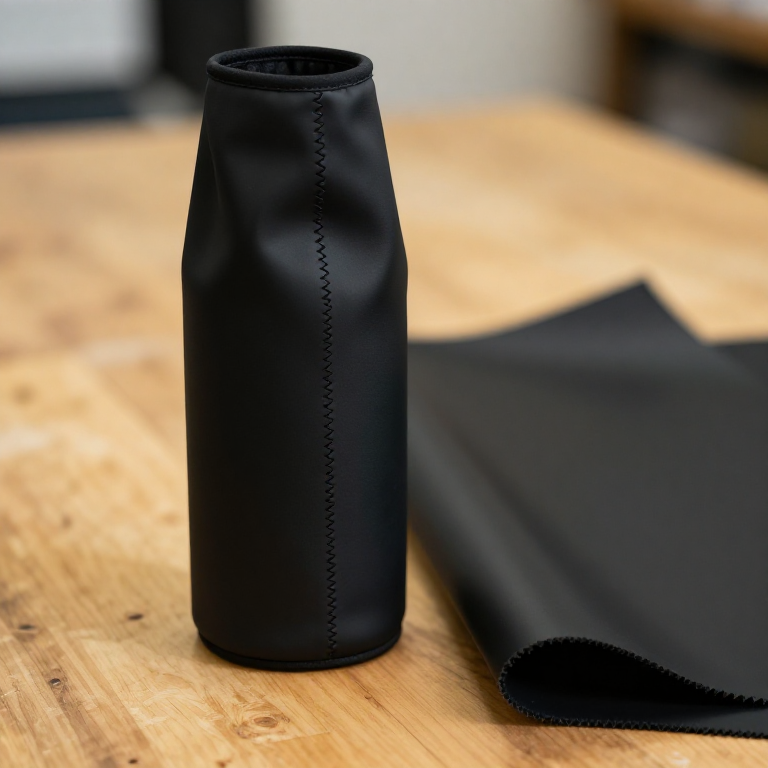
Natural rubber swells and softens in oil and cracks in sunlight. In April 1930 Arnold Collins, working in Wallace Carothers' group at DuPont, isolated chloroprene - a close relative of the isoprene in natural rubber, with one chlorine atom in place of a methyl group - and found that it polymerised by itself into a rubber-like solid. DuPont sold it from 1931 as DuPrene and renamed it neoprene in 1937. It was one of the first commercially successful synthetic rubbers, and its selling point was exactly what natural rubber lacked: resistance to oil, weather and heat. **No patent number is cited here**: the chemistry is well documented and dated, but no single patent was verified as covering neoprene itself, so none is claimed. **You make a snug neoprene sleeve with a glued-and-stitched butt seam, then test the claim** - a strip of neoprene and a natural rubber band in mineral oil for a day, measured before and after.
Principiante
2 hours plus 24 h soak

Istruzioni

1

Size the sleeve

Measure the bottle diameter. Run the notebook's sizing cell for the cut width and base disc.

Strumenti necessari:

Calibro digitale da 6 polliciCalibro digitale da 6 pollici
Riga in acciaioRiga in acciaio
2

Mark the pieces

On 3 mm neoprene, chalk a rectangle: cut width x 200 mm tall. Chalk the base disc beside it.

Materiali per questo passaggio:

Tessuto di neopreneTessuto di neoprene1 foglio

Strumenti necessari:

Gessetto da sartoGessetto da sarto
Riga in acciaioRiga in acciaio
3

Cut

Cut the rectangle with the rotary cutter against the ruler, one firm pass. Cut the disc with fabric scissors.

Strumenti necessari:

Set taglierina rotativa e tappetino da taglioSet taglierina rotativa e tappetino da taglio

Forbici da sartoForbici da sarto
4

Cement the edges

Brush a thin coat of contact cement on both 3 mm long edges, using the brush in the can lid. Leave until touch-dry, as the can directs.

Materiali per questo passaggio:

Adesivo a contattoAdesivo a contatto10 ml

Strumenti necessari:

CronometroCronometro
5

Butt the seam

Roll into a tube and press the edges face to face, no overlap. Contact cement grabs on touch - align the top first, then close downward. Clip and leave 10 minutes.

Strumenti necessari:

Fermagli a molla grandiFermagli a molla grandi
6

Stitch across the seam

Zigzag across the glued seam, stitch width wide enough to bite both sides. Stretch slightly as you sew so the thread gives with the fabric.

Materiali per questo passaggio:

Filo di poliestereFilo di poliestere5 metri

Strumenti necessari:

Macchina da cucireMacchina da cucire
7

Close the base

Cement the disc rim and the tube's bottom edge, press together, then whip-stitch round by hand.

Materiali per questo passaggio:

Adesivo a contattoAdesivo a contatto5 ml
Filo di poliestereFilo di poliestere2 metri

Strumenti necessari:

Aghi da cucito a manoAghi da cucito a mano
8

Set up the swell test

Cut a 50 x 10 mm neoprene offcut. Cut open a rubber band to a 50 mm strip. Measure both. Submerge in mineral oil in a lidded jar for 24 hours.

Materiali per questo passaggio:

Olio minerale per uso alimentareOlio minerale per uso alimentare100 ml
ElasticiElastici1 confezione

Strumenti necessari:

Barattolo di vetroBarattolo di vetro
Calibro digitale da 6 polliciCalibro digitale da 6 pollici
9

Measure again

Blot the strips dry and measure their lengths. Enter all four numbers in the notebook.

Strumenti necessari:

Calibro digitale da 6 polliciCalibro digitale da 6 pollici
10

Chlorine, swell and sizing

Caricamento del notebook Jupyter…
11

History & Context

Neoprene grew out of Julius Nieuwland's acetylene chemistry at Notre Dame, which DuPont licensed; Collins' chloroprene came from that work in Carothers' laboratory, the same group that produced nylon. Its limits are the other side of its strength: it costs more than natural rubber, is less springy, and stiffens in deep cold. The sheet you used is almost certainly closed-cell neoprene FOAM laminated to nylon jersey - the form wetsuits made familiar - where trapped gas cells add insulation that solid neoprene lacks.

Materiali

5

Strumenti richiesti

10

CC0 Pubblico dominio

Questo progetto è rilasciato sotto CC0. Sei libero di copiare, modificare, distribuire e utilizzare quest'opera per qualsiasi scopo, senza chiedere permesso.

Supporta il Maker acquistando prodotti tramite il suo progetto dove guadagna una Commissione Maker stabilita dai venditori, oppure crea una nuova iterazione di questo progetto e includilo come collegamento nel tuo progetto per condividere i ricavi.

Commenti

(0)

Accedi per partecipare alla discussione

Caricamento commenti...