

Building a Newcomen Atmospheric Engine — The First Engine to Do Real Work
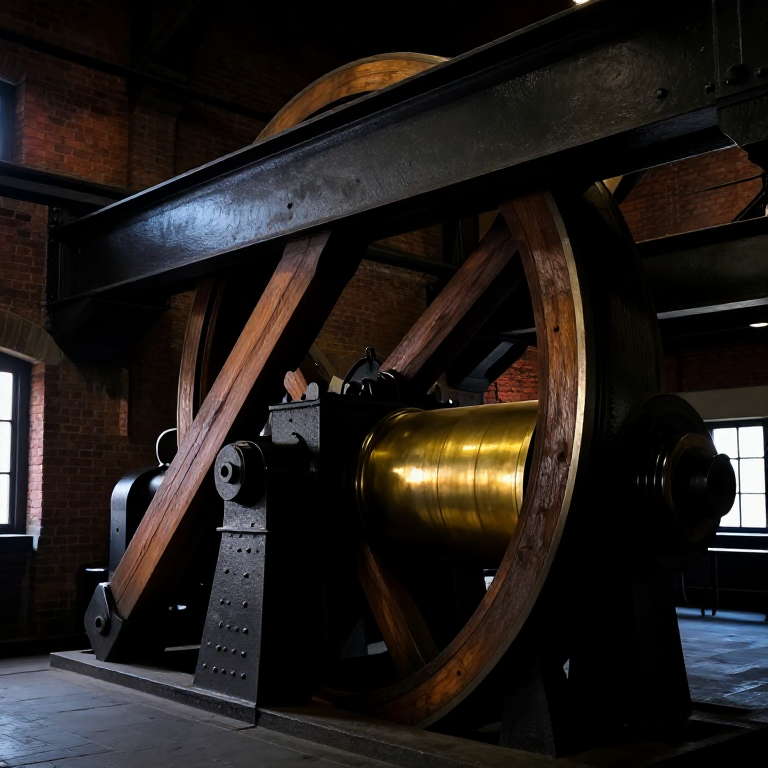
In 1712 Thomas Newcomen built a machine that changed the world quietly, by pumping water out of coal mines. It was the first engine to turn the heat of a fire into useful mechanical work on a large scale, and every steam engine and motor that followed descends from it.
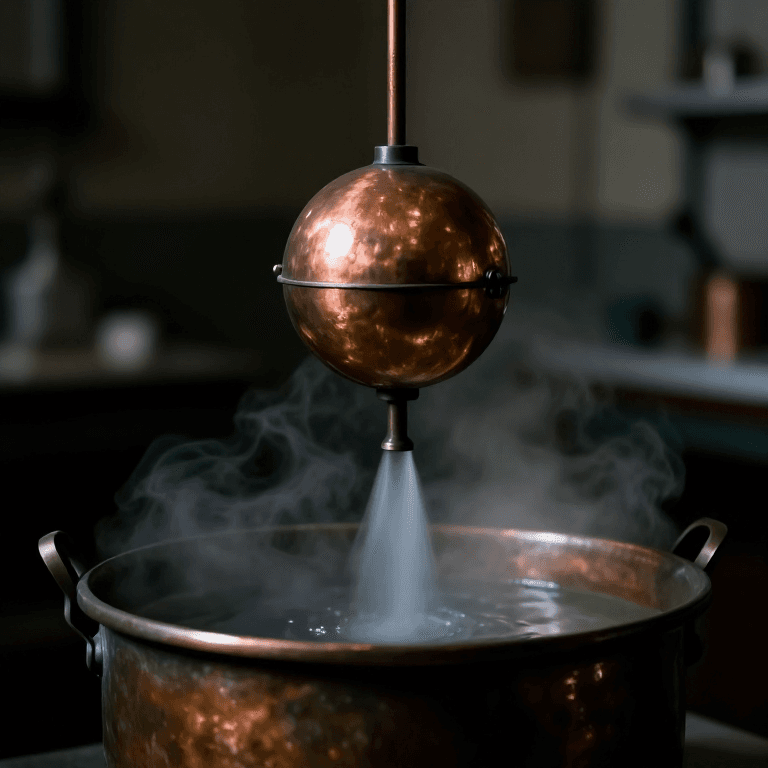
Its genius is counter-intuitive: the steam does not push the piston. Newcomen's engine fills a cylinder with low-pressure steam, then sprays in cold water to condense that steam into a few drops, leaving a vacuum. The ordinary pressure of the atmosphere — about a tonne on a large piston — then shoves the piston down into the vacuum. That downward stroke rocks a great wooden beam whose far end lifts the mine pump. Because air pressure does the work, it is called an atmospheric engine.
It was thirsty and wasteful, reheating its whole cylinder every stroke, but it was tireless and it worked. For sixty years Newcomen engines drained the mines that supplied the coal that fed the Industrial Revolution — until James Watt's separate condenser made the steam engine efficient enough to drive factories and locomotives.
Istruzioni
Grasp the atmospheric principle
Grasp the atmospheric principle
Build the boiler
Build the boiler
Materiali per questo passaggio:
 Lamiera di rame40 kg
 Mattoni refrattari120 pezzi
Cast and bore the cylinder
Cast and bore the cylinder
Materiali per questo passaggio:
 Cilindro di ghisa1 pezzo
 Cuoio2 sqm
Erect the great beam
Erect the great beam
Materiali per questo passaggio:
 Trave di abete di Douglas1 pezzo
Plumb the steam and water pipes
Plumb the steam and water pipes
Materiali per questo passaggio:
 Tubo di rame6 metri
Strumenti necessari:
 Giratubi
Raise steam
Raise steam
Materiali per questo passaggio:
 Carbone bituminoso50 kg
Admit steam and let the piston rise
Admit steam and let the piston rise
Strumenti necessari:
 Valvola a vapore
Inject cold water to make the vacuum
Inject cold water to make the vacuum
Strumenti necessari:
Valvola a vaporeTake the power stroke
Take the power stroke
Materiali per questo passaggio:
 Acqua30 litri
Drain and repeat
Drain and repeat
Strumenti necessari:
Valvola a vaporeMake it self-acting
Make it self-acting
Strumenti necessari:
GiratubiKnow its power and its flaw
Know its power and its flaw
Materiali
8- 40 kgSegnaposto
- 120 pezziSegnaposto
- 1 pezzoSegnaposto
- 2 sqmSegnaposto
- 1 pezzoSegnaposto
- 6 metriSegnaposto
- 50 kgSegnaposto
- 30 litriSegnaposto
Blueprint correlati
Questi blueprint condividono conoscenze — tecniche, materiali o principi


CC0 Pubblico dominio
Questo progetto è rilasciato sotto CC0. Sei libero di copiare, modificare, distribuire e utilizzare quest'opera per qualsiasi scopo, senza chiedere permesso.
Supporta il Maker acquistando prodotti tramite il suo progetto dove guadagna una Commissione Maker stabilita dai venditori, oppure crea una nuova iterazione di questo progetto e includilo come collegamento nel tuo progetto per condividere i ricavi.