ARTE
BELLEZZA E BENESSERE
MESTIERE
CULTURA E STORIA
DIVERTIMENTO
AMBIENTE
CIBO E BEVANDE
INGEGNERIA INVERSA
SCIENZE
SPORT
TECNOLOGIA
INDOSSABILI


Para-Xylene by Three-Stage Crystallisation from Xylene
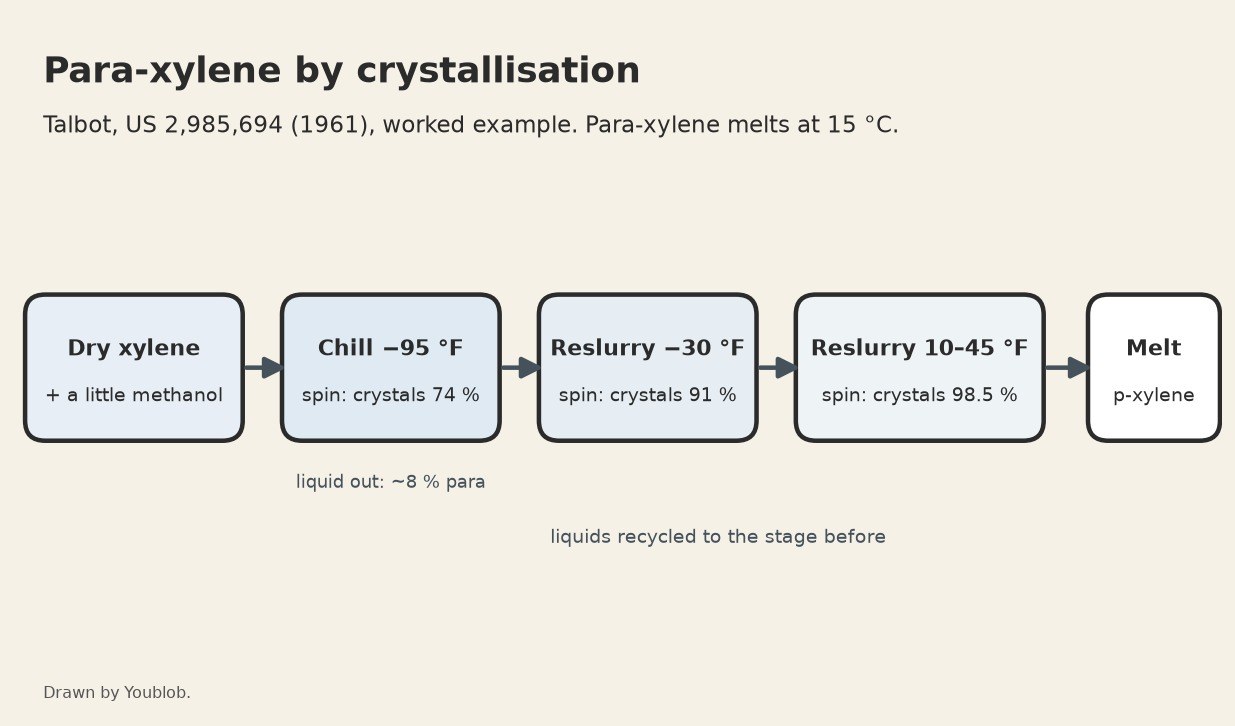
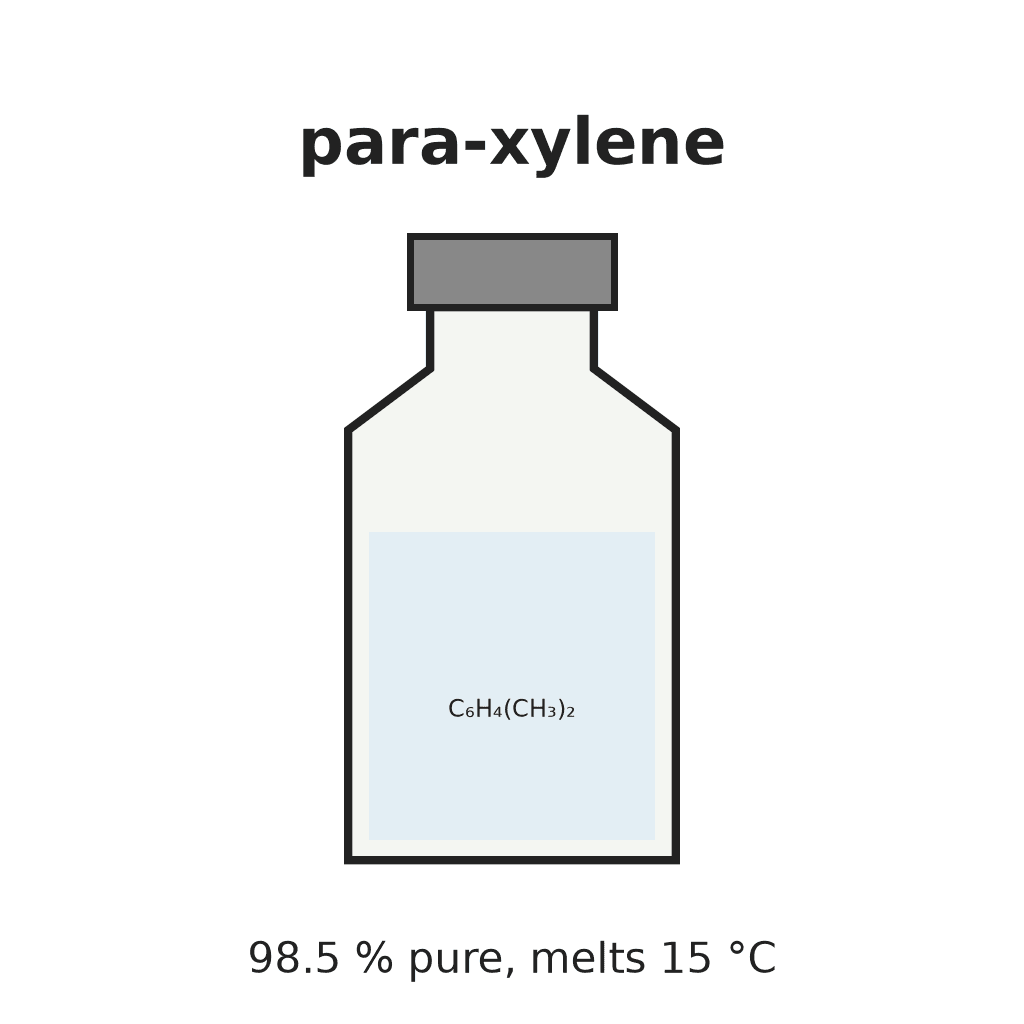
Para-xylene melts at 15 °C (Lunge, 1887), so it crystallises out of mixed xylene when this is chilled hard. This is Talbot's three-stage process (US 2,985,694, 1961): chill the dry feed to about −95 °F and spin off the crystals, then warm them in stages in their own recycled liquor and spin again, until they are 98.5 % para-xylene. Para-xylene is the raw material for terephthalic acid and so for PET.
The picture: our diagram of the three stages.
Avanzato
1 day
Istruzioni
1
1
Take out the ortho-xylene (preferred)
Take out the ortho-xylene (preferred)
If you can, first distil off ortho-xylene as the bottoms of a tall column: more than 35, better about 60, theoretical plates. The patent prefers this but does not require it.
Materiali per questo passaggio:
 Xilene1 as required
Strumenti necessari:
 Gruppo colonna di distillazione
 Caldaia a vapore
 Termometro da laboratorio
2
2
Dry the feed and add a little methanol
Dry the feed and add a little methanol
Remove all water from the xylene (calcium chloride is our choice of drier). Add methanol so ice does not plug the cold equipment: the patent's example uses 49 lb methanol to 13,430 lb feed.
Strumenti necessari:
 Cloruro di calcio
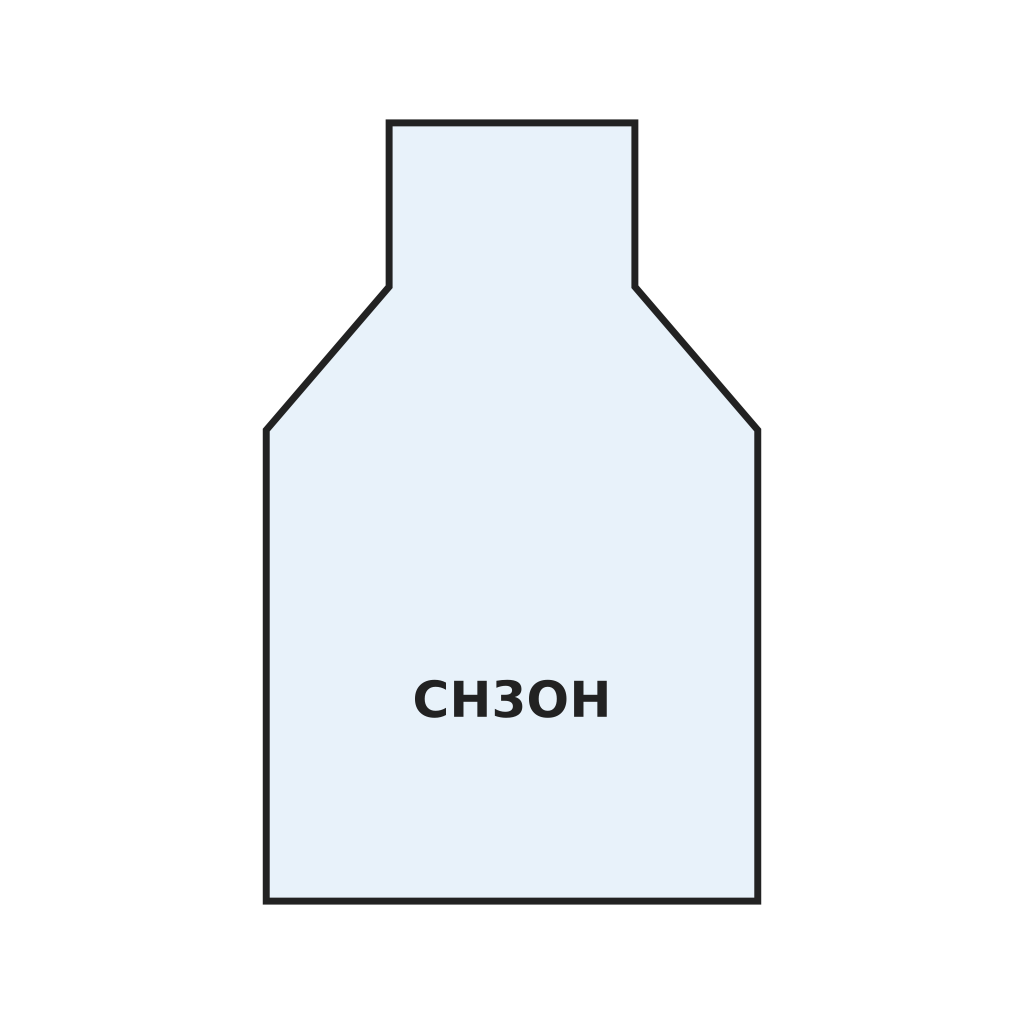 Metanolo
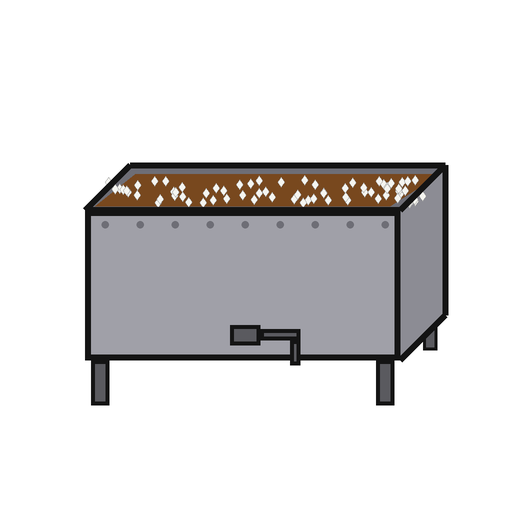 Vasca di cristallizzazione
3
3
Chill to about −95 °F and spin
Chill to about −95 °F and spin
Cool slowly, over about 20 minutes, to between −75 and −120 °F (−59 to −84 °C); the example uses −95 °F (−71 °C). Spin the slurry in a centrifuge: the liquid (about 8 % para) goes out, the crystals are about 74 % para-xylene.
Strumenti necessari:
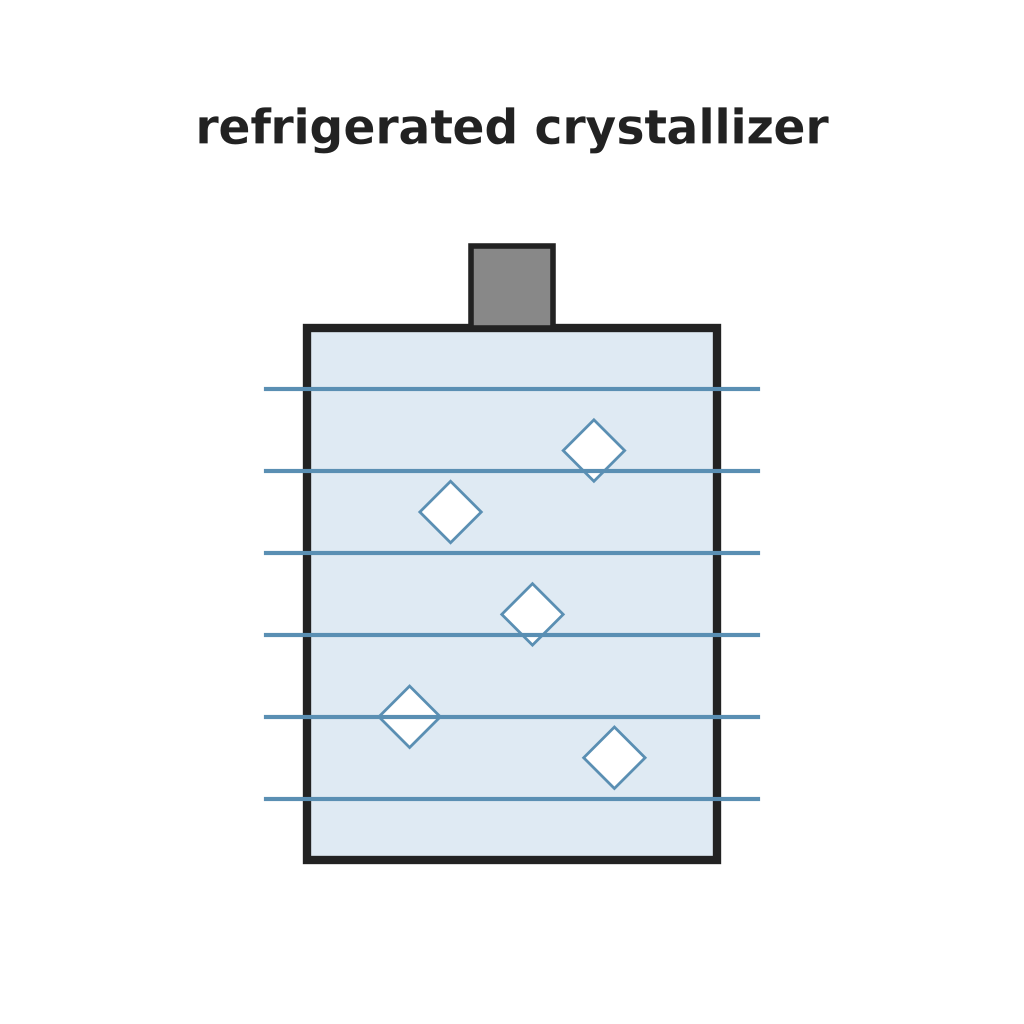 Cristallizzatore refrigerato
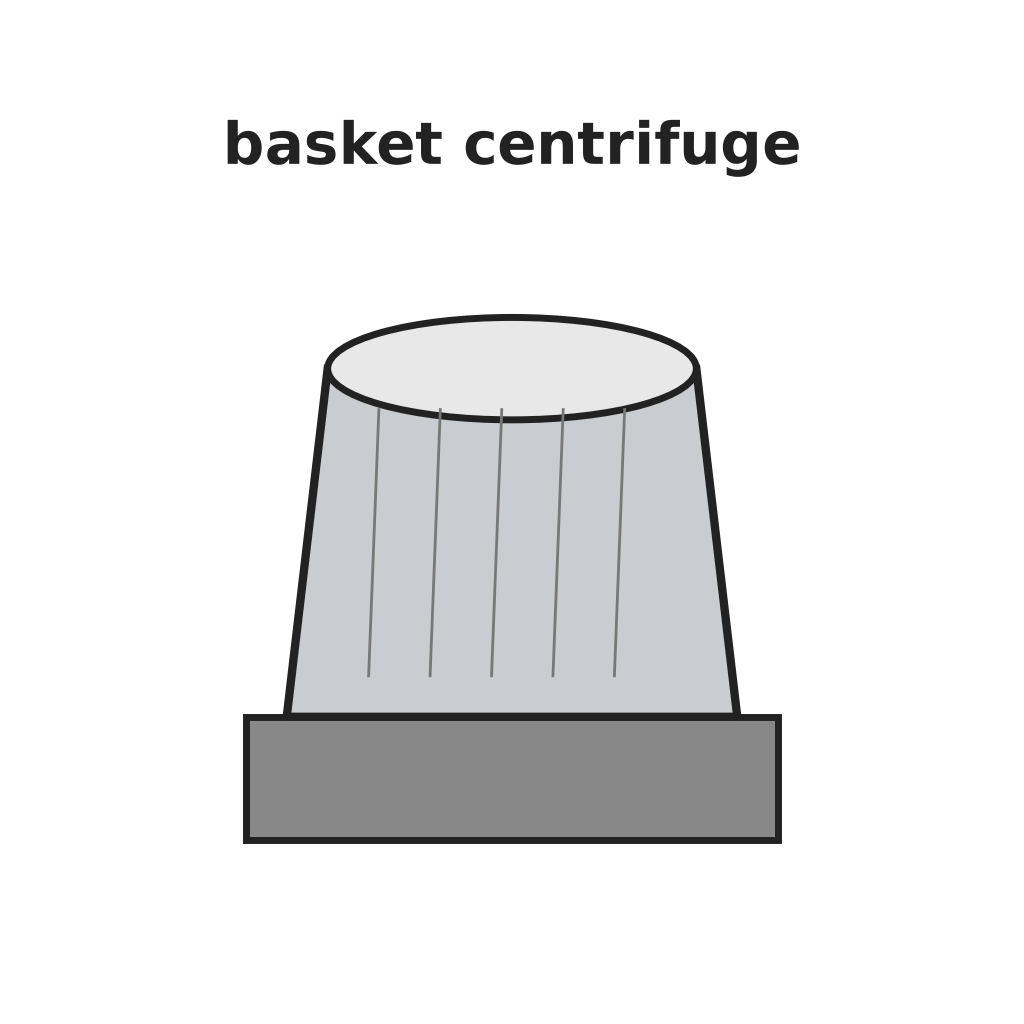 Centrifuga a cestelloTermometro da laboratorio
 Guanti resistenti al calore
 Occhiali antispruzzo chimico
4
4
Reslurry, bring to −30 °F, spin
Reslurry, bring to −30 °F, spin
Stir the crystals into the liquid from the next stage and bring the slurry to between 0 and −30 °F (−18 to −34 °C); the example uses −30 °F. Centrifuge again: the crystals are now about 91 % para-xylene.
Strumenti necessari:
Vasca di cristallizzazioneCristallizzatore refrigeratoCentrifuga a cestelloTermometro da laboratorioGuanti resistenti al calore5
5
Reslurry warmer, spin and melt
Reslurry warmer, spin and melt
Stir these crystals into the liquid from the last spin and bring to 10–45 °F (−12 to 7 °C). Centrifuge: the crystals are 98.5 % para-xylene. Melt them and bottle. Return the liquids to the earlier stages.
Strumenti necessari:
Vasca di cristallizzazioneCristallizzatore refrigeratoCentrifuga a cestelloTermometro da laboratorio Bottiglie di vetro con tappi
Strumenti richiesti
11- Segnaposto
- Segnaposto
- Segnaposto
- Segnaposto
- Segnaposto
- Segnaposto
- Segnaposto
- Segnaposto
- Segnaposto
- Segnaposto
- Segnaposto
Questo progetto realizza
Blueprint correlati
Questi blueprint condividono conoscenze — tecniche, materiali o principi
CC0 Pubblico dominio
Questo progetto è rilasciato sotto CC0. Sei libero di copiare, modificare, distribuire e utilizzare quest'opera per qualsiasi scopo, senza chiedere permesso.
Supporta il Maker acquistando prodotti tramite il suo progetto dove guadagna una Commissione Maker stabilita dai venditori, oppure crea una nuova iterazione di questo progetto e includilo come collegamento nel tuo progetto per condividere i ricavi.