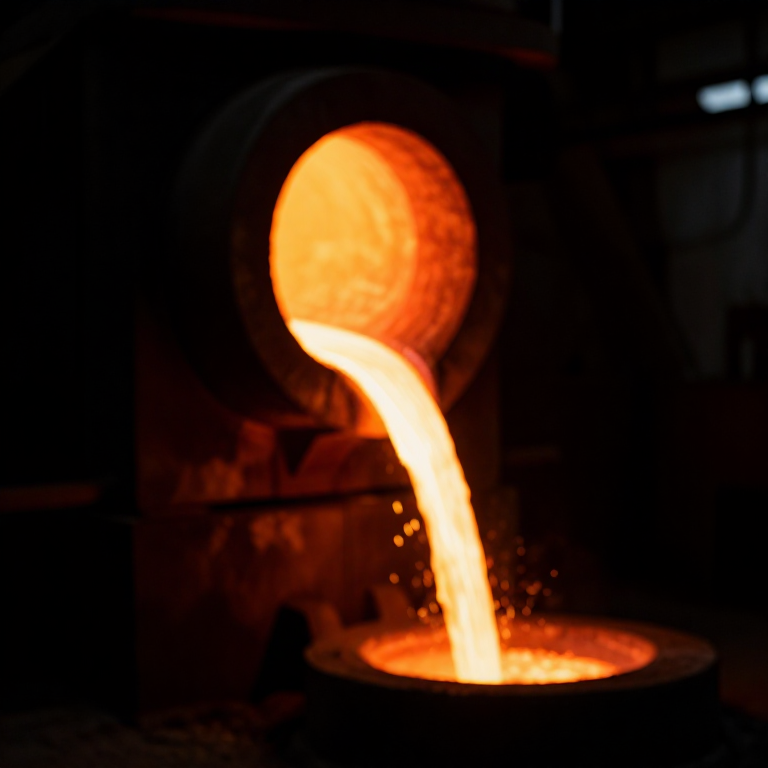


Smelting Pig Iron in a Coke Blast Furnace — Molten Iron at Industrial Scale
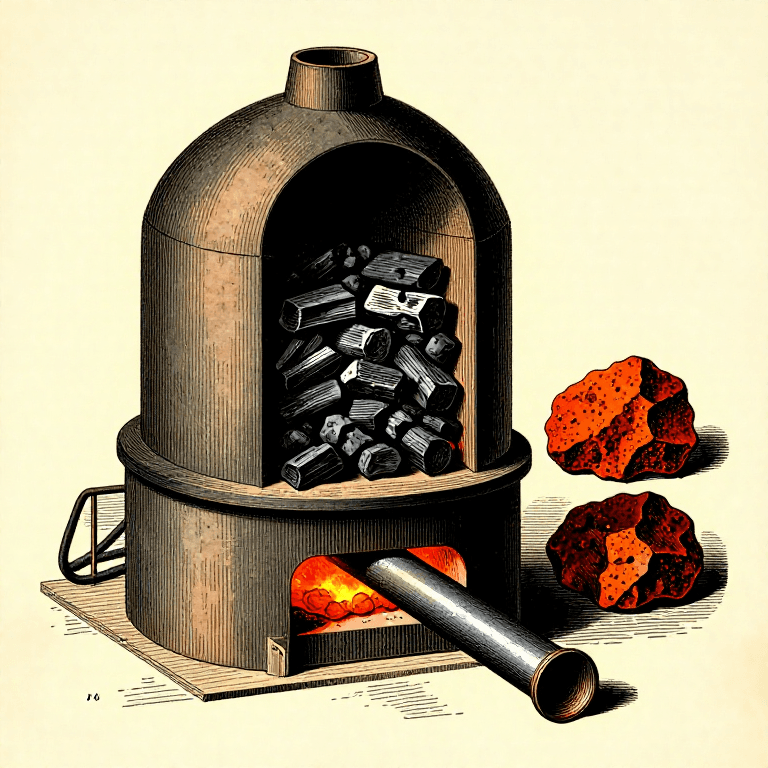
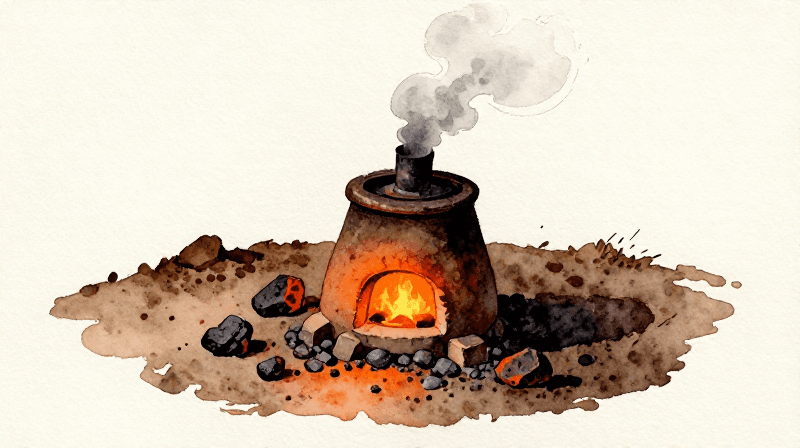
The bloomery gave the ancient world iron, but only in small spongy lumps, one slow batch at a time. The blast furnace changed everything: a tall shaft kept continuously charged and blown produces a steady river of molten iron. Where a bloomery never melts its metal, a blast furnace runs hot enough to liquefy iron entirely, letting it pool at the hearth and be tapped out by the tonne.
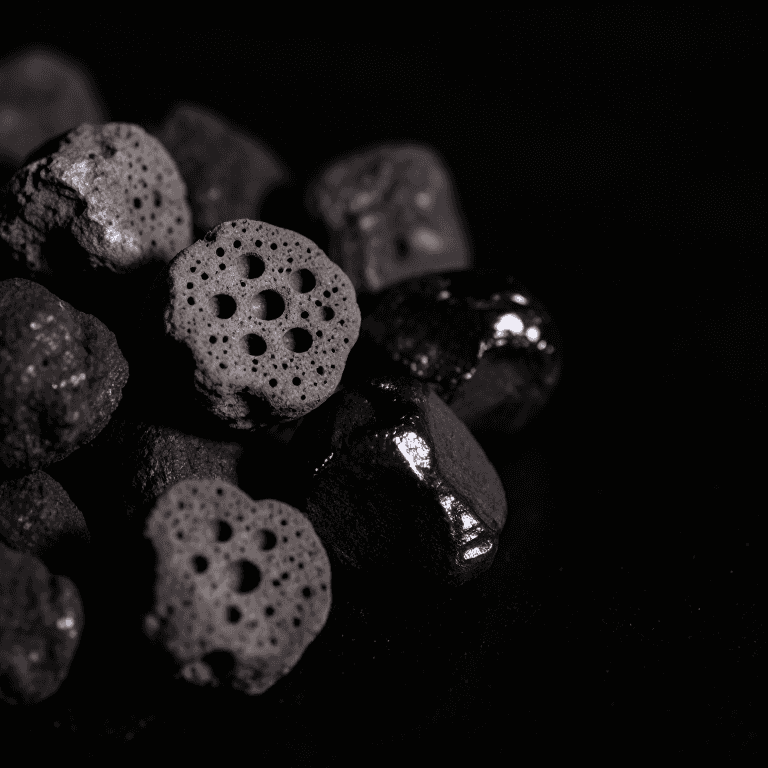
The key is heat and chemistry working together. A powerful air blast burns coke to carbon monoxide, which strips the oxygen from iron ore; meanwhile the descending iron soaks up carbon until it melts. Limestone added as flux carries off the stony impurities as a floating slag. What runs out of the tap hole is pig iron — iron saturated with about four percent carbon: hard, brittle, and perfect for casting or for refining into wrought iron and steel.
When coke replaced charcoal as the blast-furnace fuel in the early 1700s, iron could finally be made in unlimited quantity without consuming whole forests. Cheap pig iron became the raw material of the Industrial Revolution — the metal behind rails, bridges, engines, and machines.
Istruzioni
Understand pig iron
Understand pig iron
Build the shaft furnace
Build the shaft furnace
Materiali per questo passaggio:
 Mattoni refrattari80 pezzi
Strumenti necessari:
 Paletta da giardino
Crush the ore and flux
Crush the ore and flux
Materiali per questo passaggio:
 Minerale di ferro delle torbiere essiccato30 kg
 Lastra di calcare8 kg
Strumenti necessari:
 Martello
Set up the air blast
Set up the air blast
Strumenti necessari:
 Mantice
Light the coke bed
Light the coke bed
Materiali per questo passaggio:
 Coke metallurgico40 kg
Charge in layers
Charge in layers
Materiali per questo passaggio:
Coke metallurgico40 kgReduce the ore
Reduce the ore
Melt and carburize
Melt and carburize
Form and tap the slag
Form and tap the slag
Strumenti necessari:
 Barra di spillatura
Tap the molten iron
Tap the molten iron
Strumenti necessari:
Barra di spillaturaCast the pigs
Cast the pigs
Materiali per questo passaggio:
 Sabbia da fonderia50 kg
Cool, break, and identify
Cool, break, and identify
Strumenti necessari:
MartelloMateriali
5- 80 pezziSegnaposto
- Segnaposto
- Segnaposto
- 40 kgSegnaposto
- 50 kgSegnaposto
Materiali dei progetti collegati

Blueprint correlati
Questi blueprint condividono conoscenze — tecniche, materiali o principi


CC0 Pubblico dominio
Questo progetto è rilasciato sotto CC0. Sei libero di copiare, modificare, distribuire e utilizzare quest'opera per qualsiasi scopo, senza chiedere permesso.
Supporta il Maker acquistando prodotti tramite il suo progetto dove guadagna una Commissione Maker stabilita dai venditori, oppure crea una nuova iterazione di questo progetto e includilo come collegamento nel tuo progetto per condividere i ricavi.