Collaborazione
ARTE
BELLEZZA E BENESSERE
MESTIERE
CULTURA E STORIA
DIVERTIMENTO
AMBIENTE
CIBO E BEVANDE
INGEGNERIA INVERSA
SCIENZE
SPORT
TECNOLOGIA
INDOSSABILI
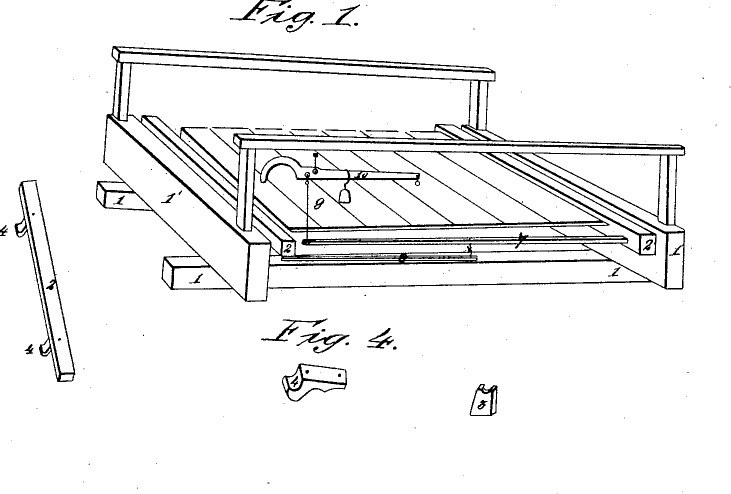


Platform Scale: Four Knife-Edge Hinges and Two Levers to a Steelyard (Fairbanks, 1831)
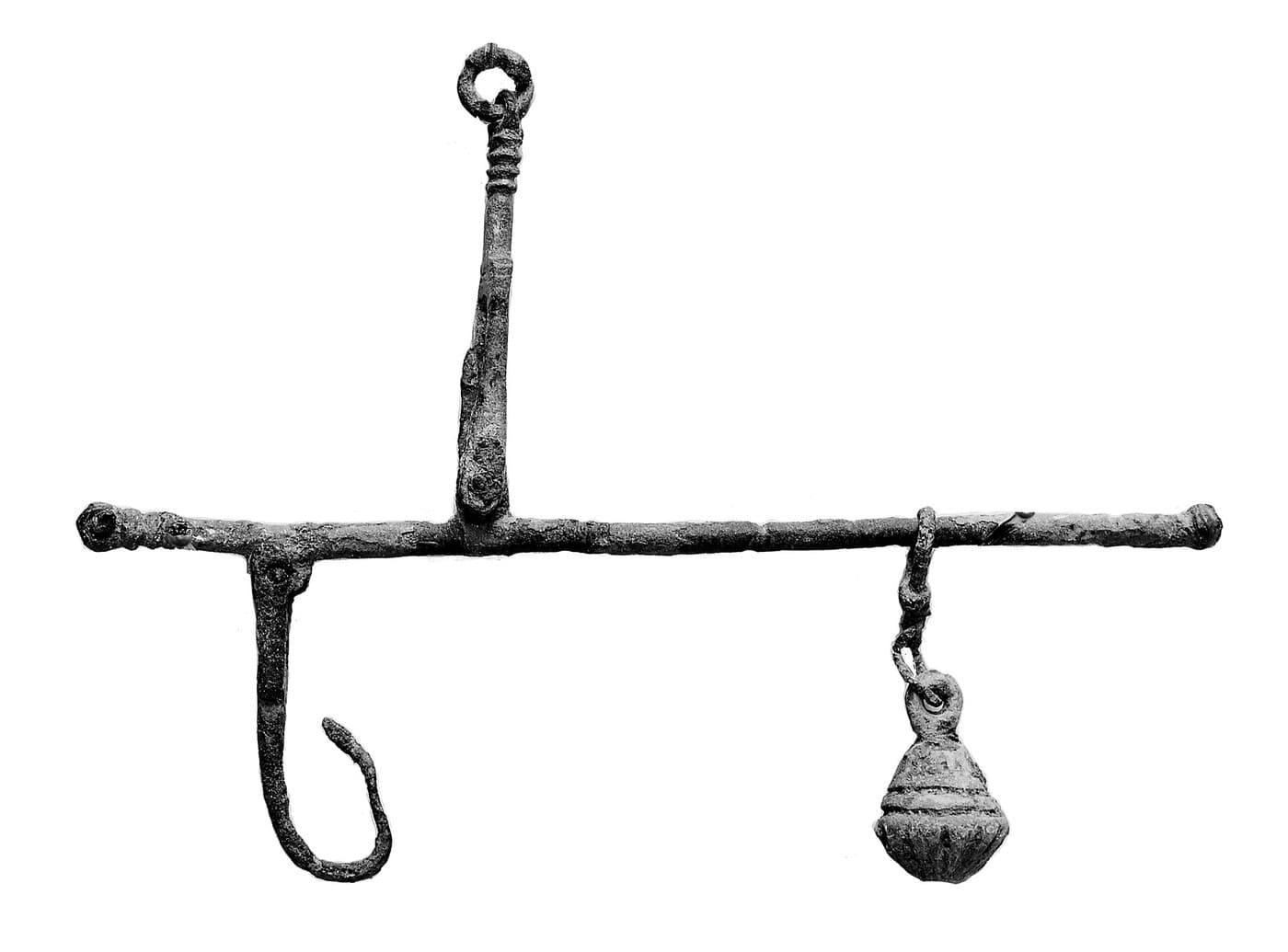
A scale for wagons and carts, reading the same wherever the load stands. Erastus and Thaddeus Fairbanks of St. Johnsbury, Vermont, patented it in 1831. A plank platform nine by twelve feet rests on four knife-edge hinges, one at each corner, and two levers gather the load from all four onto one rod. The rod pulls on an ordinary steelyard, which then reads only a tenth or a twentieth of the load.
Result: a platform scale reading ten times (or twenty times) what the steelyard shows, the same wherever the load stands on the platform.
Source: E. & T. Fairbanks, US Patent No. 118 (1837), restating their patent of 13 June 1831. Unknown: the material and sizes of the hinges, knife-edges, fulcra and levers. Picture: patent drawing.
Avanzato
1 week
Istruzioni
1
1
Build the frame
Build the frame
Lay two timber bed-sills, about 10 inches square and 16 feet long, parallel and about 7 feet apart. Bolt two end timbers, 8 by 14 inches and 12 feet long, across them near their ends. Just inside the end timbers, lay the two rockers, 8 inches square and 9 feet long, with their tops flush with the end timbers. Ours: carriage bolts.
Materiali per questo passaggio:
 Legname squadrato6 2 sills, 2 end timbers, 2 rockers
 Bullone a testa tonda e collo quadro1 set
Strumenti necessari:
 Sega a due mani
 Trivella
 Martello
2
2
Fit the four knife-edge hinges
Fit the four knife-edge hinges
Bolt a hinge firmly under each end of each rocker, one at every corner of the machine. Each hinge carries two knife-edges. One rests on a fulcrum standing on the bed-sill; the other reaches out to carry the platform. Set every knife-edge parallel to the others: knife-edges at an angle cramp and bind. Not given: the material and size of the hinges, knife-edges and fulcra.
Materiali per questo passaggio:
 Materiale sconosciuto1 4 hinges, 8 knife-edges, 4 fulcraBullone a testa tonda e collo quadro1 set
Strumenti necessari:
Trivella Dimensioni sconosciute
3
3
Join the levers
Join the levers
Run a horizontal lever from each rocker. The longer lever reaches across nearly to the opposite rocker. The shorter one ends at a point equally far from the axes of both, and hangs there from the longer lever by a chain, rod or stirrup, so the two act as one. From the end of the longer lever a rod rises straight up to a steelyard hung from a fixed support. With the two knife-edges of each hinge 6 inches apart and the rod hung 60 inches from the lever's axis, the load is ten times the steelyard reading; at 120 inches it is twenty times. Not given: the lever material. Ours: an iron chain and a wrought iron rod.
Materiali per questo passaggio:
Materiale sconosciuto1 2 levers Catena di ferro1 lever link
 Tondino di ferro battuto1 rod to the steelyard
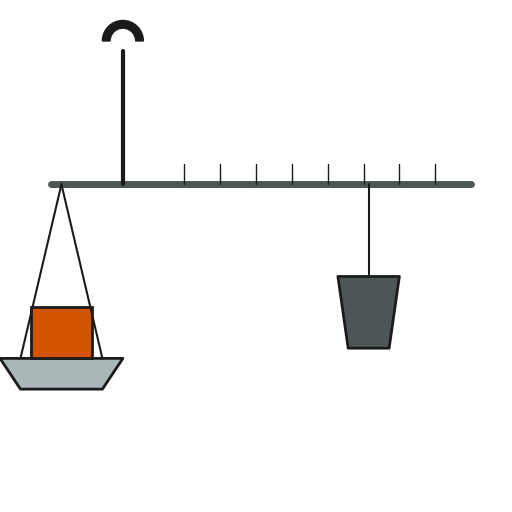 Stadera1 pezzo
Strumenti necessari:
Dimensioni sconosciute4
4
Lay the platform
Lay the platform
Lay two timbers, short enough to pass freely between the rockers, parallel over the bed-sills. Spike stout planks 9 feet long across them, making a platform of about 9 by 12 feet. Under these timbers fasten iron plates that rest on the inner knife-edges of the hinges. Ours: nails as the spikes.
Materiali per questo passaggio:
Legname squadrato2 platform timbers Tavola di legname1 for 9 x 12 ft
 Lastra di ferro4 pezzi
 Chiodi1 as needed
Strumenti necessari:
Sega a due maniMartelloMateriali
9- 2 platform timbersSegnaposto
- Segnaposto
- 1 2 leversSegnaposto
- 1 lever linkSegnaposto
- 1 rod to the steelyardSegnaposto
- 1 pezzoSegnaposto
- 1 for 9 x 12 ftSegnaposto
- 4 pezziSegnaposto
- 1 as neededSegnaposto
Materiali dei progetti collegati
Questo progetto realizza

Blueprint correlati
Questi blueprint condividono conoscenze — tecniche, materiali o principi



CC0 Pubblico dominio
Questo progetto è rilasciato sotto CC0. Sei libero di copiare, modificare, distribuire e utilizzare quest'opera per qualsiasi scopo, senza chiedere permesso.
Supporta il Maker acquistando prodotti tramite il suo progetto dove guadagna una Commissione Maker stabilita dai venditori, oppure crea una nuova iterazione di questo progetto e includilo come collegamento nel tuo progetto per condividere i ricavi.