ARTE
BELLEZZA E BENESSERE
MESTIERE
CULTURA E STORIA
DIVERTIMENTO
AMBIENTE
CIBO E BEVANDE
INGEGNERIA INVERSA
SCIENZE
SPORT
TECNOLOGIA
INDOSSABILI
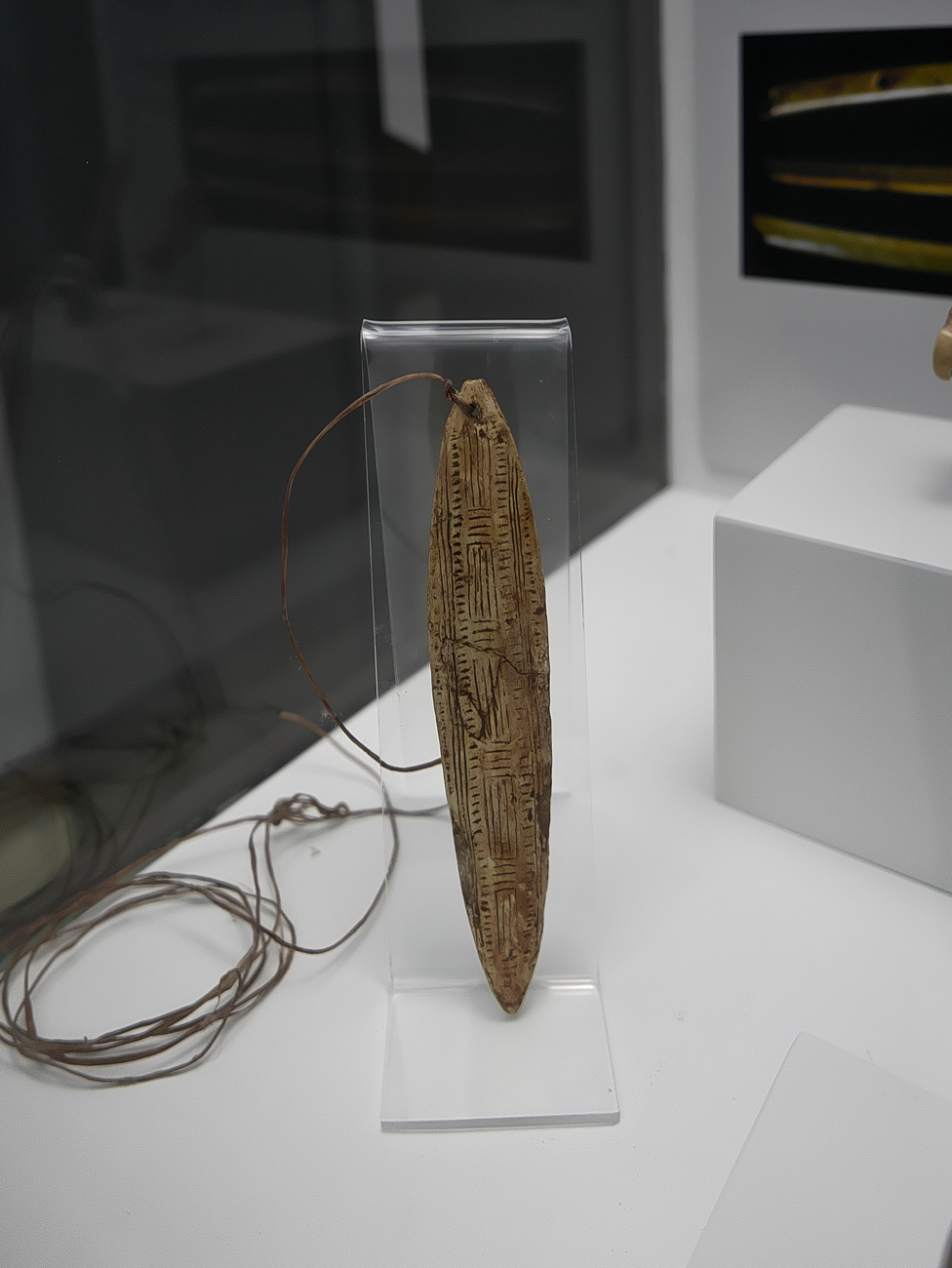
Museo Nacional y Centro de Investigación de Altamira · Public Domain


Making a Bullroarer — The Oldest Instrument You Swing Through the Air
Make a bullroarer: a flat blade of wood on a long cord that ROARS when you whirl it around your head. Shape and bevel the blade, drill the cord hole, and swing it in clear open space. A buildable school project in the free aerophone — sound made by a spinning blade, one of humanity's oldest instruments, found on every inhabited continent.
Principiante
About an hour
Istruzioni
1
1
Sound from a spinning blade
Sound from a spinning blade
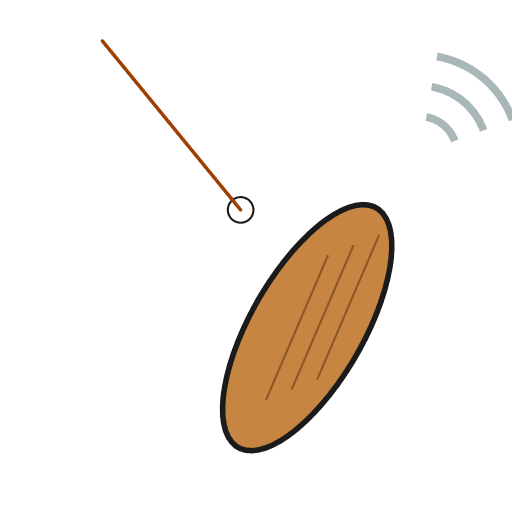
A bullroarer is just a flat slat of wood on a cord. Whirl it around your head and it spins on the twisting cord, chops the air, and makes a deep pulsing ROAR. It is one of the oldest instruments humans have — used across the world for tens of thousands of years.
2
2
Cut the blade
Cut the blade
Cut a flat blade about a hand-span long and two fingers wide — a long thin oval or leaf shape, a few millimetres thick. Bigger, heavier blades roar deeper; small light ones buzz higher.
Materiali per questo passaggio:
 Tavola di conifera secca1 pezzo
Strumenti necessari:
 Coltello da intaglio sloyd
3
3
Bevel both long edges
Bevel both long edges
Carve both long edges down to a slant, like a knife or an aeroplane wing — one edge sloping up, the other down. These bevels are what make the blade spin as it slices the air. Sand it smooth.
4
4
Drill the cord hole
Drill the cord hole
Pierce one small hole near ONE end of the blade, well in from the tip so it will not split out.
Strumenti necessari:
 Punteruolo
5
5
Tie a long cord
Tie a long cord
Tie a strong cord about an arm's length through the hole. A short handle loop at the far end gives you something safe to hold.
Materiali per questo passaggio:
 Spago di abaca1 pezzo
6
6
Swing it — in clear open space
Swing it — in clear open space
SAFETY FIRST: go outside to a wide open space with NO people, animals or windows within two cord-lengths — a swinging bullroarer hits hard. Whirl it in a big circle around your head. It roars; whirl faster for a higher pitch, slower for a lower one.
7
7
Compendium — the free aerophone
Compendium — the free aerophone
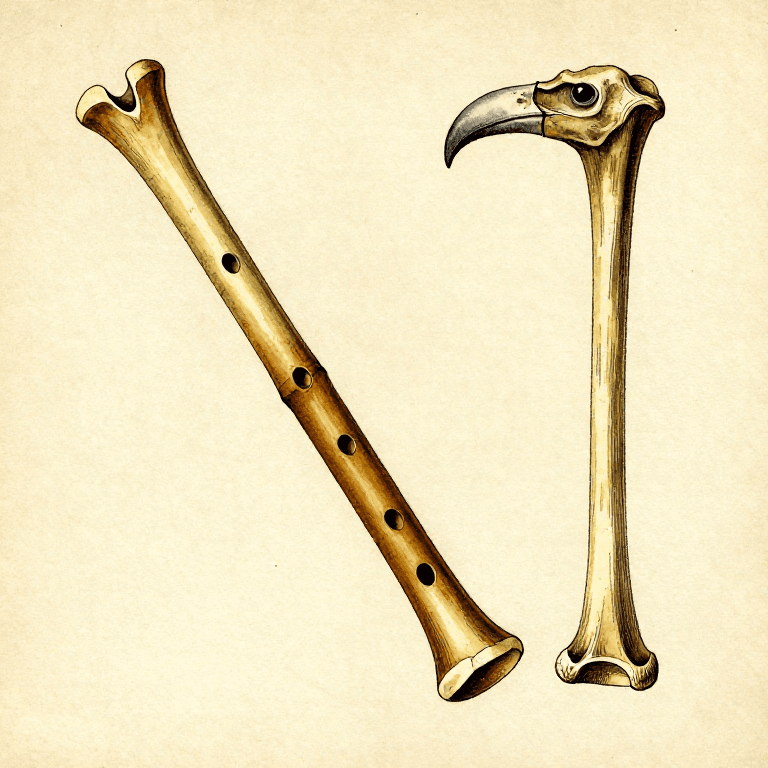
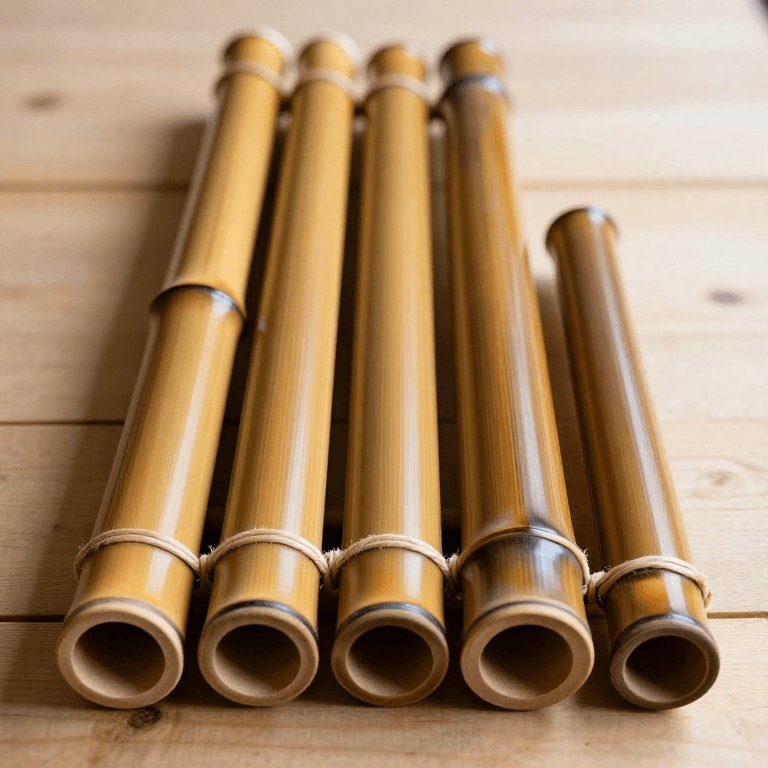
Almost every instrument makes sound by shaking a trapped column of air (a flute), a string, a skin or a solid bar. The bullroarer does something rarer: it is a FREE aerophone — it stirs the open air directly, with no tube and no enclosed cavity at all. Here is the mechanism. As you whirl the blade, the cord winds and unwinds, so the blade spins rapidly about its own long axis; because its edges are bevelled like a propeller, the spinning aerofoil sheds a train of little swirling vortices off its edges, and each shed vortex is a pressure pulse — a puff of sound. The blade spins many times a second, so those puffs blur into a continuous rolling ROAR whose pitch rises the faster the blade spins. On top of that, swinging the whole thing around your head sweeps the sound source toward you and away again, so the roar swells and fades in a wah-wah wobble — the same Doppler effect you hear in a passing siren. This is close kin to the aeroacoustic 'edge tone' that voices every flute (a jet of air fluttering past an edge), which is why the bullroarer sits in the aerophone family alongside the bone flute and the panpipe — but where those tune a captive air column with finger holes or pipe lengths, the bullroarer simply throws sound into the open sky. Found from Aboriginal Australia to Stone-Age Europe to the Americas, it is among the very oldest human instruments, and almost everywhere it was treated as a sacred voice.
Materiali
2- 1 pezzoSegnaposto
- 1 pezzoSegnaposto
Strumenti richiesti
2- Segnaposto
- Segnaposto
Questo progetto realizza
Blueprint correlati
Questi blueprint condividono conoscenze — tecniche, materiali o principi
CC0 Pubblico dominio
Questo progetto è rilasciato sotto CC0. Sei libero di copiare, modificare, distribuire e utilizzare quest'opera per qualsiasi scopo, senza chiedere permesso.
Supporta il Maker acquistando prodotti tramite il suo progetto dove guadagna una Commissione Maker stabilita dai venditori, oppure crea una nuova iterazione di questo progetto e includilo come collegamento nel tuo progetto per condividere i ricavi.