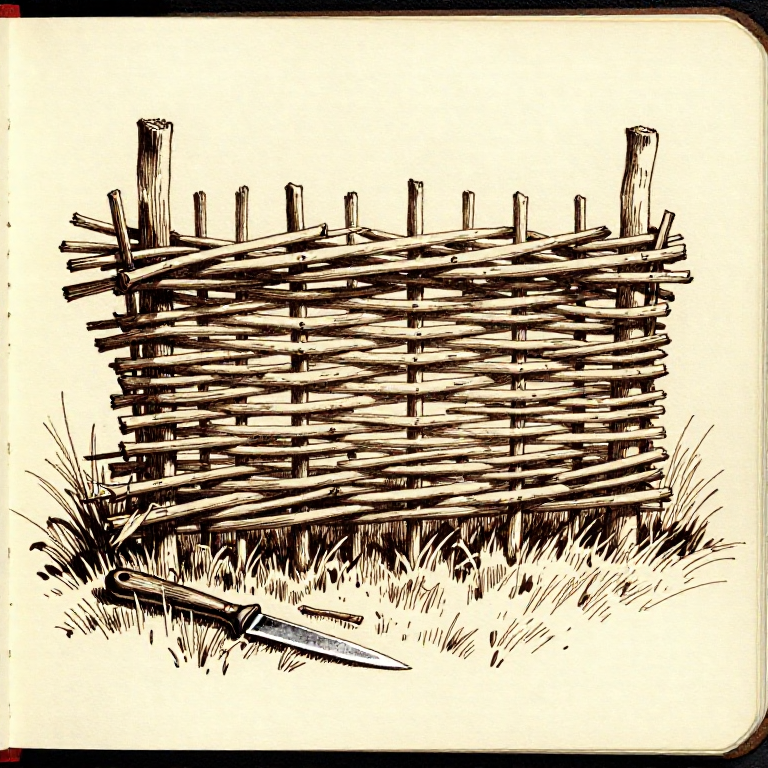


Building a Wattle Fence — Woven Wood Panel Construction
Istruzioni
Prepare Stakes and Withies
Prepare Stakes and Withies
Cut hazel or willow stakes about 5-8 cm in diameter and 1.5 metres long. Sharpen one end of each stake to a point for driving into the ground. Cut 50-80 flexible withies (thin rods) from hazel, willow, or young ash — these should be 1.5-2 metres long and 1-3 cm in diameter. Green (freshly cut) rods are most flexible. If using dried rods, soak them in water for 24-48 hours to restore pliability. Hazel is the traditional material in the British Isles because it produces long, straight, knot-free rods when coppiced (cut to ground level on a 7-year rotation cycle).
Set the Upright Stakes
Set the Upright Stakes
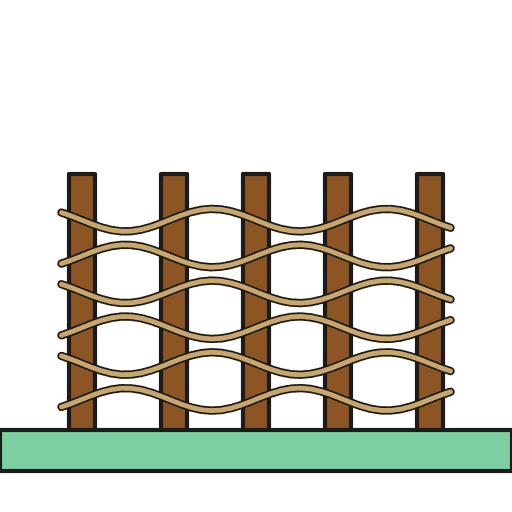
Drive the sharpened stakes into the ground at regular intervals of 20-30 cm, forming a straight line. Push each stake 25-30 cm deep for stability. You can drive them by hand in soft soil, or use a wooden mallet for harder ground. For a fence panel about 2 metres long, you need 8-10 uprights. The stakes should stand rigidly upright — wobbly stakes produce a loose, weak weave. If building against an existing structure, the end stakes can be tied to posts. The spacing between stakes determines the weave density: closer stakes produce a tighter, more wind-proof panel.
Weave the Withies
Weave the Withies
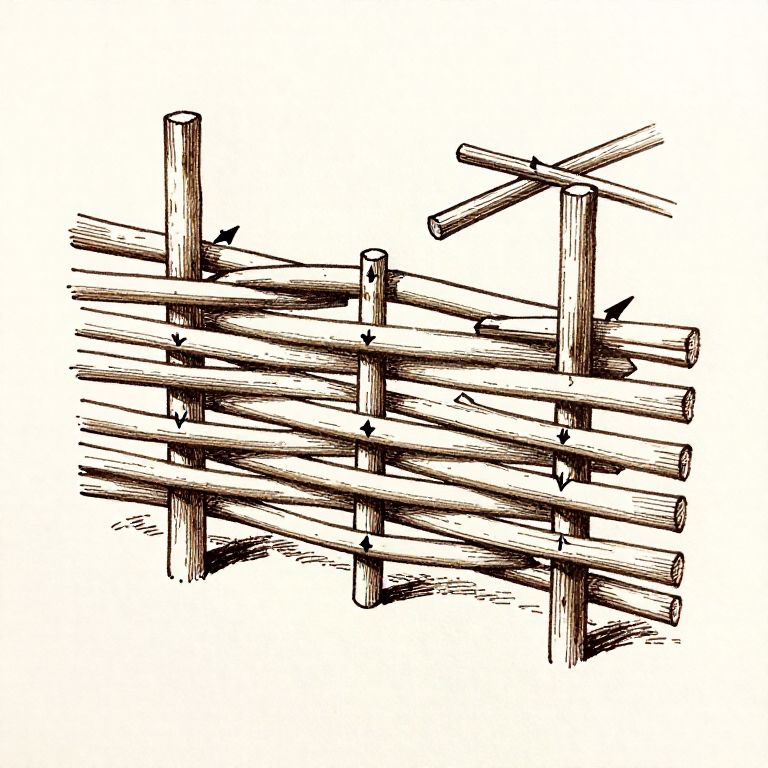
Take the first withy rod and weave it horizontally in front of the first stake, behind the second, in front of the third, and so on — the classic over-under pattern. Push the rod down to ground level. Start the second rod from the opposite side, weaving in the opposite pattern (behind the first stake where the first rod went in front). This alternation locks the rods in place and prevents them from sliding up. Continue adding rods, pushing each new row down firmly against the previous one. When a rod runs out before reaching the end, overlap the new rod with the old one behind a stake so the joint is hidden.
Build to Full Height
Build to Full Height
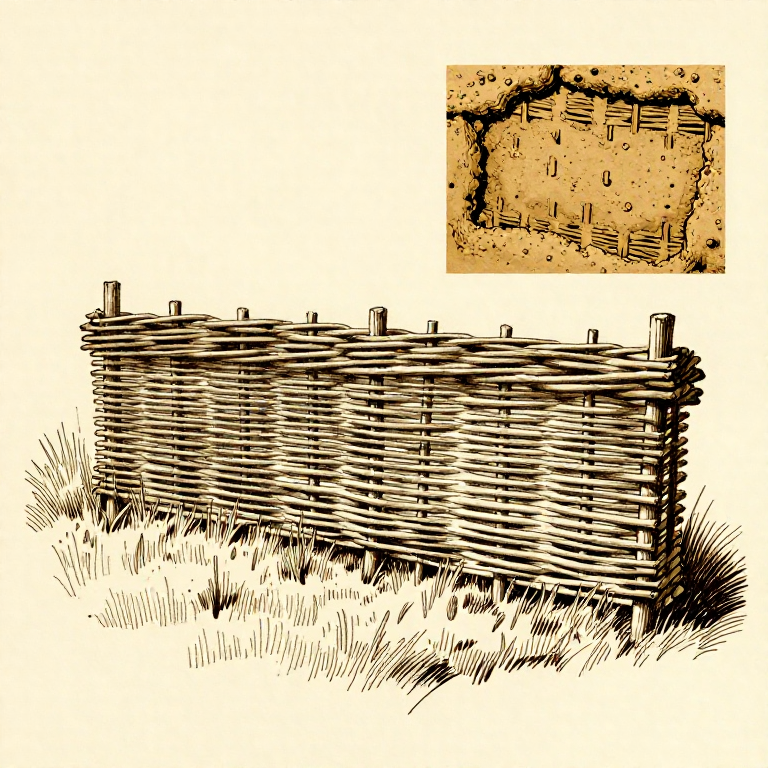
Continue weaving rows until the panel reaches the desired height — typically 1-1.2 metres for livestock fencing. Push each new row down firmly; the tighter the weave, the stronger and more weatherproof the panel. Alternate between starting from the left and from the right to keep the panel balanced and prevent it from curving. At the top, either trim the stake tops flush with the last woven row or leave them protruding as pointed finials that deter climbing animals. For very dense panels (used as house walls in wattle-and-daub construction), pack moss or straw into any gaps.
Materiali per questo passaggio:
 Vimini di salice (flessibili)50-80 rods, 1.5-2 m long, 1-3 cm diameter m
Finishing and Durability
Finishing and Durability
A completed wattle fence panel is immediately functional — no drying or curing time is needed. The woven structure is remarkably strong because each rod locks its neighbours in place through friction and spring tension. An unprotected wattle fence lasts 5-10 years before the exposed wood begins to rot. For greater longevity, the panel can be daubed with a mixture of clay, straw, and animal dung (wattle-and-daub construction), which protects the wood from moisture and extends the life to 20-30 years or more. Wattle fencing is still made commercially in Britain today using the identical coppiced hazel technique practised in the Neolithic.
Materiali
3- 50-80 rods, 1.5-2 m long, 1-3 cm diameter mSegnaposto
- 8-12 stakes, 5-8 cm diameter, 1.5 m long pezzoSegnaposto
- Segnaposto
Strumenti richiesti
2- Segnaposto
- Segnaposto
Questo progetto realizza
CC0 Pubblico dominio
Questo progetto è rilasciato sotto CC0. Sei libero di copiare, modificare, distribuire e utilizzare quest'opera per qualsiasi scopo, senza chiedere permesso.
Supporta il Maker acquistando prodotti tramite il suo progetto dove guadagna una Commissione Maker stabilita dai venditori, oppure crea una nuova iterazione di questo progetto e includilo come collegamento nel tuo progetto per condividere i ricavi.